How Much Is Judith Slaying Holofernes Worth?
Last updated: February 25, 2026
Quick Facts
- Methodology
- comparable analysis
Hypothetical fair-market/insurance value for Artemisia Gentileschi’s Judith Slaying Holofernes (Capodimonte, c. 1612–13): $50–100 million. The estimate is built from best-in-class Old Master comparables and the painting’s canonical status, recognizing it is an Italian state‑museum work and effectively not marketable.
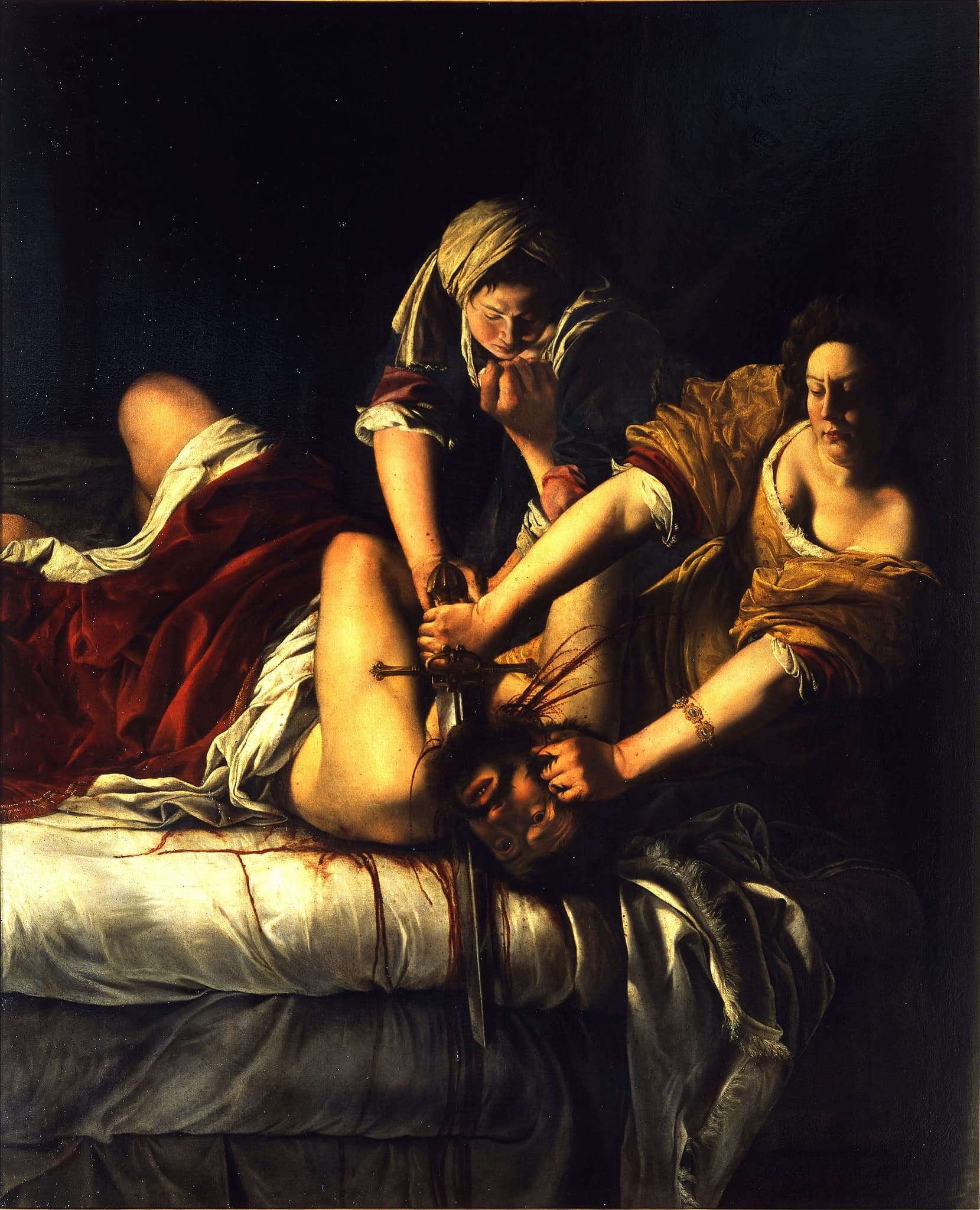
Judith Slaying Holofernes
Artemisia Gentileschi, c. 1612–13 • Oil on canvas
Read full analysis of Judith Slaying Holofernes →Valuation Analysis
Estimate: $50–100 million (hypothetical fair‑market/insurance valuation). Artemisia Gentileschi’s early Judith Slaying Holofernes at the Museo e Real Bosco di Capodimonte is a defining image of the Italian Baroque and one of the artist’s most cited works. Capodimonte itself presents the painting as an iconic jewel of the collection [1]. As an Italian state‑museum holding, it is part of the inalienable public patrimony; any figure here reflects notional insurance or institutional value rather than an auction price [2].
Market anchor points for Artemisia: Public auction benchmarks for the artist have risen steadily but remain constrained by the near‑absence of true masterpieces on the market. The current auction record—$5.687 million for Self‑Portrait as Saint Catherine of Alexandria at Christie’s New York in 2026—was set by a leading museum purchaser [3]. Her 2019 Lucretia realized about $5.2 million at Artcurial, a landmark at the time for a forceful heroine subject [4]. These results underscore strong, institutional‑backed demand, while also highlighting that headline Artemisia masterpieces are largely museum‑held and rarely, if ever, trade publicly.
Masterpiece premium and cross‑artist comparables: For Old Masters, canonical, universally reproduced works command prices far above an artist’s standard record. A closely related Caravaggesque trophy—Orazio Gentileschi’s Danaë—sold to the Getty for $30.49 million in 2016, illustrating depth of demand at the high end for the Gentileschi/Caravaggisti circle [5]. Category‑defining icons such as Botticelli’s Portrait of a Young Man Holding a Roundel have achieved $92.2 million, marking the upper tier of appetite for museum‑grade Renaissance/Baroque paintings [6]. Artemisia’s Capodimonte Judith belongs nearer this “trophy” cohort than to her auction benchmarks, justifying a multiple of her record.
Subject, scale, and cultural resonance: Among Artemisia’s most famous images, the Capodimonte Judith is compositionally gripping and powerfully narrativized—qualities that attract both museums and top collectors. Market attention for this subject has been validated at the very top end; for example, the rediscovered Caravaggio Judith and Holofernes (Toulouse) was marketed at €100–150 million before a private pre‑auction sale, evidencing ceiling‑level demand for an iconic Baroque “Judith,” even amid attribution debate [7]. Artemisia’s authorship and the work’s canonical status position it as the artist’s most valuable type of picture.
Conclusion: Balancing Artemisia’s rising but supply‑constrained market, the demonstrated masterpiece premium for Caravaggesque trophies, and the painting’s museum‑crowned significance, a hypothetical $50–100 million range is defensible for insurance or theoretical fair‑market purposes. The lower bound aligns above top Gentileschi/Caravaggisti auction benchmarks; the upper bound respects the category’s current trophy limits while acknowledging the painting’s unique art‑historical stature [3][5][6]. Italian public‑law constraints mean such a figure is not realizable at auction, but it is an appropriate expression of the work’s market‑adjacent value in institutional contexts [2].
Key Valuation Factors
Art Historical Significance
High ImpactThe Capodimonte Judith Slaying Holofernes is a cornerstone of Artemisia Gentileschi’s reputation and a signature image of the Italian Baroque. It crystalizes her Caravaggesque naturalism, narrative intensity, and radically assertive heroines, and it is among the most reproduced pictures in survey texts and exhibitions. Capodimonte foregrounds the painting as an icon of its collection, and it is central to scholarship on Artemisia’s early career and her reappraisal as a leading Baroque master. This level of canonical importance supports a substantial masterpiece premium, elevating the painting’s hypothetical value well beyond the artist’s otherwise modest auction benchmarks for secondary works.
Rarity and Scarcity of Supply
High ImpactArtemisia’s prime works are exceptionally scarce on the open market. The majority of her top-tier paintings are in museums; those that do appear at auction are often later, smaller, or less emblematic. True, era-defining Artemisia masterpieces virtually never trade publicly, which compresses auction records while elevating hypothetical or insurance values for canonical examples. This scarcity dynamic is pronounced across Old Masters, but especially for Artemisia given a small surviving oeuvre, heavy institutional retention, and intensified museum demand. The Capodimonte Judith’s unavailability—and its status as one of her few universally recognized masterpieces—contributes significantly to the $50–100 million range.
Subject, Scale, and Visual Impact
High ImpactJudith beheading Holofernes is among the most potent Baroque narratives, and Artemisia’s handling—viscerally immediate, compositionally tight, and psychologically charged—has unmatched public resonance. Large-scale, dramatic biblical scenes by Caravaggesque painters are coveted by both institutions and top private collectors. The painting’s graphic power, early date, and superb narrative clarity differentiate it from more contemplative or fragmentary subjects and help explain why similar themes by Caravaggio have been positioned at the market’s apex. Its image ubiquity enhances brand value: it is a picture most major museums would showcase as a centerpiece loan, supporting a higher insurance/fair-market assessment.
Market Comparables and Masterpiece Premium
High ImpactWhile Artemisia’s auction record stands at $5.687 million (Christie’s, 2026), that figure reflects the rarity of her very best works at auction, not demand limits. Cross-artist comparables demonstrate pricing power for canonical Baroque masterpieces: Orazio Gentileschi’s Danaë fetched $30.49 million in 2016, and Botticelli’s portrait achieved $92.2 million in 2021. The Capodimonte Judith—arguably Artemisia’s most celebrated subject—fits squarely in the category of works that command a substantial masterpiece premium over an artist’s routine benchmarks. This supports a valuation band that begins well above Artemisia’s record and extends into the lower reaches of category-defining Old Master trophies.
Ownership and Legal Context
Medium ImpactHoused in an Italian state museum, the painting forms part of the inalienable public patrimony under Italian cultural heritage law. This effectively bars open-market sale and export. As a result, any figure is primarily relevant for insurance, inter-museum loans, or theoretical fair-market analyses rather than as a realizable auction price. While this constraint does not diminish the painting’s intrinsic or comparables-based value, it does shape the context in which valuations are used and interpreted. High-limit insurance values for such works typically mirror best-in-class Old Master benchmarks and the object’s singular cultural status.
Sale History
Judith Slaying Holofernes has never been sold at public auction.
Artemisia Gentileschi's Market
Artemisia Gentileschi’s market has strengthened markedly over the past decade, propelled by major exhibitions, rediscoveries, and intense institutional demand for women Old Masters. Auction benchmarks currently cluster in the low-to-mid single-digit millions, capped by the $5.687 million record set at Christie’s New York in 2026 for Self‑Portrait as Saint Catherine of Alexandria. Strong results for thematically resonant works (Lucretia; Susanna; David with the Head of Goliath) show collectors prize narrative power, secure attribution, and good condition. Supply remains the principal constraint: most leading works are museum-held, so public records understate willingness to pay for canonical masterpieces. In private and institutional contexts, prime-period Artemisia paintings are valued far above published auction highs.
Comparable Sales
Self-Portrait as Saint Catherine of Alexandria
Artemisia Gentileschi
Same artist; prime-period, iconic work and new auction record (with premium). Demonstrates peak institutional demand for Artemisia at auction, though subject and scale are less dramatic than Judith.
$5.7M
2026, Christie's New York
~$5.5M adjusted
Lucretia
Artemisia Gentileschi
Same artist; closely related violent-heroine theme from early maturity; former record (with premium). A strong subject-matter proxy for Judith’s narrative power.
$5.2M
2019, Artcurial, Paris
~$6.6M adjusted
David with the Head of Goliath
Artemisia Gentileschi
Same artist; Caravaggesque decapitation subject with rediscovered signature; validates demand for forceful narrative works once attribution/condition are secured.
$2.7M
2025, Sotheby's London
Susanna and the Elders
Artemisia Gentileschi
Same artist; major biblical narrative painting (with premium). Shows price level for substantial, securely attributed Artemisia works in recent US auctions.
$2.1M
2022, Sotheby's New York
~$2.3M adjusted
Danaë
Orazio Gentileschi
Closely related Caravaggesque masterpiece by Artemisia’s father; museum-caliber trophy (with premium). Benchmarks top-end pricing for prime Gentileschi/Caravaggisti works.
$30.5M
2016, Sotheby's New York
~$41.0M adjusted
Portrait of a Young Man Holding a Roundel
Sandro Botticelli
Canonical Old Master trophy (with premium). Serves as an upper-bound indicator for market appetite for universally recognized, museum-grade masterpieces.
$92.2M
2021, Sotheby's New York
~$109.8M adjusted
Current Market Trends
The Old Masters market is selective but robust for quality. After a muted 2024 with scarce trophies, 2025–early 2026 saw renewed momentum driven by strong consignments, higher sell‑throughs, and multiple headline results. Buyers have rotated toward historically significant, scholarship-backed works, while mid‑tier property remains price‑sensitive. Masterpiece‑caliber Baroque and Renaissance pictures with broad cultural recognition continue to attract deep institutional and private bidding, supporting a pronounced masterpiece premium. Against this backdrop, Artemisia’s star has risen: museums are actively correcting historical gaps, and rediscoveries/reattributions are catalyzing step‑changes in value. Scarcity at the very top persists, sustaining strong pricing for canonical images when hypothetically valued for insurance or institutional purposes.
Sources
- Museo e Real Bosco di Capodimonte, work highlight
- Aedon (Il Mulino): Inalienability of Italian public museum collections
- Artnet News: Artemisia Gentileschi sets new auction record at Christie’s (2026)
- Artsy: Artemisia Gentileschi’s Lucretia sells for €4.7m ($5.1m) at Artcurial (2019)
- Los Angeles Times: Getty buys Orazio Gentileschi’s Danaë for $30 million (2016)
- Sotheby’s: Botticelli portrait sells for $92.2 million (2021)
- The Guardian: ‘Caravaggio’ Judith sold privately before auction (2019)