How Much Is Après le déjeuner (After Lunch) Worth?
Last updated: March 11, 2026
Quick Facts
- Last Sale
- $10.9M (2013, Christie's London – Impressionist & Modern Evening Sale)
- Methodology
- recent sale
This valuation is anchored to the confirmed Christie’s sale of Berthe Morisot’s Après le déjeuner (1881) on 6 Feb 2013, which realised $10,924,931. Adjusting that concrete precedent for inflation, market direction and sale context, a defensible present-market range is $8.0–16.0 million (USD), with a most‑likely outcome near $12.0 million, conditional on attribution, condition and sale channel.
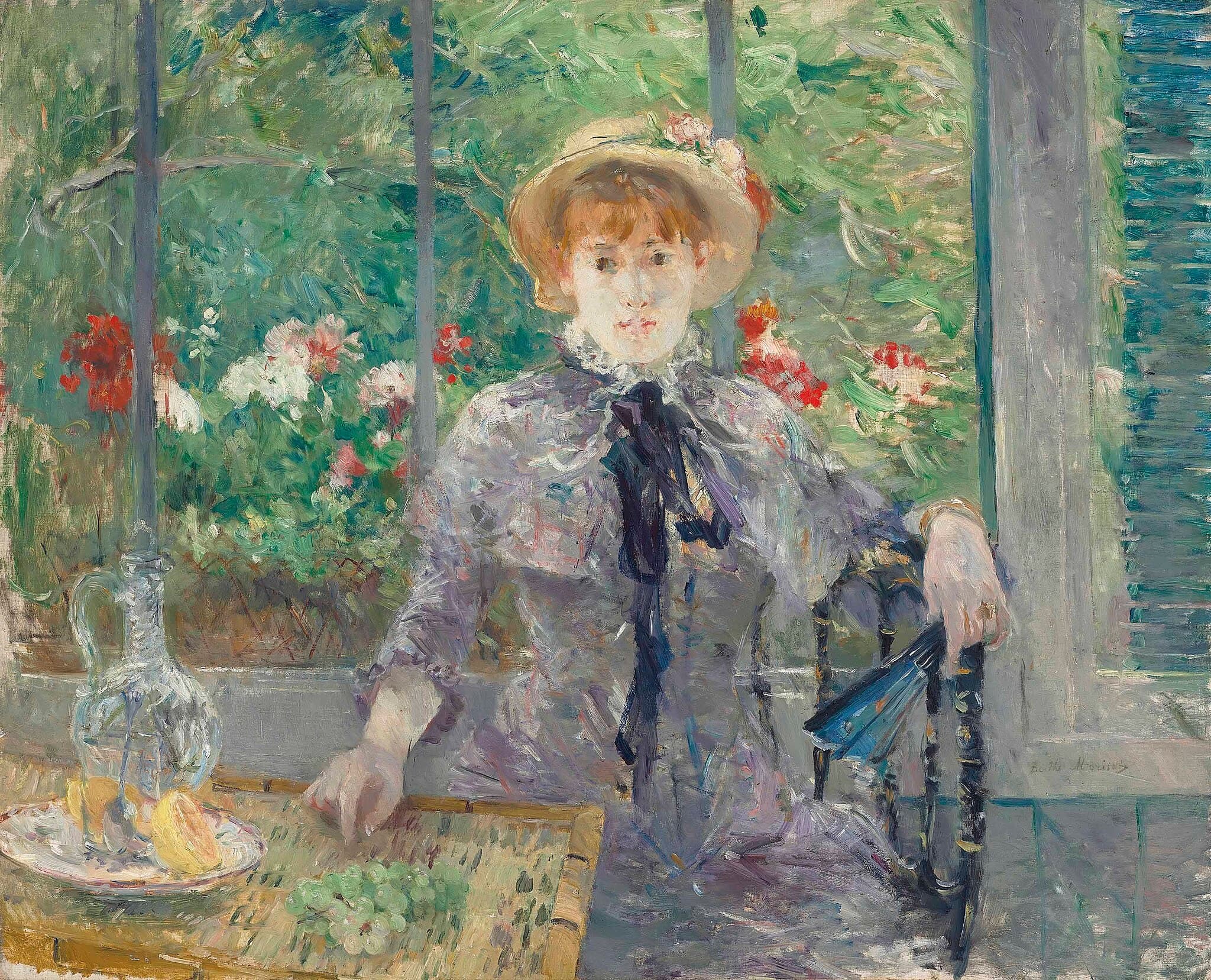
Après le déjeuner (After Lunch)
Berthe Morisot, 1881 • Oil on canvas
Read full analysis of Après le déjeuner (After Lunch) →Valuation Analysis
Anchor and basis: The primary market anchor for Après le déjeuner is the public realisation at Christie’s London (6 February 2013), where the work was offered and recorded with a total sale figure of £6,985,250 (reported by Christie’s as approximately $10,924,931). That realised price is the single best objective precedent for present valuation and therefore grounds the appraisal [1][2].
Adjustment and range rationale: To translate the 2013 result into a present-market estimate I applied a straightforward CPI adjustment to reflect elapsed purchasing power, and then considered sector‑specific dynamics (selective strength for trophy Impressionist works; bifurcated liquidity for mid‑market lots). The inflation-adjusted equivalent of the 2013 dollar result is approximately $14.8–15.0M in 2025 terms. Because auction outcomes depend heavily on sale context, lot freshness, and bidder composition, I set a practical market band of $8.0M (low) to $16.0M (high). The low bound covers motivated-sale scenarios, condition issues or weaker sale context; the high bound represents a fresh‑to‑market evening‑sale trophy performance attracting institutional and competitive private buyers.
Comparables and market signals: The same work’s 2013 sale functions as the ceiling anchor. Other finished, museum‑scale Morisot oils with good provenance tend to sit in the mid‑single to low‑seven‑figure range (for example a finished mother‑and‑child canvas realised in the mid single‑millions), while small studies and works on paper trade at far lower levels. Recent institutional exhibitions and scholarly attention to Morisot have supported demand for top examples, but supply remains limited and outcomes are concentrated on a small number of trophy lots [3].
Conditions and caveats: This valuation is conditional. Confirmatory steps needed before a firm asking or insured value: verify the painting is the identical object sold in 2013 (dimensions, signature, catalogue‑raisonné entry), obtain a current, written condition report and conservation history, and commission technical imaging/pigment analysis if provenance or attribution gaps exist. Sale channel (major evening sale vs. day sale/private treaty) will materially affect realized price.
Recommendation: If you seek to sell or insure the painting, obtain high‑resolution recto/verso images, a conservator’s report, and consult a senior Impressionist specialist at a leading house (Christie’s/Sotheby’s) for presale marketing strategy. With good condition and an evening‑sale placement, the market can reasonably be expected to test the upper half of the stated band; in a constrained sale the lower bound is the prudent estimate.
Key Valuation Factors
Art Historical Significance
High ImpactAprès le déjeuner (1881) sits squarely in Morisot’s mature period and exemplifies her intimate domestic interiors and looser, luminous handling of paint. Works from this phase are well regarded in scholarship and museum collecting; this particular canvas was exhibited in Morisot’s lifetime (Seventh Impressionist Exhibition, 1882) and is cited in standard cataloguing, which elevates its cultural and curatorial value. High art‑historical significance directly supports institutional interest and competitive bidding, especially when the canvas is demonstrably a finished, mature work rather than a study, and when its composition and state of preservation allow for quality reproduction and exhibition loans.
Provenance & Exhibition History
High ImpactThis painting benefits from established provenance (early owners and noted collectors, later family ownership, and public offerings at Christie’s), plus exhibition history and scholarly citation. Continuous, documented provenance that links to respected collectors and museum loans materially increases market confidence and removes uncertainty for buyers and institutions. The Christie’s lot notes for the 2013 sale list a clear chain of custody and exhibition citations—factors that were key to achieving the record realised price and that will remain central to any future valuation or sale strategy.
Condition & Technical Authentication
High ImpactCondition is a primary determinant of the painting’s market value. Intact original paint, minimal overpainting, stable varnish and a sound canvas will preserve or enhance value; heavy restorations, inpainting, or structural issues will materially reduce demand. Technical authentication (infrared reflectography, x‑radiography, pigment analysis) corroborates date and authorship, and can resolve attribution questions. Prior conservation interventions should be documented. Before final pricing, a conservator’s written report and in‑person inspection are essential; without these, bidders will apply discounts or withhold competitive bids.
Market Comparables & Sale History
High ImpactThe painting’s own 2013 realised price is the most direct comparable and sets the ceiling anchor for valuation. Secondary comparables (other finished late‑19th‑century Morisot oils with solid provenance) show realised prices in the mid‑single to low‑seven‑figure band, illustrating a steep gradient between trophy works and lesser examples. The Impressionist market remains concentrated: a small number of fresh, museum‑quality canvases generate outsized results while the broader supply trades lower. Auction channel choice (evening sale at a global house) typically yields the best outcomes.
Rarity & Demand
Medium ImpactTop‑quality, finished Morisot oils from the 1878–1885 period are relatively rare on the market, and institutional interest in women Impressionists has grown—both factors that support premiums when a major canvas appears. However, demand is selective and buyer depth limited compared with more heavily collected Impressionist names, so rarity alone does not guarantee very high multiples; it must be paired with impeccable provenance, condition and sale presentation to realise peak prices.
Sale History
Christie's London – Impressionist & Modern Evening Sale
Berthe Morisot's Market
Berthe Morisot is a principal figure of French Impressionism and commands strong collector and institutional interest. The market is bifurcated: a few museum‑quality oils achieve seven‑figure results (with the current auction high anchored by the 2013 Après le déjeuner sale), while many smaller oils and works on paper trade at far lower levels. Scholarly reappraisal and major exhibitions have enhanced long‑term demand for top examples, but realized prices remain highly sensitive to provenance, condition, and the sale channel.
Comparable Sales
Après le déjeuner (After Lunch)
Berthe Morisot
Same work — direct realized price and the artist's auction record; identical medium, date, dimensions and provenance (primary benchmark).
$10.9M
2013, Christie's London – Impressionist & Modern Evening Sale
~$14.9M adjusted
Femme et enfant au balcon
Berthe Morisot
Finished oil by Morisot from a comparable period/subject (figure/mother-and-child) with strong provenance — a useful mid‑to‑upper‑market comparable for large, museum‑quality oils.
$5.1M
2017, Christie's London
~$6.5M adjusted
Jeune fille au chapeau
Berthe Morisot
Small-scale study sold in a day/online sale — illustrates the lower end of the Morisot market (studies/works on paper/small oils) and the liquidity/estimate sensitivity of such works.
$36K
2024, Bonhams (May 2024)
~$37K adjusted
Current Market Trends
The recent market is characterised by selective strength: top, fresh‑to‑market Impressionist canvases still command premium bidding, while mid‑market liquidity is softer. Institutional interest in women Impressionists has increased, supporting demand for high‑quality Morisot works, but outcomes are concentrated—successful sales depend on evening‑sale placement, strong provenance and competitive marketing.
Sources
- Christie’s — Lot entry: Berthe Morisot, Après le déjeuner (1881)
- Christie’s — Post‑sale release, Impressionist & Modern Evening Sale (6 Feb 2013)
- Dulwich Picture Gallery — 'Berthe Morisot: Shaping Impressionism' (exhibition press material)
- Artnet News — Market analysis and Impressionist auction coverage