How Much Is The Harbour at Lorient Worth?
Last updated: January 30, 2026
Quick Facts
- Insurance Value
- $16.0M (Internal estimate)
- Methodology
- comparable analysis
We estimate Berthe Morisot’s The Harbour at Lorient (1869) at $9–15 million in a competitive evening-sale setting, with a replacement/insurance value around $16 million. The work’s early date, distinguished provenance (gifted by Morisot to Édouard Manet) and museum stature make it a prime, record‑challenging example within the artist’s market.
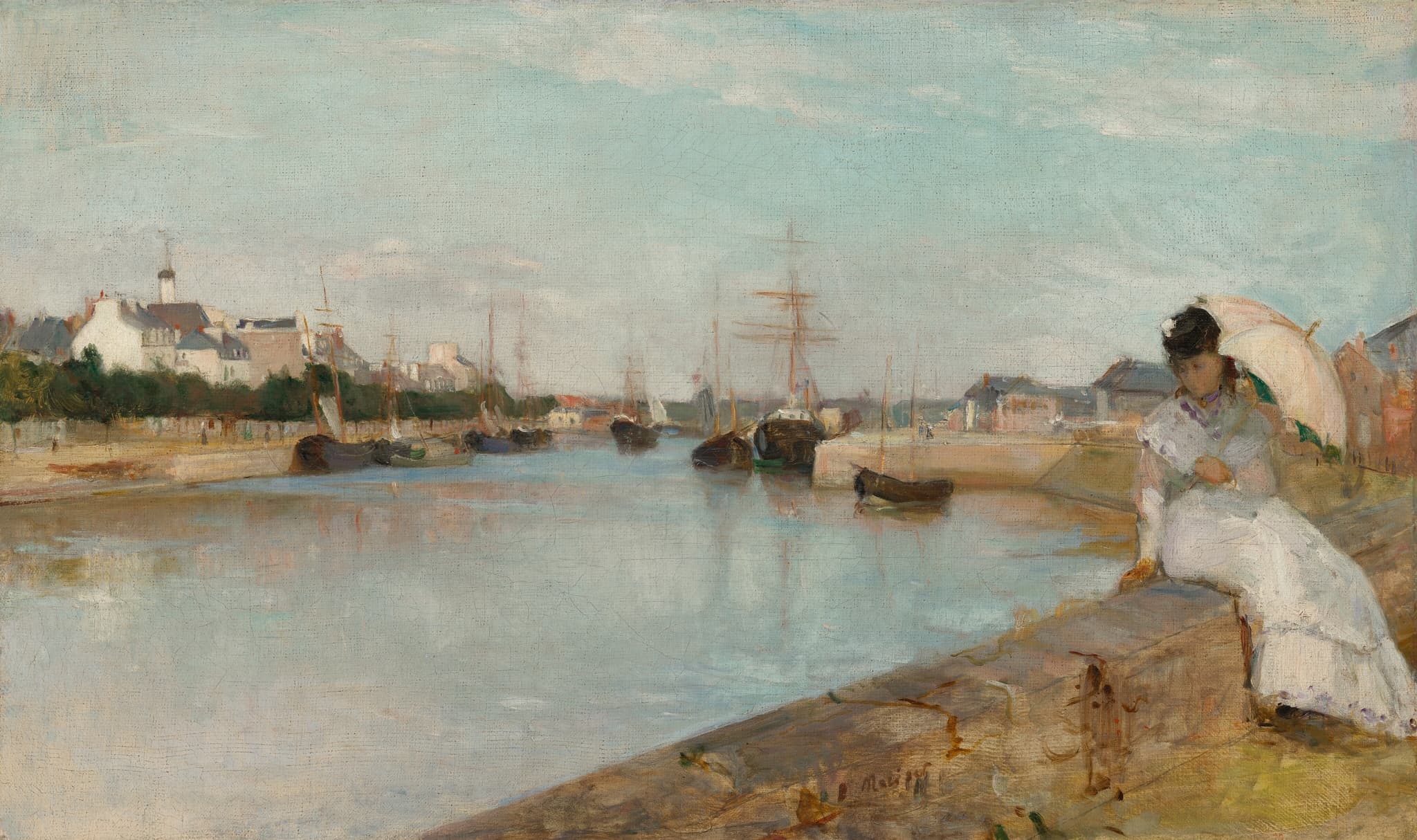
The Harbour at Lorient
Berthe Morisot, 1869 • Oil on canvas
Read full analysis of The Harbour at Lorient →Valuation Analysis
Conclusion: Based on recent market comparables, historical pricing, and the work’s exceptional provenance and period, The Harbour at Lorient would likely achieve $9–15 million at auction today, with an insurance (replacement) value around $16 million. The painting is an early, museum-level oil from 1869, long held by the National Gallery of Art (Ailsa Mellon Bruce Bequest), with provenance that begins as a gift from Morisot to Édouard Manet—an extraordinary endorsement that materially enhances desirability and price potential [1].
Comparables and market ceiling: Morisot’s auction record remains Après le déjeuner (1881), sold for $10.9 million at Christie’s London in 2013 [2]. A high-quality early outdoor/figure composition, Femme et enfant au balcon (1872), realized about $5.07 million in 2017—equivalent to roughly $6.6 million in today’s dollars—establishing a robust mid‑upper benchmark for prime oils outside her absolute record [3]. By contrast, 2025 day‑sale Morisot oils, including admired Julie Manet subjects, have clustered around $0.8–1.25 million, underscoring the sizeable spread between solid cabinet pictures and museum‑caliber masterpieces [4]. Against these anchors, a top‑tier, early plein‑air harbor canvas with a figure and exceptional provenance warrants guidance in the high single‑digit to low‑teen millions.
Qualitative drivers: The Harbour at Lorient captures Morisot’s breakthrough plein‑air practice in Brittany at a pivotal pre‑Impressionist‑exhibition moment (1869). The subject unites a luminous marine view with a figure—linking to the artist’s signature interest in modern life while showcasing her developing light and atmosphere. The gift to Manet ties the painting directly to the central network of Impressionism, reinforcing art‑historical significance and market appeal [1]. While figure‑dominant interiors often command peak prices, early outdoor works of this caliber are scarce and academically prized, narrowing any subject‑matter discount.
Market context and placement: The Impressionist/Post‑Impressionist sector saw thinner trophy supply in 2023–2024, but demand for best‑in‑class works has remained resilient, with signs of renewed strength at the very top by late 2025. Overall, values by segment fell amid selectivity, yet liquidity persisted for blue‑chip historic masters; exceptional pieces continue to command outlier results when well positioned [5]. In this climate, a museum‑proven, early Morisot with the Manet connection would be positioned to test—if not exceed—her historical benchmarks, justifying an estimate range up to $15 million. The recommended insurance level of about $16 million reflects replacement difficulty, institutional stature, and exhibition pedigree.
Key sensitivities: A recent independent condition report, a full exhibition/literature checklist, and optimal sale placement (timing/venue, guarantee strategy) could shift outcomes within or slightly beyond this range.
Key Valuation Factors
Art Historical Significance
High ImpactPainted in 1869, The Harbour at Lorient sits at the heart of Morisot’s evolution toward Impressionism, when she refined plein‑air technique and light‑infused brushwork during stays in Brittany. The composition unites a harbor motif with a figure, prefiguring core themes that define her mature oeuvre. The work’s historic resonance is amplified by its direct connection to Édouard Manet—Morisot gifted him this painting—cementing its place within the central narrative of Impressionism. The early date, the subject’s relevance to her development, and the Manet link together create a strong scholarly and curatorial case that translates into market confidence and a premium over comparable but less historically anchored landscapes.
Provenance and Institutional Stature
High ImpactThe painting’s provenance is exceptional: from Morisot to Manet, later owned by prominent collectors including Gabriel Thomas and Captain Edward H. Molyneux, then acquired by Ailsa Mellon Bruce and ultimately bequeathed to the National Gallery of Art, Washington. Works with such distinguished chains of ownership are especially prized, minimizing due‑diligence risk and bolstering buyer confidence. Museum stewardship signals vetted authenticity, conservation, and literature/exhibition history. Because comparable works with similarly storied provenance are rare, this factor heavily supports the upper half of the valuation range and justifies an insurance value above likely auction hammer.
Subject, Period, and Rarity
Medium ImpactWithin Morisot’s market, figure‑led interiors often reach the highest prices; by contrast, landscapes and marines generally trade at a modest discount. However, this painting’s early date (1869), inclusion of a figure, and refined plein‑air execution mitigate the subject‑matter gap. Early oils of this caliber are scarce on the market, and the harbor theme ties directly to a formative period with her sister in Brittany. Rarity and period importance thus support pricing near the upper end of her historical range, even if the image is not among her most widely iconic motifs (e.g., The Cradle). This balance is reflected in the $9–15 million estimate.
Market Liquidity and Comparable Alignment
Medium ImpactMorisot’s all‑time auction record is $10.9 million (2013). A prime early outdoor/figure work sold for about $5.07 million in 2017 (≈$6.6 million in today’s dollars), while recent day‑sale oils have clustered near $0.8–1.25 million. This stratification shows clear headroom at the top for museum‑caliber paintings with early dates, figures, and great provenance. The Harbour at Lorient aligns with the most desirable characteristics among landscape/marine subjects. In the current, quality‑selective environment, comp evidence supports a high single‑digit to low‑teen million outcome, with upside potential if optimally marketed and guaranteed. This justifies the $9–15 million range and a $16 million replacement value.
Sale History
The Harbour at Lorient has never been sold at public auction.
Berthe Morisot's Market
Berthe Morisot is firmly blue‑chip within Impressionism. Her auction record stands at $10.9 million (Christie’s London, 2013) for Après le déjeuner, and strong early figure/outdoor compositions have reached the mid‑single to low‑eight figures. The market has deep day‑sale liquidity for solid oils and drawings, with cabinet‑scale oils commonly trading around the mid‑six to low‑seven figures. Demand has benefited from sustained curatorial focus on women Impressionists and major exhibitions in Europe and the U.S. While interiors with iconic female subjects lead her price spectrum, rare, early plein‑air works of museum quality—with exemplary provenance—can approach or challenge her peak record levels, particularly when timed to strong seasons and backed by guarantees.
Comparable Sales
Après le déjeuner (After Lunch)
Berthe Morisot
Same artist and medium (oil), a marquee Impressionist figure composition that anchors the market ceiling for Morisot masterworks; establishes what top-tier demand has reached for a museum-caliber Morisot, though subject is an interior rather than a harbor scene.
$10.9M
2013, Christie's London
~$14.9M adjusted
Femme et enfant au balcon
Berthe Morisot
Same artist; early 1870s outdoor/figure composition with strong Impressionist light and air—closer in feel and period to the 1869 harbor picture than later portraits. Useful mid-upper benchmark for prime oils outside the record.
$5.1M
2017, Christie's London
~$6.6M adjusted
Julie Manet à la perruche (Julie Manet with a Parakeet)
Berthe Morisot
Same artist; late-19th-century oil portrait with a beloved subject (Morisot’s daughter). Shows current day-sale pricing for desirable oils in 2025 and helps frame the contemporary demand floor for good but non-trophy Morisot oils.
$1.3M
2025, Christie's Paris
Jeanne Gobillard au piano et Julie Manet
Berthe Morisot
Same artist; late-19th-century double portrait oil. Another 2025 reference point for solid but non-museum-caliber Morisot oils; underscores the gap between day-sale results and the price levels for early, exhibition-quality masterworks.
$802K
2025, Christie's London
Le pont sur l’Oise
Berthe Morisot
Same artist; 1870s landscape motif that helps show pricing for works from a broadly similar era but on paper, not an oil—useful as a low-end reference illustrating the premium the market assigns to important oils.
$101K
2023, Christie's New York
~$106K adjusted
Current Market Trends
Impressionist/Post‑Impressionist auctions saw lower totals in 2023–2024 amid thinner supply of trophies and heightened selectivity, yet demand for best‑in‑class works remained robust. By late 2025, marquee results signaled renewed confidence at the top end. In this environment, blue‑chip historic masters with rarity, strong provenance, and institutional visibility outperform, while mid‑tier material is more price‑sensitive. Paris has strengthened as a Modern/Impressionist selling hub, and private sales have absorbed cautious consignments. For Morisot specifically, increased institutional programming and scholarship continue to lift recognition and collector interest, providing a constructive backdrop for museum‑caliber works to test or exceed prior benchmarks when well placed.
Sources
- National Gallery of Art — The Harbor at Lorient (collection page)
- Christie’s — Post‑sale release (Impressionist & Modern Art Evening Sale), Feb 6, 2013
- Christie’s — Results (Impressionist & Modern Art and Art of the Surreal), Feb 2017
- HENI — Morisot, Julie Manet with a Parakeet (Christie’s Paris, Oct 23, 2025) result recap
- Art Basel & UBS — The Art Market 2024, Auctions chapter