How Much Is The Mother and Sister of the Artist (La Lecture / Madame Morisot et sa fille) Worth?
Last updated: March 11, 2026
Quick Facts
- Methodology
- comparable analysis
For Berthe Morisot’s The Mother and Sister of the Artist (1869–70), accession 1963.10.186 at the National Gallery of Art, a defensible market range today is $400,000–$1,500,000. This range reflects secure museum provenance, documented exhibition history and current auction comparables for mid‑to‑high quality early domestic oils by Morisot.
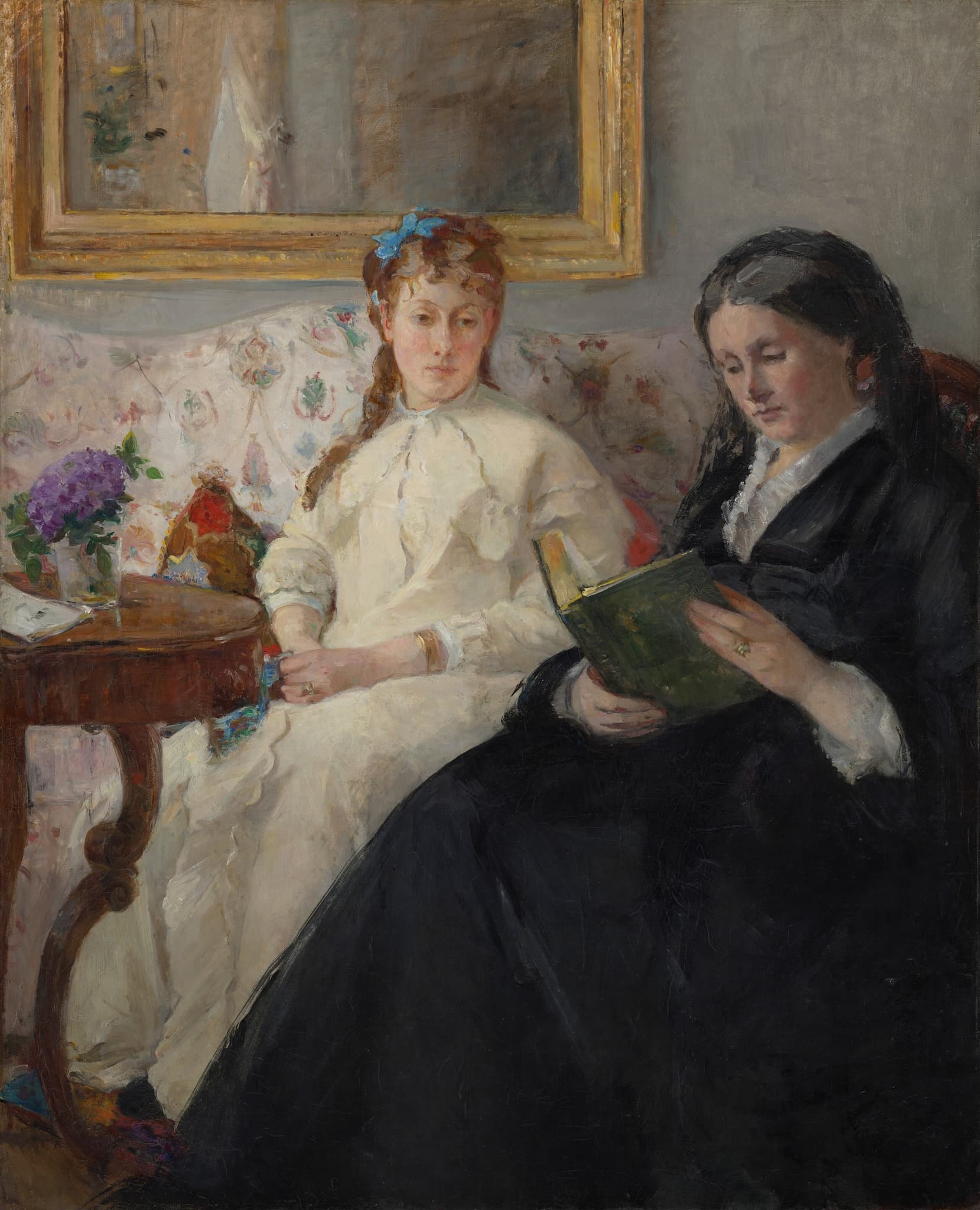
The Mother and Sister of the Artist (La Lecture / Madame Morisot et sa fille)
Berthe Morisot, 1869 • Oil on canvas
Read full analysis of The Mother and Sister of the Artist (La Lecture / Madame Morisot et sa fille) →Valuation Analysis
Valuation conclusion: If offered today, Berthe Morisot's 'The Mother and Sister of the Artist' (1869–70), accession 1963.10.186 in the National Gallery of Art’s Chester Dale Collection, would most plausibly command between $400,000 and $1,500,000 on the open market. This opinion is founded on a direct comparable‑analysis approach: applying recent auction results for family/portrait subjects by Morisot and adjusting for the painting's secure institutional provenance and exhibition record [1].
The work’s provenance and exhibition history materially strengthen its commercial standing. NGA documentation traces ownership from Mme Pontillon (the artist’s sister) through private hands to Paul Rosenberg and Chester Dale, with a bequest to NGA in 1963; the painting was shown at the Salon of 1870 and is cited in major Morisot literature [1]. Institutional ownership and Salon/exhibition citations reduce buyer risk and typically push a museum‑quality canvas above the median market band for unattributed studio pieces.
Comparable auction evidence frames the ceiling and central tendency. Berthe Morisot's auction high (Après le déjeuner) realized roughly $10.9M at Christie’s (2013), which sets the extreme trophy ceiling for the artist’s market [2]. Closer period/subject anchors include the 2017 Christie’s sale of Femme et enfant au balcon (realized in the multi‑millions) while 2024–2025 day‑sale and works‑on‑paper results show active demand in the low‑to‑mid six‑figure band for family portraits and pastels [3][4]. These data support a conservative, museum‑quality selling band centered in the mid‑six‑figures with upside into low‑seven figures under exceptional circumstances.
Key upward and downward levers are: (1) condition and conservation history (museum conservation is a positive, but any heavy restoration would lower value); (2) scale/finish — a large, finished studio oil commands a premium; (3) publication/exhibition pedigree — presence in major monographs or retrospectives will raise the price; and (4) attribution/technical findings — the NGA notes Manet’s interventions on the mother figure, a scholarly feature that can both enhance interest and require conservation consideration [1].
Practically, if deaccessioned or offered privately, a well‑marketed sale would likely realize within the stated $400,000–$1,500,000 range: the lower bound reflecting routine museum‑quality studio canvases and the upper bound contingent on exceptional condition, scale, and published exhibition history. Only truly outstanding, rare work with extraordinary provenance and cataloguing typically approaches the multi‑million evening‑sale results exemplified by the artist’s top lots [2][3].
Recommended next steps to refine and firm this estimate: obtain a full, written condition/conservation report; confirm catalogue raisonné entry and literature citations; secure high‑resolution recto/verso images and any stretcher or label documentation; and consider limited technical analysis (infrared/X‑ray/pigment). With those materials a formal written market valuation for insurance or sale can be issued and a venue strategy (private treaty, day sale or evening sale) can be advised.
Key Valuation Factors
Art Historical Significance
Medium ImpactExecuted in 1869–70, the painting sits at an important moment in Morisot’s development—early work that prefigures her mature domestic subjects. It documents familial subject matter (mother and sister) central to her oeuvre and reflects the artist’s close circle and aesthetic concerns. The NGA entry and Salon 1870 exhibition listing give it scholarly weight, but the composition is not among Morisot’s canonical masterpieces (e.g., Le Berceau). That means the painting is academically significant and desirable to institutions and informed private buyers, but it will typically attract a premium below the artist’s rare marquee works.
Authenticity & Attribution
High ImpactAttribution is essentially secure given the painting’s long museum provenance and published references: works in NGA collections undergo curatorial vetting, and the piece is documented in authoritative sources. The confirmed attribution greatly reduces market risk and supports stronger price expectations than an unattributed or doubtful work. Any remaining technical or conservation questions (e.g., the extent and impact of Manet’s interventions on the composition) should be clarified because such findings materially influence buyer confidence and market positioning.
Provenance & Exhibition History
High ImpactThe chain from Mme Pontillon (the artist's sister) through Paul Rosenberg to Chester Dale and eventual bequest to the NGA is a very strong ownership line. Exhibition at the Salon of 1870 and further literature citations enhance scholarly visibility. This pedigree materially lifts market value compared with works lacking clear descent or institutional citation: museums and seasoned collectors pay a premium for securely provenanced canvases with a documented exhibition/publication history.
Condition & Conservation
Medium ImpactCondition is a principal determinant of value. NGA stewardship suggests the work is conserved to institutional standards, which is positive, but the precise conservation history (relines, restorations, varnish, localized inpainting) must be known. Manet’s documented interventions on the mother figure introduce technical complexity that may require targeted conservation or affect aesthetics. A full condition report could adjust the estimate materially—both upward if the work is original and stable, or downward if significant restoration is required.
Market Comparables & Rarity
High ImpactTop‑tier Morisot oils are rare at auction and can realize multi‑million prices, creating a high ceiling; however most appearances are day‑sale or works‑on‑paper with pricing in the mid‑five to mid‑six‑figure band. The 2013 Christie’s record and subsequent multi‑million sales for comparable maternal/child group portraits establish a broad upper bracket, but scarcity means most comparable museum‑quality early oils settle in the mid‑to‑low‑seven‑figure or high six‑figure range when offered. This rarity and price bifurcation make accurate comparables critical to valuation.
Sale History
The Mother and Sister of the Artist (La Lecture / Madame Morisot et sa fille) has never been sold at public auction.
Berthe Morisot's Market
Berthe Morisot is a principal figure of French Impressionism and one of the most important women artists on the market. Institutional holdings are numerous and the artist’s auction ceiling (Après le déjeuner, c. $10.9M) demonstrates that exceptional oils can reach the highest echelons. That said, top‑tier museum‑quality oils are scarce; most market activity comprises drawings, pastels and smaller oils that trade in the mid‑five to mid‑six‑figure bands. Curatorial attention to female Impressionists has raised visibility and demand for the best Morisot canvases, reinforcing a selective but robust market for high‑quality works.
Comparable Sales
Après le déjeuner (After Lunch)
Berthe Morisot
Auction‑record, evening‑sale marquee work by Morisot — useful as a top‑tier anchor for the artist's market (shows ceiling for important oils).
$10.9M
2013, Christie's, London (Impressionist & Modern Evening Sale)
~$15.2M adjusted
Femme et enfant au balcon (Woman and Child on a Balcony)
Berthe Morisot
Close in period (early 1870s), subject (woman/child group) and scale — a multi‑million evening‑sale lot that is a strong market analogue for high‑quality maternal/child group portraits by Morisot.
$5.1M
2017, Christie's, London (Impressionist & Modern Sale)
~$6.7M adjusted
Julie Manet à la perruche (Julie Manet with a Parakeet)
Berthe Morisot
Family/portrait subject (mother/daughter circle). Recent 2025 sale shows current market pricing for well‑provenanced family/portrait oils by Morisot in the low‑million band.
$1.3M
2025, Christie's, Paris (Impressionist/Modern Week)
Jeanne Gobillard au piano et Julie Manet (pastel)
Berthe Morisot
Recent day‑sale pastel/portrait by Morisot of family subjects — useful as an upper‑mid‑market comparable showing strong demand for family portraits and works on paper/canvas in the current market.
$802K
2025, Christie's, London (Impressionist & Modern Day Sale)
Current Market Trends
The Impressionist market remains resilient but selective: demand concentrates on the very best works with strong provenance and exhibition histories. Recent anniversary exhibitions and focused Morisot programming (2019–2025) have increased institutional and collector interest. Day‑sale results and works‑on‑paper remain steady in the mid‑five to mid‑six‑figure range, while rare museum‑quality oils continue to fetch strongly when they appear at evening sales or via high‑profile private transactions.
Sources
- National Gallery of Art: 'Mother and Sister of the Artist' (Berthe Morisot), object page (accession 1963.10.186)
- Christie's press: Impressionist & Modern Evening Sale — Après le déjeuner (2013) (auction record anchor)
- Christie's press: Femme et enfant au balcon (2017) — strong comparable for maternal/child group portraits
- Christie's / market reporting (2024–2025): recent day‑sale and works‑on‑paper results for Morisot family portraits