How Much Is The Sisters Worth?
Last updated: March 11, 2026
Quick Facts
- Methodology
- comparable analysis
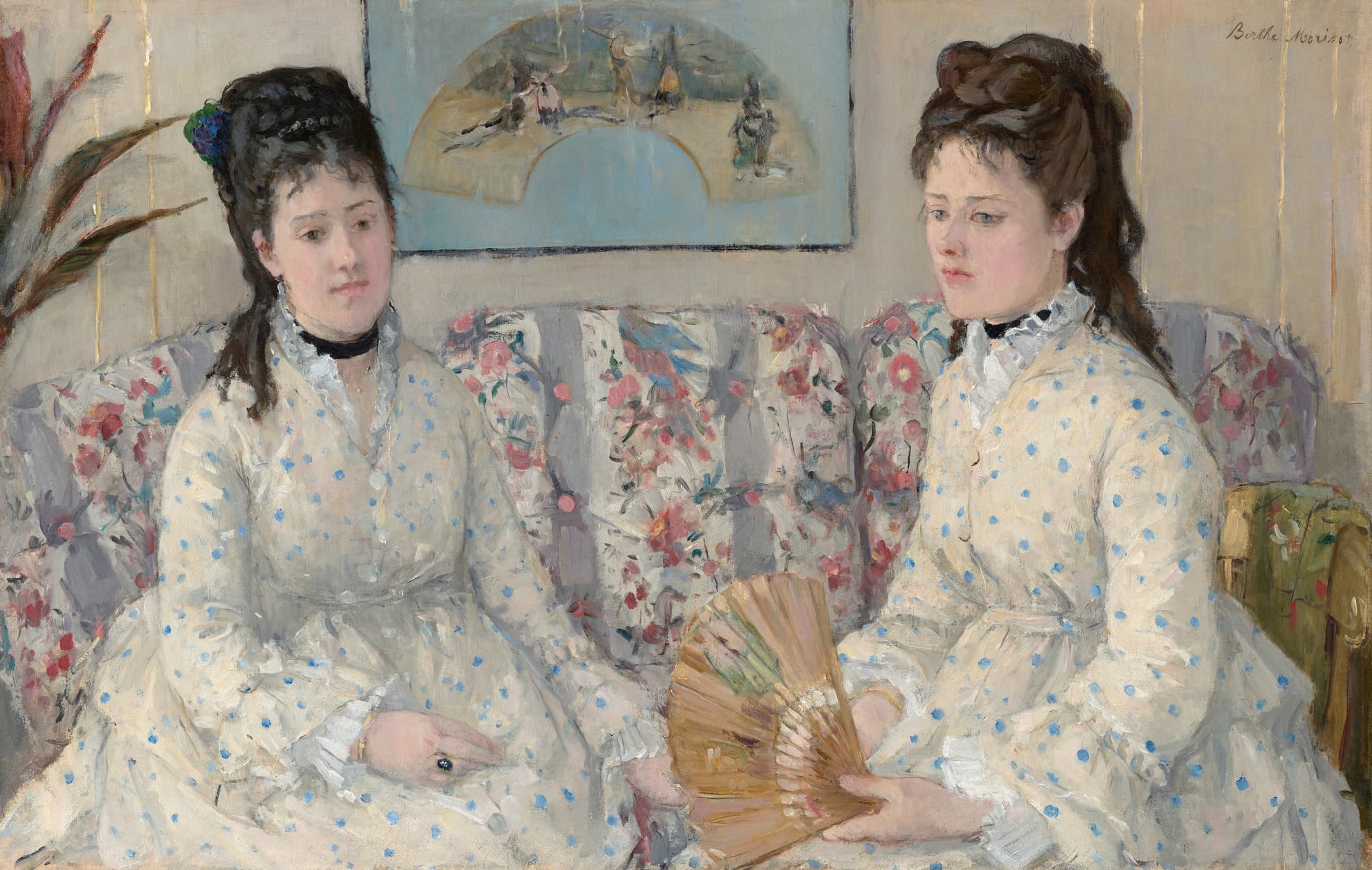
Assuming the work is the National Gallery of Art's The Sisters (1869; NGA accession 1952.9.2), a practical auction estimate today is approximately $1,000,000–$6,000,000. This range reflects the painting's museum ownership and documented Bernheim‑Jeune / Durand‑Ruel / Carstairs provenance, benchmarked against recent high‑quality Morisot oil sales and sensitivity to condition and sale placement.
Valuation Analysis
Identification and basis: This valuation assumes the object is the National Gallery of Art's "The Sisters" (1869), accession 1952.9.2, and therefore benefits from secure provenance and institutional validation [1]. Because the painting has not been offered publicly since its acquisition by the NGA, the estimate is derived from a comparable analysis of modern auction outcomes for finished Morisot oils, adjusted for subject, date, provenance and likely condition.
Market anchors and precedents: Berthe Morisot's public‑sale ceiling is represented by Après le déjeuner (1881), sold in a Christie’s evening sale in 2013 for the artist’s modern auction high — a benchmark for truly exceptional pictures [2]. More typical top‑tier finished figure works have realized in the mid‑seven‑figure band; representative recent sales such as Fillette portant un panier (Christie’s, 2021) indicate sustained demand for well‑provenanced portraits and family/group compositions in the $3–$6M zone under competitive evening‑sale conditions [3]. These outcomes frame a realistic upper range for museum‑quality Morisot oils offered in major salerooms.
Condition, provenance and subject sensitivity: The NGA provenance (Bernheim‑Jeune → Durand‑Ruel → Carroll Carstairs → NGA) is a material value enhancer: dealer lineages and long institutional ownership reduce attribution risk and attract institutional and private bidders. However, the realized price would be highly conditional on a modern conservation assessment. Original surface, limited overpaint, stable support and catalogue‑raisonné confirmation push value toward the top of the range; significant restoration, heavy relining or substantial retouching could depress realizations markedly.
Estimate rationale: Balancing the strong provenance and museum ownership against the lack of a modern public sale and the variability of Morisot prices by scale and condition, a working auction estimate is $1,000,000–$6,000,000. The lower bound assumes either a smaller/study scale, moderate condition issues or day‑sale placement; the upper bound assumes a well‑preserved, finished canvas with catalogue‑raisonné entry, exhibition history and evening‑sale presentation that triggers competitive bidding. The range is intentionally conservative and rooted in the cited comparables [2][3].
Caveats and recommended next steps: Final valuation requires: (1) high‑resolution recto/verso photography and dimensions, (2) a written condition report from a qualified conservator, (3) confirmation of catalogue‑raisonné entry and bibliography, and (4) sale strategy guidance from Impressionist specialists at a major auction house. If you want a formal presale estimate or a condition review I can help prepare the dossier to send to Christie’s or Sotheby’s specialists.
Key Valuation Factors
Art Historical Significance
High ImpactThe Sisters, dated 1869, sits in an important developmental period for Morisot as she moved toward Impressionist practice. Works of this period that demonstrate her characteristic handling of light, intimate domestic subject matter and nuanced female portraiture are highly regarded by both scholars and collectors. If the painting is a fully finished, large‑format portrait group that is well executed and documented, it carries high art‑historical value because it exemplifies Morisot’s early mastery and subject focus. This significance increases institutional interest and collector competition, which supports higher market valuations, particularly when corroborated by exhibition history and catalogue entries.
Provenance & Exhibition History
High ImpactSecure provenance to prominent Parisian dealers (Bernheim‑Jeune and Durand‑Ruel) and to the Carstairs collection, culminating in a bequest to the National Gallery of Art, materially reduces attribution and authenticity risk and raises buyer confidence. Museum ownership is a strong positive signal in the market; it typically increases a work’s salability and realized price if offered. Conversely, absence of documented provenance or gaps in ownership history would significantly reduce marketability. Exhibition or catalogue citations would further enhance value by placing the work in scholarly context.
Condition & Conservation
High ImpactTechnical condition is one of the single most value‑sensitive factors. Original paint surface and stable support with minimal restoration sustain full market value. Major issues — pervasive retouching, extensive relining, varnish discoloration or structural instability — can reduce a work’s desirability and the number of competitive bidders, often lowering realizations by multiples. A contemporary, detailed conservator’s report and imaging (X‑ray, infrared) are essential to confirm state and to quantify any restoration discounts that would be applied in a sale estimate.
Comparability & Price Benchmarks
High ImpactComparable auction results for museum‑quality Morisot oils anchor the estimate. The artist’s auction high and several mid‑to‑high results for portraits/interiors establish an achievable upper range under ideal sale conditions. However, Morisot’s market is segmented: day‑sale offerings and small studies fetch substantially less than evening‑sale, well‑provenanced canvases. The painting’s scale, subject and documented comparability to recent seven‑figure lots determine where it sits within that segmentation, making comparables critical to pricing strategy.
Sale Venue & Market Timing
Medium ImpactPlacement in an evening sale at a marquee auction house (New York or London) during Impressionist/19th‑century sales weeks can materially elevate final realizations due to higher bidder attendance and greater publicity. By contrast, day‑sale placement, off‑market private sale, or sale during weak market windows typically reduces competitive pressure and final price. Timing relative to major exhibitions, anniversaries, or renewed scholarly focus on Morisot can also amplify demand and price, so strategic timing and marketing are important value drivers.
Sale History
Berthe Morisot's Market
Berthe Morisot is one of the most marketable female Impressionists. Her highest public sale results are in the multi‑million dollar range, with a documented auction high in the 2010s and multiple evening‑sale results in the low‑to‑mid seven‑figure zone since. The market is bifurcated: smaller studies and works on paper trade at modest prices, while well‑provenanced, museum‑quality finished oils attract institutional buyers and private collectors prepared to pay seven‑figure sums. Recent anniversary programming and increased attention to women artists have strengthened demand for the best examples.
Comparable Sales
Après le déjeuner
Berthe Morisot
Artist's auction record; large, finished oil (1881) sold in a major evening sale—sets the market ceiling for top-tier Morisot oils.
$10.9M
2013, Christie's London
~$14.0M adjusted
Fillette portant un panier (Little Girl with a Basket)
Berthe Morisot
Finished oil portrait of a child sold from a prominent collection in an evening sale—comparable in subject and scale, demonstrates strong demand for figure portraits.
$5.3M
2021, Christie's New York (The Cox Collection)
~$5.8M adjusted
Femme et enfant au balcon (Woman and Child on the Balcony)
Berthe Morisot
Very similar subject (woman and child), close in date (1874) and comparable scale—good anchor for mid‑period portraits/interiors.
$5.1M
2017, Christie's London
~$6.1M adjusted
Julie rêveuse
Berthe Morisot
Intimate portrait (Julie Manet) with strong provenance and evening‑sale placement—comparable in familial/portrait appeal to The Sisters.
$3.2M
2022, Christie's New York
~$3.4M adjusted
Plage de la Comtesse dans la brume
Berthe Morisot
Recent sale of a finished oil (landscape) showing market interest at the low‑seven‑figure level—useful as a lower‑end comparable for museum‑quality Morisot oils.
$1.6M
2024, Christie's London
~$1.7M adjusted
Current Market Trends
The broader Impressionist market has seen increased mid‑market activity with selective strength at the top, aided by museum shows and anniversary programming that raise visibility. Macro pressures (interest rates, geopolitical uncertainty) have made top‑end consignments more selective, but institutional interest and targeted evening‑sale placements continue to support strong results for canonical works by Morisot.