How Much Is Woman at Her Toilette Worth?
Last updated: January 21, 2026
Quick Facts
- Insurance Value
- $20.0M (Comparable sales and market norms; see citations [1]-[4])
- Methodology
- comparable analysis
Hypothetical fair-market value for Berthe Morisot’s Woman at Her Toilette (Art Institute of Chicago) is $12–18 million at auction, with a prudent insurance/replacement benchmark near $20 million. The estimate is anchored to Morisot’s record-tier comparables, the work’s prime-period date and canonical “toilette” subject, and its prominent exhibition profile.
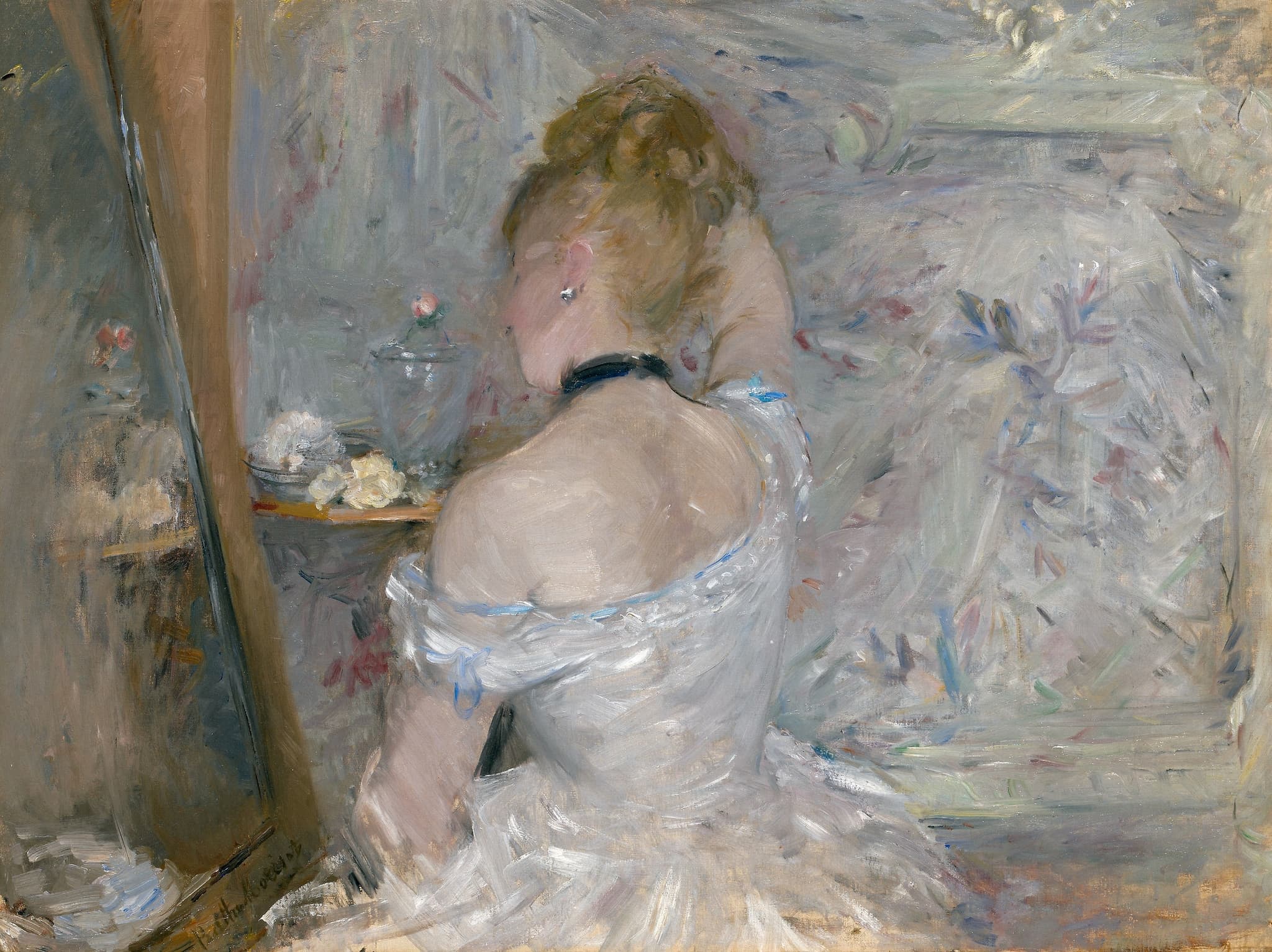
Woman at Her Toilette
Berthe Morisot, 1875–1880 • Oil on canvas
Read full analysis of Woman at Her Toilette →Valuation Analysis
Value conclusion: $12–18 million at auction; insurance/replacement benchmark approximately $20 million. This range reflects the painting’s prime late‑1870s date, canonical “toilette” subject, museum-grade quality, and extensive exhibition recognition, including its anchoring presence in the Art Institute of Chicago’s collection [1].
Comparable framework: Morisot’s public auction record is Après le déjeuner (1881), which realized about $10.9 million in 2013; in today’s dollars this equates to roughly the mid‑teens, providing a clear upper-tier benchmark for prime, intimate interiors by the artist [2]. Woman at Her Toilette belongs squarely to that record-quality cohort: it is a signature subject executed in Morisot’s most sought-after period, with the flickering touch, high‑key palette, and modern interior sensibility that define her best work [1].
Market positioning and scarcity: While many Morisot oils trade between roughly $0.8–3.5 million, those results largely reflect later portraits or smaller domestic scenes. By contrast, tightly comparable “toilette” subjects remain scarce and are treated as top‑tier material. Notably, a related Devant la toilette (1894) was positioned by Sotheby’s with a $1.2–1.8 million estimate in 2023, underscoring consistent demand for the theme even when the date and execution are later than the artist’s absolute prime [3]. The gulf between these later works and a late‑1870s masterpiece supports a low‑ to mid‑teens valuation for the AIC canvas.
Category context: The Impressionist/Post‑Impressionist sector experienced a value dip in 2024 due to fewer trophy consignments, then rebounded into late‑2025 as buyers exhibited a flight to quality—conditions that favor canonical, museum‑level pictures [4]. Concurrent scholarship and exhibitions—most notably the 2025–26 Manet & Morisot presentation in San Francisco—have further elevated Morisot’s profile with institutions and collectors alike, reinforcing demand for her most emblematic subjects [5].
Conclusion: Calibrated against Morisot’s standing record (inflation‑adjusted), the subject’s centrality within her oeuvre, and current blue‑chip market dynamics, Woman at Her Toilette would plausibly test and exceed prior benchmarks if deaccessioned and carefully marketed. We therefore synthesize a confident auction range of $12–18 million, with a prudent private-sale/insurance replacement proxy at approximately $20 million [1][2][4][5].
Key Valuation Factors
Art Historical Significance
High ImpactWoman at Her Toilette is a canonical image in Berthe Morisot’s oeuvre and a touchstone for the Impressionist depiction of modern bourgeois femininity. The toilette theme—women at mirrors, dressing, or preparing—recurs throughout Morisot’s practice and is frequently reproduced in surveys of Impressionism. This specific work’s late‑1870s dating aligns with the movement’s core years and with Morisot’s most influential period. Its art-historical stature is amplified by extensive museum citation and exhibition visibility, situating it among the artist’s most recognized compositions. Works that both epitomize an artist’s contribution to a movement and encapsulate a signature motif tend to command premium valuations, especially when supported by scholarship and institutional endorsement.
Prime Period & Execution Quality
High ImpactDated circa 1875–1880, the painting sits squarely in Morisot’s prime Impressionist years. The handling—luminous, high‑key color; rapid, flickering brushwork; and a confident balance of finish and spontaneity—exemplifies the traits most prized by collectors. Its mid‑size format (about 60.3 × 80.4 cm) is market‑friendly, offering presence without the practical constraints of very large canvases. In Morisot’s market, 1870s interiors and figure scenes with persuasive facture and atmosphere trade at a premium to later, sometimes more thinly painted or smaller oils. The combination of date, touch, and harmonious composition places Woman at Her Toilette in the artist’s top tier for quality, underpinning a valuation above most recent auction comparables.
Subject/Iconography & Market Resonance
High ImpactThe toilette is among Morisot’s most coveted subjects, uniting a modern, intimate interior with the nuanced psychology of a female sitter—an arena in which she was unmatched. This theme aligns directly with current collector preferences for female authorship, domestic modernity, and the interior as a site of innovation. Market evidence shows consistent demand for intimate figure subjects across Morisot’s career; when the subject is a defining motif executed at peak period, the price premium is pronounced. The image’s recognizability—regularly reproduced and cited—adds brand equity that translates into measurable bidding depth at the top end of the Impressionist category.
Provenance, Exhibitions & Institutional Status
High ImpactLong held by the Art Institute of Chicago (acquired 1924), Woman at Her Toilette benefits from the reputational halo of a major U.S. museum collection. The work has a prominent exhibition footprint, including the Impressionists’ 1880 exhibition and loans to significant retrospectives, most recently the 2025–26 Manet & Morisot presentation in San Francisco. Such institutional validation reduces buyer risk and increases perceived cultural capital, often lifting both auction and insurance valuations. While museums rarely sell, if responsibly deaccessioned with clean title and premier marketing, a picture of this stature typically attracts a global bidding pool and has the potential to set or test artist records.
Scarcity & Comparable Pricing
High ImpactMasterpiece‑level, late‑1870s Morisot oils seldom reach the market; many are institutionally held. Public results for later portraits and interiors have clustered around $0.8–3.5 million in recent years, whereas the record work Après le déjeuner achieved about $10.9 million in 2013 (mid‑teens in today’s dollars). A related “toilette” canvas offered by Sotheby’s in 2023 carried a $1.2–1.8 million estimate—indicative of demand for the theme, though later in date. The relative scarcity of prime‑period “toilette” subjects—combined with the current flight to quality in blue‑chip pre‑war categories—supports an estimate in the low‑ to mid‑teens for this museum‑grade example, with potential to eclipse Morisot’s standing public benchmark.
Sale History
Woman at Her Toilette has never been sold at public auction.
Berthe Morisot's Market
Berthe Morisot is firmly established as a blue‑chip Impressionist with robust international demand for prime oils. Her standing public auction record—Après le déjeuner (1881) at approximately $10.9 million in 2013—remains the market’s benchmark, which inflation-adjusts to the mid‑teens today. Over the last five years, auction results for quality oils have generally ranged from roughly $0.8 to $3.5 million, with premiums for compelling subjects, strong provenance, and 1870s–80s dates. Institutional reassessment and high‑profile exhibitions have further elevated Morisot’s visibility, while the scarcity of best-in-class works constrains supply at the top. Collectors prize her intimate interiors, depictions of modern women, and confident Impressionist brushwork, making canonical subjects—like the toilette—the segment’s most competitive.
Comparable Sales
Après le déjeuner
Berthe Morisot
Same artist; prime-period (1881) large oil with an intimate female interior theme—market-setting benchmark for Morisot.
$10.9M
2013, Christie's London
~$14.9M adjusted
Julie rêveuse
Berthe Morisot
Same artist; finished oil portrait of a female sitter (Julie Manet), comparable intimacy and scale though later (1893–94).
$3.2M
2022, Christie's New York
~$3.5M adjusted
La jatte de lait
Berthe Morisot
Same artist; late-19th-century domestic subject in oil, mid-size, sought-after provenance (Claude & Michel Monet).
$1.4M
2022, Sotheby's New York
~$1.5M adjusted
Jeanne Fourmanoir sur le lac
Berthe Morisot
Same artist; oil portrait of a young woman (1892); similar intimate focus though later and smaller.
$1.6M
2023, Christie's New York
~$1.7M adjusted
Jeanne Gobillard au piano et Julie Manet
Berthe Morisot
Same artist; 1888 domestic interior with two female figures in oil; pertinent subject matter, but smaller and less iconic.
$802K
2025, Christie's London
Julie Manet à la perruche
Berthe Morisot
Same artist; intimate oil portrait of Julie Manet (1890), strong provenance; good measure of late-career figure demand.
$1.3M
2025, Christie's Paris
Current Market Trends
Impressionist/Post‑Impressionist auctions softened in 2024 due to a shortage of trophy consignments, then rebounded into late‑2025 as buyers sought quality and rarity. Liquidity remains deepest for blue‑chip names and museum‑grade works with hallmark subjects and strong exhibition histories. Paris has become increasingly competitive for historical material, while New York and London continue to anchor the top end. Against this backdrop, masterpiece‑level pictures by historically significant women artists command heightened attention. These conditions support a low‑ to mid‑teens valuation for a prime‑period, canonical Morisot oil and suggest upside potential if marketed during peak season with global visibility.
Sources
- Art Institute of Chicago: Woman at Her Toilette (object page)
- ArtfixDaily (Feb 7, 2013): Modigliani, Morisot lead Christie's $213 million sale
- Sotheby’s: Berthe Morisot (artist page; includes Devant la toilette, May 2023 listing)
- Art Basel & UBS: The Art Market 2025 – Auctions
- Fine Arts Museums of San Francisco: Manet & Morisot (exhibition resources)