How Much Is The Garden of Pontoise Worth?
Last updated: January 29, 2026
Quick Facts
- Insurance Value
- $34.0M (Comparable analysis)
- Methodology
- comparable analysis
The Public Garden at Pontoise (1874) is a prime-period, museum-caliber Pissarro that would command approximately $15–24 million at auction today. Private-sale interest could support $18–28 million, with an appropriate insurance replacement figure around $34 million.
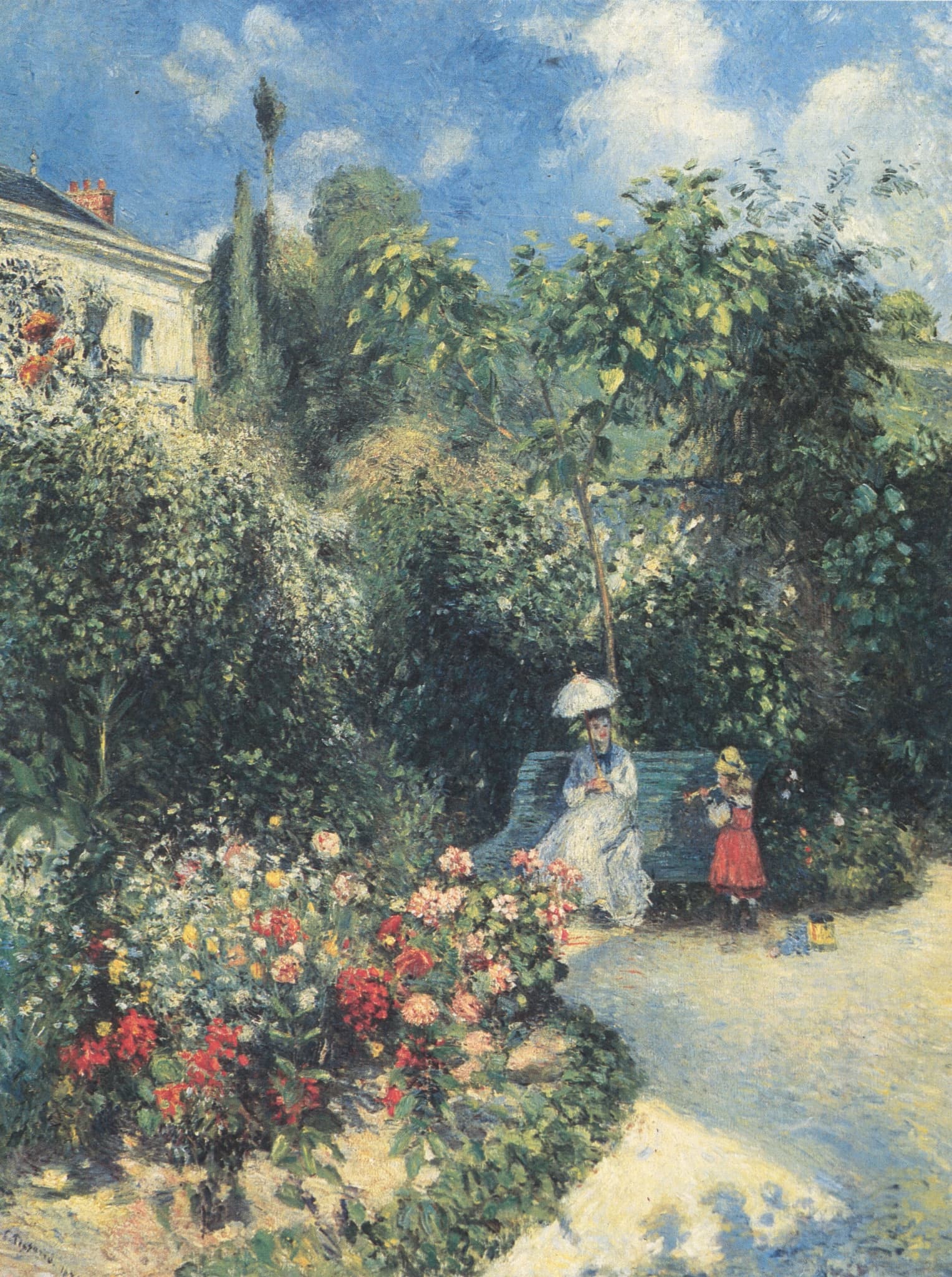
The Garden of Pontoise
Camille Pissarro, 1874 • Oil on canvas
Read full analysis of The Garden of Pontoise →Valuation Analysis
Conclusion: We estimate Camille Pissarro’s The Public Garden at Pontoise (1874; oil on canvas, 60 × 73 cm; Metropolitan Museum of Art, inv. 64.156) at $15–24 million for a well-orchestrated auction sale today, with likely private-sale outcomes around $18–28 million and a prudent insurance replacement value near $34 million. The painting is a canonical Pontoise-period work at an ideal format, long published and held by a top U.S. museum—attributes that command a premium for a work not otherwise accessible to the market [1].
Methodology and benchmarks: We anchor the ceiling to Pissarro’s auction record—Le Boulevard Montmartre, Matinée de Printemps at about $32.1 million (Sotheby’s London, 2014)—which reflects the peak market appetite for his late Paris boulevard series [2]. Within the last decade, high-quality but less iconic Pissarro garden and Pontoise landscapes have realized mid-seven to low-eight figures, such as Jardin et poulailler chez Octave Mirbeau at $10.3 million (2019) [6], Bords de l’Oise à Pontoise (1872) at $2.49 million (2025) [3], and the closely scaled Le Jardin de Maubuisson, Pontoise at $2.97 million (2015) [5]. The Met’s 1874 painting merits a substantial premium to these comparables due to its prime date, subject, scale, and museum-level stature, but it should sit below the boulevard-record tier.
Positioning within the oeuvre: Pontoise in the early–mid 1870s is the heart of Pissarro’s achievement and market appeal. The year 1874—the moment of the First Impressionist Exhibition—confers particular art-historical weight, and The Public Garden at Pontoise forms part of a small cluster of urban-garden views from this period; a related public-garden scene painted the year before was shown in the 1874 exhibition [1]. The Met canvas combines a desirable figure-in-landscape motif with a luminous, modern public space—an intersection of social subject and plein-air innovation that resonates strongly with collectors and institutions.
Market climate: Impressionist and Post-Impressionist totals softened in 2023–2024 as trophy supply thinned, but 2025 saw a selective rebound and a sustained “flight to quality.” Blue-chip Impressionists (led by Monet) anchored evening sales, and depth of bidding returned for prime material [4]. Against that backdrop, a fresh-to-market, prime-date Pissarro of this caliber would draw cross-category attention, particularly with a guarantee and global outreach.
Why this range: The $15–24 million band calibrates market comparables upward to reflect the painting’s prime 1874 date, garden-with-figures subject, ideal size, and long scholarly visibility, while remaining realistic relative to the boulevard-view record [2][3][5][6]. The private-sale premium recognizes the scarcity of comparable quality and the willingness of buyers to pay for discretion and certainty. The insurance figure reflects wall-to-wall replacement at or above likely auction results and the cost—and difficulty—of sourcing a qualitative substitute for a core-period, museum-grade Pissarro [4].
Key Valuation Factors
Art Historical Significance
High ImpactPainted in 1874—the year of the First Impressionist Exhibition—The Public Garden at Pontoise sits at the core of Pissarro’s contribution to the movement. The Pontoise period marks his consolidation of plein-air technique, modern subject matter, and compositional clarity, and public-garden scenes offer a rare, urban-social counterpoint to his rural themes. A closely related garden view was shown in the seminal 1874 exhibition, underscoring the thematic currency of the motif at the movement’s birth. The Met’s painting, long published and institutionally held, embodies the period that collectors and museums regard as academically defining and commercially most coveted for Pissarro, supporting sustained demand and a premium valuation.
Period and Subject Desirability
High ImpactEarly–mid 1870s Pontoise works have the strongest, most liquid market among Pissarro’s landscapes. This canvas unites a garden-with-figures subject—one of the artist’s most sought-after motifs—with an urbane public-park setting that broadens cross-category appeal beyond pure landscape collectors. The 60 × 73 cm format is an ideal, wall-ready size that has repeatedly performed well at auction. Compared with later Éragny scenes or smaller sketches, this combination of prime date, subject, and scale aligns with what top buyers prioritize: canonical works that are representative, visually engaging, and instantly legible as “Impressionist,” all of which justifies pricing in the low-to-mid eight figures when quality and provenance align.
Provenance and Institutional Standing
High ImpactThe painting’s provenance includes the leading dealer Paul Rosenberg and a 1964 gift to the Metropolitan Museum of Art, where it has been accessible to scholars and the public for decades. Museum-held, core-period Pissarros are scarce, and their visibility in major catalogues and exhibitions reinforces art-historical credibility while limiting market supply. Clean, documented ownership and the imprimatur of a top institution reduce transactional risk, a key concern in 19th-century markets where buyers prize clarity on title, literature, and condition. The combination of Rosenberg lineage, early American collection, and long-term Met presence supports a premium over otherwise similar works lacking such institutional and scholarly ballast.
Market Comparables and Liquidity
Medium ImpactWhile recent Pontoise-period oils have typically realized low- to mid-seven figures, those results largely reflect smaller, later, or less resonant subjects. Notable benchmarks include Le Jardin de Maubuisson, Pontoise at $2.97m (2015), Bords de l’Oise à Pontoise (1872) at $2.49m (2025), and the high-demand 1890s garden subject Jardin et poulailler chez Octave Mirbeau at $10.3m (2019). Pissarro’s boulevard-view record of $32.1m (2014) defines the upper bound for the artist. The Met’s 1874 garden ranks materially higher than most Pontoise comparables on date, subject, scale, and publication, yet sits below the boulevard series in market heat—placing it squarely in the $15–24m band in today’s conditions.
Sale History
The Garden of Pontoise has never been sold at public auction.
Camille Pissarro's Market
Camille Pissarro is a cornerstone of the Impressionist canon, collected globally by major museums and private buyers. His market is broad and liquid across media, with the strongest demand for prime 1870s Pontoise works and the late 1897–1902 Paris boulevard views. The standing auction record is approximately $32.1 million for Le Boulevard Montmartre, Matinée de Printemps (Sotheby’s London, 2014), and exceptional garden or city subjects in strong condition can achieve mid- to high-eight figures. Early Pontoise landscapes more commonly trade from low- to mid-seven figures, with standout examples moving materially higher. Overall, Pissarro’s market is depth-driven, stable, and responsive to quality, provenance clarity, and marquee sale placement.
Comparable Sales
Le Jardin de Maubuisson, Pontoise
Camille Pissarro
Garden-with-figures subject in Pontoise; virtually identical size to the Met’s (about 60 x 73 cm); strong subject/scale match though slightly later (1881).
$3.0M
2015, Christie's New York
~$4.0M adjusted
Le Jardin de Maubuisson, Pontoise, la Mère Bellette
Camille Pissarro
Garden-and-figures composition at Maubuisson, Pontoise; very close subject matter; later (1882) than the Met’s 1874 work.
$1.8M
2013, Bonhams New York
~$2.5M adjusted
L’Hermitage en été, Pontoise
Camille Pissarro
Prime 1870s Pontoise landscape of comparable scale and period; same locale and date-range appeal though not a garden-with-figures.
$4.3M
2011, Sotheby's New York
~$6.2M adjusted
Bords de l’Oise à Pontoise
Camille Pissarro
Early Pontoise (1872) river landscape; same commune and formative decade; benchmarks current demand for 1870s Pontoise oils.
$2.5M
2025, Sotheby's New York
Jardin et poulailler chez Octave Mirbeau, Les Damps
Camille Pissarro
Major garden subject with figures (1892); not Pontoise but shows the upper range for desirable garden-themed Pissarro oils.
$10.3M
2019, Christie's New York
~$13.1M adjusted
Current Market Trends
After a robust 2021–2022, Impressionist/Post‑Impressionist totals softened in 2023–2024 as masterpiece supply thinned, even as lot volumes rose. By 2025, demand rebounded selectively, with buyers “flying to quality” in evening sales anchored by blue-chip Impressionists. The category remains supply-constrained at the trophy level, which supports pricing for fresh, canonical works with strong provenance and condition. Within this environment, Pissarro performs best when works align with core-period preferences (1870s Pontoise; late Paris views) and present clear title and publication. Given these dynamics, a prime 1874 Pontoise garden in museum condition should attract global bidding and trade in the low-to-mid eight-figure range today.
Sources
- The Metropolitan Museum of Art – The Public Garden at Pontoise (Object 437301)
- Sotheby’s – Le Boulevard Montmartre, Matinée de Printemps (Record Price, 2014)
- HENI News – Pissarro, Bords de l’Oise à Pontoise (Sold $2.49m, 2025)
- Art Basel & UBS – The Art Market 2024: Auctions
- Art.Salon – Le Jardin de Maubuisson, Pontoise (Christie’s, 2015, $2.965m)
- Sotheby’s – Camille Pissarro: Top Results and Market Overview