How Much Is Amor Vincit Omnia (Victorious Cupid) Worth?
Last updated: March 16, 2026
Quick Facts
- Methodology
- comparable analysis
Assuming the Gemäldegalerie/Berlin Amor Vincit Omnia is a securely attributed, saleable autograph Caravaggio in good condition, the estimated market range today is $100–150 million. This range is driven by the extreme scarcity of autograph Caravaggios, recent institutional buying behavior, and high‑end Old Master comparables; attribution, provenance and condition are the decisive variables.
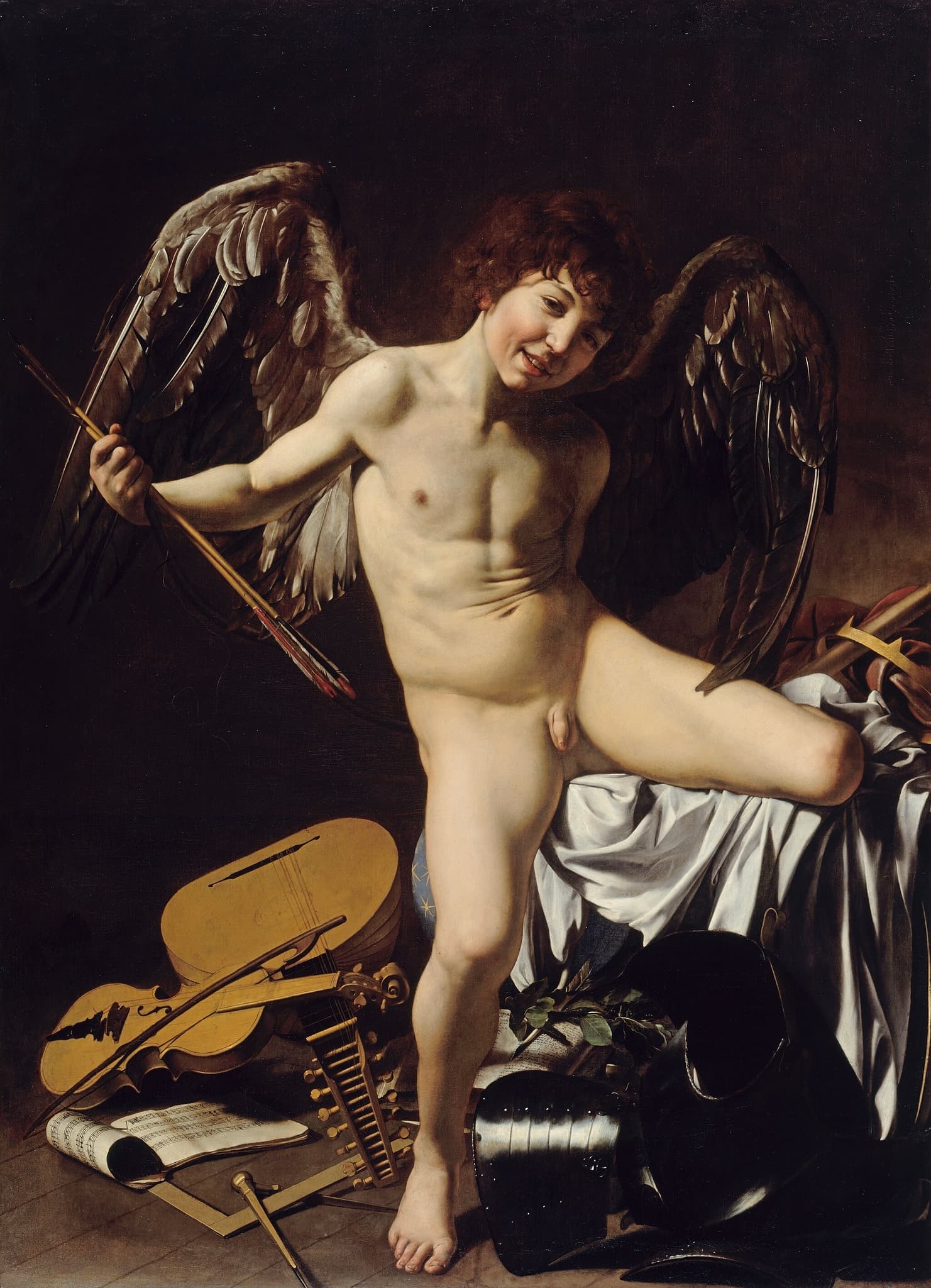
Amor Vincit Omnia (Victorious Cupid)
Caravaggio • Oil on canvas
Read full analysis of Amor Vincit Omnia (Victorious Cupid) →Valuation Analysis
Overview: This valuation assumes the painting in question is the Gemäldegalerie (Staatliche Museen zu Berlin) Amor Vincit Omnia, accepted by leading scholarship as an autograph Caravaggio, and that it is structurally stable and saleable. The figure presented is a theoretical market value reflecting what a fully authenticated, museum‑quality Caravaggio of this composition would realistically achieve if it were to come to market under competitive conditions [1].
Why $100–150 million? The lower bound ($100M) represents a conservative institutional outcome where a major museum or state apparatus competes successfully but exercises disciplined bidding; the upper bound ($150M) models a high‑contest private sale or auction scenario in which multiple global institutions and ultra‑high‑net‑worth collectors drive the price upward. The estimate is anchored to recent institutional behaviour (for example, reported state purchases of Caravaggios in the mid‑tens of millions) as a practical starting point, and then scaled upward to reflect the scarcity and iconic status of a securely attributed Caravaggio of this subject and quality [2].
Comparables & market context: Direct public auction comparables for autograph Caravaggios are scarce because the corpus of securely attributed works is small and most are museum‑held. That scarcity is precisely why an offered autograph Caravaggio becomes a marquee, market‑moving object. Institutional purchases and high‑profile private acquisitions of major Old Masters set the ceiling dynamics; the estimate uses those datapoints plus the premium attendant to a canonical Caravaggio composition to arrive at the range.
Key conditionals and risks: This valuation is highly conditional on (1) secure, up‑to‑date scholarly consensus of autograph status; (2) excellent-to‑very‑good conservation condition with a supporting technical dossier (x‑ray, infrared reflectography, pigment analysis); and (3) clear, high‑quality provenance and exhibition history. If any of these conditions fail—if the work is downgraded to studio/period by technical study or scholarship, or if major restoration problems exist—market value would decline sharply (studio/period copies commonly trade in the low‑millions to tens of millions; later copies often well below $500k).
Practical next steps: To firm this estimate into an actionable appraisal: obtain high‑resolution photography and dimensions, secure a full conservation/technical report, assemble a line‑by‑line provenance and exhibition dossier, and solicit formal opinions from leading Caravaggio scholars and Old Master specialists at major auction houses. If you wish, I can compile a targeted research checklist and draft curator/dealer inquiry letters to initiate that process.
Key Valuation Factors
Art Historical Significance
High ImpactCaravaggio's 'Amor Vincit Omnia' is an iconic formulation of the painter's late-16th/early-17th-century aesthetic: stark chiaroscuro, naturalistic modeling, and provocative eroticized allegory. The composition is historically linked to the Giustiniani circle and is repeatedly referenced in scholarship on Caravaggio’s development of secular allegory alongside religious commissions. That cultural and scholarly prominence elevates demand among museums and collectors when an accepted autograph example becomes available. While not necessarily his single most monumental narrative canvas, the subject’s fame, art‑historical importance and frequent citation in literature make it a top‑tier, bankable Caravaggio when attribution and condition are secure.
Attribution Certainty
High ImpactAttribution is the single most decisive value driver. A consensus that the work is fully autograph—supported by technical imaging (x‑ray, infrared reflectography), pigment/ground analysis consistent with Caravaggio’s palette and demonstrable pentimenti—permits prices in the high eight figures. Any substantial scholarly dispute or reclassification to 'studio' or 'follower' reduces marketability and typically collapses price into a much lower bracket (low millions to mid‑tens of millions for period studio works). Formal acceptance in leading catalogues raisonnés and endorsement by prominent Caravaggio scholars are required to reach the top of the estimate range.
Provenance & Exhibition History
High ImpactStrong, continuous provenance—early Giustiniani ownership, documented 1812 dispersal, and subsequent Prussian/ Berlin Gemäldegalerie custody—adds significant market credibility and mitigates title concerns. A long museum history also enhances scholarly acceptance and the painting’s exhibition value, which institutional buyers prize. That said, museum ownership makes an actual sale unlikely; if a privately‑held variant lacks that archival trail or has gaps, buyers will discount heavily. Well‑documented loans, major exhibitions and catalogue entries materially increase desirability and price certainty.
Condition & Conservation
High ImpactCondition affects both cosmetic appearance and the technical evidence that underpins attribution. Original paint layer integrity, absence of invasive overpainting, a stable support and conservation records all support top valuations. Conversely, extensive restoration, large retouches, or structural instability introduce risk, reduce confidence among institutional buyers and complicate export/loan negotiations. A modern, detailed conservation dossier (x‑ray, IRR, cross‑sections and pigment reports) is necessary to validate the high end of the estimate and to avoid post‑sale disputes that can materially reduce realized value.
Market Scarcity & Demand
High ImpactThere are very few securely attributed Caravaggios in private hands; the small supply of autograph works concentrates demand among a limited set of museums, national collections and UHNW buyers. Institutional urgency—often amplified by national patrimony laws—can push prices well above standard auction comparables. Recent institutional acquisitions at multi‑million levels demonstrate active buyer appetite; the constrained supply and high cultural prestige together create a market environment capable of supporting nine‑figure prices for an indisputably autograph, museum‑quality Caravaggio.
Sale History
Amor Vincit Omnia (Victorious Cupid) has never been sold at public auction.
Caravaggio's Market
Caravaggio ranks among the highest‑value Old Masters due to a small corpus of securely attributed works and intense institutional and private demand. Autograph examples rarely reach the open market; when they do, they become marquee lots that attract national museums and wealthy private collectors. Rediscoveries and scholarly reattributions have driven concentrated spikes in interest and pricing in recent years. The market is characterized by low liquidity, high volatility around attribution news, and an institutional buyer base willing to pay premium sums to secure canonical works.
Comparable Sales
Salvator Mundi
Leonardo da Vinci
Record public auction for an Old Master/renaissance masterpiece — shows the market ceiling for uniquely rare, securely attributed canonical works when attribution, publicity and buyer demand converge.
$450.3M
2017, Christie's New York (Evening sale)
~$594.4M adjusted
Portraits of Marten Soolmans and Oopjen Coppit (pair)
Rembrandt van Rijn
High‑profile museum purchase of major 17th‑century works; directly relevant as an indicator of institutional willingness to pay well into eight‑figures/low‑hundreds of millions for canonical Old Masters.
$176.0M
2016, Joint national acquisition (Louvre & Rijksmuseum) — reported purchase
~$238.0M adjusted
Portrait of Maffeo Barberini
Caravaggio
Same artist and a recent, reported institutional purchase — useful as a direct Caravaggio market datapoint showing that important, market‑available Caravaggios can trade in the tens of millions to institutions.
$35.0M
2026, Private sale — reported purchase by Italian Ministry of Culture
The Card Players (one of the series)
Paul Cézanne
High‑end private sale of an iconic masterpiece — useful as a ceiling example for private‑market values for unique masterpieces (though from a different era), demonstrating what top works can fetch off‑auction.
$250.0M
2011, Private sale (reported sale to a Gulf purchaser / royal collection)
~$320.0M adjusted
Current Market Trends
Since 2024 the Old Masters segment—particularly museum‑quality Caravaggios and major rediscoveries—has seen renewed institutional purchases and exhibition activity, driving selective strength. Attribution confirmations and state acquisitions have been primary price drivers; expect continued high demand for securely attributed, well‑provenanced works and muted pricing for workshop and later‑copy material.