How Much Is David with the Head of Goliath Worth?
Last updated: March 16, 2026
Quick Facts
- Current Location
- Galleria Borghese
- Methodology
- comparable analysis
If authenticated as an accepted, autograph Caravaggio, a realistic market band today is roughly $80–200+ million, with the top end achievable only under flawless attribution, pristine condition and strong institutional competition. If attribution or provenance is uncertain the realistic range falls to roughly $20–80 million; if judged workshop/follower the likely market is low six figures to a few million.
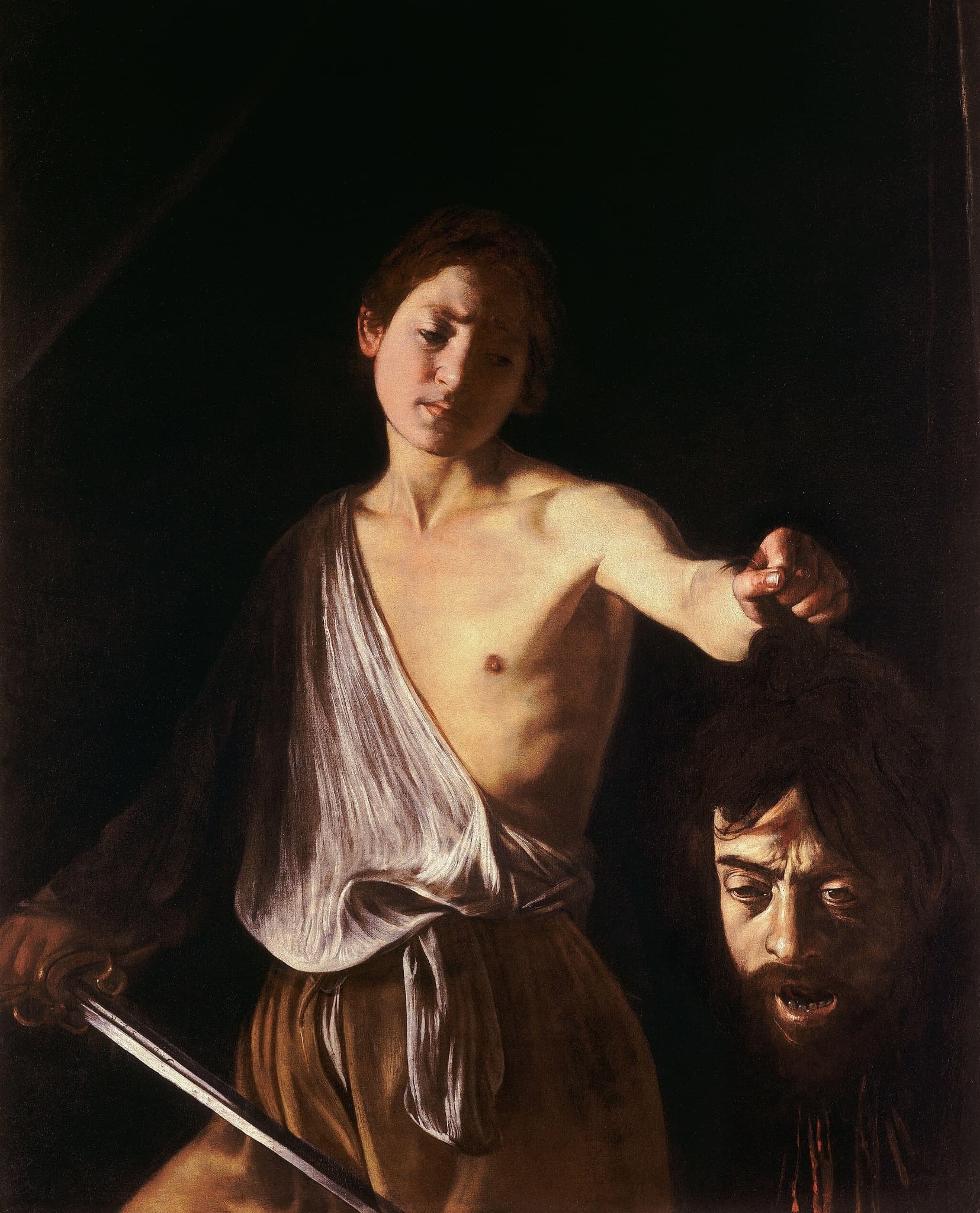
David with the Head of Goliath
Caravaggio • Oil on canvas
Read full analysis of David with the Head of Goliath →Valuation Analysis
Valuation conclusion: Based on a comparable‑analysis of recent high‑profile rediscoveries, institutional purchases and the rarity of securely attributed Caravaggios on the market, a confirmed autograph David with the Head of Goliath would realistically be offered in a preliminary market band of about $80–200+ million. This band reflects trophy‑work pricing dynamics, with the upper extreme dependent on perfect attribution, exceptional condition, unambiguous provenance and active competition among museums and deep‑pocketed private collectors.
Rationale and evidence: The three principal canonical David/Goliath pictures are museum‑held (Prado, Borghese, Kunsthistorisches), which removes routine supply and creates scarcity that supports trophy pricing if a new autograph example is authenticated [1]. Recent institutional behaviour shows museums and states are prepared to pay tens of millions (and to negotiate purchases) for important reassigned or rediscovered works, shifting realized value away from open auction records and into negotiated museum acquisitions [2].
High‑profile rediscoveries and pre‑sale private deals illustrate the ceiling for an indisputable autograph: press estimates and confidential private bids for contested rediscoveries have ranged into the tens and low hundreds of millions, while confirmed institutional buys of attributed works have settled in the mid‑tens of millions — both data points inform the spread in this band [3].
How the band was derived: The low end of the band assumes strong attribution but some questions about provenance or condition, or the absence of multiple competing buyers; the middle of the band corresponds to a broadly accepted autograph with good provenance and sound condition; the top end presumes unanimous scholarly endorsement, museum interest, and an open competitive process. If attribution remains doubtful, prices typically compress to the $20–80M bracket; if the work is judged workshop/follower, market value drops to the mid‑five to low‑seven figure zone.
Key contingencies and next steps: attribution certainty (scholarly consensus + technical analysis), uninterrupted provenance, condition and legal/export status are the decisive variables. Immediate recommended actions before marketing: commission infrared/X‑ray/pigment analysis, a full conservation report, provenance deep‑dive, and confidential consultation with leading Caravaggio scholars and an Old Masters specialist at a major auction house. These steps materially change realisable value and buyer appetite.
Key Valuation Factors
Art Historical Significance
High ImpactDavid with the Head of Goliath is a recurrent and much‑studied Caravaggio subject that occupies a prominent place in his late production. Certain versions are central to debates about Caravaggio's self‑portraiture, psychological realism and late compositional mannerisms. An accepted autograph with demonstrable art‑historical importance functions as a cultural trophy: it attracts institutional buyers, anchors blockbuster exhibitions, and elevates the painting above market comparables. The subject's scholarship and exhibition potential therefore amplify value beyond mere stylistic desirability — museums prize such works for display and research, which in turn justifies a premium on the open market.
Attribution Certainty
High ImpactAttribution is the single largest value determinant. If leading Caravaggio scholars, conservation scientists and major museums concur on autograph status, buyer confidence soars and the viable buyer pool expands to major institutions and trophy collectors. Conversely, contested or split attribution produces market discounting, encourages private/quiet sales and can collapse price to a fraction of the autograph band. Technical analyses (infrared reflectography, X‑radiography, pigment and binder studies, canvas weave/panel dendrochronology) materially change expert opinions; a positive technical dossier is often decisive for commanding top‑end offers.
Provenance & Legal Status
High ImpactAn unbroken, documented provenance elevates market value by reducing acquisition risk. Early collection records, exhibition history and publication citations increase institutional interest and justify higher pricing. By contrast, gaps, suspicious ownership periods or claims under cultural patrimony laws can deter buyers and invite export restrictions; state interventions have recently prevented cross‑border sales of contested works. Clear title and exportability are therefore essential to reach the high end of the valuation band — unresolved provenance or pending legal claims typically force significant discounts or elimination of certain bidders.
Condition & Conservation
High ImpactPhysical condition and conservation history directly affect both perceived authenticity and aesthetic quality. Original paint losses, heavy overpaint, aggressive 19th/20th century restorations, or compromised supports reduce market value even when attribution is secure. Conversely, stable condition with conservative, documented conservation supports the highest bids. Scientific imaging that reveals coherent underdrawing and original handling can strengthen attribution and market confidence. Buyers will factor the cost and uncertainty of further conservation into bidding strategies, so condition can swing price materially within the established band.
Market Demand & Institutional Interest
High ImpactDemand dynamics for Caravaggio works are characterized by a very limited supply of securely attributed originals and intense institutional competition for major rediscoveries. Museums and states have demonstrated a willingness to pay tens of millions in negotiated purchases, removing high‑quality works from the market and increasing trophy value for remaining examples. Private collectors with museum‑level priorities can also push prices up at private sale. Market appetite is therefore concentrated and event‑driven; a confirmed autograph shown publicly and championed by reputable institutions will command a premium over works lacking institutional endorsement.
Sale History
David with the Head of Goliath has never been sold at public auction. It has been held by Galleria Borghese.
Caravaggio's Market
Caravaggio occupies a top tier in the Old Masters market: his works are scarce, heavily museum‑held and therefore trade infrequently. Public auction records understate his market because canonical paintings rarely pass through open sale; instead realized values often appear through negotiated institutional acquisitions and confidential private deals. Recent institutional purchases and high‑profile rediscoveries have reaffirmed strong demand from museums and state actors. Works by followers regularly trade in the mid‑five to low‑six‑figure range, highlighting the sharp premium for securely attributed Caravaggios.
Comparable Sales
Judith Beheading Holofernes (Toulouse rediscovery)
attributed to Caravaggio (disputed)
High‑profile rediscovery attributed by some to Caravaggio with press estimates €100–150M; illustrates trophy‑level private‑sale potential for a newly authenticated autograph Caravaggio.
$140.0M
2019, Private sale (pre-auction withdrawal; publicised ahead of Dorotheum/Toulouse auction)
~$165.2M adjusted
Portrait of Monsignor Maffeo Barberini
attributed to Caravaggio
Recent institutional purchase (reported c.€30M / ~$35M). Shows willingness of museums/states to pay mid‑tens of millions in negotiated deals for contested/high‑profile Caravaggio attributions.
$35.0M
2026, Private negotiated acquisition (purchased by Italian state / Palazzo Barberini)
Salvator Mundi (attributed to a Caravaggesque painter)
Caravaggesque / follower
Example of a high‑quality Caravaggesque picture outperforming low estimates at auction (hammer + buyer's fees ≈ €237,650 ≈ US$268k); shows the active market and typical price band for followers.
$268K
2025, Wannenes, Genoa (Apr 15, 2025)
Denial of Saint Peter (Circle of Caravaggio)
Circle of Caravaggio
Typical auction result for a 'circle of' Caravaggio at a major house (reported ~GBP35,300 ≈ US$48.4k); useful lower‑end benchmark if attribution is to workshop/follower.
$48K
2025, Christie's, London (July 2, 2025)
Current Market Trends
The Old Masters market has been selective and recalibrating: supply constraints and cautious buyers mean attribution and provenance drive pricing. Recent years saw museums paying substantial sums in negotiated deals and rediscoveries generating headline interest. For Caravaggios specifically, confirmed attributions attract institutional competition and can materially raise realized prices, while disputed works trade at a substantial discount.