How Much Is Judith Beheading Holofernes Worth?
Last updated: February 26, 2026
Quick Facts
- Methodology
- comparable analysis
Judith Beheading Holofernes (c. 1599–1600) is a prime-period, canonical Caravaggio in the Italian State collection and not commercially tradeable. In a hypothetical free international market with clear title and exportability, a defensible valuation is $150–300 million, reflecting A+ art-historical significance and extreme scarcity.
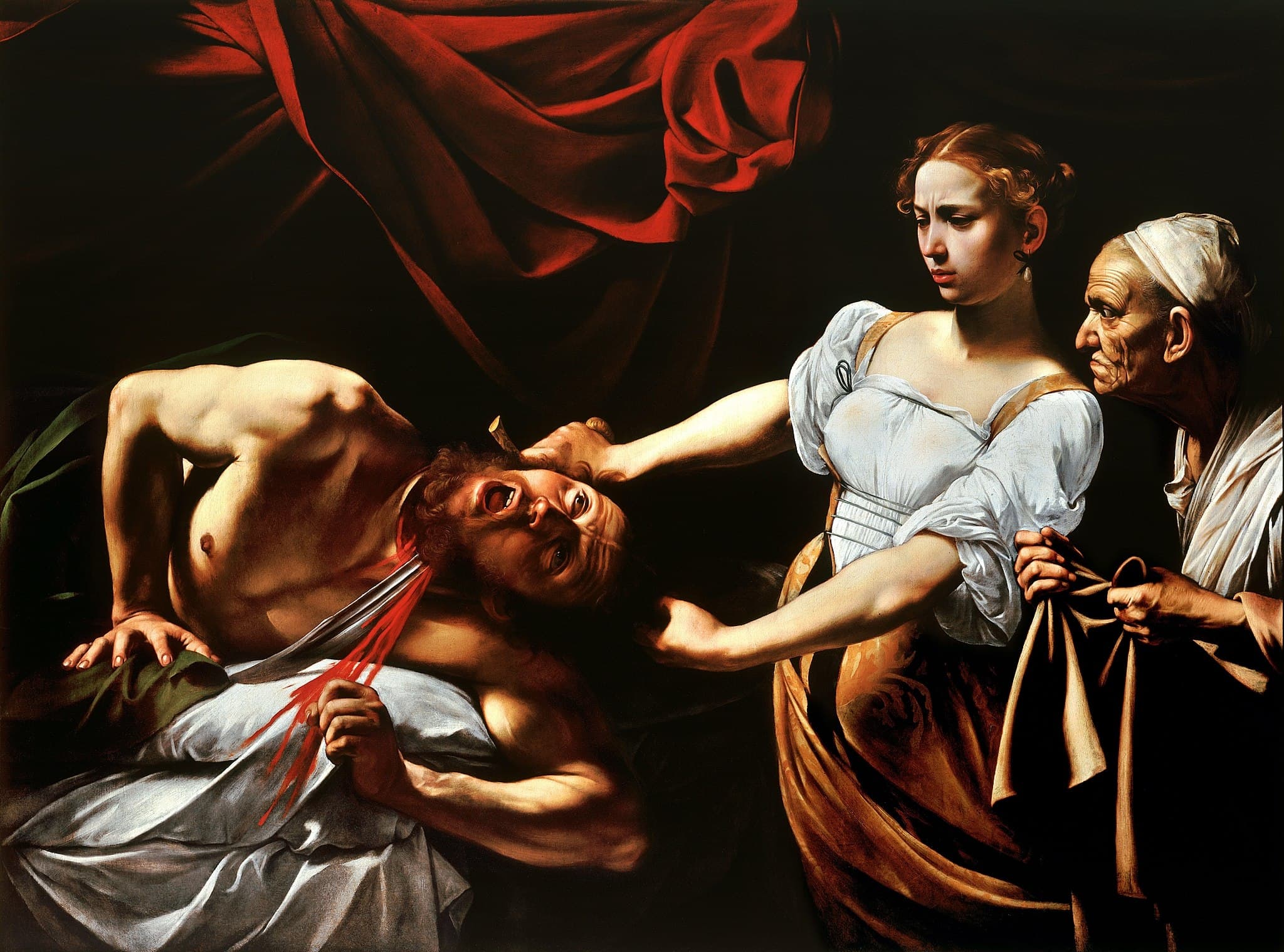
Judith Beheading Holofernes
Caravaggio, 1599 • Oil on canvas
Read full analysis of Judith Beheading Holofernes →Valuation Analysis
Conclusion: On a fully open, international market with clear title and exportability, Caravaggio’s Judith Beheading Holofernes at Palazzo Barberini would command approximately $150–300 million. The work sits in the absolute top tier of Old Masters by historical importance, scholarly centrality, and market scarcity. It is currently held by the Italian State and is effectively non-transferable under cultural patrimony law, so this estimate is a hypothetical market value rather than an achievable transactional price today [1].
Methodology and key signals: Because uncontested Caravaggios almost never reach public auction, we triangulate from adjacent, top-tier Old Master benchmarks and the few modern private market signals for Caravaggio. The closest directional datapoint is the contested “Toulouse Judith,” which carried widely reported auction guidance of €100–150 million before a private sale in 2019—despite attribution risk [3]. At public auction, Botticelli’s Portrait of a Young Man Holding a Roundel achieved $92.2 million in 2021, demonstrating robust nine-figure demand for blue-chip Old Masters in the current era [4]. Leonardo’s Salvator Mundi at $450.3 million is an acknowledged outlier, but it confirms ceiling capacity for singular, canonical works [5].
Caravaggio scarcity premium: Caravaggio’s accepted oeuvre is vanishingly small, with many masterpieces in church or state collections. Authenticated, autograph paintings almost never transact publicly. The most instructive recent signal is the 2024 rediscovery and private, Spain-restricted sale of Ecce Homo, reported around €36 million prior to its display at the Prado—at a smaller scale, later date, and with much less canonical weight than Judith [2]. In that light, a prime-period, undisputed, large-scale narrative centerpiece like Judith Beheading Holofernes commands a multiple of that figure in an unconstrained market.
Position in the oeuvre: The Barberini Judith is a touchstone of Caravaggio’s Roman period, synthesizing his radical chiaroscuro, psychological intensity, and compositional innovation. Its fame and scholarly centrality place it alongside the artist’s most desired works. For any global institution or top-tier collector—if acquisition were possible—this would be a once-in-a-lifetime opportunity, justifying a valuation well above most Old Master records and comfortably in the mid–nine figures.
Legal/market context and condition: As an Italian State-held treasure, the painting’s sale or export is effectively impossible, limiting any real-world pricing to academic constructs or state indemnity frameworks for loans [1]. Our range assumes undisputed attribution, clear title, exportability, and sound condition consistent with museum display. Upside beyond $300 million would require intense competition across multiple geographies and confirmation of exceptional structural/surface condition; downside would stem from material condition issues or market risk. Within today’s selective but deep appetite for A+ Old Master trophies, the $150–300 million band best reflects demonstrated demand and the unique, scarcity-driven premium attached to a canonical Caravaggio.
Key Valuation Factors
Art Historical Significance
High ImpactJudith Beheading Holofernes is a canonical, prime-period Caravaggio that crystallizes the artist’s radical chiaroscuro, psychological drama, and naturalism at a pivotal moment in Roman Baroque painting. It is one of the images most frequently reproduced in scholarship and exhibitions and is central to narratives about the birth of the Baroque and Caravaggio’s influence on European painting. Its dramatic narrative, compositional clarity, and technical bravura make it an anchor work in the oeuvre—on par with the artist’s most famous commissions. For any major museum or collector, this would be a centerpiece acquisition, driving a value premium that sits at the very top of the Old Masters category.
Scarcity and Oeuvre Position
High ImpactAuthentic Caravaggios almost never come to market; many reside in churches or state museums. The accepted oeuvre is small, and supply of undisputed, prime-period masterpieces is effectively zero in public auction. That structural scarcity creates a pronounced rarity premium. Among the scarce set of paintings that could, in theory, be privately traded, few rival Judith Beheading Holofernes in scale, subject, and canonical importance. This scarcity dynamic is compounded by intense institutional demand and the fact that new discoveries (e.g., Ecce Homo in 2024) tend to be retained under export restrictions, further tightening available supply and elevating private-market pricing potential for any hypothetically movable masterpiece.
Legal/Exportability Constraints
High ImpactThe painting belongs to the Italian State (Gallerie Nazionali Barberini Corsini) and is protected under cultural patrimony laws that make sale and export effectively impossible. In the real world, this suppresses any transactional value discovery and shifts risk/pricing into academic or indemnity contexts. Our valuation explicitly assumes a hypothetical scenario in which the work could be sold internationally with clear title and export permits. Without that assumption, buyer pool and achievable price would be severely constrained to domestic institutional contexts, and any number would be largely notional. This legal context is critical: it explains the absence of auction comps and the need for cross-category extrapolation.
Market Benchmarks and Demand
Medium ImpactRecent market signals support mid–nine-figure outcomes for singular Old Master trophies. Botticelli’s portrait made $92.2 million at auction (2021), and the joint private sale of Rembrandt’s pendant portraits reached €160 million. The contested “Toulouse Judith” was guided at €100–150 million before a private sale, indicating deep appetite for a Judith/Holofernes tied to Caravaggio even with attribution risk. Leonardo’s Salvator Mundi at $450.3 million shows ultimate headroom for uniquely canonical objects. Within this context, a prime, undisputed Caravaggio of this stature justifies a range meaningfully above Botticelli and at parity or better with major Baroque benchmarks, landing credibly at $150–300 million.
Condition and Conservation
Medium ImpactSpecific, recent public condition reports are not disclosed, but the painting’s continuous museum stewardship and exhibition history support an assumption of professional care. At this price tier, micro-conditions—canvas integrity, lining history, retouching, varnish, and surface saturation—can shift pricing materially. If the work presents with strong structural stability, legible original paint layers, and harmonious past restorations, competitive bidding in a free market could pressure the high end of the range or beyond. Conversely, evidence of structural compromise or extensive overpaint would temper peak pricing, especially given the subject’s dramatic lighting and flesh passages where condition is visually decisive.
Sale History
Judith Beheading Holofernes has never been sold at public auction.
Caravaggio's Market
Caravaggio sits at the pinnacle of the Old Masters market: a tiny, fiercely protected oeuvre; unparalleled influence on Baroque painting; and near-total absence from modern public auction. Authentic works are typically in churches or state collections, and rediscoveries are often subject to export restrictions. There is effectively no modern auction record for an uncontested Caravaggio, underscoring the market’s illiquidity at the autograph level. The most informative recent datapoint is the 2024 private, Spain-restricted sale of Ecce Homo around €36 million before display at the Prado, which—while smaller and later—confirms current private-market capacity for the name. In short, demand is deep but supply is virtually nonexistent.
Current Market Trends
Old Masters have been supply-constrained at the trophy level, with 2024 showing a softer overall market but renewed selectivity and strength for best-in-class works. By 2025, Old Masters sales rebounded on the back of fresh, high-quality consignments and a pivot toward private transactions. Nine-figure private deals (e.g., Rembrandt pendants) and strong public benchmarks (Botticelli at $92.2m) demonstrate sustained depth when rarity, quality, and provenance align. For prime Baroque works, institutional demand remains intense, and export controls often keep masterpieces in state hands—further tightening supply and supporting higher pricing for any hypothetically movable, A+ object.
Sources
- Gallerie Nazionali Barberini Corsini – Judith Beheading Holofernes (collection page)
- AP News – ‘Lost Caravaggio’ Ecce Homo goes on display at the Prado after private sale
- The Guardian – Caravaggio painting sold privately before planned 2019 auction in Toulouse
- Sotheby’s – Botticelli portrait sells for $92.2 million (2021)
- Christie’s – Leonardo da Vinci’s Salvator Mundi sells for $450,312,500 (2017)
- The Independent – Lost Rubens fetches record £49.5m at auction (2002)