How Much Is The Cardsharps Worth?
Last updated: March 16, 2026
Quick Facts
- Methodology
- comparable analysis
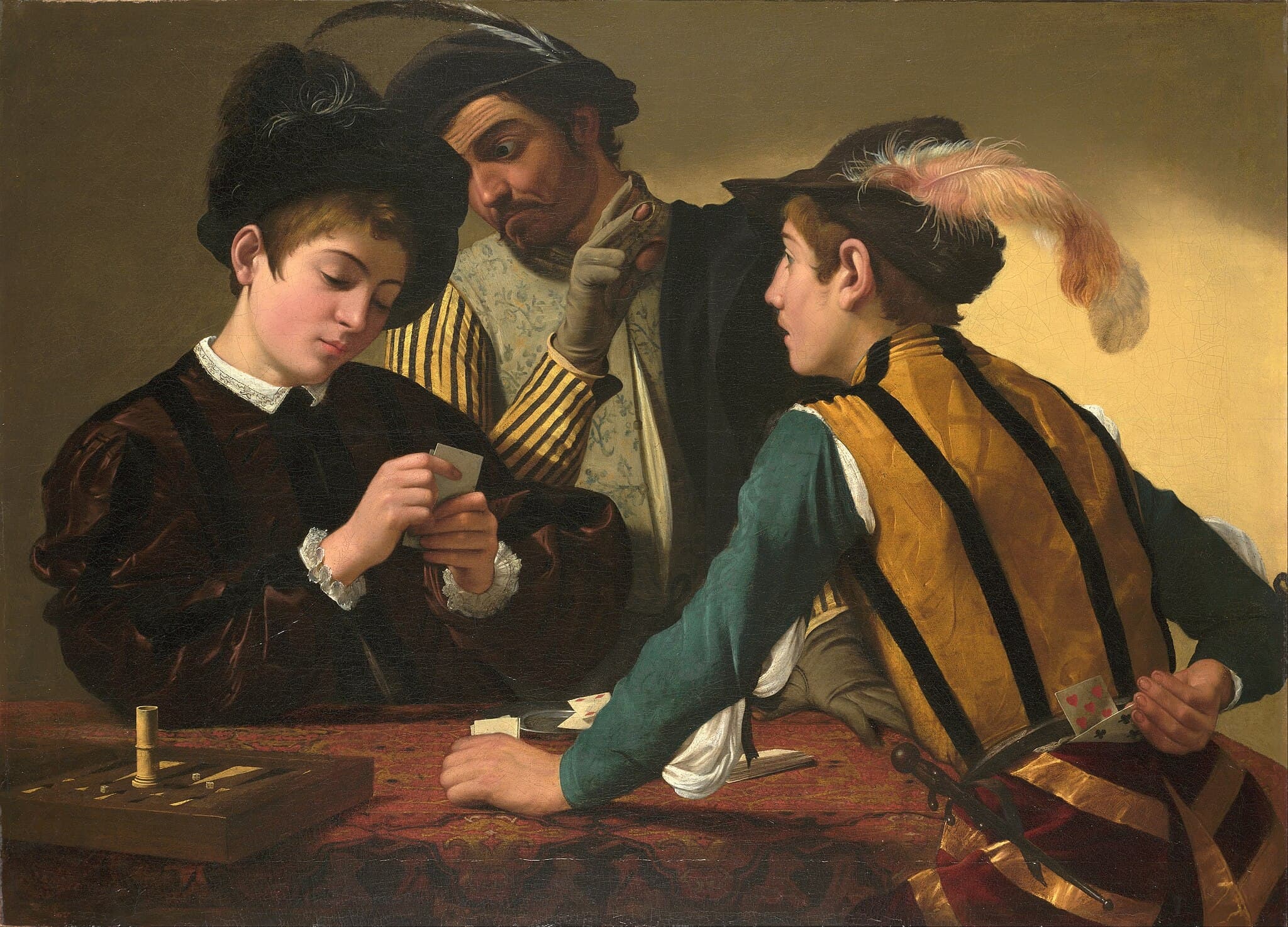
For a securely attributed, well‑conserved, museum‑quality autograph of Caravaggio’s The Cardsharps brought to open market today, a realistic market range is USD 100–200 million. The range reflects comparable rediscovery/ private‑acquisition outcomes, the demonstrated collapse of value when attribution is uncertain, and strong institutional demand for scarce Caravaggio masterpieces.
Valuation Analysis
Valuation conclusion: Based on a comparable‑analysis review of recent rediscoveries, institutional purchases and auction outcomes in the Caravaggio/Caravaggesque field, I estimate a market value range of USD 100,000,000–200,000,000 for a securely attributed, exhibition‑quality Caravaggio The Cardsharps offered free and clear of legal encumbrances. This range assumes an autograph attribution accepted by leading specialists, stable structural condition after conservation, complete and demonstrable provenance, and no export/restitution impediments.
Two forces dominate this valuation: (1) extreme rarity and institutional demand for autograph Caravaggios, which can push prices into the high tens or low hundreds of millions when attribution confidence is high; and (2) attribution risk, which can collapse value to five‑ or six‑figure outcomes for works catalogued as “follower/copy” (an outcome illustrated by the Thwaytes/Sotheby’s 2006 event and the subsequent High Court record) [1]. Recent state and museum purchases demonstrate willingness to pay tens of millions to secure major attributions, underlining the institutional floor for quality works and the premium museums will pay to keep them public [2].
The lower bound of USD 100M reflects realistic competition among deep‑pocket private collectors and institutions for an important early genre work by Caravaggio that is in good condition with strong provenance. The upper bound (USD 200M) is reserved for a near‑perfect package: undisputed autograph status, exemplary conservation evidence and major exhibition history that would drive fierce private bidding or trigger competitive museum rivalry in a private‑treaty sale. The top end also assumes contemporary market appetite for Old Master masterpieces remains robust and that no legal/heritage claims emerge.
Conversely, the price will materially decrease if scholarly consensus is lacking, technical imaging or pigment analysis raises questions, the canvas shows heavy overpainting or structural instability, or unresolved provenance/restitution risk exists — scenarios where comparable auction outcomes show precipitous declines in value [1]. Given the paucity of public auction price discovery for guaranteed Caravaggios, most decisive transactions occur off‑market (private or institutional sales) and valuations therefore depend on comparators drawn from a mix of reported private purchases and high‑profile rediscoveries.
Recommended next steps: to refine this estimate to +/- 10–15% you should (a) identify the exact physical picture (accession/dimensions/images); (b) commission a full technical dossier (IR, X‑ray, dendro/pigment labs); (c) assemble complete provenance documentation; and (d) consult senior Old Master specialists at major auction houses and leading Caravaggio scholars. With those inputs the working range above can be tightened into a defensible market or insurance valuation.
Key Valuation Factors
Art Historical Significance
High ImpactThe Cardsharps is a pivotal early genre composition that illustrates Caravaggio's radical naturalism and early mastery of psychological narrative. As a subject it is central to scholarship on his Roman beginnings and the development of his chiaroscuro vocabulary. Works with clear attribution to Caravaggio carry outsized cultural value because there are very few securely attributed canvases; each such picture shifts scholarly debate and exhibition programming. Because museums prize canonical Caravaggios for permanent display and branding, the art‑historical importance of an autograph Cardsharps translates directly into market premium and institutional competition.
Attribution & Provenance
High ImpactSecure attribution is the single largest value determinant. Demonstrable inclusion in a modern catalogue raisonné, consistent scholarly endorsements, and uninterrupted provenance back to the 17th–18th centuries materially increase value. Conversely, contested attributions or gaps invite significant downward revaluation (as the 2006 Sotheby’s Thwaytes sale demonstrates). Full documentation of ownership, export history and exhibition/publication record will be required to approach the top of the range.
Condition & Technical Analysis
High ImpactConservation status—original ground, paint loss, later overpaint, relining, or structural issues—directly affects marketability and price. High‑resolution imaging (IRR, X‑ray), pigment analysis and conservation reports that confirm a stable, original surface will support premium pricing. Extensive or invasive restorations reduce desirability and institutional willingness to bid, while technical concordance with known Caravaggio materials and technique enhances attribution confidence.
Market Rarity & Demand
High ImpactAutograph Caravaggios are exceptionally rare on the open market; most high‑quality examples reside in museums. That scarcity drives intense competition between institutions and private buyers when a museum‑quality work becomes available, elevating possible outcomes into the tens or low hundreds of millions. Recent high‑profile rediscoveries and state purchases show that public institutions will pay aggressively to retain or acquire authenticated works, which supports the higher end of the range.
Legal & Heritage Constraints
Medium ImpactNational patrimony laws, export permits and potential restitution claims can deter buyers or block sales. Any unresolved legal or ethical ownership issue significantly depresses market value and can preclude trade. Clear legal title and absence of restitution risk are therefore prerequisites for realizing top market prices.
Sale History
Sotheby's (Olympia), London
Kimbell Art Museum (Fort Worth)
Caravaggio's Market
Caravaggio occupies the apex of the Old Masters market: scarcity of securely attributed works, combined with intense museum and private collector demand, drives outsized prices when attributions are accepted. Public auction evidence is limited because most autograph examples are museum‑held; therefore significant price discovery occurs in private or state transactions. While headline outliers exist, outcomes hinge on connoisseurship and technical validation—authenticated rediscoveries can trigger multimillion to multi‑tens‑of‑millions purchases, and in exceptional cases approach or exceed the low hundreds of millions.
Comparable Sales
The Cardsharps (Thwaytes sale; sold as 'copy/follower')
Follower of Caravaggio (catalogued as copy/follower at sale)
Same subject (Cardsharps) sold publicly but catalogued as a copy/follower — demonstrates how attribution risk collapses value from multimillions to five figures.
$64K
2006, Sotheby's (Olympia), London
~$102K adjusted
Salvator Mundi (Caravaggesque / follower)
Unattributed/Caravaggesque follower
Recent auction example (2025) of a high‑quality Caravaggesque picture realizing high six figures with buyer's premium — shows market for strong followers, well below autograph Caravaggio level.
$276K
2025, Wannenes, Genoa
The Flagellation of Christ
Jusepe de Ribera (major Caravaggisti)
Rediscovered/reattributed work by a major Caravaggisti realized a regional record in 2025 — useful as a high‑end follower/Caravaggesque comparable (six‑figure outcome for a notable name).
$519K
2025, Stockholms Auktionsverk
The Denial of Saint Peter (Circle of Caravaggio)
Circle of Caravaggio
Recent 'circle of' Caravaggio at auction — another data point showing modest public auction performance for non‑autograph works of this school/subject matter.
$48K
2025, Christie's, London
Judith Beheading Holofernes (Toulouse discovery; reported private acquisition)
Attributed to Caravaggio (rediscovered / withdrawn; later reported private sale)
High‑profile rediscovery later placed into private hands; pre‑auction estimates and reported private offers illustrate the upper echelon for newly authenticated Caravaggios (tens → hundreds of millions). Price here is an indicative estimate (midpoint of reported estimate range) rather than a disclosed public hammer.
$140.0M
2019, Private sale (reported; lot withdrawn from auction — widely reported/pre-auction estimates €100–150M)
~$175.7M adjusted
Current Market Trends
Current market conditions (2024–2026) favor museums and states acquiring high‑profile rediscoveries, reducing public auction supply and supporting premiums for authenticated works. Attribution news, technical imaging advances and episodic rediscoveries create spikes in demand and volatility. Buyers remain cautious: top prices require near‑unanimous scholarly support and clear legal title.