How Much Is The Conversion of Saint Paul (Conversion on the Way to Damascus) Worth?
Last updated: March 16, 2026
Quick Facts
- Methodology
- comparable analysis
Hypothetical market value for Caravaggio’s Cerasi‑Chapel Conversion on the Way to Damascus is estimated at $100–$300 million USD if freely transferable and uncontested. In practice the altarpiece is in situ at Santa Maria del Popolo and is effectively unsaleable without extraordinary legal and institutional action.
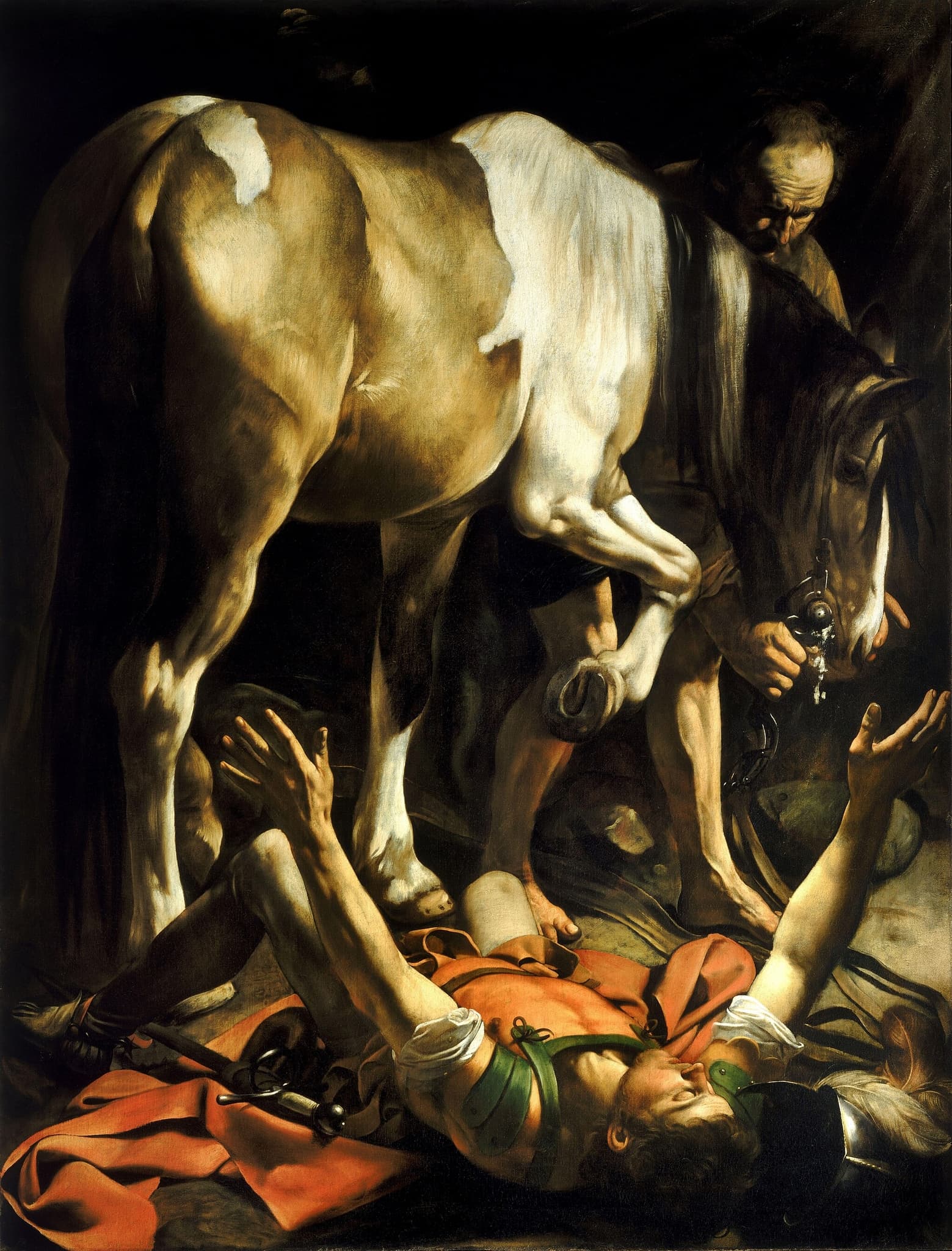
The Conversion of Saint Paul (Conversion on the Way to Damascus)
Caravaggio • Oil on canvas
Read full analysis of The Conversion of Saint Paul (Conversion on the Way to Damascus) →Valuation Analysis
Valuation premise: The Conversion on the Way to Damascus (Cerasi Chapel, Santa Maria del Popolo) is a canonical Caravaggio. If the painting were lawfully transferable and the attribution, provenance and condition were accepted by leading scholars and market participants, a comparable‑analysis approach supports a hypothetical market range of $100,000,000 to $300,000,000 USD. This opinion assumes clear title, no unresolved export or deaccession restrictions, and that the work is in sound or restorable physical condition.
Comparables and pricing signal: A small number of high‑profile events inform the band. The 2019 Toulouse rediscovery (publicly estimated in the approx. €100–150m band before it sold privately) shows the private‑market ceiling for an accepted Caravaggio rediscovery and sets a contemporary reference for an upper‑mid trophy price [1]. Institutional acquisitions — for example the Italian State’s reported €30M purchase of a portrait attributed to Caravaggio for Palazzo Barberini — illustrate robust museum/state demand and provide a lower anchor for secure attributions [2]. Trophy Old‑Master precedent such as Leonardo’s Salvator Mundi (Christie’s 2017) demonstrates an extreme market ceiling for a canonical single object, explaining how exceptional conditions could push value above the $300M mark [4]. Recent reattributions and restorations (e.g., Prado’s Ecce Homo) have tightened supply and increased institutional appetite, which also influences price discovery [3].
Constraints and sensitivities: The numerical range above is heavily conditional. The painting is an in‑situ church altarpiece and is therefore subject to Italian cultural‑heritage protections, ecclesiastical custodial policies and ministerial pre‑emption or export controls — legal encumbrances that make a conventional open‑market sale unlikely and depress realisable value. Attribution certainty and technical condition are decisive: contested authorship or extensive non‑original restoration reduces value by orders of magnitude. Buyer demand is concentrated in institutions and ultra‑high‑net‑worth collectors; negotiations for such marquee pieces are frequently private, opaque and influenced by reputational considerations.
Conclusion & recommended next steps: Using comparable‑analysis I place a defensible hypothetical freely‑tradeable market value for this canonical Caravaggio at $100M–$300M (working midpoint ≈ $200M), while noting that in real terms the work is effectively unsaleable without extraordinary legal and institutional processes. To refine a formal appraisal, obtain a full provenance dossier, high‑resolution technical imaging (infrared reflectography, X‑radiography), pigment and binder analysis, and written clearance of any ecclesiastical/state covenants; then consult Old Master specialists at major auction houses and Caravaggio scholars for market calibration.
Key Valuation Factors
Art Historical Significance
High ImpactThe Cerasi‑Chapel Conversion is a cornerstone work in Caravaggio's Roman period and is widely cited in scholarship for its compositional daring and chiaroscuro. Its status as a major altarpiece commission and its frequent reproduction in academic literature give it exceptional cultural and iconographic value. That significance translates directly into market value when a work is transferable: canonical, well‑documented masterpieces by Caravaggio belong at the very top of the Old Master price spectrum because they carry unique curatorial and exhibition utility, confer provenance prestige to institutional collections, and attract trophy buyers. In short, the painting’s art‑historical weight is a primary driver of the high valuation assumed here.
Provenance & Custodial Status
High ImpactContinuous ecclesiastical custody (the Cerasi Chapel, Santa Maria del Popolo) substantially affects marketability. Clear, uninterrupted provenance increases institutional confidence and uplifts value; however, church ownership and any attached covenants often render deaccessioning legally and politically fraught. Provenance that documents an unbroken, publicly recorded custodial chain is a positive for price but the in‑situ custodial status typically creates near‑insurmountable barriers to sale. Thus provenance both elevates theoretical value (because it confirms authenticity) and simultaneously suppresses realistic sale prospects because of custodial inalienability.
Scarcity & Market Rarity
High ImpactAuthenticated Caravaggios are extremely rare on the open market; most autograph works reside in museums or churches. This scarcity concentrates buyer demand and produces a high scarcity premium for any securely attributed, museum‑quality canvas that could come to market. Limited transactional comparables increase valuation volatility: a single private sale or disputed rediscovery can reset expectations, producing very large swings in perceived value. In practice, scarcity raises the ceiling dramatically but also contributes to price opacity and negotiation asymmetry in private transactions.
Condition & Technical State
Medium ImpactPhysical condition and the work’s technical profile materially alter price. Original paint loss, overpainting, earlier heavy restorations or an unstable support reduce value and may complicate attribution. Conversely, a well‑preserved or properly restorable surface confirmed by infrared reflectography and pigment analysis supports higher valuation. Technical evidence that corroborates Caravaggio's hand (brushwork, pigments consistent with his practice) amplifies market confidence. Because current public information lacks a contemporary conservation dossier, condition remains a medium‑level uncertainty that could move the valuation meaningfully after inspection.
Legal & Export Constraints
High ImpactItalian cultural‑heritage legislation, ministerial pre‑emption rights, and church custodial rules are decisive. Works classified as national cultural property or held by ecclesiastical institutions are often non‑alienable or require ministerial permission to export and sell; the State can exercise first refusal. These legal barriers greatly reduce practical liquidity and deter commercial purchasers who require certainty of title and export. Even where sale is technically possible, the time, political sensitivity and reputational scrutiny involved will depress competitive bidding and may force institutional rather than open private sale routes.
Sale History
The Conversion of Saint Paul (Conversion on the Way to Damascus) has never been sold at public auction.
Caravaggio's Market
Caravaggio occupies the apex of the Old Masters market: his autograph paintings are rare, highly desired by museums and major private collectors, and when securely attributed can command tens to hundreds of millions of dollars. The market for Caravaggio is thin and opaque—few works reach public auction and many high‑value transactions are private or mediated by institutions. Key value drivers are scholarly consensus on attribution, pristine or demonstrably restorable condition, museum‑grade provenance, and the absence of legal encumbrances. Rediscoveries and reattributions trigger spikes in attention and price but also attract intense scholarly scrutiny.
Comparable Sales
Judith and Holofernes (Toulouse rediscovery, attributed to Caravaggio)
Attributed to Caravaggio (contested)
High-profile rediscovery attributed (by some) to Caravaggio and sold privately in 2019; market commentators used its pre-auction estimate as a contemporary private‑market ceiling for a newly attributed Caravaggio.
$140.0M
2019, Private sale / pre-auction purchase (France, reported June 2019)
~$165.2M adjusted
Salvator Mundi
Leonardo da Vinci
Record-breaking Old Master / trophy sale demonstrating the extreme upper bound for single-object Old Master market values; not a direct Caravaggio comparable in authorship but useful as a market ceiling for exceptional canonical works.
$450.3M
2017, Christie's New York (Evening Sale)
~$558.4M adjusted
Salvator Mundi (Caravaggesque / follower)
Caravaggesque follower / 'school of' (unspecified)
Actual auction sale of a Caravaggesque work (follower/school) showing the lower‑end market for non-autograph pictures on this subject/style — a cautionary floor when attribution or quality is uncertain.
$275K
2025, Wannenes Auction, Genoa (Apr 15, 2025)
Portrait of Monsignor Maffeo Barberini (attributed to Caravaggio)
Attributed to Caravaggio
Recent institutional/state purchase (reported €30M) for a work attributed to Caravaggio — a real-world example of an institutional willingness to pay tens of millions for a securely‑attributed Old Master; useful lower‑mid anchor for market expectation for authenticated Caravaggios.
$34.7M
2026, Reported Italian State purchase / acquisition for Palazzo Barberini (reported Mar 10, 2026)
~$34.4M adjusted
Current Market Trends
The current Old Masters market is bifurcated: mid‑market volume has softened while top‑quality, museum‑grade works draw strong institutional interest and selectively robust prices. Recent institutional purchases and high‑profile reattributions have tightened supply and increased demand for authenticated masterpieces. For Caravaggio specifically, scarcity and institutional competition keep the upper band firm, but legal/export constraints and attribution disputes remain primary headwinds to open‑market sales.
Sources
- Artsy — Long‑lost Caravaggio painting sold privately days before planned auction (Toulouse 2019)
- AP News — Italy purchases portrait attributed to Caravaggio for Palazzo Barberini (reported Mar 10, 2026)
- AP News — Prado confirms attribution and restoration of Ecce Homo (May 2024)
- List of most expensive paintings (context for trophy Old Master ceiling; Salvator Mundi, Christie's 2017)