How Much Is The Entombment of Christ (The Deposition/Entombment) Worth?
Last updated: March 16, 2026
Quick Facts
- Methodology
- comparable analysis
If this is the canonical, autograph Entombment/Deposition by Caravaggio (the museum‑held altarpiece), it is effectively off‑market and culturally priceless; a defensible hypothetical market/replacement valuation today is approximately $100–400 million. If the object is a downgraded autograph or studio‑involved variant, value contracts to the $25–100 million band; a workshop/follower copy would typically sit in the $0.1–5 million range.
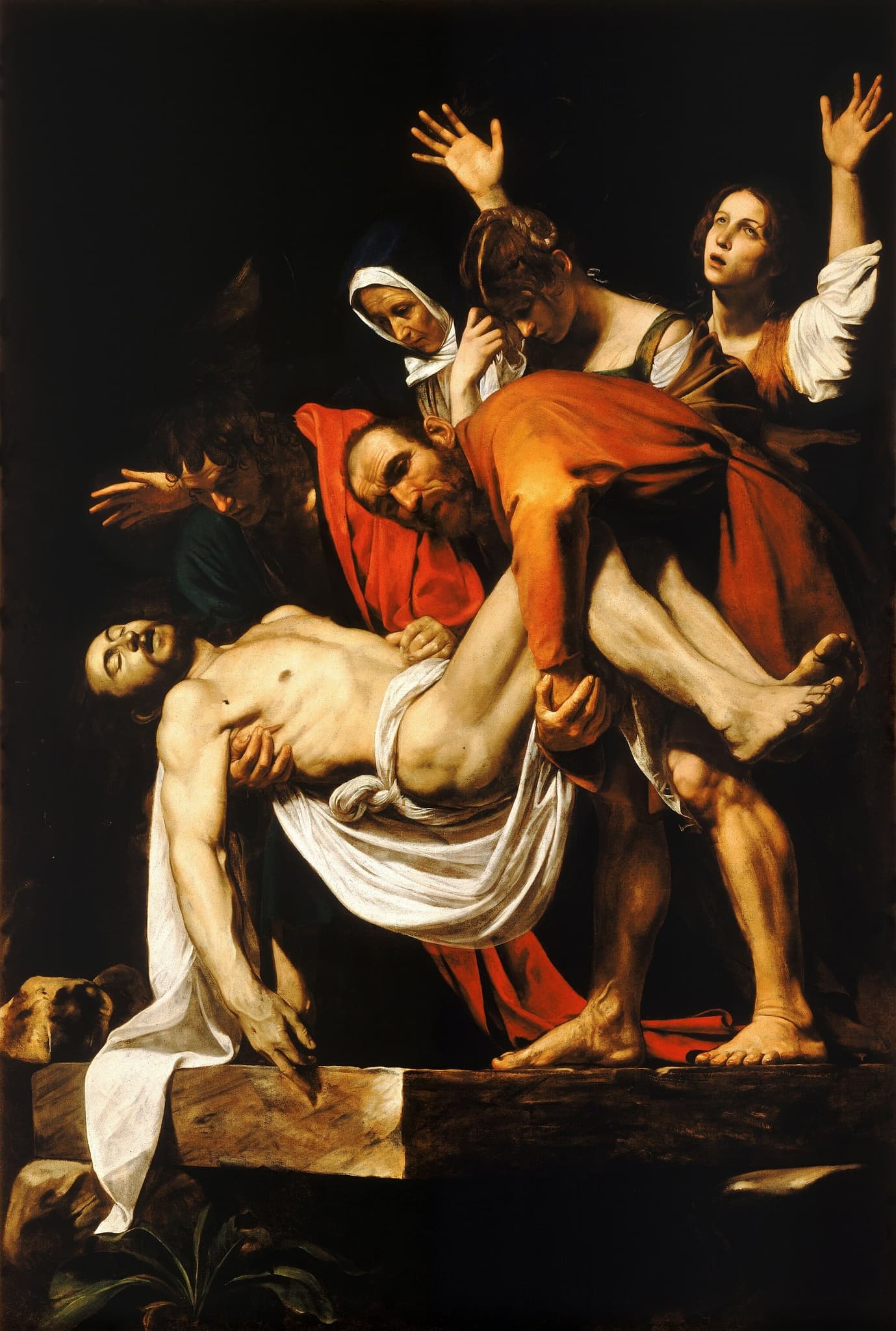
The Entombment of Christ (The Deposition/Entombment)
Caravaggio • Oil on canvas
Read full analysis of The Entombment of Christ (The Deposition/Entombment) →Valuation Analysis
Valuation conclusion: The painting commonly called "The Entombment of Christ" (The Deposition/Entombment) by Michelangelo Merisi da Caravaggio is a canonical altarpiece and is held by the Vatican Pinacoteca; as such it is effectively off‑market and functionally priceless in cultural terms [1]. For hypothetical market purposes — if an uncontested, museum‑quality autograph version were to be offered under clear title and exportability — a defensible illustrative auction/replacement range today is approximately $100–400 million.
This range is derived by comparative analysis of top Old Master outcomes and recent high‑profile Caravaggio events: Leonardo’s Salvator Mundi sale (2017) sets a headline upper‑bound for unique, universally accepted masterpieces, while recent contested/rediscovered Caravaggios and state acquisitions (Toulouse Judith pre‑auction private handling; Italy’s reported purchase of a Barberini‑attributed portrait) demonstrate appetite and market pathways for major rediscoveries or reattributions [2][3]. Institutional interventions and private diplomatic purchases frequently determine final prices for works of this cultural weight, making public auction records sparse and confidential private deals common.
The breadth of the band — $100–400 million — reflects the strong step‑function impact of attribution certainty, condition, and provenance. A fully accepted autograph with pristine technical support, continuous high‑quality provenance, and clean legal/export status sits at the top of the band; any credible doubts about authorship, extensive overpainting, or export/legal encumbrances can compress realized value into the lower tens of millions or less. Conversely, a convincing but recently reattributed rediscovery bought by a state or major museum could settle in the mid‑to‑high tens or low hundreds of millions depending on buyer competition and political will [3].
Practical sale routes for a work of this profile would be private placement or state acquisition rather than a public auction. Museums, national governments and a very small set of ultra‑high‑net‑worth private collectors are the only realistic buyers; their buying decisions are driven by scholarship, conservation clarity, and national patrimony considerations. Because many top‑tier Old Master blockbusters are sold privately or by inter‑institutional transfer, public price transparency will remain limited and recorded comparables will be few [2].
To refine this illustrative valuation from a hypothetical band to a defensible appraisal requires: (1) firm confirmation of which physical object is under review; (2) a full technical and conservation report (infrared, x‑ray, pigment/ground analysis); (3) complete provenance back to the earliest records; and (4) at least one formal scholarly opinion from recognized Caravaggio specialists and institutional curators. Absent that work, the range above should be treated as an evidence‑based market illustration rather than a formal insurance/appraisal figure.
Key Valuation Factors
Art Historical Significance
High ImpactThe Entombment/Deposition is among Caravaggio's most important religious compositions: a large altarpiece that encapsulates his mature chiaroscuro, naturalism and psychological intensity. It functions as a pivotal work in the development of Baroque painting and is heavily cited in scholarship and major exhibitions. That status confers extreme cultural capital and institutional primacy, which elevates market value beyond ordinary supply/demand mechanics; replacement cost and institutional willingness to pay become the dominant price drivers. In short, its art‑historical stature alone supports a top‑tier, triple‑digit million valuation if the work is accepted as fully autograph and available for purchase.
Attribution Certainty
High ImpactAttribution certainty is the single largest determinant of monetary value. A painting accepted as fully autograph by Caravaggio — corroborated by technical imaging and strong scholarly consensus — commands a massive premium because the pool of undisputed Caravaggios is effectively fixed. Even modest doubts (possible studio involvement, conflicting expert opinions, or inconclusive technical evidence) produce step‑function declines in value. Recent market behaviour shows that once attribution consensus forms, institutions or wealthy private buyers can pay very large sums; absent consensus, market interest and prices fall dramatically.
Condition & Conservation
High ImpactPhysical condition and conservation history strongly affect price. Large altarpieces often bear centuries of varnish, lining or overpainting; unresolved structural issues, heavy inpainting or loss of original paint reduce both scholarly confidence and market desirability. Conversely, a conservation programme that clarifies original layers and reveals authentic autograph brushwork enhances attribution and buyer confidence. A current, detailed condition report (including X‑ray, IRR and stratigraphy) is therefore essential; condition issues can change value by tens of millions and, in extreme cases, by orders of magnitude.
Provenance & Legal Status
High ImpactA long, documented provenance — ideally continuous church or museum custody or early inventories — is a major value multiplier because it reduces restitution risk and eases export/acquisition by institutions. The canonical Entombment’s established museum/church provenance would maximize value and buyer confidence. By contrast, ownership gaps, wartime transfers, or unresolved claims create legal and reputational risk that can render a work unsaleable internationally or force domestic sale with significant discounts. National patrimony and export controls can also prevent cross‑border transactions, narrowing buyer pools and reducing realized prices.
Market Liquidity & Demand
High ImpactDemand for autograph Caravaggios is concentrated among museums, state bodies and a tiny set of super‑collectors; supply of undisputed originals is effectively static. Liquidity is therefore very low for top‑tier works: a sale requires a motivated institution or a rare private buyer with deep pockets. High‑profile reattributions and state purchases have tightened supply further, often removing major works from the market. For valuation this yields a high theoretical ceiling but limited practical liquidity; the final price depends heavily on the type of buyer and whether a public institution or state elects to acquire the work.
Sale History
The Entombment of Christ (The Deposition/Entombment) has never been sold at public auction.
Caravaggio's Market
Caravaggio occupies the uppermost tier of the Old Master market. Only some 60–70 paintings are commonly accepted as autograph, creating acute scarcity. Institutional demand is intense; public auction comparables for securely attributed works are rare because major pieces move via private sale, state purchase or inter‑institutional transfer. Rediscoveries or reattributions (Prado Ecce Homo, recent Barberini reporting) have produced headline interest and institutional acquisitions. Because supply is limited and scholarship decisive, attribution upgrades produce outsized market responses while attribution doubts sharply reduce buyer interest.
Comparable Sales
Salvator Mundi
Leonardo da Vinci
World‑record Old Master sale — not by Caravaggio but useful as an upper‑bound for what a unique, securely attributed masterpiece can command in the private/institutional market.
$450.3M
2017, Christie's New York
~$553.9M adjusted
Judith and Holofernes (the 'Toulouse' picture, attributed/contested)
attributed to Caravaggio (contested)
Directly comparable by artist and subject matter — high‑profile contested attribution that was handled via private sale after a public estimate (~€100–150M). Illustrates private‑market appetite for rediscovered/contested Caravaggios.
Price unknown
2019, Private sale (pre‑auction; originally consigned for Toulouse sale)
Portrait of Monsignor Maffeo Barberini (attributed)
attributed to Caravaggio
Recent institutional acquisition of an attributed Caravaggio (~€30M / reported ~$35M) — shows museums/states will pay tens of millions for credible attributions, a practical mid‑market signal for important but not canonical attributions.
$35.0M
2026, Reported Italian state / institutional purchase (Palazzo Barberini acquisition)
Salvator Mundi (17th‑century, 'Caravaggio school')
Caravaggio school / follower
Public‑auction result for a school/follower work — shows the market level for non‑autograph Caravaggisti at major regional auctions (low 6‑figures with buyer's fees).
$268K
2025, Wannenes (Genoa)
The Denial of Saint Peter (circle of Caravaggio)
Circle of Caravaggio / follower
Auction result for a 'circle of' Caravaggio lot — illustrates volatility and relatively low realized prices for follower/circle works at major houses.
$48K
2025, Christie's London
Current Market Trends
Since 2024 institutional demand for authenticated Old Masters (and Caravaggios specifically) has strengthened following high‑profile reattributions and blockbuster exhibitions. Supply remains constrained and auctions primarily clear followers and 'circle of' works with high volatility. State and museum purchases reduce private market availability and push theoretical ceilings higher, though realized sales remain confidential and conditional on attribution, provenance and legal clearance.
Sources
- Vatican Museums — The Deposition (Entombment) of Christ (Pinacoteca Vaticana)
- Artnet News — Italy acquires Caravaggio 'Barberini' portrait (reported acquisition)
- AP News — Prado confirms rediscovered Caravaggio 'Ecce Homo' and exhibition (re‑attribution coverage)
- Christie's Press — Sale of Leonardo's Salvator Mundi (illustrative upper‑bound comparable)