How Much Is The Supper at Emmaus Worth?
Last updated: February 27, 2026
Quick Facts
- Current Location
- National Gallery
- Methodology
- comparable analysis
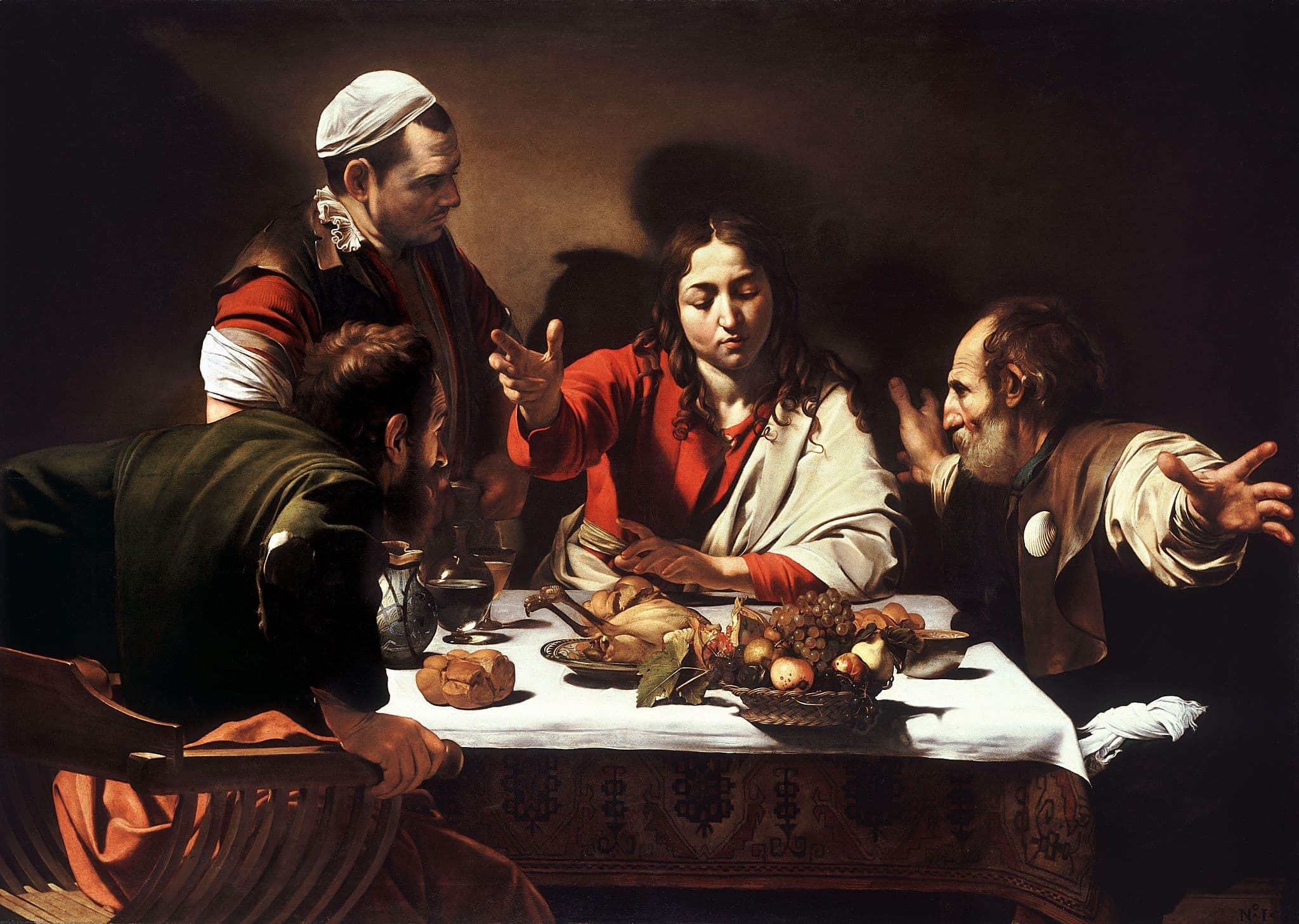
We estimate Caravaggio’s The Supper at Emmaus (1601, National Gallery, London) at $250–400 million on a hypothetical sale basis. The range reflects its canonical status, bullet‑proof attribution and provenance, and the extreme scarcity of undisputed Caravaggios, benchmarked against apex Old Master trophies.
Valuation Analysis
Conclusion: A disciplined, market-consistent valuation for Caravaggio’s The Supper at Emmaus (1601; National Gallery, London) is $250–400 million on a hypothetical sale basis. The work is a canonical masterpiece with secure attribution and long, public provenance; while it resides in a UK national collection and is effectively not for sale, this range represents realistic insurance/comparative value grounded in the current apex Old Master market [1][7].
Method: Comparable analysis calibrated to the tiny set of true top-tier Old Master transactions. Leonardo da Vinci’s Salvator Mundi at $450.3m (auction, 2017) defines the absolute ceiling for Renaissance/Old Master trophies [3]. Rembrandt’s The Standard Bearer sold by private treaty to the Dutch state at €175m in 2022, establishing contemporary state-backed pricing for an unimpeachable Baroque icon [4]. Botticelli’s $92.2m portrait (2021) demonstrates the public auction appetite for rare, museum-grade Renaissance works [5]. Within this band, a secure, multi-figure, narrative Caravaggio of textbook power commands a premium over most peers and sits materially closer to the Rembrandt–Leonardo corridor than to general Old Master results.
Scarcity and artist market: Accepted Caravaggios with long exhibition and publication histories almost never transact. The most relevant recent same-artist datapoint—Ecce Homo—changed hands privately in 2024 at a reported ~€36m and was then exhibited at the Prado, underscoring both demand and the tendency for such works to resolve via private placement rather than auction [6]. That price reflects a later, smaller picture and is not a peer to the London Supper at Emmaus, but it provides a floor for authenticated works by the master in today’s market.
Quality and significance: The 1601 Supper at Emmaus is a touchstone of Caravaggio’s Roman maturity, uniting radical naturalism, dramatic tenebrism, and a bravura still-life into a psychologically charged revelation scene. It is among the artist’s most reproduced and studied compositions, and the earlier, more theatrical of the two Emmaus versions, with an unbroken chain from the Mattei circle to the National Gallery [1]. These attributes—canonical subject, peak-period execution, and bullet-proof scholarship—confer a meaningful premium.
Practical context: The painting was offered at Christie’s London in 1831 and bought in; it entered the National Gallery as a gift in 1839 [1]. UK national collections are effectively barred from deaccession, so any transaction today would be hypothetical and shaped by export, pre-emption, and indemnity frameworks [7]. Those constraints affect path to sale, not intrinsic value. Assuming good, well-documented condition commensurate with National Gallery stewardship, the $250–400m range accurately reflects current buyer capacity—private UHNW collectors, foundations, and states—at the absolute apex of the Old Master field, triangulated against Leonardo ($450.3m), Rembrandt (€175m), Botticelli ($92.2m), and landmark Titian private-treaty benchmarks [2][3][4][5].
Key Valuation Factors
Art Historical Significance
High ImpactThe 1601 London Supper at Emmaus is a centerpiece of Caravaggio’s Roman maturity and one of the most frequently reproduced works in Baroque art. It fuses radical naturalism, dramatic chiaroscuro, and a bravura still-life with a psychologically charged revelation narrative, crystallizing the artist’s transformative influence on European painting. The composition’s theatricality and the sheer quality of execution make it a benchmark for Caravaggio’s oeuvre, comparable in renown to Calling of Saint Matthew and The Taking of Christ. As a canonical, textbook work taught across art history curricula and exhibited for nearly two centuries in a world-class museum, it commands a full “masterpiece premium” over even strong period comparators.
Extreme Scarcity and Market Liquidity
High ImpactUndisputed, museum-grade Caravaggios almost never enter the market; the vast majority reside in public collections. This chronic supply starvation supports exceptional pricing when credible opportunities arise, often prompting state-backed or foundation-level interventions. The recent private sale of Ecce Homo confirms present-day demand and the preference for private treaty over public auction for this material. In this context, a secure, iconic, multi-figure narrative by Caravaggio sits at the very top of Old Master pricing dynamics. Scarcity at this level behaves non-linearly: a single, universally accepted masterpiece can clear at a multiple of more common Old Master benchmarks because it satisfies both connoisseur and cross-category “trophy” demand.
Provenance and Scholarly Acceptance
High ImpactSupper at Emmaus is supported by a long, transparent provenance from its early Roman context (Mattei circle), through 19th-century ownership, to its 1839 gift to the National Gallery. It has been published, exhibited, and studied exhaustively, with unwavering attribution to Caravaggio. This removes the largest single risk factor in Old Master pricing—attributional uncertainty—and justifies a substantial quality premium over works with contested authorship or thin documentation. The painting’s institutional custodianship also implies rigorous technical study and conservation records, increasing buyer confidence under a hypothetical sale scenario. Together, these elements materially tighten the valuation range at the upper end of Old Masters.
Regulatory/Transferability Context
Medium ImpactAs an object in a UK national collection, the work is effectively non-deaccessionable, and any hypothetical sale would be shaped by pre-emption rights, export controls, and indemnity frameworks. These rules influence transaction route and timeline—often pushing apex works to sovereign or foundation buyers via private treaty—but they do not diminish intrinsic value. For valuation purposes, we assume a compliant path-to-sale where states or UHNW collectors with heritage commitments act as the buyer pool. This context can, in fact, compress negotiation and concentrate competition, sustaining a full ‘trophy’ price. Accordingly, we treat these constraints as affecting liquidity mechanics rather than price levels.
Sale History
Christie's London
Offered as lot 35; bought in (unsold) per National Gallery provenance.
National Gallery, London
Presented by George John Warren Vernon (gift) to the National Gallery.
Caravaggio's Market
Caravaggio occupies an ultra–blue-chip niche with extraordinary brand power and vanishingly scarce supply. There is no meaningful modern auction record for a fully accepted, major painting; virtually all masterpieces are in museums. Market signals derive from private-treaty placements and cross-artist Old Master trophies. A key recent datapoint is the privately sold Ecce Homo (2024), reported around €36 million and immediately exhibited by the Prado—evidence of intense institutional interest and a preference for negotiated outcomes. Rumored nine-figure situations around rediscoveries (e.g., the Toulouse Judith and Holofernes) underscore latent demand, but the only reliable benchmarks are the handful of apex Old Master sales (Leonardo, Rembrandt) that demonstrate state-level and sovereign-wealth participation at the ten-figure and high nine-figure bands.
Comparable Sales
Ecce Homo
Caravaggio
Same artist; accepted autograph Caravaggio sold recently; Biblical subject and museum-level interest. Useful lower anchor showing current private-treaty pricing for an authenticated work.
$39.0M
2024, Private sale via Colnaghi, Madrid
~$40.0M adjusted
Salvator Mundi
Leonardo da Vinci
Ceiling-setting Renaissance/Old Master trophy with extreme rarity and global brand power; indicates the potential apex for singular masterworks with intense demand.
$450.3M
2017, Christie's New York
~$576.9M adjusted
The Standard Bearer
Rembrandt van Rijn
Top-tier Baroque masterpiece placed by a state museum; demonstrates current state-backed capacity and pricing for canonical works by the greatest Old Masters.
$199.0M
2022, Private sale to Dutch State/Rijksmuseum
~$213.5M adjusted
Portrait of a Young Man Holding a Roundel
Sandro Botticelli
Rare, undisputed Renaissance icon sold at auction; a key benchmark for demand/pricing of museum-quality Old Masters in public salerooms.
$92.2M
2021, Sotheby's New York
~$106.9M adjusted
Massacre of the Innocents
Peter Paul Rubens
Record-setting Baroque history painting at auction; signals what the market has paid for a rediscovered, canonical work by a peer master.
$76.7M
2002, Sotheby's London
~$133.8M adjusted
Diana and Actaeon
Titian
Joint institutional acquisition of a universally acknowledged Renaissance masterpiece; strong proxy for what museums will mobilize for apex Old Masters.
$71.0M
2009, Private treaty to National Gallery London & National Galleries of Scotland (from the Duke of Sutherland)
~$103.9M adjusted
Current Market Trends
Old Masters remain supply-constrained at the top, with 2024’s softer macro backdrop producing fewer $10m+ auction lots but strong outcomes when museum-grade works surface. The apex is now largely set by private treaties and state-led acquisitions, while public auction records like Botticelli’s $92.2m (2021) and Titian’s 2024 record reaffirm demand for rare quality. Price discipline and rigorous scholarship drive activity; rediscoveries with watertight attributions can catalyze outsized competition, whereas debated works underperform. In this environment, a bullet‑proof, canonical Caravaggio would trade as a cross-category “trophy,” attracting sovereign, institutional, and UHNW buyers and clearing well above the general Old Master band.
Sources
- National Gallery (London): Caravaggio, The Supper at Emmaus (NG172)
- National Gallery: Securing the Bridgewater Titians (private treaty £50m/£45m)
- Christie’s: Leonardo da Vinci, Salvator Mundi, sells for $450.3m (2017)
- Guinness World Records: Most expensive Rembrandt (The Standard Bearer) €175m private sale (2022)
- Sotheby’s: Botticelli, Portrait of a Young Man Holding a Roundel, sells for $92.2m (2021)
- The Spain English: Caravaggio’s Ecce Homo exhibited at the Prado after private sale (~€36m) (2024)
- UK Parliament: Statutory limits on deaccession from national museums