How Much Is Landscape: The Parc Monceau Worth?
Last updated: March 16, 2026
Quick Facts
- Insurance Value
- $18.0M (Hypothetical replacement value based on public Parc Monceau comparables and institutional ownership context)
- Methodology
- comparable analysis
Based on directly comparable Parc Monceau canvases sold in 2007, 2009, and a fresh March 2026 result, and adjusting for this work’s larger format, 1877 Impressionist exhibition history, and distinguished early provenance, we estimate $14–18 million. This places the Met’s 1876 Landscape: The Parc Monceau in the upper tier of the series, below Monet’s trophy cycles but materially above most 1878 variants.
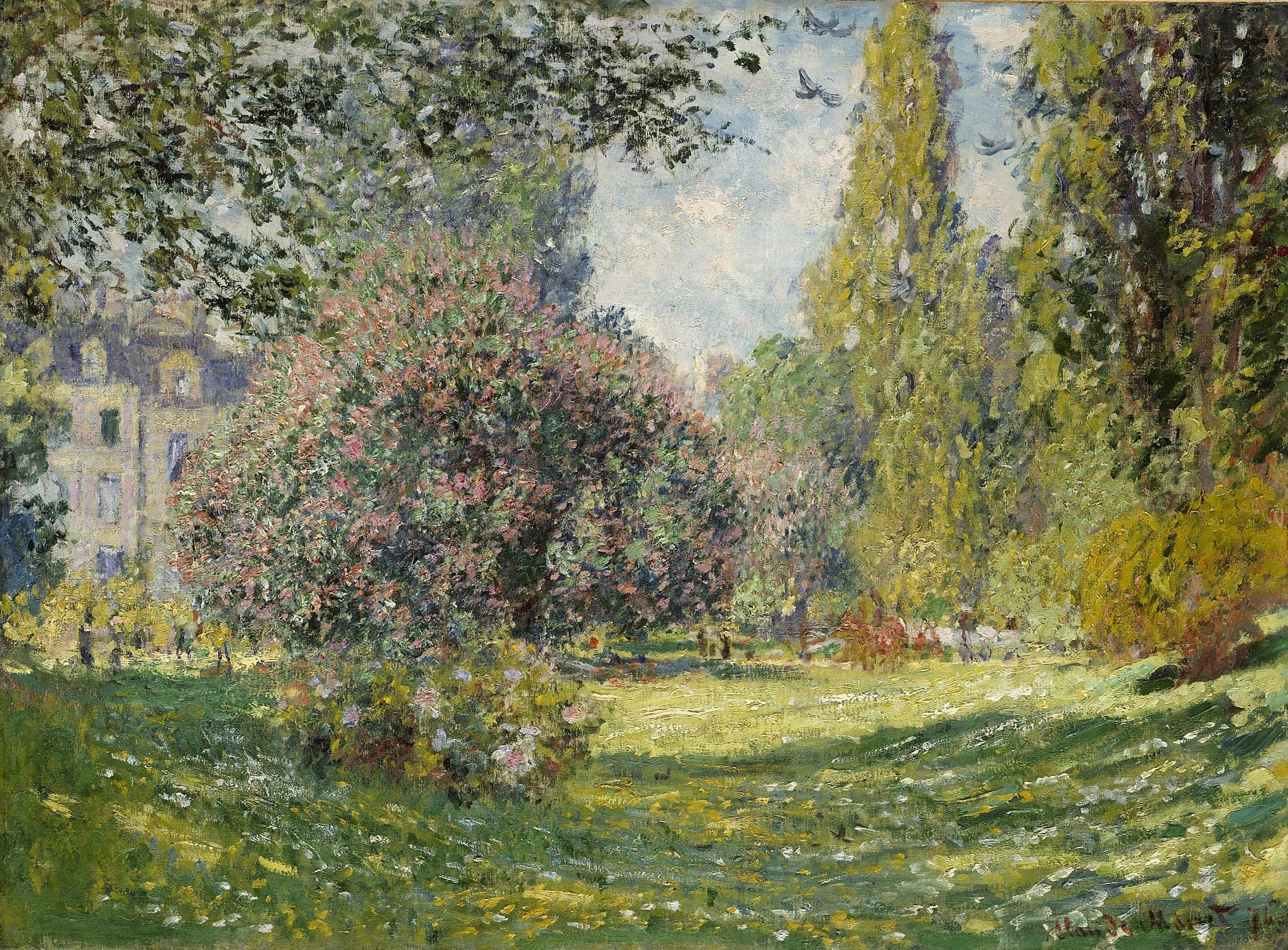
Landscape: The Parc Monceau
Claude Monet, 1876 • Oil on canvas
Read full analysis of Landscape: The Parc Monceau →Valuation Analysis
Conclusion: We estimate Claude Monet’s Landscape: The Parc Monceau (1876, oil on canvas, 59.7 x 82.6 cm; The Metropolitan Museum of Art, acc. 59.206) at $14–18 million on a hypothetical replacement/auction basis. The work was exhibited in the 1877 Impressionist exhibition and carries distinguished early provenance from Monet to Dr. Georges de Bellio, with later ownership by Loula D. Lasker before entering The Met in 1961 [1].
Method: A like-for-like comparable analysis was built around Monet’s Parc Monceau series. The most recent benchmark is Christie's London (Mar 5, 2026), where an 1878 Le Parc Monceau of slightly smaller format achieved £6.76 million (~$9.0m) with premium [2]. Earlier anchors include Christie’s London (Jun 23, 2009), Au Parc Monceau (1878), at £6,313,250 (~$10.28m at the time) [3], and Christie’s New York (May 9, 2007), Le parc Monceau (1878), at $3.85m [4]. Together these establish a mid- to high-single-digit million baseline for strong 1878 Parc Monceau canvases.
Adjustments to the Met work: The Met’s painting is earlier (1876 vs. 1878), larger (59.7 x 82.6 cm), and singled out by its inclusion in the 1877 Impressionist exhibition—factors that elevate art-historical significance and scarcity within the series. The direct Monet → de Bellio provenance is particularly prized, and long institutional ownership with robust publication/exhibition exposure typically warrants a premium in a replacement framework given the difficulty of sourcing equivalents [1].
Market context: Monet remains the most liquid and valuable Impressionist, with an enduring global bidder base. His auction record stands at $110.7 million for Meules (2019) [5]. While the very top prices accrue to canonical cycles (Nymphéas, Meules, Rouen, London), the 1870s urban park and cityscape subjects continue to transact in the high single-digit to mid-teens millions when quality, size, and provenance align. Recent marquee results for prime Monet series in the 2020s further confirm depth at the top end, even in a selective market [6].
Value synthesis: Starting from the 2007/2009/2026 Parc Monceau benchmarks, we add a material upward adjustment for the Met canvas’s larger format, earlier date, 1877 Impressionist exhibition, and superior provenance. This supports a consolidated estimate of $14–18 million today, with the higher end most appropriate for insurance/replacement given institutional ownership. As a museum object, it is not for sale, but in a major evening auction the work would reasonably be expected to clear within this band, subject to condition and market tone at time of sale.
Key Valuation Factors
Art Historical Significance
High ImpactPainted in 1876 at the heart of Monet’s mature Impressionist breakthrough, this Parc Monceau view belongs to a tightly collected group of Paris park scenes that capture modern life, light, and atmosphere. The Met confirms the canvas was shown at the landmark 1877 Impressionist exhibition, anchoring its period importance and giving it a direct link to the movement’s public formation. That exhibition history, combined with the work’s strong execution and luminous handling of foliage and urban leisure, elevates its stature within Monet’s 1870s production. As a subject, Parc Monceau sits just below Monet’s top trophy cycles, but among urban park scenes it is a recognized, sought-after theme.
Provenance and Exhibition History
High ImpactThe painting’s chain of title—direct from Monet to his physician and early supporter Dr. Georges de Bellio, later to distinguished collectors and ultimately to The Met via the Lasker bequest—confers exceptional credibility. Works with Monet → de Bellio provenance are especially desirable to connoisseurs. Long-term museum ownership adds publication and exhibition visibility and signals institutional caliber. In a hypothetical replacement scenario, sourcing a like-for-like Parc Monceau canvas with this pedigree would be exceptionally difficult, meriting a premium over auctioned 1878 variants with less prominent histories.
Size, Composition, and Quality
Medium ImpactAt 59.7 x 82.6 cm (23 1/2 x 32 1/2 in.), the Met’s painting is larger than several 1878 Parc Monceau comparables and presents a balanced panoramic format that enhances wall presence. The composition fuses modern life (strollers, dappled light, clipped lawns) with a vigorous, confidently handled palette. Within the Parc Monceau cohort, quality and colorism vary; this example’s combination of size, coherence, and painterly freshness sits above typical mid-size variants, supporting an upward adjustment from baseline comp levels. Larger, well-resolved canvases in Monet’s 1870s corpus generally carry stronger pricing power.
Series Positioning and Market Liquidity
Medium ImpactParc Monceau is a respected mid-tier Monet subject: scarcer and more desirable than many minor motifs, yet priced below the headline cycles that dominate the artist’s records. The comp set shows robust liquidity in the high single-digit millions for 1878 examples; the Met painting’s earlier date, greater size, and superior context justify a high-teens ceiling. In today’s selective but stable Impressionist market, series identity remains a key driver of competition; Parc Monceau’s recognition among both connoisseurs and broader collectors underpins reliable demand without approaching the stratosphere of Nymphéas or Meules.
Sale History
Landscape: The Parc Monceau has never been sold at public auction.
Claude Monet's Market
Claude Monet is the anchor of the Impressionist category and one of the most globally liquid blue-chip artists. His auction record stands at $110.7 million for Meules (Haystacks) achieved at Sotheby’s New York in 2019, with numerous $30–75 million results across core series (Nymphéas/Water Lilies, Rouen Cathedral, London Parliament/Bridges) in the past decade. Demand is driven by international collectors, institutions, and cross-category buyers seeking historically secure, aesthetically iconic works. Market depth extends into mid-tier subjects—particularly strong 1870s canvases—which consistently attract competitive bidding at evening sales. Quality, freshness to market, condition, and series identity remain decisive in establishing price within Monet’s broad and stratified market.
Comparable Sales
Le Parc Monceau (1878)
Claude Monet
Same artist and exact subject (Parc Monceau), very close in date (1878 vs. 1876), comparable but slightly smaller format (~54.1 x 65 cm); most recent public benchmark for this series.
$9.0M
2026, Christie's London
~$8.8M adjusted
Au Parc Monceau (1878)
Claude Monet
Same artist/series (Parc Monceau), close in date to the Met’s 1876 canvas; similar mid-size format (c. 25 3/4 x 21 3/8 in.). A prime, well-publicized series comp from a strong sale.
$10.3M
2009, Christie's London
~$15.5M adjusted
Le parc Monceau (1878)
Claude Monet
Same subject and cohort (1878 Parc Monceau), similar dimensions (21 1/4 x 25 5/8 in.); anchors the lower end of the series’ modern auction performance.
$3.8M
2007, Christie's New York
~$6.0M adjusted
Au Parc Monceau (1878)
Claude Monet
Same artist/series (Parc Monceau); notable market/provenance context (restituted Levy‑Kainer work). Provides a longer-term anchor for the series’ valuation trajectory.
$5.2M
2001, Sotheby's London
~$9.6M adjusted
Current Market Trends
Impressionism remains a relatively low-volatility, supply-driven segment. After the 2022–2024 marquee peaks for top Monet series, the broader market has shifted to a more selective tone, with robust participation for museum-quality blue chips and tighter spreads for mid-tier subjects. Asia has become an increasingly important demand center, broadening bidder pools for Western masterworks. Against this backdrop, Monet functions as a safe-harbor brand: when strong examples surface, sell-through is high and pricing resilient. Parc Monceau canvases have transacted in the high single-digit to low-teens millions, with premiums for larger formats, prime 1870s dates, standout color/condition, and superior provenance.
Sources
- The Metropolitan Museum of Art – Landscape: The Parc Monceau (1876), acc. 59.206
- Christie’s London – 20th/21st Century: London Evening Sale results (Mar 5, 2026)
- Christie’s Press Release – Impressionist & Modern Art Evening Sale (Jun 23, 2009)
- Christie’s New York – Le parc Monceau (May 9, 2007) lot page
- Sotheby’s – Monet’s Meules sells for $110.7m (May 14, 2019)
- Christie’s – May 2022 Marquee Week sale results