How Much Is The Cliff Walk at Pourville Worth?
Last updated: January 21, 2026
Quick Facts
- Insurance Value
- $110.0M (Analyst estimate based on comparable sales; museums typically keep policy values confidential)
- Methodology
- comparable analysis
Claude Monet’s The Cliff Walk at Pourville (1882, Art Institute of Chicago) is a canonical Normandy coast masterpiece with figures and impeccable provenance. Based on recent top-tier Monet results ($65.5m–$74.0m) and premiums for subject, fame, and institutional cachet, a current fair‑market value is $70–95 million, with replacement value around $110 million.
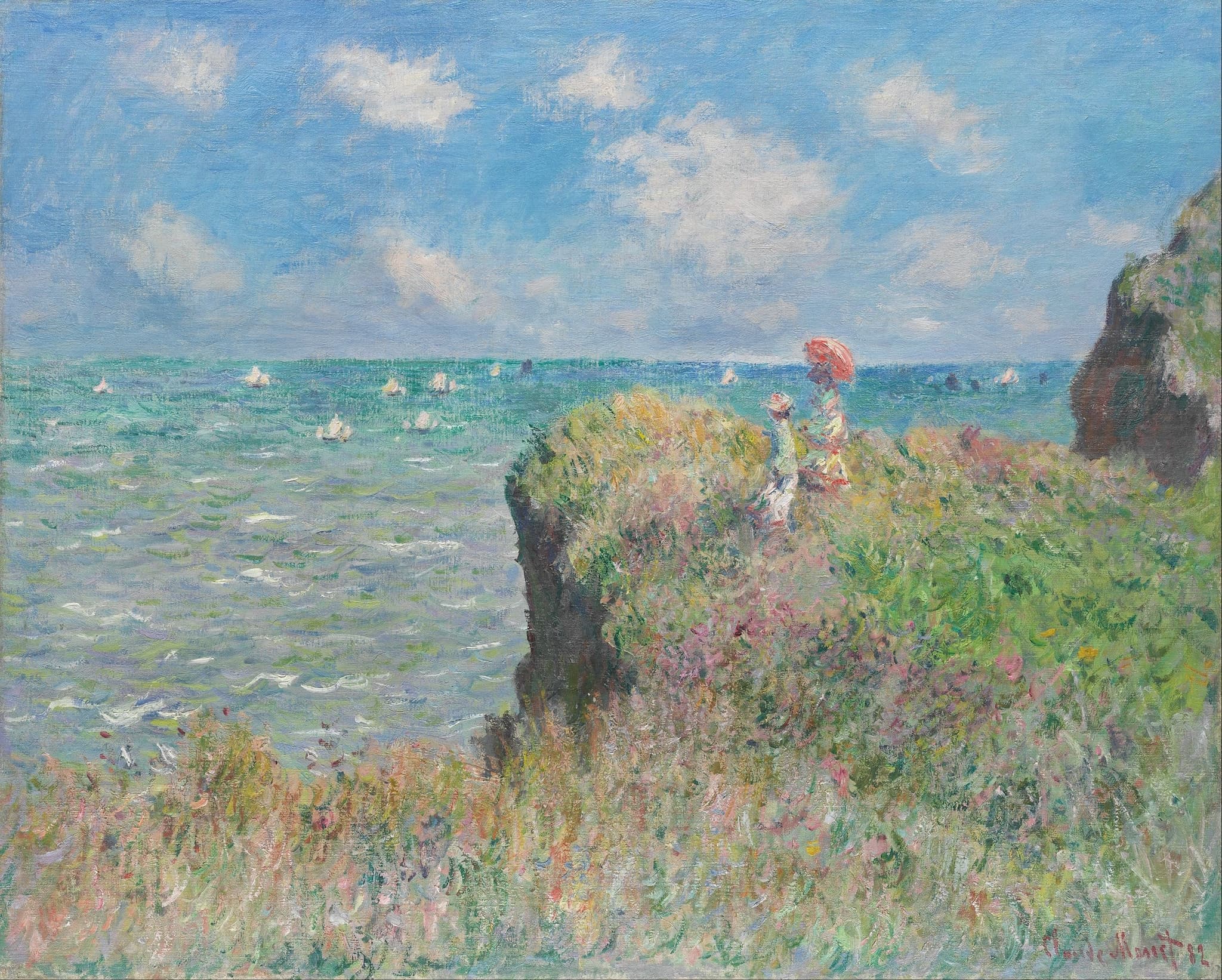
The Cliff Walk at Pourville
Claude Monet, 1882 • Oil on canvas
Read full analysis of The Cliff Walk at Pourville →Valuation Analysis
Conclusion: The Cliff Walk at Pourville is a trophy‑level Monet from the pivotal 1882 Normandy campaign, combining a dramatic coastal vista with elegant figures and a storied museum provenance. Considering the current price environment for best‑in‑class Monets and the painting’s exceptional recognizability, a fair‑market value of $70–95 million is appropriate, with a scheduling/loan insurance value around $110 million.
Art-historical and object-specific merits. Painted in 1882 and now in the Art Institute of Chicago, the work is among the most published images of Monet’s Pourville series, notable for the integration of two fashionable figures atop wind‑swept cliffs—an element that increases both narrative appeal and market demand relative to pure seascapes [1]. Within Monet’s oeuvre, it sits just below the price apex commanded by the great serialized motifs (Haystacks, Rouen Cathedral, Parliament, and the largest Water Lilies) but represents the top echelon of early‑1880s coastal works.
Market benchmarks and calibration. Monet’s auction record stands at $110.7 million for Meules (Haystacks) in 2019 [2]. In the current cycle, late Water Lilies have realized $74.0 million (Christie’s, Nov 2023) and $65.5 million (Sotheby’s, Nov 2024) [3][4]. These results establish a live ceiling for masterpiece-grade Monets. Direct Normandy/Pourville comparables are scarcer at the top end; an 1882 Pourville cliff scene without prominent figures sold for $8.23 million in 2014, a lower tier that nevertheless helps frame a floor for the subject category in an earlier market phase [5]. Additional non‑series but strong Monets in 2023–25 have ranged from the low‑ to mid‑eight figures (e.g., $21.685m for Moulin de Limetz deaccessioned by the Nelson‑Atkins) [6].
Positioning this work. The Cliff Walk at Pourville warrants a substantial premium over simpler coastal views due to its iconic composition, inclusion of figures, and AIC provenance. Relative to late Nymphéas—which currently lead Monet’s market—the present work should price modestly below those series peaks but well above typical early‑ to mid‑career landscapes. The $70–95 million range reflects that hierarchy while acknowledging broadened global demand for canonical Impressionist images.
Insurance/replacement value. Given the extreme scarcity of equivalently important Pourville/Étretat canvases with figures, the work’s widespread reproduction, and the difficulty of sourcing a like‑for‑like substitute, an insurance value around $110 million is defensible, sitting between recent late‑series peaks and Monet’s absolute record [2][3][4].
Assumptions and sensitivities. This valuation presumes sound, well‑documented condition consistent with the Art Institute’s catalogue notes, and reflects present‑day liquidity for blue‑chip Monet. Adverse condition findings would compress the range; a particularly strong market and competitive guarantee framework could nudge the result toward the upper bound.
Key Valuation Factors
Art Historical Significance
High ImpactPainted in 1882, The Cliff Walk at Pourville is a signature statement from Monet’s Normandy campaign and one of the most widely reproduced Pourville images. The integration of two elegantly dressed figures animates the scene and ties the work to a broader history of modern leisure on the coast, enhancing its narrative and cultural resonance. It has been deeply cited in Monet literature and anchored in the Art Institute of Chicago’s collection for decades, strengthening its stature. Within Monet’s oeuvre, it exemplifies the early 1880s pursuit of shifting light and atmosphere in coastal settings, placing it among the most important non‑series works of its decade.
Subject and Composition
High ImpactMarket demand prioritizes recognizable, photogenic compositions with strong color, clear focal structure, and narrative elements. This painting’s elevated vantage, sweeping diagonal of cliff and sea, and two figures in fashionably windswept attire create a cinematic image that is iconic in the public imagination. Works that include figures in landscape are rarer in Monet’s coastal corpus and carry a premium over pure seascapes. The balance of cool sea tones with warm grasses and lively brushwork delivers high wall power and brand‑defining visibility, characteristics that consistently translate into competitive bidding for blue‑chip Impressionist pictures.
Provenance and Institutional Cachet
High ImpactLong‑term residence at the Art Institute of Chicago, with earlier Durand‑Ruel dealer history, provides impeccable provenance and extensive exhibition and publication exposure. Museum‑level ownership is a recognized price accelerant in hypothetical valuations because it signals curatorial validation, stable history, and broad public familiarity. For a work as frequently reproduced as The Cliff Walk at Pourville, the institutional imprimatur also heightens perceived scarcity: few comparably important Pourville works with figures remain available to the market, making this canvas especially difficult to replace in quality and renown.
Market Comparables and Liquidity
Medium ImpactMonet’s market remains among the deepest in Impressionism, with late Nymphéas and other prime series currently achieving $65.5m–$74.0m. While non‑series coastal works trade below those peaks, this picture’s fame and subject complexity justify a position well above typical Normandy seascapes. Scarcity of directly comparable ‘figures on cliff’ Pourville canvases complicates one‑to‑one pricing and elevates reliance on cross‑series benchmarks and subject premiums. In today’s market—where guarantees and global bidding pools shape outcomes—this canvas would likely attract multiple trophy‑hunters and institutional‑caliber buyers, supporting a $70–95 million fair‑market range.
Sale History
The Cliff Walk at Pourville has never been sold at public auction.
Claude Monet's Market
Claude Monet is a top‑tier, highly liquid blue‑chip artist with a global collector base, frequent evening‑sale presence, and robust cross‑regional demand. His auction record is $110.7 million for Meules (Haystacks) at Sotheby’s in 2019. In the current cycle, late Water Lilies remain the most commercially powerful, achieving $74.0 million (Christie’s, Nov 2023) and $65.5 million (Sotheby’s, Nov 2024). Core series such as Poplars and select Haystacks have transacted in the $30–45+ million zone, while strong non‑series landscapes generally occupy the mid‑eight figures. Against this backdrop, masterpiece‑grade Monets with exceptional recognition and provenance continue to command intense competition and pricing resilience.
Comparable Sales
Sur la falaise à Pourville
Claude Monet
Same artist, same year (1882), same Pourville cliff subject; strong period/subject comp though a simpler composition without prominent figures.
$8.2M
2014, Sotheby's New York
~$11.1M adjusted
Le Moulin de Limetz
Claude Monet
Same artist and late‑1880s Normandy landscape of comparable ambition/scale; frames value for strong non‑series, pre‑Giverny motifs.
$25.6M
2023, Sotheby's New York
~$27.4M adjusted
Meules à Giverny (Haystacks)
Claude Monet
Blue‑chip series Monet; establishes pricing for core, highly liquid subjects relative to earlier coastal Normandy works.
$34.8M
2024, Sotheby's New York
~$35.8M adjusted
Peupliers au bord de l’Epte, crépuscule
Claude Monet
Major 1891 Poplars series picture; shows current market ceiling for prime but non‑Nymphéas series versus earlier Normandy subjects.
$43.0M
2025, Christie's New York
Nymphéas (large Water Lilies, 1914–17)
Claude Monet
Late Water Lilies benchmark; sets upper-tier pricing for top Monet in the current cycle, useful as an upper bound for non‑series 1880s icons.
$65.5M
2024, Sotheby's New York
~$67.5M adjusted
Le bassin aux nymphéas (c. 1917–19)
Claude Monet
Top late Nymphéas result in 2023; provides a contemporary reference point for masterpiece‑grade Monet demand at the very top end.
$74.0M
2023, Christie's New York
~$79.2M adjusted
Current Market Trends
The Impressionist/Post‑Impressionist segment experienced a contraction in 2023–24 amid thinner trophy supply, but blue‑chip masters rebounded in 2025 as high‑quality consignments and guarantees returned. Within this recalibrated environment, best‑of‑series Monets set the pace, while earlier motifs with iconic imagery and museum‑level provenance drew strong bidding. Geographic demand has broadened, with Asia‑based buyers active at the top end. Overall, pricing remains selective and supply‑driven: canonical names and visually compelling works with pristine condition and deep literature command premiums, while mid‑tier examples face estimate sensitivity. Monet sits at the very center of this resilient, quality‑focused demand.
Sources
- Art Institute of Chicago – Object page: The Cliff Walk at Pourville
- Sotheby’s – Monet’s Meules sells for $110.7m (artist record), May 2019
- Christie’s – 20th Century Evening Sale totals; Monet Le bassin aux nymphéas $74,010,000 (Nov 9, 2023)
- The Wall Street Journal – Monet Water Lilies sold for $65.5 million (Nov 18, 2024)
- ArtDaily – Sur la falaise à Pourville (1882) sold for $8.23m, Sotheby’s NY (May 2014)
- Nelson-Atkins Museum – Monet’s Le Moulin de Limetz sold for $21,685,000 (May 16, 2024)