How Much Is The Magpie Worth?
Last updated: January 17, 2026
Quick Facts
- Methodology
- extrapolation
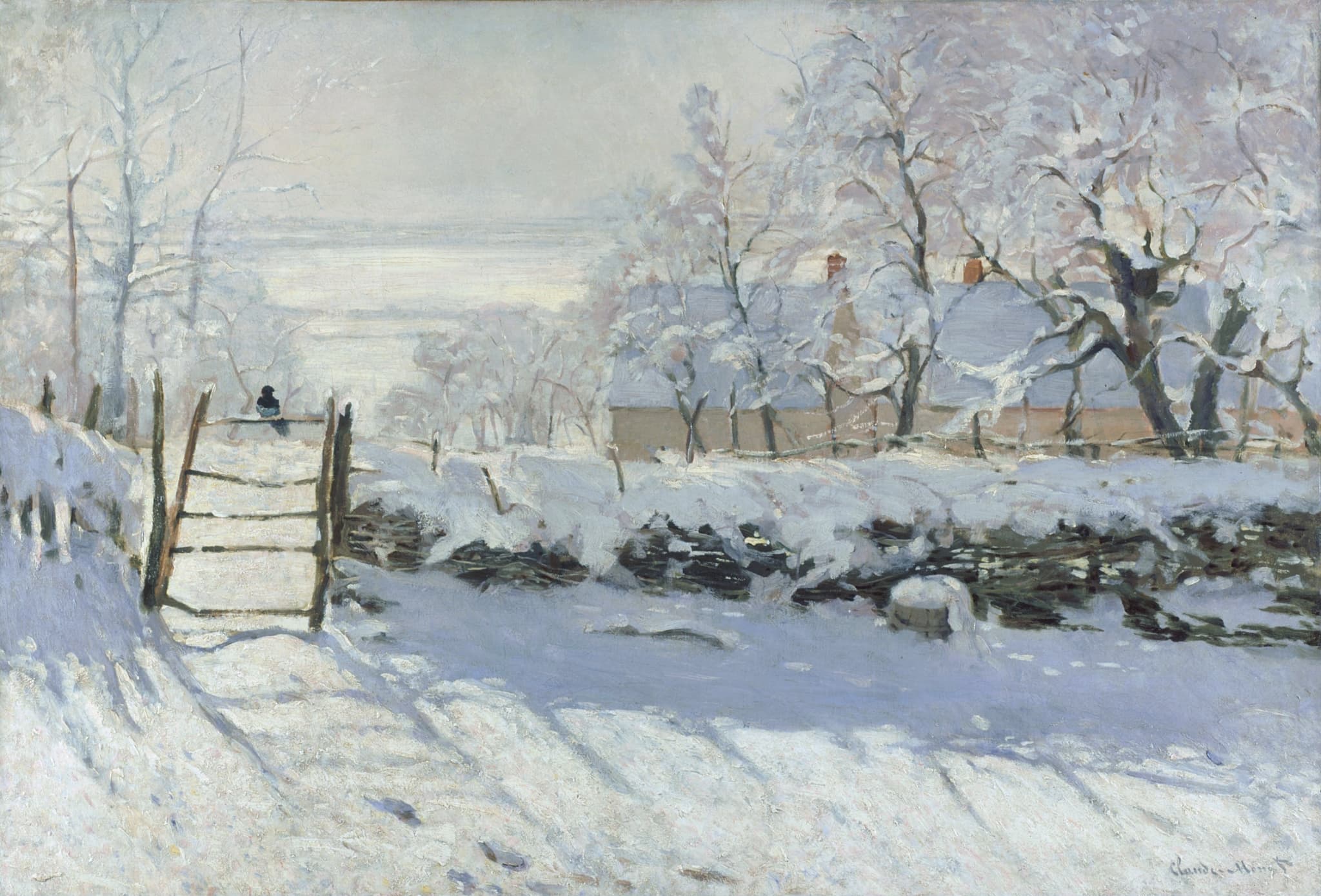
Claude Monet’s The Magpie (1868–69) is a canonical early masterpiece held by the Musée d’Orsay and is not marketable; this valuation is a hypothetical benchmark for insurance and comparability. Anchored to Monet’s $110.7m auction record and sustained nine‑figure demand for prime works, the painting would command $120–170 million in an unconstrained international sale. Its singular status as Monet’s most celebrated snowscape justifies an upward extrapolation over the artist’s record.
Valuation Analysis
Conclusion: Claude Monet’s The Magpie (1868–69) resides in the Musée d’Orsay and forms part of the inalienable French national collections; any monetary figure is therefore a hypothetical benchmark rather than a sale price [1][2]. Based on the artist’s proven price ceiling and current demand for blue‑chip Impressionist masterpieces, we estimate an unconstrained international sale at $120–170 million.
Significance: As a landmark early masterpiece and arguably Monet’s most celebrated snowscape, The Magpie crystallizes the artist’s breakthrough exploration of colored shadows across a luminous winter field. Its large 89 × 130 cm format and striking, instantly recognizable composition have made it a canonical image in scholarship and museum displays, frequently reproduced and central to narratives about Monet’s evolution prior to the great series of the 1890s and 1900s [1]. These qualities elevate it beyond typical winter subjects and justify positioning alongside Monet’s most coveted series works.
Market evidence: Monet’s auction record stands at $110.7 million for Meules (Haystacks) in 2019, establishing the artist’s capacity to clear nine figures when a trophy from a marquee series is offered [3]. More recently, prime Water Lilies canvases sold for $74.0 million (Christie’s, Nov 2023) and $65.5 million (Sotheby’s, Nov 2024), underscoring deep, global bidding for best‑in‑class Monets even amid selective market conditions [4][5]. These benchmarks confirm a stable $65–75 million band for top late works and a nine‑figure ceiling for truly iconic subjects.
Positioning The Magpie: While snow scenes typically trade below Water Lilies, Haystacks, or Cathedral series pictures, The Magpie is the singular, brand‑defining exception within Monet’s winter oeuvre. By comparison, later and smaller winter views such as Effet de neige à Giverny (1893) achieved $15.5 million in 2018—reflective of subject‑category norms rather than canonical, museum‑caliber status [6]. The Magpie’s scale, fame, and art‑historical primacy place it near the top of Monet’s value spectrum, warranting an upward extrapolation beyond the 2019 record in a fully international sale.
Assumptions and constraints: This estimate presumes excellent museum‑level condition and a standard, unconstrained sale format. In practice, the work is inalienable under French law and would likely be subject to preemption and export controls, which could narrow the buyer pool and suppress the realized price if sold domestically [2]. The stated range therefore functions as a robust insurance/benchmark valuation calibrated to open‑market dynamics for a painting of this stature.
Key Valuation Factors
Art Historical Significance
High ImpactThe Magpie is a landmark early Monet and arguably the most celebrated snowscape in his oeuvre. Executed in 1868–69, it crystallizes Monet’s pioneering use of colored shadows and luminous atmosphere at a pivotal moment in his development. The composition’s poetic simplicity—a solitary bird atop a snow‑covered gate—has become a canonical image that appears frequently in scholarship and museum narratives. Its prominent display and broad reproduction history amplify its cultural footprint, elevating it beyond a subject category (winter scenes) that otherwise tends to price below Monet’s major series. This reputational weight is a primary driver of nine‑figure valuation.
Rarity and Market Scarcity
High ImpactMonet snowscapes appear at auction far less frequently than his late garden series, and few approach The Magpie’s scale, beauty, and fame. Museum‑grade early masterpieces with this level of recognition are effectively unavailable: The Magpie has no modern auction history and has been in a national museum for decades. Scarcity at this qualitative tier drives intense competition when comparably important Monets do appear, often compressing bidding into a small cohort of determined buyers. In value terms, rarity is not merely quantitative but qualitative: the painting’s unique status as the definitive Monet winter icon places it in a near‑singular supply category.
Market Benchmarks and Price Ceiling
High ImpactMonet’s record price of $110.7m for Meules (2019) demonstrates a nine‑figure ceiling when a best‑in‑class, series‑defining work is offered. Recent prime Water Lilies have achieved $65.5–74.0m (2024–2023), confirming sustained global depth for top Monets even through more selective market phases. The Magpie is not a Nymphéas or Grainstack, but its canonical status within Monet’s early oeuvre and broad image recognition support positioning near or above the record in an unconstrained sale. This factor anchors the $120–170m range, with the high end reflecting the potential for cross‑category bidding on a museum‑defining icon.
Condition, Scale, and Image Quality
Medium ImpactAt 89 × 130 cm (35 × 51.2 in), The Magpie has exceptional wall power, and its crystalline winter light and graphic silhouette read with great clarity at distance. For nine‑figure works, condition is pivotal: paint‑layer stability, surface freshness, and conservation history materially affect outcomes. As a work in a national museum, it benefits from high standards of care, and its celebrated exhibition life supports the perception of strong condition and quality. While any undisclosed structural issues would adjust price, the combination of scale, pictorial punch, and presumed museum‑level condition supports the work’s placement at the very top of Monet’s market.
Legal and Export Constraints
Medium ImpactThe painting belongs to the Musée d’Orsay and is inalienable under French law (Musées de France). Practically, this means it is not saleable; a hypothetical sale within France would likely trigger preemption and export controls, narrowing the buyer pool and compressing price. Our range is calibrated to an unconstrained, international sale scenario to provide a robust benchmark for insurance and comparative purposes. If constraints applied, realized value could fall below the indicated band due to reduced competition and logistical barriers. This factor affects realizability rather than intrinsic market appeal, hence a medium impact designation.
Sale History
The Magpie has never been sold at public auction.
Claude Monet's Market
Claude Monet is a top-tier, globally liquid blue-chip artist with a deep, diversified collector base across the U.S., Europe, and Asia. His all-time auction record is $110.7 million for Meules (2019), and prime late works from the Water Lilies cycle routinely achieve $60–75 million in major evening sales. Key series—Grainstacks, Nymphéas, Rouen Cathedral, Poplars, and London/Thames—anchor the high end, while strong provenance and condition are decisive for pricing power. Supply of museum-grade Monets remains thin, supporting resilience at the top. While broader markets have been selective, trophy-caliber Monets continue to attract guarantees and intense competition, confirming the artist’s status as a cornerstone of the Impressionist category.
Comparable Sales
Meules (Haystacks)
Claude Monet
Record-setting Monet from the most coveted series; establishes the upper bound for a museum-grade Monet and a benchmark for masterpiece pricing even though not a snow scene.
$110.7M
2019, Sotheby's New York
~$138.4M adjusted
Le bassin aux nymphéas (c. 1917–19)
Claude Monet
Top-tier Water Lilies of major scale; demonstrates current depth for blue-chip Monets at the trophy level, useful as a ceiling proxy for The Magpie’s masterpiece status.
$74.0M
2023, Christie's New York
~$77.7M adjusted
Nymphéas (1914–17)
Claude Monet
Another trophy-grade Water Lilies confirming sustained demand for canonical late Monets; calibrates the 60–70m band for peak, series-defining works.
$65.5M
2024, Sotheby's New York
~$67.1M adjusted
Peupliers au bord de l’Epte, crépuscule (Poplars)
Claude Monet
Prime series picture from a marquee cycle with a consistent high-end market; helpful for valuing non–Water Lilies masterpieces below the absolute apex.
$43.0M
2025, Christie's New York
Effet de neige à Giverny (1893)
Claude Monet
Direct subject comparable (snow scene) showing the historical price band for winter motifs; later and smaller than The Magpie, thus a conservative subject-based anchor.
$15.5M
2018, Christie's New York
~$20.0M adjusted
La Seine à Lavacourt, débâcle (1880)
Claude Monet
Winter/ice subject by Monet; smaller and secondary in importance, useful to establish a floor for snow/ice compositions relative to The Magpie’s landmark status.
$4.9M
2024, Christie's New York
~$5.0M adjusted
Current Market Trends
The Impressionist/Post‑Impressionist segment softened in 2023–24 as mega-lot supply thinned and bidding became more selective, but late‑2025 sales signaled renewed confidence for blue-chip masterpieces. Trophy works with clear provenance and museum‑level significance continue to draw deep international demand, while mid‑tier material requires disciplined estimates to clear. Guarantees remain common for headline lots. Against this backdrop, Monet’s best series pictures have held a $60–75 million trading band, with the 2019 record confirming capacity for nine-figure prices when an icon is offered. Overall, conditions favor historically important, highly recognized works over generalized subject pieces, reinforcing a premium for canonical images like The Magpie.
Sources
- Musée d’Orsay – La Pie (The Magpie) object record
- Legifrance – Code du patrimoine, Article L451-5 (inalienability of Musées de France collections)
- Sotheby’s – Monet’s Meules sells for $110.7m (artist record)
- Christie’s – 20th Century Evening Sale totals $640.8m; Monet’s Le bassin aux nymphéas at $74.01m
- Sotheby’s – Fall 2024 Auction Results; Monet Nymphéas at $65.5m
- The Art Newspaper – Christie’s 2018 New York Impressionist & Modern Sales analysis