How Much Is Waterloo Bridge, Sunlight Effect Worth?
Last updated: February 1, 2026
Quick Facts
- Insurance Value
- $85.0M (Comparable auction analysis (Christie's and Sotheby's results))
- Current Location
- The Art Institute of Chicago
- Methodology
- comparable analysis
Using direct, same-series auction comparables and the superior desirability of the high-chroma “Sunlight Effect” variant, we estimate Claude Monet’s Waterloo Bridge, Sunlight Effect at $60–80 million. The work’s prime format, museum pedigree (Art Institute of Chicago), and luminous palette justify a premium over recent fog/brume Waterloo Bridge results.
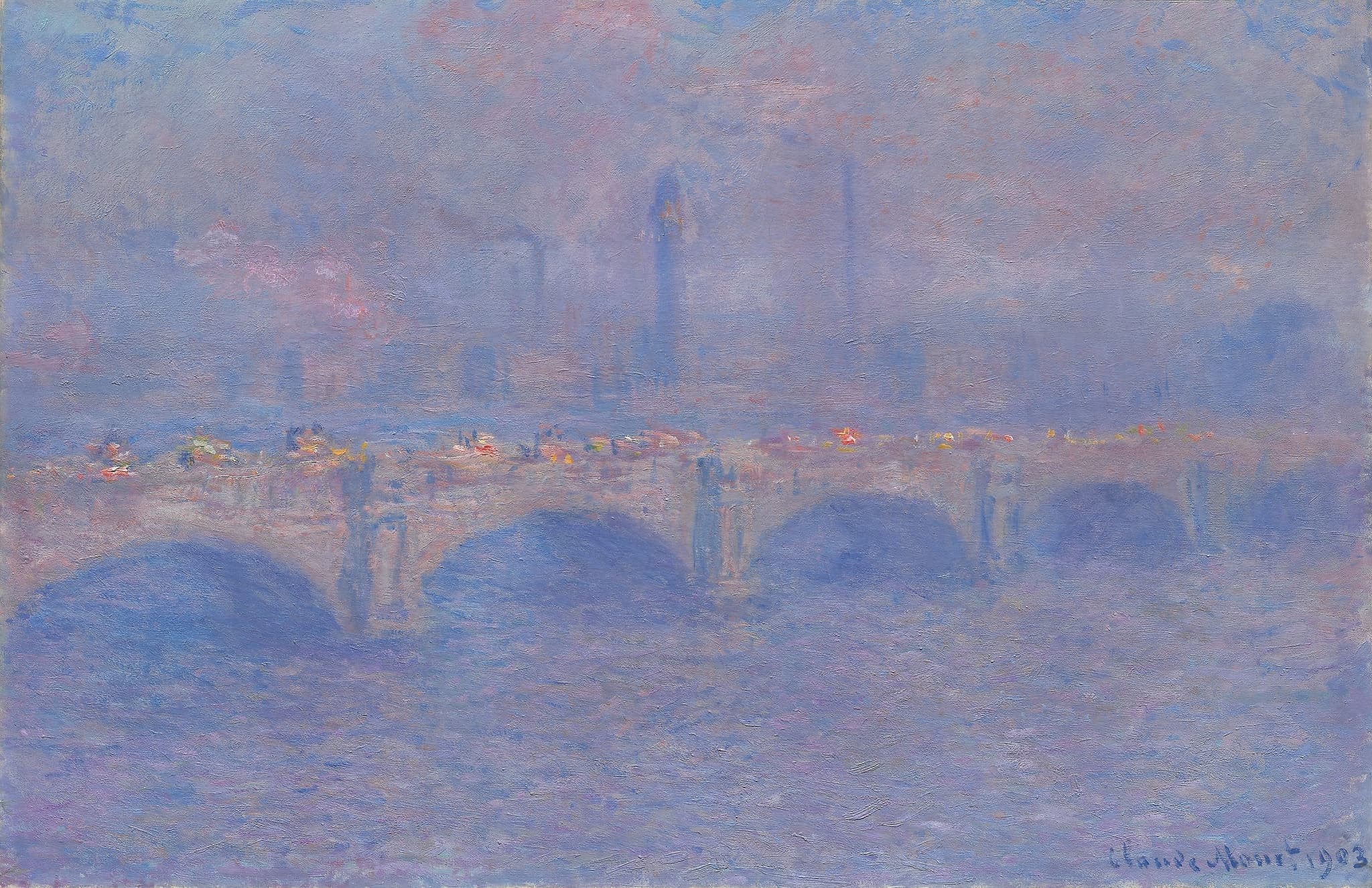
Waterloo Bridge, Sunlight Effect
Claude Monet, 1903 (begun 1900) • Oil on canvas
Read full analysis of Waterloo Bridge, Sunlight Effect →Valuation Analysis
Work identified: Claude Monet’s Waterloo Bridge, Sunlight Effect (1903; c. 65.7 × 101 cm; Wildenstein W1586) is a marquee canvas from the artist’s London Thames campaign. The Art Institute of Chicago records the painting’s debut as Effet de soleil in Monet’s 1904 Durand‑Ruel exhibition and details a Durand‑Ruel to Martin A. Ryerson provenance culminating in the museum’s 1933 bequest [1]. Within the London corpus (Waterloo Bridge, Charing Cross Bridge, Houses of Parliament), this is a prime, luminous variant rather than a veiled fog study.
Comparable-sales anchor: Two recent, same-format Waterloo Bridge results define the floor of value: Christie’s New York, 13 May 2021, Waterloo Bridge, effet de brouillard at $48.45m [2]; and Christie’s London, 28 June 2022, Waterloo Bridge, effet de brume at £30,059,000 (~$36.8m) [3]. Market behavior consistently rewards higher-chroma, more legible “sunlight” images with a premium over tonalist fog/brume variants. Given the AIC painting’s variant, palette, and institutional stature, it should rank above the 2021 brouillard benchmark.
Upper benchmarks and market ceiling: Within the London series, a leading Houses of Parliament (sunset) realized $75.96m in 2022, providing a credible upper anchor for London motifs [4]. Monet’s global demand ceiling remains extremely high, with the artist’s record at $110.7m for Meules (2019) [5], underscoring deep liquidity for trophies. Recent top-tier Nymphéas prices—$74.01m (2023) and $65.5m (2024, to an Asian buyer)—confirm sustained, international bidding for masterpiece-quality Monets even amid selective market conditions [6].
Provenance, condition, and scarcity: The AIC painting’s Durand‑Ruel lineage, early American collection history, and nearly century-long institutional custody are best‑in‑class. The standard marine format (c. 65 × 100 cm) is the series’ prime commercial size, and the AIC technical/scholarly entry indicates sound condition and exhibition history [1]. With a significant portion of the Waterloo Bridge set in museums, replacement difficulty is high, and museum-caliber examples command upper‑quartile pricing.
Conclusion and pricing: Synthesizing like‑kind auction comparables, variant desirability, institutional cachet, and current top‑end market dynamics, we assess fair market value at $60–80 million, with midpoint expectation around the low‑to‑mid $70s for an optimally timed sale. For insurance/replacement, reflecting scarcity and competition, a $85 million figure is justified.
Key Valuation Factors
Art Historical Significance
High ImpactMonet’s London campaign (1899–1904) is central to his mature exploration of color, light, and atmospheric optics, bridging Impressionism and proto‑abstraction. Within this campaign, Waterloo Bridge is one of the canonical motifs alongside Charing Cross and Houses of Parliament. A “Sunlight Effect” canvas crystallizes Monet’s thesis: dissolving architecture into chromatic light while preserving enough structure (bridge, barges, chimneys) to anchor perception. The series’ exhibition at Durand‑Ruel in 1904 marked a pivotal moment in Monet’s late career reception, and works from the set are widely represented in major museums and scholarship. As such, the AIC painting sits within the artist’s top tier of historically significant themes, conferring durable cultural and market value.
Series/Variant Quality
High ImpactWithin Waterloo Bridge, palette and legibility materially affect demand. Collectors pay premiums for luminous, high‑chroma pictures—particularly those that articulate the bridge span, barges, and sunlit atmosphere—over more veiled fog/brume variants. The “Sunlight Effect” nomenclature signals stronger color and light, positioning the AIC canvas at the desirable end of the variant spectrum. It also aligns with the motif’s most reproduced and exhibition‑friendly images, enhancing its recognizability. With recent auction benchmarks for fog/brume Waterloo Bridges in the mid‑to‑high eight figures, a sunlit exemplar with museum pedigree justifies top‑quartile pricing for the series and approaches the band set by leading Parliament sunsets, while remaining below Monet’s absolute category records.
Provenance and Institutional Cachet
High ImpactA Durand‑Ruel provenance, early American collection history (Martin A. Ryerson), and long-term placement in the Art Institute of Chicago confer exceptional credibility. Museum‑held examples benefit from rigorous conservation, exhibition, and publication histories, and their remarketability—should deaccession be permitted—is enhanced by verified authenticity and scholarship. Works emerging from major institutions often attract guarantees and underbidders who value replacement difficulty as much as aesthetics. For Waterloo Bridge specifically, a large share resides in museums, constraining supply. The AIC imprimatur, together with the painting’s presence in foundational literature and exhibitions since 1904, supports valuation at the upper end of the series range and justifies an elevated insurance replacement figure.
Condition, Scale, and Display
Medium ImpactThe standard marine format (approximately 65 × 100 cm) is the market’s preferred Waterloo Bridge size—large enough to deliver the optical effect yet manageable for private display. The Art Institute’s technical entry notes sound condition and mid‑century conservation typical for the series, with stable surface and preserved color relationships. At this scale, Monet’s layered strokes and chromatic vibration read convincingly from domestic viewing distances, which broadens the buyer base beyond institutions to top private collectors. Condition and scale thus reinforce liquidity and pricing power, though they are secondary to variant quality and provenance in driving the premium reflected in the $60–80 million estimate.
Sale History
Durand-Ruel, New York
Sold to W. A. Putnam; repurchased by Durand-Ruel in 1913.
Durand-Ruel, New York
Sold to Martin A. Ryerson; bequeathed to the Art Institute of Chicago in 1933.
Claude Monet's Market
Claude Monet is a cornerstone of the global blue‑chip market, with deep institutional and private demand across the U.S., Europe, and Asia. His auction record stands at $110.7 million for Meules (2019), and prime late works—particularly Nymphéas, London views, and other series canvases—regularly command prices from the mid‑eight to low‑nine figures. Recent headline results include $74.01 million (Nymphéas, 2023) and $65.5 million (Nymphéas, 2024, to an Asian buyer), underscoring sustained trophy demand. The best works benefit from scarce supply, strong brand recognition, and curatorial endorsement. While the broader high‑end market has grown more selective, top‑quality Monets with outstanding provenance continue to attract guarantees and multiple bidders.
Comparable Sales
Waterloo Bridge, effet de brouillard
Claude Monet
Closest comp: same series (Waterloo Bridge), same marine format (~65×100 cm), c.1899–1903; atmospheric variant directly comparable to a luminous ‘sunlight’ canvas.
$48.5M
2021, Christie's New York
~$58.1M adjusted
Waterloo Bridge, effet de brume
Claude Monet
Same artist/series/size and period; a fog/brume variant from the Waterloo Bridge cycle provides a like‑kind benchmark.
$36.8M
2022, Christie's London
~$40.9M adjusted
Waterloo Bridge, temps couvert (Overcast Weather)
Claude Monet
Same subject and standard marine format; a well‑publicized earlier market high for the series offers a long‑run reference point.
$35.5M
2007, Christie's London
~$55.8M adjusted
Le Parlement, soleil couchant (Houses of Parliament, Sunset)
Claude Monet
Same London ‘Vues de Londres’ project, similar date and scale; top‑tier London motif used as an upper benchmark for Waterloo valuations.
$76.0M
2022, Christie's New York
~$84.4M adjusted
Charing Cross Bridge
Claude Monet
Companion London view from the same campaign and identical format; calibrates demand across the London bridge subset.
$27.6M
2019, Sotheby's New York
~$35.1M adjusted
Current Market Trends
Marquee sales since 2023 show a selective, quality‑driven market: fewer $10m+ consignments, disciplined bidding, and strong outcomes for masterpiece‑caliber works. Within Impressionist and early Modern, supply of top examples remains constrained, which bolsters pricing for museum‑level material. Monet sits at the center of this demand—late Nymphéas and the most celebrated series pictures still elicit global competition, with active participation from American, European, and Asian buyers. Against this backdrop, series‑defining London canvases in luminous palettes price above fog variants and track just below the best Water Lilies and Parliament sunsets, supporting a $60–80 million fair market view for a museum‑pedigree “Sunlight Effect” Waterloo Bridge.
Sources
- Art Institute of Chicago — Waterloo Bridge, Sunlight Effect
- Christie’s — Waterloo Bridge, effet de brouillard (13 May 2021), $48.45m
- Christie’s — Waterloo Bridge, effet de brume (28 June 2022), £30,059,000
- Christie’s — Le Parlement, soleil couchant (12 May 2022), $75.96m
- Sotheby’s — Monet’s Meules sells for $110.7m (14 May 2019)
- Wall Street Journal — Monet Water Lilies sold for $65.5m (18 Nov 2024)