How Much Is The Balcony Worth?
Last updated: March 13, 2026
Quick Facts
- Methodology
- comparable analysis
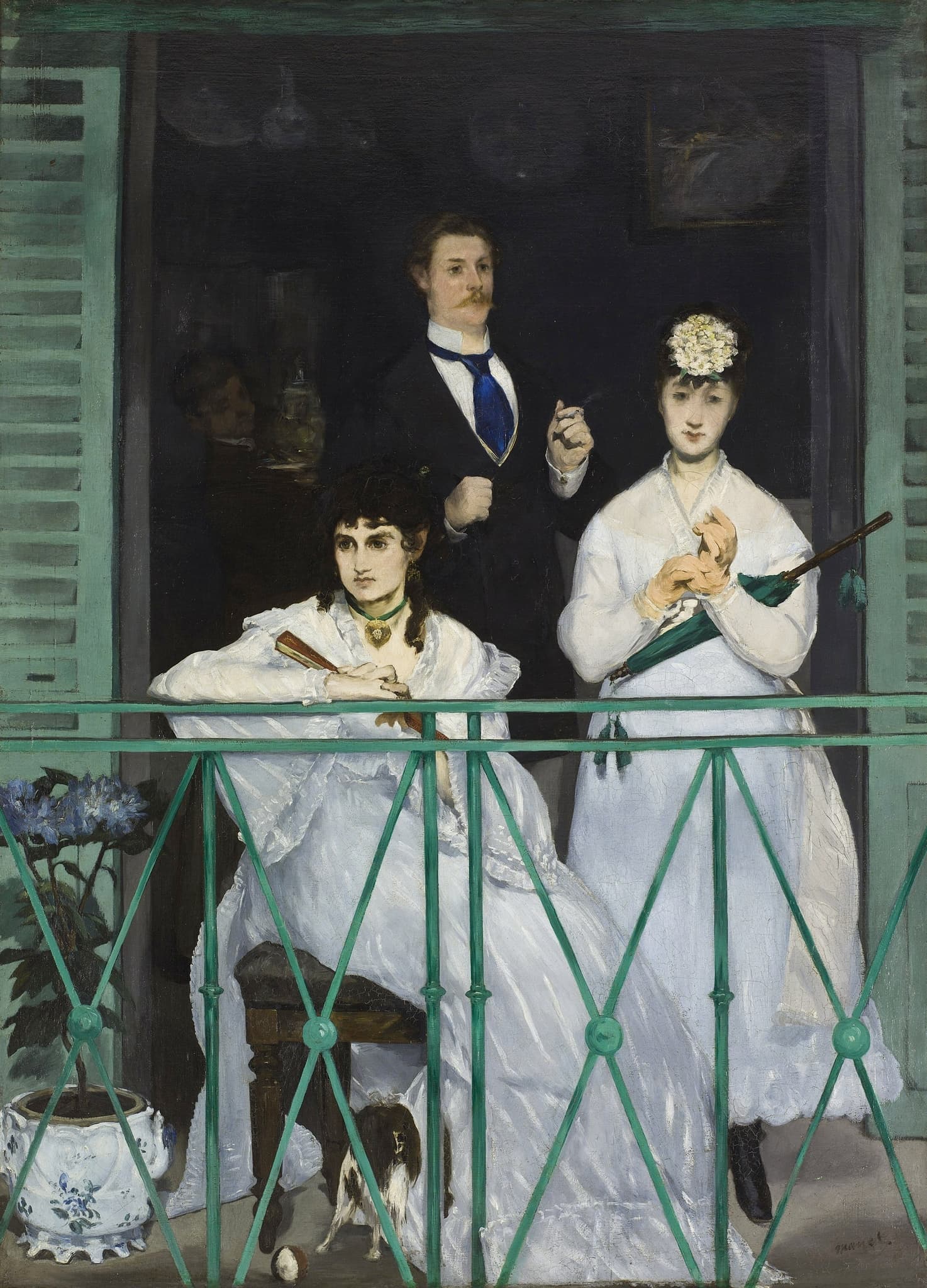
The Balcony (c.1868–69) is a museum‑grade Manet and — under a hypothetical open‑market sale with clear title and export permission — I estimate its market value at USD 45–95 million. This band is anchored to recent high‑end Manet auction results and adjusted for the painting’s canonical status, pristine provenance, and likely purchaser pool.
Valuation Analysis
Valuation conclusion: On a hypothetical open market the Musée d’Orsay’s The Balcony (Le Balcon, c.1868–69) would reasonably be estimated in the range of USD 45,000,000 to USD 95,000,000, with the most probable realizations clustering around USD 55–80M under typical auction or negotiated private‑sale circumstances. The painting’s museum status makes this a theoretical exercise — it is in public ownership — but the estimate is based on direct market comparables and standard upward/downward adjustments for condition, provenance and sale mechanics [1].
Comparable anchors: The primary auction anchors are Manet’s Jeanne (Le Printemps), which realized USD 65,125,000 at Christie’s in 2014, and Le Grand Canal à Venise, which realized USD 51,915,000 in Christie’s 2022 Paul Allen sale. These headline results demonstrate demand and price ceilings for top‑tier Manet oils; smaller or later Manet works trade materially lower (e.g., recent still lifes in the low‑to‑mid single‑digit millions) and category trophy sales (e.g., major Monet results) illustrate an upper bound in the broader Impressionist market [2][3].
Adjustments applied: The band above reflects qualitative and quantitative adjustments to comparables. Positive drivers: canonical subject, long public exhibition history, and pristine Gustave Caillebotte → French state provenance increase institutional confidence and buyer competition. Negative or discounting drivers: museum ownership (complicates market access and elevates deaccession risk), any significant conservation interventions, and French patrimony/export constraints that can limit the international buyer pool. A pristine condition report and a high‑profile pre‑sale exhibition/publication campaign would push toward the top of the band; material conservation issues or legal encumbrances could push realized value below the low end.
Sale mechanics and sensitivity: Auction placement with international marketing, sale guarantees and competitive bidding typically yields the highest public prices; private treaty sales can realize similar outcomes but depend on buyer relationships and confidentiality. For a work with The Balcony’s profile, a single aggressive institutional buyer or a heated private bidding contest could drive price toward the high end; conversely, constrained sale circumstances (deaccession with legal limits or forced sale) would depress interest and realization. Recent mid‑market Manet trades show strength but also selectivity, supporting the band above [4].
Next steps to refine: obtain the Musée d’Orsay accession/provenance file, a full conservation report, and confidential market‑soundings from Christie’s/Sotheby’s private sales teams. Those items materially tighten the range and convert this hypothetical estimate into a formal, market‑actionable appraisal.
Key Valuation Factors
Art Historical Significance
High ImpactThe Balcony is a canonical Manet from the late 1860s and occupies an important place in the artist’s transition from Realism toward the visual language that informed Impressionism. While not as publicly notorious as Olympia or Déjeuner sur l'herbe, Le Balcon is consistently referenced in scholarship, exhibition histories and museum literature and is widely recognized among curators and collectors. That status converts directly into market value: canonical, well‑documented examples of an artist’s output command a sustained institutional and private bidder pool and a premium over comparable works that lack comparable art‑historical standing. Consequently, historical significance is a principal upward driver in the estimate.
Provenance & Exhibition History
High ImpactThe painting’s provenance is exceptionally clean and market‑supportive: retained by Manet until his death, sold into Gustave Caillebotte’s collection and ultimately bequeathed to the French state — a transmission that eliminates gaps or suspect ownership chains. Long‑term institutional custody and frequent exhibition/publication history increase buyer confidence and the work’s scholarly footprint, both of which raise marketability and price. That said, public ownership also creates practical constraints (deaccession policy, public scrutiny) that can complicate or delay any sale and therefore affect net realizable value. Overall, pristine provenance and deep exhibition history materially increase the fair‑market estimate.
Condition & Conservation
High ImpactCondition is a binary and high‑leverage factor for a large 19th‑century oil. A well‑preserved original surface with minimal, documented interventions supports premium pricing; conversely, significant varnish discoloration, inpainting, structural relining or unstable paint layers can reduce value substantially. For major museum pictures conservators’ reports often move price by tens of percent: a clean bill of health will push toward the higher end of the band, while evidence of heavy restoration or recent aggressive intervention will necessitate a downward adjustment. A current, detailed conservator’s report is essential to convert this theoretical estimate into a firm market valuation.
Market Scarcity & Demand
High ImpactLarge, canonical Manet oils are rare on the market and scarcity is a key positive driver. Institutions and high‑net‑worth collectors prize museum‑grade works for their exhibition potential and academic value, creating a concentrated but deep buyer pool when such works surface. Recent headline Manet sales demonstrate meaningful willingness to pay in the mid‑tens to low‑sixties of millions for major canvases, and intense competition (guarantees, institutional bidding) can lift prices further. Conversely, when supply is limited but sale conditions restrict broad access, scarcity alone cannot fully offset market friction. Overall scarcity supports premium pricing relative to the mid‑market.
Legal / Cultural Restrictions
Medium ImpactBecause The Balcony is part of the French national collection via the Caillebotte bequest, legal and cultural‑property rules may apply. Export permits, state retention rights and deaccession protocols can limit potential buyers (or require preemptive offers by national museums) and create timing and reputational complexities. Those frictions do not alter the painting’s intrinsic desirability, but they do diminish practical saleability and can reduce competitive tension at auction. If the work were cleared for international sale with unrestricted title, market value would be higher; the presence of cultural restrictions therefore represents a measurable discount risk.
Sale History
The Balcony has never been sold at public auction.
Édouard Manet's Market
Édouard Manet occupies a top‑tier position in the 19th‑century French market: his largest, well‑provenanced oils are trophy assets for institutions and private collectors. Public auction records (e.g., Le Printemps, Christie’s 2014) show the artist can command mid‑to‑high tens of millions when canonical works appear; a small number of comparable sales in the $50M–$65M band dominate recent price references, while smaller or later works trade in much lower brackets. Manet’s market is therefore highly quality‑sensitive: a single museum‑quality canvas can move the price needle significantly, while mid‑tier material is subject to buyer selectivity.
Comparable Sales
Le Printemps (Jeanne)
Édouard Manet
Artist; large, canonical Manet figure painting and the artist's modern-auction record — primary benchmark for top-tier Manet oils.
$65.1M
2014, Christie's, New York (Impressionist & Modern Evening Sale)
~$84.7M adjusted
Le Grand Canal à Venise
Édouard Manet
Artist; recent high‑profile sale of a major Manet oil from a single‑owner/trophy collection — good contemporaneous market comparable.
$51.9M
2022, Christie's, New York (The Paul G. Allen Collection sale)
~$56.1M adjusted
Self‑Portrait (Manet à la palette)
Édouard Manet
Artist; prior major auction high for an important Manet (earlier record) — shows historical collector demand and price trajectory for important canvases.
$33.0M
2010, Sotheby's, London
~$47.9M adjusted
Vase de fleurs, roses et lilas
Édouard Manet
Artist; recent sale of a later, smaller Manet still life — useful for mid‑market context and to show demand dispersion across subjects/sizes.
$10.1M
2024, Sotheby's, New York
~$10.4M adjusted
Meules (Haystacks)
Claude Monet
Different artist but a trophy Impressionist sale that demonstrates category ceiling for museum‑quality Impressionist masterpieces — useful cap-case for The Balcony.
$110.7M
2019, Sotheby's, New York
~$130.6M adjusted
Current Market Trends
The market for top Impressionist and Modern works remains two‑speed: trophy masterpieces maintain strong demand and pricing resilience, while the mid‑market has been more price‑sensitive since the 2023–24 softening. A partial rebound in 2025 has favored high‑quality, well‑provenanced canvases. For Manet specifically, scarcity of large canonical oils keeps the ceiling intact even as general auction activity fluctuates.
Sources
- Musée d’Orsay — Le Balcon (Manet) catalogue entry
- Christie’s press — Impressionist & Modern Evening Sale results (Le Printemps, 2014)
- Christie’s press material — The Paul G. Allen Collection (Manet: Le Grand Canal à Venise, 2022)
- Sotheby’s lot page — Vase de fleurs, roses et lilas (Manet), May 15, 2024