How Much Is Blue Dancers (The Blue Dancers / Dancers in Blue) Worth?
Last updated: March 8, 2026
Quick Facts
- Methodology
- comparable analysis
Assuming 'Blue Dancers' is an authenticated, finished Degas pastel of museum quality, I estimate a market value of USD 2,000,000–12,000,000. The range reflects recent comparable dancer pastels (a $5.78M late pastel anchor) and the wide dispersion between small studies and museum‑quality works; final value will hinge on medium, size, condition and provenance.
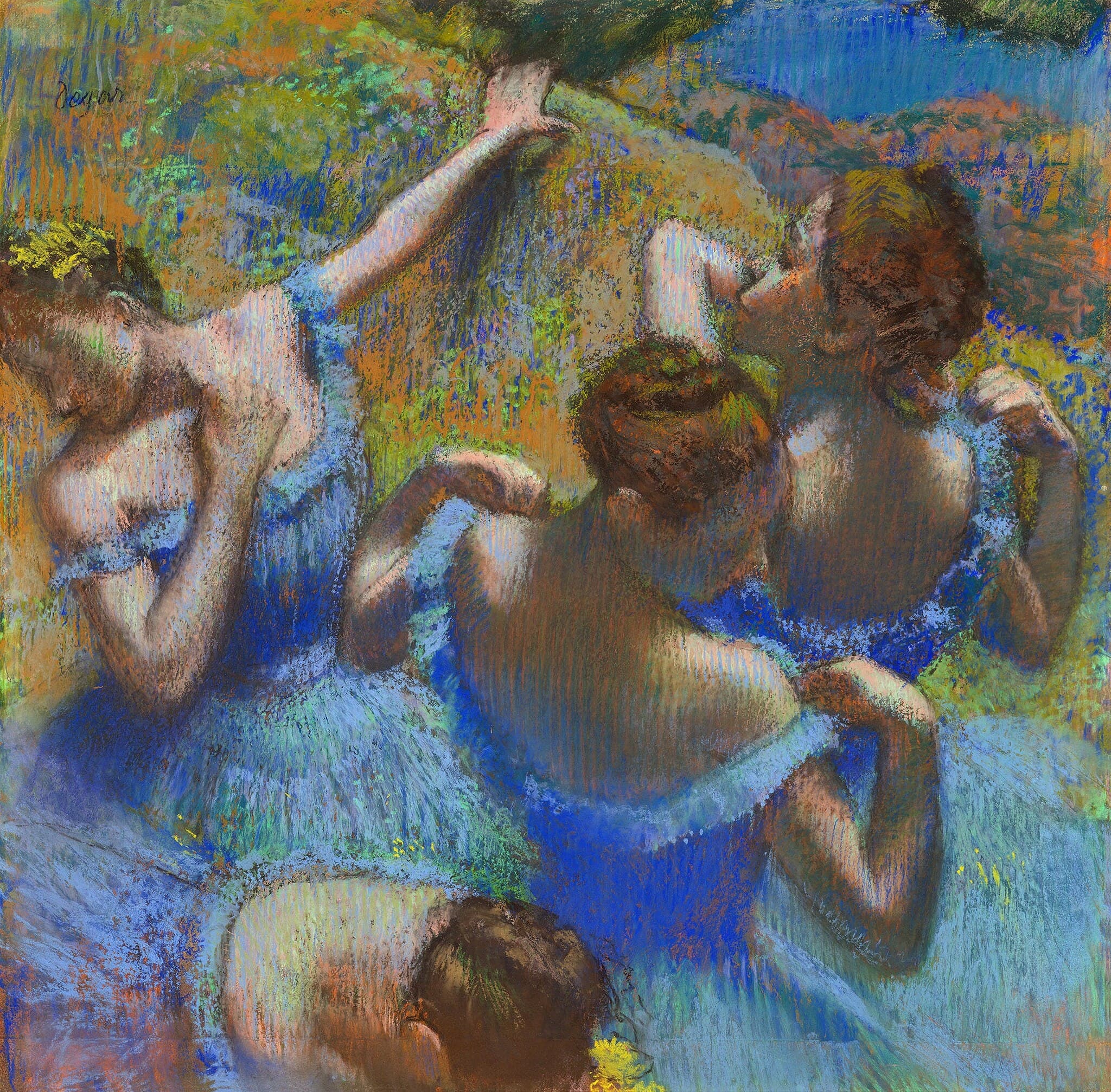
Blue Dancers (The Blue Dancers / Dancers in Blue)
Edgar Degas • Oil on canvas / pastel variants
Read full analysis of Blue Dancers (The Blue Dancers / Dancers in Blue) →Valuation Analysis
Conclusion and headline rationale: Based on comparative auction evidence and market context, if 'Blue Dancers' is an authenticated, finished Degas pastel of museum quality the appropriate market range is approximately USD 2,000,000–12,000,000. This bracket is driven by direct dancer‑pastel comparables and the known variability in prices for Degas works on paper [1][3][4].
Comparative anchors: Degas’s market displays a very wide dispersion. High‑end anchors for dancer subjects include top 2‑D sales such as the Sotheby’s 2008 Danseuse au repos (≈$37.04M) [1] and the artist‑record bronze sale in 2022 (≈$41.6M) [2] — these set the ceiling for premier, museum‑quality material. For close, recent, directly comparable evidence, a late dancer pastel sold at Sotheby’s in Nov 2025 for about $5.78M; that lot is the most useful direct anchor for a finished late pastel of similar scale and quality [3]. At the opposite end, small studies and sheet variants have realized low six‑figures (e.g., $151k–$220k) demonstrating compression at the market’s lower tail [4].
Why the range is wide: Degas repeatedly reworked dancer compositions across media (oil, pastel, drawings, monotypes) and in multiple states; titles alone are unreliable for identification. The principal valuation drivers are medium (large oil > finished pastel > small study in many cases), scale, condition (pastel fragility and restoration history matter), catalogue‑raisonné entry and exhibition/literature history. A museum‑quality, well‑provenanced pastel with RA listing and exhibition citations typically competes in the upper half of the range; a studio variant, unattributed sheet, or poorly conserved work falls to the lower half or below six‑figures.
Specific scenarios: If the sheet matches a known catalogue entry (for example the 'Trois danseuses en bleu' RA entry) and technical examination supports autograph status, expect market interest at or above the recent $5.78M pastel anchor—potentially $6M–12M with excellent provenance and exhibition history [3][5]. If it is a large authenticated oil with museum provenance, estimate materially higher (the user’s preliminary oil range of ~$8M–35M is plausible, depending on quality). If it is a workshop, copy, or lacks secure provenance, marketability is constrained and realizations are commonly well under $1M [4].
Next steps to firm the estimate: obtain high‑resolution recto/verso photos, exact dimensions, media/support identification, any inscriptions/labels, and provenance documentation; secure a condition report and technical imaging (X‑ray/infrared/pigment analysis); and consult the Degas catalogue raisonné and at least two major auction houses for formal pre‑sale opinions. These actions will typically reduce the bracket materially and identify the single most likely market channel (evening Impressionist sale, works‑on‑paper sale, or dealer/private sale).
Final practical note: Given market selectivity since 2022, scarcity and impeccable documentation drive premiums; present the strongest possible provenance and conservation record to approach the top of the stated range [2][3].
Key Valuation Factors
Art Historical Significance
High ImpactEdgar Degas’s dancer subject is central to his artistic reputation and market desirability. Works that represent a mature stage in his exploration of ballet—demonstrating compositional inventiveness, finished surface, and characteristic late‑period pastel technique—carry a significant premium. An autograph 'Blue Dancers' that can be linked to important exhibitions or scholarship will attract institutional bidders and private collectors who prioritize canonical works. Conversely, pieces that appear to be peripheral studies without literature references command far lower prices. In short, demonstrable art‑historical importance is a dominant value driver.
Medium & Condition
High ImpactMedium is decisive: large oils and finished pastels with intact surfaces and minimal intervention sell highest. Pastels are fragile and require sympathetic conservation; condition issues (loss, bleed, heavy restoration, matting damage) materially reduce marketability and price. Pastel fixatives, discoloration and paper tone are common concerns; an exemplary condition report can add millions, while significant conservation needs or losses can shave value dramatically. Accurate medium/support identification is therefore essential to any defensible valuation.
Provenance & Exhibition/Literature History
High ImpactA clear, well‑documented provenance (museum ownership, prominent private collections, or continuous ownership with exhibition and catalogue citations) materially elevates value by reassuring buyers and encouraging institutional competition. Works with exhibition history are more likely to be included in major sales and to command top prices. Gaps, dubious chains of ownership, or lack of catalogue or exhibition references increase buyer risk and depress the price; provenance is often the single factor that moves a work from mid‑market to top‑market.
Rarity & Market Demand
High ImpactSupply of museum‑quality Degas dancer pastels and oils is limited. When such works come to market they attract multiple bidders, including institutions, driving strong outcomes. By contrast, sheets, studio variants, and later reproductions are comparatively abundant and face softer demand. Market appetite for Degas is steady but selective; rarity combined with documented quality magnifies value, while commonness reduces it significantly.
Technical Authentication & Attribution
High ImpactScientific and connoisseurship evidence (pigment analysis, infrared reflectography, X‑ray, studio stamps, signature verification and catalogue raisonné confirmation) substantially affect attribution certainty and therefore value. A positive RA entry and technical corroboration will likely move a lot into the higher valuation band. Unresolved attribution or technical anomalies will lower buyer confidence and result in discounts or withdrawal from premier sales channels.
Sale History
Christie's, New York
Sotheby's, New York
Sotheby's, New York
Christie's, New York
Edgar Degas's Market
Edgar Degas is a blue‑chip nineteenth‑century French artist whose works—particularly dancer subjects—remain highly collectible. The market demonstrates a broad range: trophy bronzes and rare, museum‑quality pastels can reach tens of millions, while studies and lesser sheets trade in the mid‑six‑figure band. Institutional demand for canonical Degas material is strong, and provenance/exhibition history consistently differentiates multi‑million‑dollar outcomes from routine market realizations.
Comparable Sales
Petite danseuse de quatorze ans (Little Dancer)
Edgar Degas
Artist auction record (bronze); establishes top-end market anchor for Degas across media — shows ceiling of collector demand even though sculpture differs from a dancer pastel/painting.
$41.6M
2022, Christie's, New York
~$46.6M adjusted
Danseuse au repos (pastel / gouache, c.1879)
Edgar Degas
Major 2‑D auction record for Degas (pastel/gouache) — a direct, high‑quality precedent for top market value in works on paper of dancer subjects.
$37.0M
2008, Sotheby's, New York
~$51.9M adjusted
Trois danseuses (late pastel, c.1897)
Edgar Degas
Recent late‑period dancer pastel sold at major evening sale (2025) — closest direct comparable in subject, period and medium for a museum‑quality 'Blue Dancers' pastel.
$5.8M
2025, Sotheby's, New York
Danseuse (Buste) (small pastel/study)
Edgar Degas
Small study/pastel example — useful lower‑end bracket showing how size, format and study status materially reduce realised prices versus finished large pastels.
$151K
2025, Christie's, New York
Current Market Trends
Since the 2022 record bronze sale, the Impressionist market has become more selective: scarcity and provenance drive premiums while general liquidity has softened. High‑quality, well‑documented works still perform strongly, but smaller or uncertain pieces face more variability and often lower buyer turnout.
Sources
- Sotheby's — Danseuse au repos (Impressionist & Modern Art Evening Sale, 2008)
- Forbes reporting on Christie’s — Petite danseuse de quatorze ans (Christie’s, 2022)
- Sotheby's — Trois danseuses (Nov 2025 sale listing/result)
- Art.Salon / Christie’s example — Trois danseuses (lower‑end example, Nov 2022)
- Degas Catalogue Raisonné — 'Trois danseuses en bleu' (MS 2294) listing