How Much Is L'Absinthe (The Absinthe Drinker) Worth?
Last updated: March 8, 2026
Quick Facts
- Methodology
- comparable analysis
If this is the canonical 1875–76 L'Absinthe (Dans un café) in the Musée d'Orsay, it is a museum‑quality Degas masterpiece and—if it ever came to market—would very likely sell in the USD 40–100 million range. The range is driven by Degas auction precedents, the painting’s iconic status and rarity, and significant legal/market frictions arising from its public French ownership.
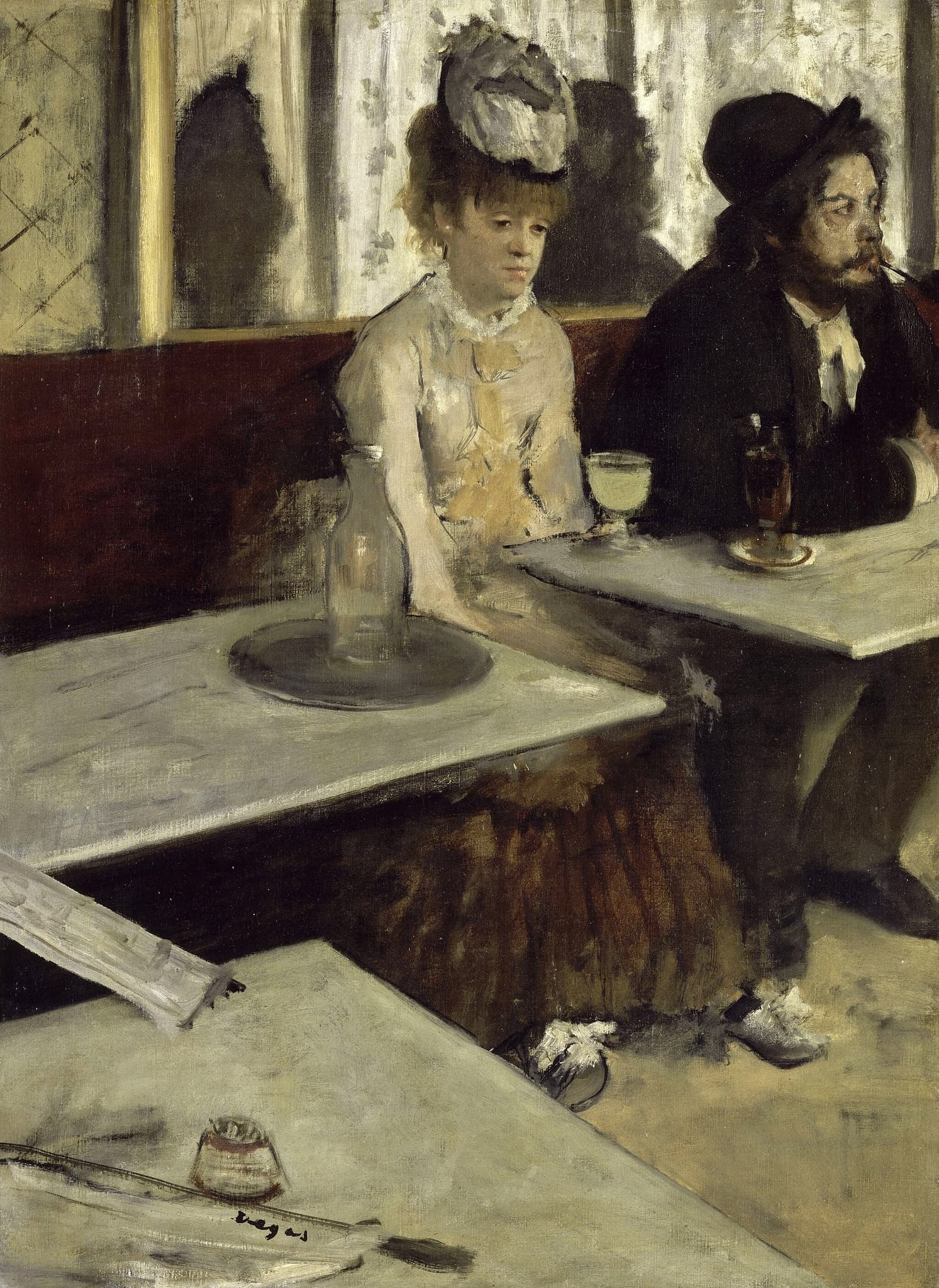
L'Absinthe (The Absinthe Drinker)
Edgar Degas • Oil on canvas
Read full analysis of L'Absinthe (The Absinthe Drinker) →Valuation Analysis
Conclusion and context: The canonical L'Absinthe (Dans un café), dated c.1875–76 and held in the French national collection/Musée d'Orsay, is an iconic, museum‑quality work. Were it to be offered on the international market under ordinary competitive conditions, a realistic auction/private‑treaty estimate is approximately USD 40–100 million. This valuation is based on direct Degas comparables, scarcity of comparable oils in private hands, and the classic trophy‑art pricing dynamics that favor top‑tier institutional pieces [1][2].
Comparable evidence and floors: Public auction evidence for top Degas works provides a practical market floor. The highest recent Degas results include the 2022 Christie’s sale of La Petite danseuse de quatorze ans (bronze) at ~USD 41.6M and earlier two‑dimensional Degas highs (e.g., important pastels/canvas results in the high‑$30M range) that set precedent for what the market has paid for canonical Degas objects [2][3]. Because L'Absinthe is a major oil painting—rare among Degas works to reach market—the floor established by these results supports the low end of the range; strong competition from institutions and private buyers could push price materially higher.
Upside, ceilings and analogous outliers: Exceptional Impressionist/Post‑Impressionist masterpieces (e.g., top Monet and Van Gogh canvases) have sold for well over USD 100M in rare circumstances, demonstrating theoretical upside for a uniquely important late‑19th‑century canvas. However, Degas typically trades below Monet/Van Gogh maxima; therefore, while an absolute upper bound could exceed USD 100M in an extraordinary sale, the most probable realized range aligns with top‑end Degas precedents unless the sale attracts exceptional single‑interest buyers or occurs in a blockbuster season [3].
Museum ownership, provenance and legal constraints: L'Absinthe’s museum accession, exhibition and publication history materially strengthen its authenticity and value but simultaneously reduce liquidity. The work is effectively off the open market while in public French custody [1]; French patrimonial rules, export controls and deaccession norms can prevent or complicate sale and limit the buyer pool, which is both a discounting and a risk factor to price realization in practice [5].
Condition, documentation and recommended next steps: This valuation assumes sound condition and museum conservation; any serious conservation issues would lower value materially. For a sale‑ready estimate: obtain the Musée d'Orsay accession number and full provenance line, request conservation/condition reports, confirm legal/export status with the French Ministry of Culture, and then seek formal market testing (auction house estimates or private‑sale interest). Given the painting’s importance, a retained‑or‑deaccession or exceptional private treaty sale would produce atypical dynamics that could push price above or below the stated band.
Summary of confidence: The USD 40–100M band is a reasoned, evidence‑based range grounded in Degas auction history and scarcity. Significant upside exists under extraordinary sale conditions; significant downside is driven by the practical improbability of a market offering and by legal/export frictions associated with national museum ownership [1][2][3][5].
Key Valuation Factors
Art Historical Significance
High ImpactL'Absinthe is a central, widely recognized work in Degas’s figural oeuvre: a defining example of his urban realism and exploration of modern Parisian social types. Its iconography and repeated reproduction in scholarship and exhibition histories confer exceptional cultural capital, making it highly desirable to museums and top private collectors. This level of art‑historical import materially elevates market value because buyers prize canonical status, provenance, and exhibition lineage; such works are judged both for visual quality and for their capacity to anchor collections and blockbuster exhibitions. In short, its canonical status is a primary driver of high value.
Rarity & Market Scarcity
High ImpactLarge, museum‑quality Degas oils of the importance of L'Absinthe rarely enter the market. The scarcity of directly comparable, museum‑grade canvases by Degas concentrates buyer competition when one appears, pushing pricing above typical auction results for mid‑tier Degas works. Market exemplars—top pastels, bronzes and the occasional major painting—have achieved high single‑digit to low‑double‑digit millions and, in exceptional cases, tens of millions, which establishes a scarcity premium. Because institutional examples like L'Absinthe are so seldom available, scarcity is a consistent upward pressure on valuation.
Provenance & Institutional Ownership
High ImpactThe painting’s long, museum‑held provenance (accepted into the French national collection and displayed at the Musée d'Orsay) significantly strengthens authenticity and market trust. That institutional provenance is value‑enhancing for collectors and institutions seeking canonical works, and it supports premium pricing in a contested sale. Conversely, institutional ownership also limits liquidity: deaccessioning rules, governmental oversight and the likelihood that the state will retain or preempt sale constrain practical marketability. Thus provenance both raises theoretical price and complicates realization.
Condition & Conservation
Medium ImpactCondition is a fundamental determinant of price. Museum care typically preserves good condition, but any significant restoration, overpainting, or structural issues would reduce market value materially. A comprehensive conservation report is required for sale readiness; clarity about past interventions, varnish, craquelure and retouching informs buyer confidence and insurance limits. Even with a clean condition history, high‑end buyers will require technical imaging and conservation documentation before bidding at the top of the estimated range.
Legal / Export Restrictions & Liquidity
High ImpactBecause L'Absinthe is in a French national/public collection, French cultural patrimony rules, export controls and preemption rights can prevent or heavily restrict export and sale. Classification as a 'trésor national' or other patrimonial designation would effectively bar export, narrowing the buyer pool to domestic institutions or requiring complex government approvals. These legal encumbrances lower liquidity and introduce sale risk; they can depress bids in a forced sale or concentrate demand domestically, potentially raising price only in an exceptional, contested deaccession scenario.
Sale History
L'Absinthe (The Absinthe Drinker) has never been sold at public auction.
Edgar Degas's Market
Edgar Degas is a blue‑chip Impressionist whose market is strong for canonical works but nuanced by medium and rarity. Degas bronzes and top pastels have set the artist’s auction highs (a 2022 bronze sold for ~USD 41.6M) while two‑dimensional works have traded into the high tens of millions when exceptional [2][3]. Degas lacks the absolute price ceiling of Monet or Van Gogh, but major museum‑quality pieces remain highly collectible and command premium pricing. Buyers differentiate heavily by medium (bronze/pastel/oil), provenance, scale and exhibition history, producing a stable yet selective market.
Comparable Sales
Danseuse au repos
Edgar Degas
Top public sale for a two‑dimensional Degas (pastel/gouache) — the most directly relevant auction precedent for major flat-media Degas works and a practical market floor for high‑quality Degas imagery.
$37.0M
2008, Sotheby's New York
~$53.7M adjusted
La Petite danseuse de quatorze ans (bronze cast)
Edgar Degas
Artist auction record (highest recent Degas result) — while a sculpture (different medium), it signals top‑end collector demand for canonical Degas works and sets a near‑term market ceiling for the artist.
$41.6M
2022, Christie's New York
~$44.9M adjusted
Meules (Haystacks)
Claude Monet
Museum‑scale Impressionist painting that sold >$100M — demonstrates upside for an exceptional, canonical late‑19th‑century French canvas in strong market conditions; useful as an upper‑bound market analogue.
$110.7M
2019, Sotheby's New York
~$131.0M adjusted
Portrait of Dr. Gachet
Vincent van Gogh
Iconic, museum‑quality Post‑Impressionist painting that set a high‑water mark for late‑19th‑century works at auction; useful to illustrate the extreme upper bound a canonical work can achieve.
$82.5M
1990, Christie's New York
~$175.0M adjusted
Current Market Trends
The current Impressionist/late‑19th‑century market is two‑tiered: strong demand and competition for trophy, museum‑quality works and weaker demand for mid‑market, decorative or repetitive pieces. Recent seasons show selective buyer appetite, institutional buying and blockbuster exhibitions supporting top prices while many smaller lots face softer demand. This dynamic benefits an iconic Degas painting—if it were available—because buyers are consolidating capital for the best, rare offerings.
Sources
- Musée d'Orsay — Dans un café (L'Absinthe) catalogue entry
- Christie’s press: The Collection of Anne H. Bass (La Petite danseuse de quatorze ans sale, May 12, 2022)
- Sotheby’s / market coverage — high two‑dimensional Degas precedent (Danseuse au repos and related sales)
- Degas Catalogue Raisonné — Au café (L'Absinthe) entry
- French Ministry of Culture — cultural patrimony / export control guidance