How Much Is The Ballet Class Worth?
Last updated: January 15, 2026
Quick Facts
- Current Location
- Musée d’Orsay, Paris
- Methodology
- extrapolation
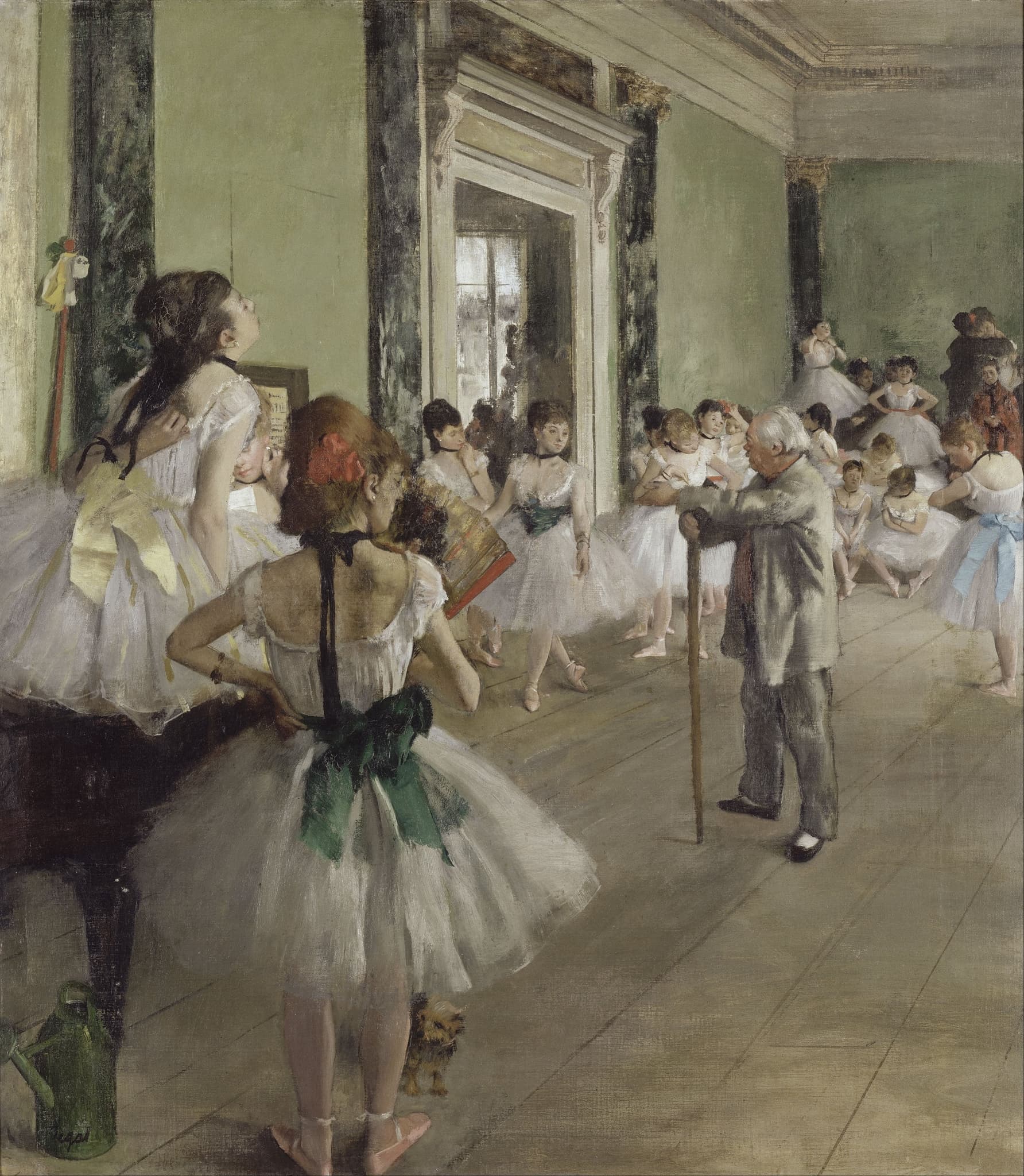
Assuming an unrestricted, international sale, Edgar Degas’s The Ballet Class merits a $100–150 million valuation. Its status as a canonical, large-scale 1870s oil of Degas’s signature ballet theme—paired in art history with The Dance Class at the Met—places it in the ultra‑trophy tier where nine‑figure outcomes are achievable.
Valuation Analysis
Conclusion: Under an unrestricted, international private‑market sale scenario, Degas’s The Ballet Class (Musée d’Orsay) supports a $100–150 million valuation. The work is a large, fully worked 1870s oil of the artist’s signature ballet subject, long regarded as one of the defining images of Impressionism and the pendant to The Dance Class at The Met—a pairing that anchors its art‑historical stature and brand recognition [1][6].
Method and benchmarks: Because the painting is French public property and effectively inalienable under the Code du patrimoine, our estimate is hypothetical and isolates pure market dynamics by extrapolating above the artist’s current record levels [2]. Degas’s auction apex remains the bronze Petite danseuse de quatorze ans at $41.6m (premium), while the highest price for a unique picture is the pastel Danseuse au repos at $37.0m (premium) [3][4]. Those figures understate the potential for a canonical 1870s oil, as most masterpieces are museum‑held and rarely test the market.
Cross‑artist context: The ultra‑trophy Impressionist segment has repeatedly demonstrated nine‑figure capacity for iconically branded, museum‑caliber works (e.g., Monet’s Meules at $110.7m) [5]. Manet’s Jeanne (Spring) at $65.1m (2014; ≈$85–90m in today’s dollars) confirms depth for canonical 1870s images by Degas’s immediate peers [7]. Against that backdrop, a singular ballet‑class oil—central to Degas’s identity and with a celebrated pendant at The Met—rationally prices above all prior Degas sales and within a $100–150m corridor.
Market positioning and sensitivities: The estimate assumes strong condition and surface quality, which are critical at the top end. It also assumes an unconstrained buyer pool; French patrimony protocols can depress price formation by limiting export and enabling state preemption [2]. Notwithstanding the broader Impressionist auction contraction in 2023–2024 due to fewer trophies, the top tier remains selective rather than weak; true icons with museum‑level significance have continued to command aggressive bidding when available [8]. On these fundamentals—canonical subject, major 1870s oil, exhibition fame, and extreme rarity—the $100–150m bracket is well supported, with competitive upside possible in a fully global sale.
Key Valuation Factors
Art Historical Significance
High ImpactThe Ballet Class is among the most emblematic images in Degas’s oeuvre and in Impressionism writ large. Painted in the 1870s and historically paired with The Dance Class at The Met, it encapsulates Degas’s modern vision of the Paris Opéra and the ballet studio. Its composition, scale, and finish place it in the very small cohort of works by Degas that transcend connoisseurship and function as cultural touchstones. This level of recognition, buttressed by extensive exhibition and publication histories, makes it the kind of museum‑defining picture that commands a global audience and premium pricing. Within Degas’s canon, only a handful of oils carry comparable art‑historical weight, most of them in public collections.
Subject, Medium, and Period Fit
High ImpactDegas’s dancers are the core driver of his market, and the 1870s are his most coveted period for this theme. Within that, a large, fully realized oil on canvas—rather than a pastel, drawing, or later oil—is the most competitive medium/period combination for top collectors. The Ballet Class unites all three attributes: the quintessential dancer subject, the formative mid‑1870s moment, and the unique, unrepeatable status of a major oil. Unlike cast bronzes or editioned works, this is a single, canonical painting. That alignment with collector preferences is a powerful value amplifier, helping justify a level well above the artist’s recorded auction highs when extrapolated to a true masterwork scenario.
Rarity and Market Scarcity
High ImpactThe very best Degas oils of dancers almost never come to market; most are in museums. As a result, public auction records for Degas understate the price potential of a masterpiece‑caliber oil. When trophy Impressionist icons with brand‑name recognition do surface, they attract a deep, international demand pool and can reset artist ceilings. The Ballet Class sits at this apex of scarcity and desirability: a unique, canonical 1870s oil with a famous pendant and decades of scholarly and exhibition pedigree. In valuation terms, that warrants a significant premium to past Degas results and supports positioning in the nine‑figure range, consistent with other flagship works by leading Impressionist peers.
Legal/Export Status (Hypothetical Constraint)
Medium ImpactAs part of the French national collections, the painting is inalienable and would almost certainly be deemed a national treasure if deaccessioned, triggering export restrictions and potential state preemption. Such constraints reduce the effective buyer pool and can suppress price discovery by shifting the process from competitive bidding to administrative outcomes. Our $100–150 million valuation explicitly assumes an unrestricted, international sale to isolate pure market value. If a transaction occurred under French patrimony constraints, the realized price could be lower or administratively determined; however, the underlying scarcity, art‑historical importance, and global demand profile remain the same, and they are the basis for the unconstrained valuation presented here.
Sale History
The Ballet Class has never been sold at public auction. It has been held by Musée d’Orsay, Paris.
Edgar Degas's Market
Edgar Degas is a blue‑chip pillar of the Impressionist canon. Demand concentrates around dancers, bathers, and racehorses, with top prices reserved for major oils and exceptional pastels. The artist’s current auction apex is the bronze Petite danseuse de quatorze ans at $41.6m (Christie’s, 2022), while the highest price for a unique picture is the pastel Danseuse au repos at $37.0m (Sotheby’s, 2008). These figures reflect the scarcity of true masterpiece oils in private hands; most of the best examples reside in museums. High‑quality pastels routinely achieve strong seven‑figure results, and prime bronzes command eight figures. For a fresh, museum‑grade 1870s oil of dancers, informed buyers would be prepared to price decisively above the existing record band.
Comparable Sales
Danseuse au repos (Dancer at Rest)
Edgar Degas
Same artist and iconic ballerina subject; late‑1870s pastel/gouache masterpiece and the highest price for a Degas painting/pastel. Calibrates demand for apex dancer images (though on paper, not oil).
$37.0M
2008, Sotheby's New York
~$53.7M adjusted
Danseuses à la barre (Dancers at the Barre)
Edgar Degas
Same artist and signature ballerina subject; blue‑chip pastel from the classic period. Strong proxy for top‑tier dancer imagery and brand value (different medium).
$26.6M
2008, Christie's London
~$38.5M adjusted
Petite danseuse de quatorze ans (cast 1927)
Edgar Degas
Artist auction record; quintessential ballerina subject. Demonstrates ceiling for Degas trophies with global demand (though a bronze in an edition, not a unique oil).
$41.6M
2022, Christie's New York
~$44.5M adjusted
Danseuses (Les coulisses de l’Opéra)
Edgar Degas
Same artist, same medium (oil on canvas) and dancer subject; smaller size and less iconic composition. Useful medium‑specific benchmark for oils.
$6.8M
2022, Christie's Paris
~$7.2M adjusted
Trois danseuses (Three Dancers)
Edgar Degas
Same artist and ballerina subject; strong late pastel with current-cycle bidding. Calibrates contemporary appetite and pricing for quality dancer works on paper.
$5.8M
2025, Sotheby's New York
Jeanne (Spring)
Édouard Manet
Cross‑artist, same Impressionist tier; museum‑caliber icon with broad brand recognition. Anchors the upper bound for canonical 1870s masterworks in today’s dollars.
$65.1M
2014, Christie's New York
~$86.0M adjusted
Current Market Trends
The Impressionist and Post‑Impressionist auction sector contracted in value in 2023–2024 due mainly to a shortage of trophy consignments, not a collapse in demand. Sell‑through remains solid for quality, with a barbell market: disciplined bidding at the mid‑range and intense competition for the rarest blue‑chip icons. Nine‑figure outcomes continue for singular masterpieces with global name recognition, as demonstrated by recent marquee sales beyond Impressionism. Within Degas’s market, strong results for dancer pastels and the 2022 bronze record underscore sustained appetite for best‑in‑class works. Against this backdrop, a canonical 1870s dancer oil such as The Ballet Class fits squarely into the ultra‑trophy tier capable of commanding a $100–150 million result under unrestricted conditions.
Sources
- Musée d’Orsay – La Classe de danse (object record)
- Legifrance – Code du patrimoine (inalienability of museum collections)
- Christie’s – Anne H. Bass Collection results (Degas record $41.6m)
- Sotheby’s – Danseuse au repos (2008) result via Art.Salon
- Sotheby’s – Monet’s Meules sells for $110.7 million
- The Metropolitan Museum of Art – The Dance Class (Degas)
- Christie’s – Results: Impressionist & Modern Evening Sale (Manet, Jeanne/Spring, $65.125m)
- Art Basel & UBS – The Art Market 2024: Auctions