How Much Is A Bar at the Folies-Bergère (Un bar aux Folies-Bergère) Worth?
Last updated: March 10, 2026
Quick Facts
- Methodology
- comparable analysis
A Bar at the Folies‑Bergère is a museum‑defining Manet and, if hypothetically offered with clean title and exportability, would be valued as a trophy masterpiece. Based on scarcity, market anchors and recent trophy sales for late‑19th‑century works, a reasoned market window is USD 150,000,000–300,000,000.
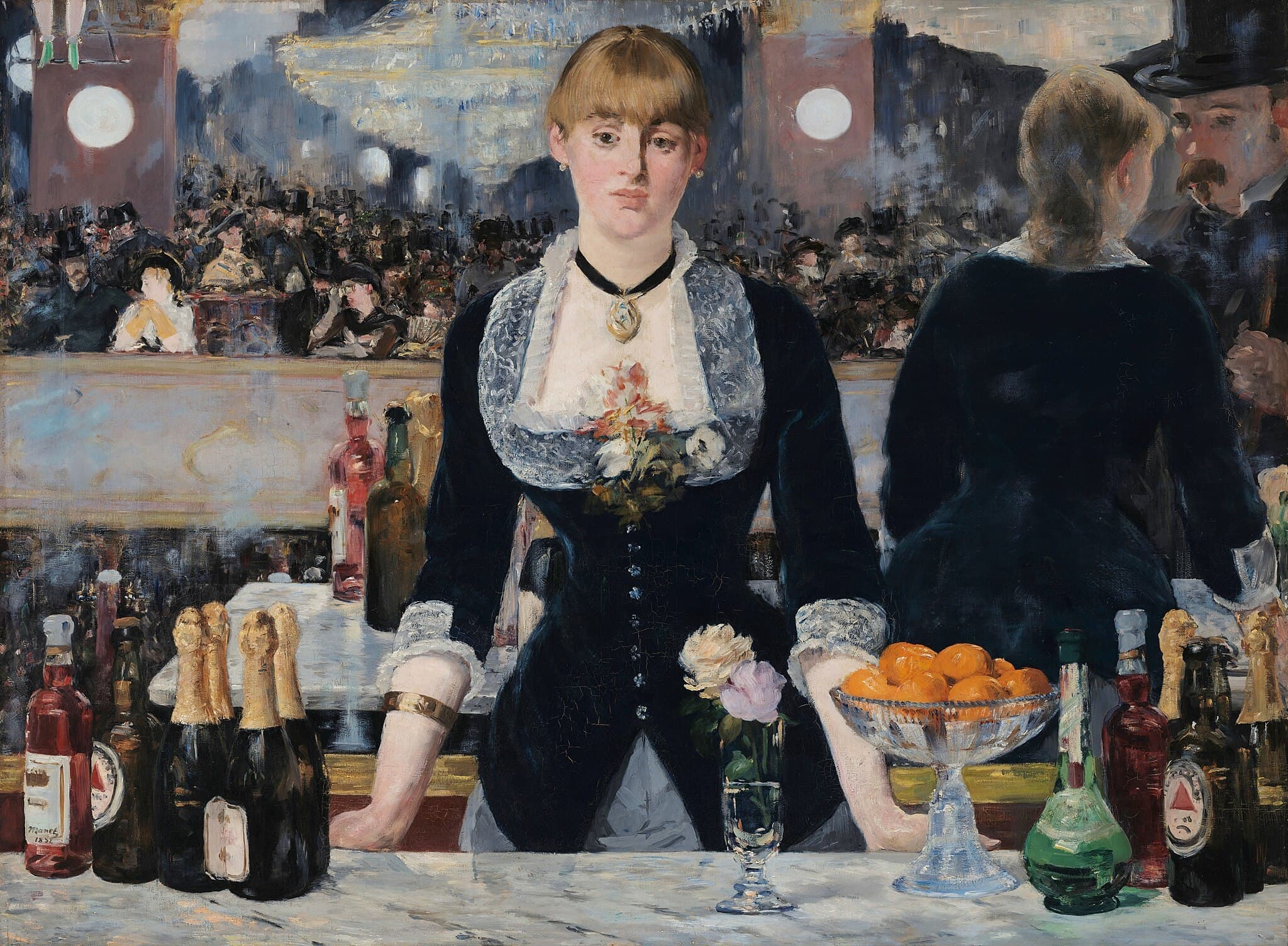
A Bar at the Folies-Bergère (Un bar aux Folies-Bergère)
Édouard Manet, 1882 • Oil on canvas
Read full analysis of A Bar at the Folies-Bergère (Un bar aux Folies-Bergère) →Valuation Analysis
Valuation conclusion: A Bar at the Folies‑Bergère (Édouard Manet, 1882) is a canonical museum masterpiece in long‑term institutional custody at the Courtauld Gallery [1]. Assuming clear title, lawful exportability, and sound conservation condition, the work should be treated as a trophy‑level lot. On a best‑efforts public offering or controlled private treaty marketed to global institutions and major private collectors, I estimate a market range of USD 150,000,000–300,000,000.
The numerical range is grounded in comparable analysis rather than a single recent sale. Manet's public auction ceiling (Le Printemps, $65.125M, 2014) establishes the artist‑specific anchor [3], while the Paul G. Allen dispersal at Christie’s (Nov 2022) demonstrated that late‑19th/early‑Modern masterpieces can breach the $100M+ tier (Cézanne and Seurat results of c. $138M and $149M) when market conditions and a single‑owner narrative converge [2]. At the same time, more typical late Manet canvases trade in the low‑ to mid‑eight‑figure band (for example, a late still life at Sotheby’s realized ≈$10.1M in 2024) [4]. The $150–300M window sits above Manet’s established auction record to reflect the painting’s exceptional cultural status and the demonstrated ceiling for comparable era masterpieces.
Key market mechanics that justify the upper range include effectively zero supply of comparable museum‑quality Manets, concentrated demand from major museums/sovereign funds/ultra‑high‑net‑worth collectors, and auction‑house guarantee and private‑treaty structures that can amplify final realizations. A high‑profile offering would be a global event with aggressive, cross‑border bidding and the possibility of multiple parties (public institutions and private consignors) competing for long‑term display rights; those dynamics have historically driven prices well beyond simple historic anchors.
Critical caveats: the estimate is conditional. The painting is held by the Courtauld Gallery (accession P.1934.SC.234) [1], and donor/trust terms, UK charity and national heritage rules, or export restrictions could block or limit sale; such legal constraints would materially reduce or nullify the hypothetical market value. Equally decisive are provenance clarity and a clean conservation history—any structural or restoration issues lower buyer confidence and price. For transaction readiness, legal clearance, a full conservation/condition report, and confidential market testing with the major houses are essential.
Practical next steps: confirm legal/exportability via the owner (Courtauld), obtain a formal conservation report, then engage one or two major auction houses for confidential presale valuation and potential marketing strategies. With those clearances, the USD 150M–300M window represents a defensible trophy‑sale expectation; absent clean title/exportability and pristine condition, marketability and value decline sharply.
Key Valuation Factors
Art Historical Significance
High ImpactA Bar at the Folies‑Bergère is one of Manet's signature late works (1882) and a cornerstone image in the narrative of modern art. Its complex mirror composition, social commentary and late‑career refinement make it central to museum narratives and scholarship. Because it functions as an icon of modernity and is heavily reproduced and exhibited in major surveys, the painting commands exceptional cultural premium beyond technical metrics such as scale or medium. That cultural centrality places it in the 'museum‑defining' category, attracting institutional retention and elevating buyer willingness to pay for permanent display access—key reasons the piece should be valued at the trophy level if marketable.
Market Scarcity and Supply Dynamics
High ImpactMost of Manet's greatest works reside in museums and effectively never circulate; supply of comparable museum‑quality canvases is essentially zero. When a true masterpiece emerges, it becomes a singular market event that concentrates demand among major museums, sovereign purchasers and ultra‑high‑net‑worth collectors. This scarcity drives a structural premium because prospective buyers price both the work and the unique chance to acquire it. Scarcity also increases leverage for auction houses to structure guarantees or private‑sale mechanisms that can push realized prices far beyond prior artist auction anchors.
Comparables and Price Anchors
High ImpactManet's auction record (Le Printemps, $65.125M, 2014) provides a firm artist‑specific anchor, while marquee dispersals of late‑19th‑century masterpieces (e.g., the Paul G. Allen sale, 2022) established a $100M+ trophy ceiling for comparable era works. Mid‑range late Manet results (~$1–12M) show where most offerings clear, but they are not comparable to a canonical salon masterpiece. A Bar's valuation therefore bridges the artist's auction ceiling and the broader era's trophy ceiling: the result is a premiumed band consistent with the painting's unique status and market precedents.
Legal/Provenance/Condition Constraints
High ImpactOwnership, legal restrictions and condition are decisive. The work's institutional ownership at the Courtauld and any donor/trust terms, UK cultural heritage regulations or export controls could prevent sale or restrict export, collapsing practical marketability. Provenance is well documented historically, which supports market confidence, but undisclosed donor restrictions or title complexities would sharply reduce value. Likewise, conservation history and current condition directly affect buyer willingness to pay: pristine, well‑documented condition supports the high end of the range; significant restoration or structural issues diminish value materially.
Sale History
A Bar at the Folies-Bergère (Un bar aux Folies-Bergère) has never been sold at public auction.
Édouard Manet's Market
Édouard Manet occupies a central position in 19th‑century French painting and in the story of modernism; his canonical canvases are predominantly museum‑held. Public auction activity for his best works is therefore rare, producing a market characterized by scarcity at the top and steady demand in the mid‑tier. Manet's public auction record (Le Printemps, $65.125M, 2014) demonstrates institutional willingness to pay for fresh, museum‑quality canvases, while other important single‑owner sales have shown that the market can re‑price top works when conditions align. For canonical images like A Bar, demand transcends historical auction anchors and places the work in a trophy category.
Comparable Sales
Jeanne (Le Printemps)
Édouard Manet
Same artist; this work set Manet's public auction record and therefore functions as the primary auction-anchor for the artist's market.
$65.1M
2014, Christie's, New York
~$86.6M adjusted
Le Grand Canal à Venise
Édouard Manet
Same artist; a high‑profile single‑owner (Paul G. Allen) dispersal result for a top Manet—useful to gauge demand when major Manets come fresh to market.
$51.9M
2022, Christie's (Paul G. Allen Collection), New York
~$56.1M adjusted
Vase de fleurs, roses et lilas
Édouard Manet
Same artist and year (1882); a recent late‑period Manet still life realized a low‑eight‑figure price—helps define the market for late Manet subjects that are not canonical salon masterpieces.
$10.1M
2024, Sotheby's, New York (Modern Evening Sale)
~$10.4M adjusted
La Montagne Sainte‑Victoire
Paul Cézanne
Canonical late‑19th/early‑Modern masterpiece sold as a trophy lot (high‑eight to nine‑figure result); establishes the market ceiling for comparable museum‑quality works of the period.
$137.8M
2022, Christie's, New York (Paul G. Allen Collection)
~$148.8M adjusted
Les Poseuses (petite version)
Georges Seurat
Another trophy, canonical late‑19th‑century work that sold in the same marquee dispersal; demonstrates that museum‑defining canvases from this era can breach the $100M+ tier.
$149.2M
2022, Christie's, New York (Paul G. Allen Collection)
~$161.2M adjusted
Current Market Trends
The market today is bifurcated: top‑tier, museum‑quality masterpieces remain resilient and can command record sums, while broader market volumes are softer. Recent marquee dispersals (2022) and a partial rebound in late‑2025 reinforced appetite for blue‑chip Impressionist and early modern works. Macro uncertainty, institutional budgets and regulatory scrutiny moderate activity but do not eliminate demand for truly iconic works. For a canonical Manet, these dynamics favor a well‑managed, globally marketed offering with institutional outreach and guarantee structures.