How Much Is Le Déjeuner sur l'herbe (The Luncheon on the Grass) Worth?
Last updated: March 10, 2026
Quick Facts
- Methodology
- comparable analysis
Le Déjeuner sur l'herbe (1863) is a museum‑held, canonical Manet masterpiece (Musée d'Orsay) that has not traded on the modern commercial market. Assuming legal saleability and a proven pristine condition, a conservative hypothetical market valuation is USD 150–300 million, reflecting scarcity, art‑historical importance and trophy‑sale precedents.
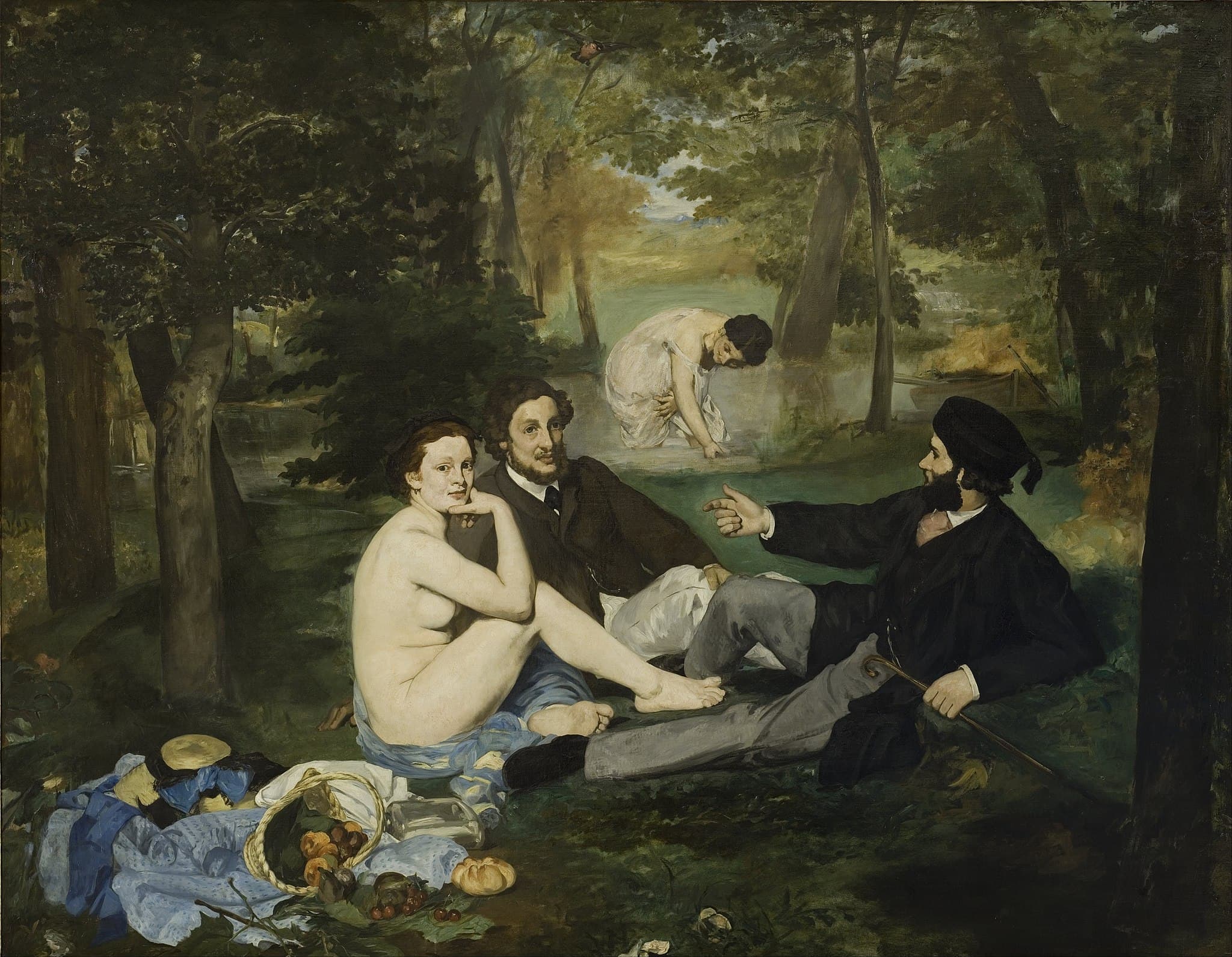
Le Déjeuner sur l'herbe (The Luncheon on the Grass)
Édouard Manet, 1863 • Oil on canvas
Read full analysis of Le Déjeuner sur l'herbe (The Luncheon on the Grass) →Valuation Analysis
Valuation conclusion: Le Déjeuner sur l'herbe (1863) is one of Édouard Manet’s signature canvases and is currently part of the French national collections via the Moreau‑Nélaton donation (Musée d'Orsay). Because it has not been exposed to the commercial market in the modern era, any monetary valuation is hypothetical. Taking a conservative comparable‑analysis approach, and assuming the painting could be lawfully offered to the global market, I estimate a market range of USD 150,000,000 to USD 300,000,000. This estimate reflects the painting's unparalleled cultural importance, the scarcity of comparable works available to buyers, and precedents in the Impressionist/Modern trophy market. [1], [2]
Methodology: The lower bound is anchored to artist‑specific transaction history (the strongest public auction result for Manet is Le Printemps at Christie’s New York, USD 65.125M in 2014), while the upper bound reflects observed trophy ceilings for canonical late‑19th‑ and early‑20th‑century masterpieces (examples include public Impressionist results above USD 100M and reported private trophies at substantially higher levels). I adjusted public auction anchors for inflation and for the premium that single‑owner, museum‑defining works attract when they become available. The resulting band is therefore an extrapolation from direct Manet market evidence combined with cross‑artist trophy precedents. [2]
Demand dynamics and sale mechanics: Were the painting legally available, it would draw competing interest from major international museums, sovereign collections and a very small bracket of ultra‑high‑net‑worth collectors. Auction houses would deploy guarantees, irrevocable bids and targeted private‑treaty outreach to create competition; private negotiations could similarly escalate realized price via buyer exclusivity or donor/sovereign involvement. The psychology of a "once‑in‑a‑generation" acquisition commonly pushes final prices well above an artist’s standing auction record when the work is uniquely important and provenance is impeccable.
Constraints and uncertainties: In practice, Le Déjeuner sur l'herbe is effectively inalienable under French cultural‑heritage practice and has been in public ownership since the Moreau‑Nélaton donation; export and definitive sale would require extraordinary government approvals, making an actual market transaction highly unlikely. [1] Condition and conservation history are central variables: structural issues, major restorations, or other conservation concerns would materially depress value; conversely, pristine condition with an exemplary exhibition/publication record supports the high end. Confidential museum insurance values and internal appraisals may produce different figures than a public hypothetical estimate.
Conclusion & next steps: USD 150–300 million is a defensible, conservative hypothetical band that captures both observed auction behavior and the elevated premium that fully canonical, museum‑quality masterpieces command when they become available to a global buyer pool. To refine this into a saleable figure would require: (1) confirmation of legal/export/deaccession status, (2) a current, detailed conservation report, and (3) formal market testing/consultation with Impressionist & Modern specialists at leading auction houses (to evaluate guarantees, potential buyers and sale mechanism).
Key Valuation Factors
Art Historical Significance
High ImpactLe Déjeuner sur l'herbe is one of the defining canvases of mid‑19th‑century French painting and a foundational work in the story of modern art. Its 1863 Salon des Refusés context, radical composition and frank subject matter disrupted academic conventions and helped reorient artistic priorities toward modern life and painterly immediacy. Because scholarship, exhibition history and public recognition place this painting among Manet’s most consequential works (frequently paired in significance with Olympia), its cultural capital is exceptionally high. Institutional valuation practices reflect that: museums and curators treat it as a national touchstone, and collectors recognize the non‑fungible reputational value attached to owning a work of comparable art‑historical weight. This significance is a primary upward driver of market value.
Rarity & Supply
High ImpactLarge, museum‑quality Manet canvases like Le Déjeuner sur l'herbe are effectively off‑market: the majority remain in major public institutions or long‑established collections. This structural scarcity concentrates demand among a very small set of potential buyers and drastically magnifies the price impact when a rare canvas becomes saleable. Because collectors and institutions have few substitution options, bidding competition can escalate dramatically, and auction houses will typically employ financial instruments (guarantees, irrevocable bids, private buyer solicitations) to bridge seller expectations and market liquidity. The supply constraint therefore both raises a theoretical ceiling and makes precise price discovery difficult in the absence of a genuine market transaction.
Provenance & Institutional Ownership
High ImpactThe painting's provenance — ownership by Manet and notable collectors before entering the Moreau‑Nélaton donation to the French state (1906) and subsequent placement at the Musée d'Orsay — is exemplary for authenticity and scholarship. Such institutional custody underwrites attribution, exhibition history and public familiarity, which are positive value enhancers. However, institutional ownership also ordinarily precludes sale; national custody typically means export restrictions and legal protections, which reduce the likelihood of a bona fide market transaction. Consequently, while provenance increases theoretical market value by lowering attribution and authenticity risk, it simultaneously makes realization improbable and thereby turns any market price into a hypothetical premium that only exceptional legal circumstances could unlock.
Market Comparables & Precedent
High ImpactComparable sales provide the empirical basis for the estimate. Manet’s public auction record (Le Printemps, Christie’s 2014: USD 65.125M) is a direct artist‑specific anchor; other Impressionist masterpieces have reached triple‑digit millions (e.g., Monet 'Haystacks') and modern 'trophy' works by Picasso and Cézanne have set ceilings considerably higher, including reported private transactions above USD 200M. These precedents demonstrate that the market will support substantially higher prices than an artist’s standing auction record when the work in question is uniquely important, fresh to market and attracts competition from museums and sovereigns. Extrapolating from these anchors, and accounting for the painting's canonical rank, yields the USD 150–300M hypothetical band.
Legal & Export Constraints
High ImpactFrench cultural‑property law and museum practice impose practical limits on alienation and export. Works designated or effectively treated as national treasures are subject to review by administrative commissions, export permits and state preemption rights; sale abroad is typically blocked or requires exceptional ministerial approval. For Le Déjeuner sur l'herbe, which entered public collections via a donation and has high visibility in national cultural patrimony, these constraints are likely decisive. The legal environment does two things to value: it reduces the probability of a genuine market sale (lowering practical liquidity) while simultaneously increasing hypothetical price expectations among bidders should an extraordinary sale be permitted. Legal status therefore has both dampening and elevating effects on a theoretical market valuation.
Sale History
Le Déjeuner sur l'herbe (The Luncheon on the Grass) has never been sold at public auction.
Édouard Manet's Market
Édouard Manet occupies a central, canonical position in the market for nineteenth‑century French painting. While many drawings, pastels and smaller works trade in mid six‑ to seven‑figure ranges, large museum‑quality canvases by Manet rarely appear and achieve outsized prices when they do. The artist’s auction record (Le Printemps, 2014) demonstrates latent trophy demand but also underscores scarcity: that top public result ($65.125M) remains a conservative public anchor for what a true canonical Manet could realize under intense competition. Institutional ownership of key works, strong scholarly attention and enduring exhibition histories secure Manet’s long‑term collector interest, but frequency of headline sales is limited compared with some contemporaries.
Comparable Sales
Le Printemps
Édouard Manet
Same artist; this is the world auction record for Manet (top direct market anchor for the artist). A large, museum‑quality Manet that realized the artist's highest public price.
$65.1M
2014, Christie's New York
~$89.2M adjusted
Self‑Portrait with Palette
Édouard Manet
Same artist and high‑profile sale of a major Manet canvas; useful as a second artist‑specific auction anchor showing realized interest in prime Manet works.
$33.1M
2010, Sotheby's London
~$49.3M adjusted
Meules (Haystacks)
Claude Monet
Canonical Impressionist masterpiece that achieved a triple‑digit million auction result; a close genre/period comparable showing what top Impressionist works realize when fresh to market.
$110.7M
2019, Sotheby's New York
~$140.6M adjusted
Les Femmes d'Alger (Version 'O')
Pablo Picasso
Different artist/period but a modern art 'trophy' sale that sets market psychology and ceiling for unique, museum‑level masterpieces sold at auction.
$179.4M
2015, Christie's New York
~$245.7M adjusted
The Card Players (reported private sale)
Paul Cézanne
Reported private trophy sale of a canonical 19th‑century French masterpiece; often cited as a top‑end benchmark for market ceilings on singular, museum‑quality works.
$250.0M
2011, Private sale (reported)
~$360.0M adjusted
Current Market Trends
Since 2023 the Impressionist & Modern auction segment has been relatively cautious: overall volumes and the number of $10M+ lots have declined compared with earlier peaks, while Contemporary and Post‑War categories have been more resilient. Supply of museum‑quality Impressionist masterpieces has been constrained, which supports prices for exceptional works but reduces the frequency of blockbuster results. Macro factors (interest rates, liquidity and geopolitical uncertainty) have tightened buyer risk appetite, making final realizations more dependent on guarantees, private treaty sales and targeted institutional bidding.