How Much Is On the Beach Worth?
Last updated: January 21, 2026
Quick Facts
- Methodology
- comparable analysis
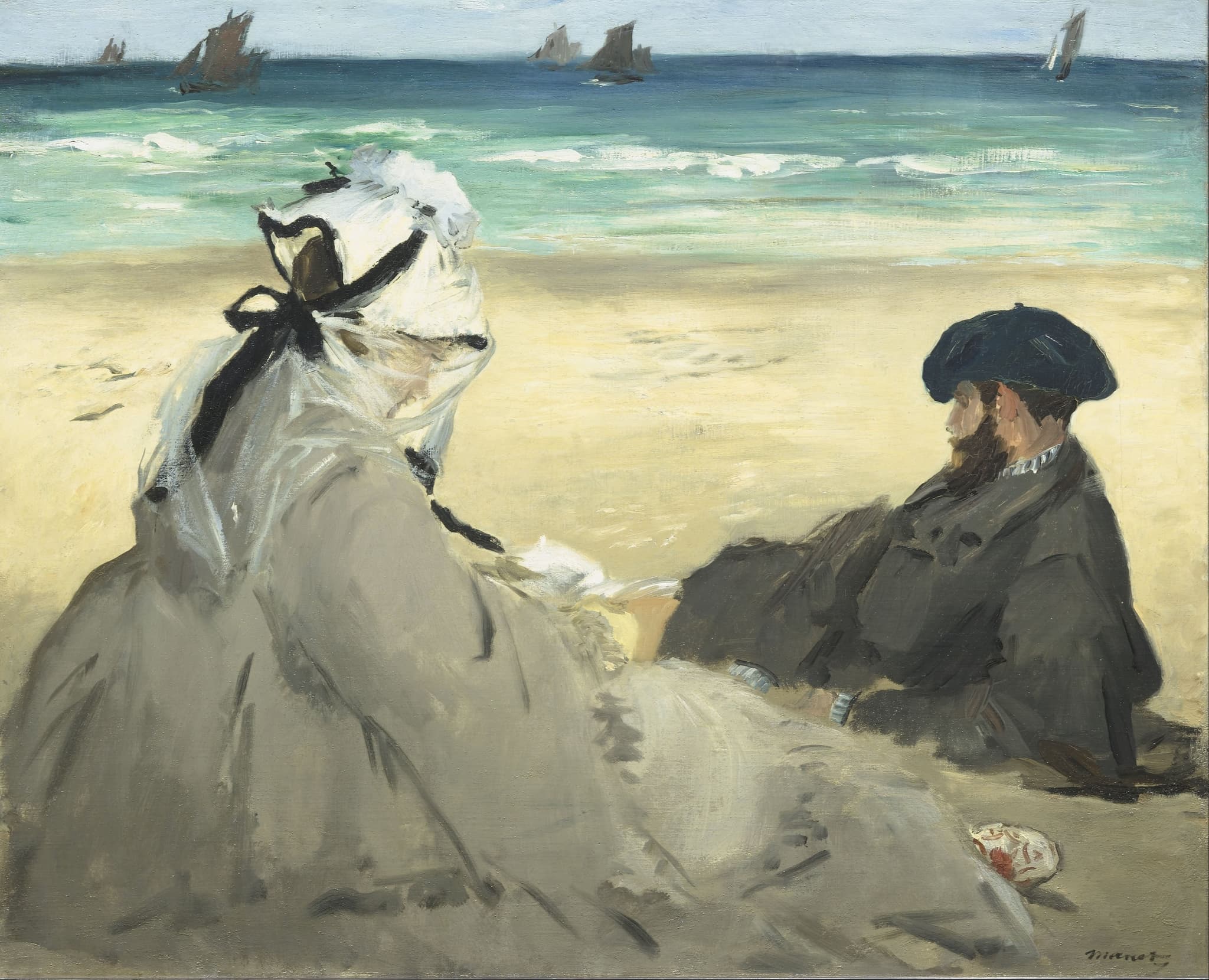
On the Beach (Sur la plage), 1873, is a prime mid‑career Manet oil of museum renown in the inalienable French national collection. Benchmarked against the artist’s $65.1m auction record (2014) and adjusted for inflation, rarity, period, and subject appeal, a hypothetical fair‑market value is assessed at $85–115 million.
Valuation Analysis
Conclusion: We estimate Édouard Manet’s On the Beach (Sur la plage), 1873, at $85–115 million on a hypothetical fair‑market basis. The work is a significant mid‑career oil in the French national collection (Musée d’Orsay) and is therefore not for sale; this valuation functions as a market proxy/insurance guide only [1][2].
Methodology and anchors: The upper benchmark is Manet’s standing auction record, Le Printemps (Spring), which achieved $65.125 million at Christie’s New York in 2014 [3]. Adjusted for inflation and set against the sustained scarcity of blue‑chip Manet oils, that record equates to roughly the low‑$80 millions in today’s dollars. On the Beach is a desirable 1873 seaside figure composition of attractive scale, rich exhibition/literature history, and wide recognition—characteristics that position it near or above the prior record in a competitive sale context. Recent Manet transactions also demonstrate depth in the category: for example, a late floral still life brought $10.1 million in 2024 amidst selective market conditions, underscoring the strength of quality Manet oils even outside the top tier [5].
Position within the oeuvre: Painted in Berck‑sur‑Mer during Manet’s turn to brighter, outdoor subjects, On the Beach sits among the most sought‑after themes of the 1870s and is frequently reproduced and exhibited [1]. While not at the absolute pinnacle occupied by Olympia or A Bar at the Folies‑Bergère, it is unequivocally a major, museum‑quality canvas with broad collector appeal were it hypothetically to appear.
Market context: After a contraction in 2023–2024 at the high end, the Modern market stabilized and showed renewed appetite for trophy‑level works, with selective bidding favoring masterpieces and best‑in‑class examples [4]. Given the extreme rarity of comparably important Manet oils coming to market, competitive tension can quickly propel prices once two or more determined bidders engage.
Key sensitivities: Final outcomes would still hinge on condition, freshness, scale, and sale orchestration (guarantees, third‑party interest, and venue). As part of France’s inalienable national patrimony, however, On the Beach is not saleable; any figure here reflects a reasoned proxy grounded in comparables, inflation, and art‑historical significance [1][2][3].
Key Valuation Factors
Art Historical Significance
High ImpactOn the Beach (1873) exemplifies Manet’s pivotal turn to outdoor, light‑filled subjects closely associated with Impressionist circles. Painted at Berck‑sur‑Mer, it unites a modern leisure theme with Manet’s incisive figure painting, representing a key phase between his early provocations and late portraits/still lifes. The work is widely exhibited, reproduced, and deeply embedded in scholarship, enhancing its stature. While not as singularly canonical as Olympia or A Bar at the Folies‑Bergère, it is an important, museum‑quality picture from an especially coveted period. Such recognized mid‑career masterpieces carry a substantial premium over studio‑bound or minor‑subject oils and sit near the top of the artist’s market hierarchy.
Rarity and Supply Dynamics
High ImpactMaster‑grade Manet oils of this period and scale are exceptionally scarce in private hands. The Musée d’Orsay’s ownership underscores institutional competition for works of this caliber, and comparable pictures seldom surface. Manet’s auction record—$65.1 million in 2014—was set nearly a decade ago; few chances have arisen since to test the very top of the market for equivalent works. When such opportunities appear, bidding can be aggressive due to pent‑up demand and cross‑category appeal. Scarcity alone justifies substantial pricing power, especially when coupled with a recognizable subject and distinguished provenance. This supply constraint is a critical driver of the $85–115 million valuation band.
Provenance, Exhibition, and Institutional Status
High ImpactThe painting’s provenance traces to major collectors (including Henri Rouart) and an historically documented 1912 Paris sale before its eventual acceptance by the French State; it now resides at the Musée d’Orsay. This chain of ownership, combined with extensive publication/exhibition, strengthens both scholarly and market confidence. Although museum stewardship precludes sale (the work is inalienable under French law), such institutional validation typically commands a premium in hypothetical fair‑market or insurance contexts. Assuming sound, well‑documented condition consistent with national‑museum standards, these factors jointly support positioning the work near or above the artist’s prior auction record.
Subject Appeal and Period Desirability
High ImpactSeaside leisure scenes from the early 1870s resonate strongly with collectors: they are visually accessible, emblematic of modern life, and bridge Realism with Impressionist atmosphere. On the Beach offers an engaging figure group, luminous tonality, and a relatable narrative situated in a key moment of Manet’s development. Works from this period have broad cross‑market appeal beyond strict Manet specialists, encouraging participation from buyers focused on Impressionism, Modernism, and museum‑level trophies. The attractive subject, mid‑career date, and approachable scale combine to support a top‑tier valuation, especially in a well‑structured sale likely to attract institutional and private competition.
Sale History
Galerie Manzi-Joyant, Paris (Henri Rouart sale, lot 237)
Public auction recorded in provenance; price not listed on publicly accessible records; subsequent private ownership before state acceptance in 1953.
Édouard Manet's Market
Édouard Manet occupies a blue‑chip position at the summit of 19th‑century art. His market is defined by extreme scarcity of major oils and strong depth for recognized subjects. The artist’s standing auction record is $65.1 million, achieved by Le Printemps at Christie’s New York in 2014, and remains the key benchmark for trophies. While late floral still lifes have proven notably liquid in the $8–12 million range, and smaller/earlier oils can sell around $1–4 million depending on quality and freshness, true museum‑caliber figure paintings rarely come to market and can challenge or exceed prior records when two or more top bidders engage. Demand is global and connoisseur‑driven, with institutions active when circumstances permit.
Comparable Sales
Le Printemps (Spring)
Édouard Manet
Same artist; prime-size, museum-caliber oil and a market-defining Manet record. While a later single-figure portrait (1881) rather than a seaside scene, it anchors the upper end of pricing for major Manet oils.
$65.1M
2014, Christie's New York
~$83.3M adjusted
Self-Portrait with a Palette
Édouard Manet
Same artist; mature-period figure oil with strong provenance and rarity (self-portrait). Useful to bracket top-tier demand for iconic Manet subjects.
$33.2M
2010, Sotheby's London
~$46.0M adjusted
Vase de fleurs, roses et lilas
Édouard Manet
Same artist; late oil on canvas in a robust Manet sub-market (floral still lifes). Though a different subject, it shows recent liquidity for quality Manet oils in cautious seasons.
$10.1M
2024, Sotheby's New York
~$10.4M adjusted
Le bal de l’Opéra
Édouard Manet
Same artist and same year (1873) as On the Beach; period figure composition. Indicates pricing for smaller, less iconic mid‑1870s oils.
$3.9M
2022, Christie's New York
~$4.4M adjusted
Ambroise Adam in the Garden at Pressagny
Édouard Manet
Same artist; open‑air figure scene (earlier, 1861) sold recently in Paris. Serves as a lower‑bound indicator for modestly scaled, non‑trophy Manet outdoor oils.
$1.0M
2025, Christie's Paris
Current Market Trends
The broader Impressionist and early Modern market tightened at the top in 2023–2024 as consignors delayed bringing trophies, but stabilized in 2025 with selective strength for best‑in‑class works. Buyers remain discerning and estimate‑sensitive, yet competition re‑ignites for masterpieces with great provenance and visibility. In this environment, rarity is paramount: fresh, museum‑quality canvases can unlock significant upside, while mid‑tier material faces stricter pricing discipline. Against this backdrop, a major, mid‑1870s Manet with an iconic subject profile would likely command vigorous bidding, particularly if offered with thoughtful marketing, third‑party support, and optimally timed to marquee seasons in New York or Paris.
Sources
- Musée d’Orsay – Sur la plage (On the Beach) object record
- Code du patrimoine (France), Art. L451-5 – Inalienability of national collections
- Christie’s – Post‑sale release: Impressionist & Modern Evening Sale (Manet’s Le Printemps record)
- Art Basel & UBS – The Art Market 2024 (auctions overview)
- Sotheby’s – Vase de fleurs, roses et lilas (1882) sale result