How Much Is The Balcony (Le Balcon) Worth?
Last updated: March 10, 2026
Quick Facts
- Methodology
- comparable analysis
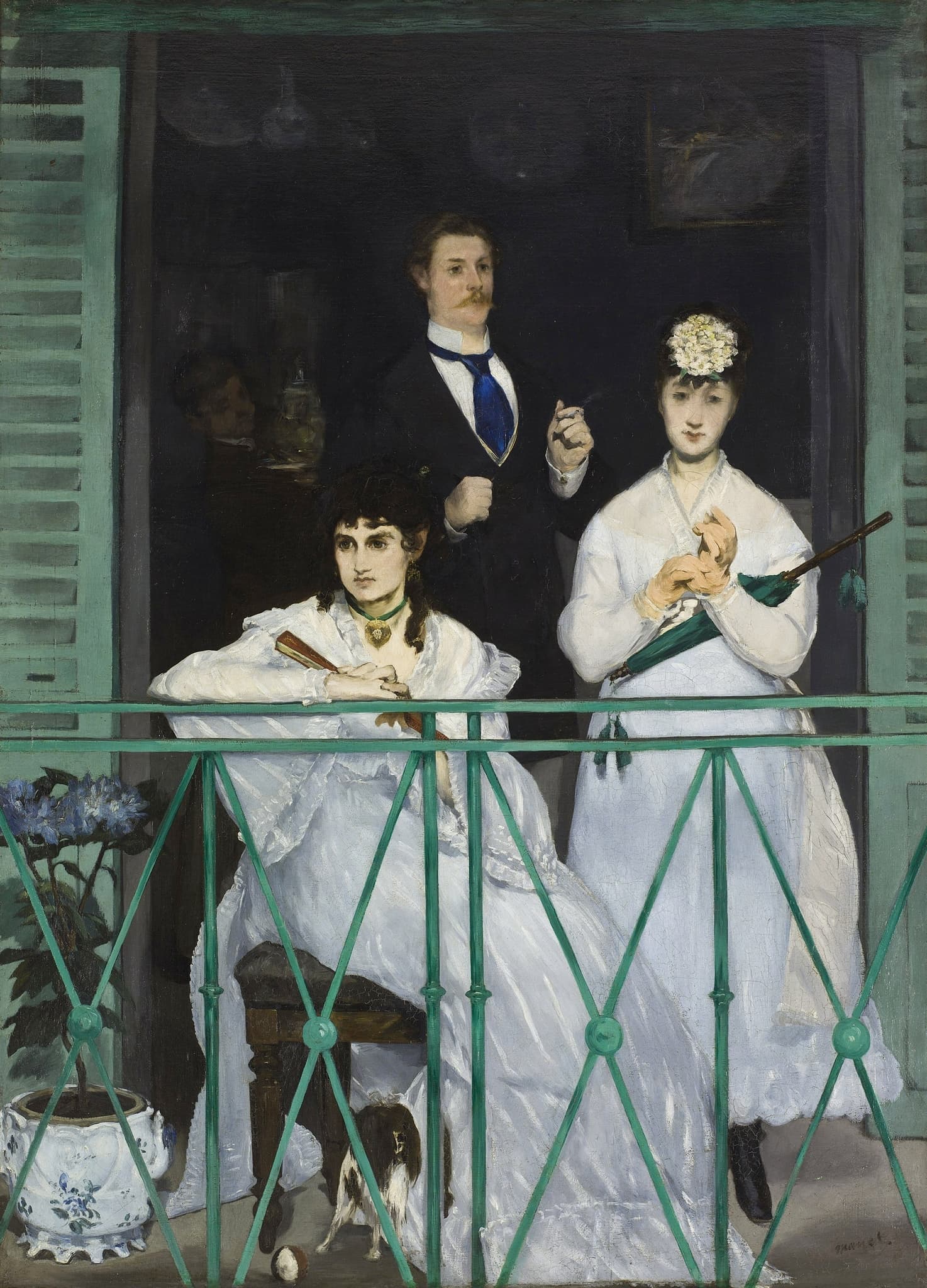
Assuming an authenticated, museum‑quality Édouard Manet 'Le Balcon' (c.1868–69) were offered on the open market today, a realistic market range is approximately US$40,000,000–US$120,000,000. If the painting in question is the Musée d'Orsay's canonical 'Le Balcon', it is effectively not for sale and any figure is purely hypothetical.
Valuation Analysis
Valuation premise: This valuation assumes an original, authenticated, museum‑quality Édouard Manet canvas titled 'Le Balcon' (c.1868–69) that is free of legal inalienability and has clear title. If the object you mean is the Musée d'Orsay version, that work is in public custody and not commercially available—the figures below are therefore hypothetical in that case [1].
Comparable anchors: Auction evidence for top‑tier Manet oils anchors the estimate. Christie’s sale of Le Printemps (2014) set a modern auction high at US$65.1M and functions as a primary price anchor for trophy Manets [2]. The 2022 Christie’s dispersal of Paul G. Allen’s collection realized US$51.9M for a large Manet canvas, showing continued institutional and private demand for canonical canvases [3]. By contrast, late still lifes and smaller works trade well below that level (Sotheby’s 2024 still life at ≈US$10.1M is an instructive lower‑tier reference) [4]. These comparables produce a wide but supportable band between ~US$40M and US$120M depending on sale circumstances.
Why the range is broad: The spread reflects four decisive levers: (1) condition and conservation history (structural issues or heavy restoration materially reduce realizable value); (2) provenance and exhibition/publication history (museum endorsement and long exhibition records add premium); (3) legal or national‑ patrimony constraints (works in state ownership or on state deposit are unsaleable or restricted); and (4) sale modality and buyer set (a highly marketed marquee auction with multiple institutional bidders or a targeted private sale to a museum can push price toward or above the top of the range) [1][2][3].
Practical sale scenarios: In an aggressive, well‑run evening sale in New York or London with multiple institutional bidders, a canonical 'Le Balcon' could reasonably achieve bids in the mid‑tens of millions to the low hundreds of millions if provenance, condition and exportability are clear. Conversely, if condition is compromised or legal/export barriers apply, the work could fail to reach the low end of the estimate or be unsaleable. Insurance/indemnity valuations are typically confidential but would track the upper half of this band for loaned museum masterpieces.
Recommendation: To refine this range to a single‑figure estimate, obtain the catalogue raisonné citation, full provenance chain and a formal condition report with technical imaging (X‑ray/IRR/pigment analysis). With those documents, auction houses or a qualified appraiser can provide a signed market valuation and sales strategy (public evening sale vs private treaty to institutions) tailored to the work’s specifics [2][3][4].
Key Valuation Factors
Art Historical Significance
High ImpactManet's 'Le Balcon' is widely regarded as one of his major salon‑scale works from the late 1860s and is frequently reproduced and discussed in monographs and exhibition catalogues. Its compositional innovation—complex figure placement, luminous interior/exterior contrasts and its role in Manet's development—give it intrinsic museum‑level stature. Market demand for works with that level of scholarly and curatorial endorsement is strong because institutions and top collectors prioritise canonical, well‑illustrated paintings. As a result, art‑historical importance converts directly into buyer interest and willingness to pay a premium when other conditions (provenance, condition, exportability) are favorable.
Provenance & Exhibition History
High ImpactUnbroken, well‑documented provenance—especially paths that include respected collectors or state/museum custody—markedly increases market confidence and value. The Musée d'Orsay's 'Le Balcon' benefits from the Gustave Caillebotte bequest and continuous public ownership, which elevates scholarly standing but removes the work from commerce. For a privately held, comparably provenanced 'Le Balcon', museums and institutional buyers would view the work as a low‑risk acquisition, often paying materially above market midpoints. Conversely, gaps in provenance, contested title, or absence from major exhibitions materially reduce buyer appetite and price realization.
Condition & Conservation
High ImpactPhysical condition is a decisive price driver for 19th‑century oils. Issues such as extensive inpainting, relining, canvas weakness, paint losses or unstable varnish can depress prices by tens of percent; clear, documented conservation histories and benign technical reports support top‑end results. Major buyers—especially museums—require full technical dossiers (X‑ray, IRR, conservation reports) before committing large sums. A canonical 'Le Balcon' with excellent original surface and documented, minimal restoration will command a materially higher price than one with structural or treatment concerns.
Market Comparables & Demand
High ImpactComparable auction outcomes establish realistic expectations: Christie’s 2014 sale of 'Le Printemps' ($65.1M) and Christie’s 2022 dispersal sale (≈$51.9M) are primary anchors for top‑tier Manet oils; late still lifes and smaller works sell in the mid‑seven to low‑eight figure band. The scarcity of museum‑quality Manet canvases in private hands concentrates demand and can drive prices above these anchors in a competitive sale or private institutional acquisition. Conversely, restricted supply, export limitations or weak condition can push a result beneath the comparable set.
Sale History
The Balcony (Le Balcon) has never been sold at public auction.
Édouard Manet's Market
Édouard Manet is a blue‑chip figure in the Impressionist/Modern market. His most important oils are rare on the secondary market because major canvases are concentrated in public museums and important private collections, which elevates prices when canonical pieces do appear. Auction record performances (e.g., 'Le Printemps' at US$65.1M) show that institutions and deep‑pocketed collectors will invest at the tens of millions for trophy works; smaller or late works trade at substantially lower price points. Overall, Manet’s market is characterised by selective strength: the very best works command premium pricing and strong institutional interest.
Comparable Sales
Le Printemps (Jeanne / Spring)
Édouard Manet
Artist auction-record; large museum-grade salon painting comparable in scale, period and trophy status to Le Balcon; serves as the top-tier price anchor for Manet oils.
$65.1M
2014, Christie's New York
~$88.6M adjusted
Le Grand Canal à Venise
Édouard Manet
Large salon-scale Manet canvas sold at a high-profile single-owner sale (2022); a recent benchmark showing strong demand for top-tier Manet oils.
$51.9M
2022, Christie's New York (Paul G. Allen sale)
~$57.1M adjusted
Self-portrait with palette (Autoportrait à la palette)
Édouard Manet
High-priced Manet portrait (2010); useful as a historical benchmark for demand on canonical Manet works though smaller and different in subject compared with Le Balcon.
$33.3M
2010, Sotheby's London
~$49.3M adjusted
Vase de fleurs, roses et lilas (1882)
Édouard Manet
Late-period Manet still life sold in 2024; represents the lower-tier but high-quality end of the market and is useful for setting a conservative lower bound.
$10.1M
2024, Sotheby's New York
~$10.4M adjusted
Current Market Trends
Through 2023–25 the high end of the art market has seen constrained supply and cautious buyer behavior—owners are withholding trophy works while institutions remain selective. That dynamic produces fewer headline sales but sustained demand for truly exceptional examples. For Impressionist/Modern material, including Manet, well‑provenanced, museum‑quality canvases continue to attract competitive bidding, while ambiguous or condition‑compromised works face downward pressure.
Sources
- Musée d'Orsay — 'Le Balcon' catalogue entry (Manet)
- Christie's — Impressionist & Modern Evening Sale results (Nov 5, 2014) — 'Le Printemps' sale
- Artnet / market coverage — Christie’s Paul G. Allen sale (Nov 2022) — 'Le Grand Canal à Venise'
- Sotheby's — Lot page / sale results (May 15, 2024) — Manet still life 'Vase de fleurs, roses et lilas'
- Art Basel & UBS Art Market Report / market commentary (2024–25) and institutional exhibition context (e.g., The Met Manet/Degas)