How Much Is The Channel of Gravelines, Petit Fort Philippe Worth?
Last updated: March 29, 2026
Quick Facts
- Methodology
- comparable analysis
Based on the painting’s museum provenance (Indianapolis Museum of Art at Newfields, acc. 45.195), publication history, and auction comparables for late Seurat coastal canvases, a defensible auction-market estimate is $8–30 million. The low end assumes study-tier treatment, condition or attribution questions; the mid–high band assumes a published, well‑provenanced, soundly conserved autograph Seurat.
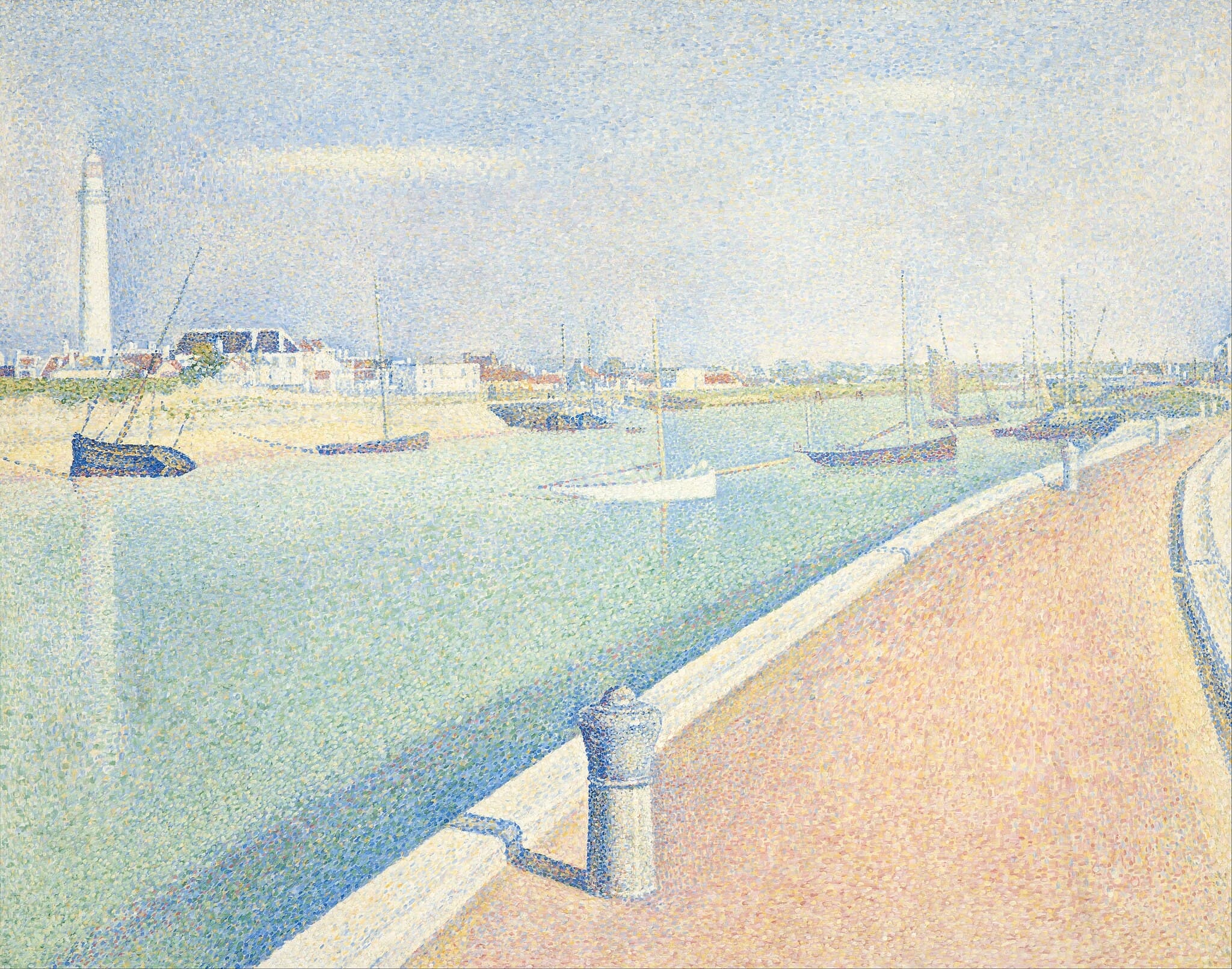
The Channel of Gravelines, Petit Fort Philippe
Georges Seurat, 1890 • Oil on canvas
Read full analysis of The Channel of Gravelines, Petit Fort Philippe →Valuation Analysis
Valuation conclusion: I estimate an auction-market range of $8–30 million for Georges Seurat’s The Channel of Gravelines, Petit Fort Philippe (assuming the object in question is the Indianapolis Museum of Art at Newfields painting, accession 45.195: oil on canvas, 28⅞ × 36¼ in., signed & dated 1890), which is published and museum-held [1]. Because the work is not a recent public-sale lot, the value is theoretical and depends on a short list of condition and attribution confirmations prior to sale.
My range is anchored by direct and closely related auction comparables for late coastal Seurat canvases and important studies. The most relevant finished-canvas anchor is La rade de Grandcamp (Le port de Grandcamp), which sold at Christie’s in 2018 for about $34.06M — a practical ceiling for a well‑preserved medium‑sized coastal canvas of Seurat’s late period [2]. Smaller finished studies and oil panels have sold in the mid single‑ to low double‑digit millions (e.g., Paysage et personnages at c. $13.1M including premium), while important small studies and drawings cluster in the mid‑six to low‑seven‑figure range; the 2022 Les Poseuses sale is an exceptional outlier at c. $149M that reset the artist’s trophy ceiling but does not directly recalibrate medium‑sized coastal works.
The lower bound (~$8M) reflects an outcome where the painting is seen as a study, or where visible conservation issues or questions about the completeness of provenance/raisonné citation create buyer caution. The mid band (~$8–20M) is the most probable for a published, well‑provenanced, technically sound Seurat of this size and subject. The upper bound (~$30M) requires particularly vigorous bidding, recent curatorial reappraisal or exhibition momentum that elevates the work above typical mid‑market seascapes. The painting’s documented provenance (gallery chain through Reid & Lefevre, Bignou, M. Knoedler; purchase by Caroline Marmon Fesler and donation to Herron/Newfields) supports strong attribution and therefore the mid‑range assumption [1].
Key caveat and next steps: this estimate should be refined after (1) a full technical/condition report (including imaging and any treatment history), (2) confirmation of catalogue‑raisonné listing(s) and bibliographic citations, and (3) an in‑person specialist inspection by an Impressionist/Seurat specialist at a major house. If you want, I can prepare a 3–5 comparable comp sheet with hammer and total prices, or draft an inspection checklist and an email template for preliminary auction‑house outreach.
Key Valuation Factors
Art Historical Significance
High ImpactSeurat’s late coastal seascapes occupy an important place in his oeuvre: they show his mature pointillist technique applied to maritime light and horizon space and date from his final productive years (c. 1889–1891). While the artist’s canonical parade-of-figures canvases (Grande Jatte, Bathers at Asnières, Les Poseuses) are materially more famous, late seascapes are the subject of recent scholarship and major exhibitions and are highly desirable to curators and collectors who specialize in Seurat’s later output. Being dated 1890, the Channel of Gravelines work has intrinsic art‑historical weight that supports a premium over ordinary studies, provided the work is accepted as an autograph and published in standard catalogues raisonnés.
Provenance & Publication
High ImpactProvenance is a major value driver for Seurat. The Newfields record indicates a continuous gallery and private‑ownership chain (Reid & Lefevre; Bignou; M. Knoedler & Co.; Caroline Marmon Fesler purchase and 1945 donation), and the painting is published in museum catalogues and exhibition histories. A clear, uninterrupted provenance plus an entry/illustration in an accepted catalogue raisonné materially reduces attribution risk and narrows bidding uncertainty. Published exhibition history or loans to important Seurat shows further increase market confidence and typically support results in the mid‑ to high‑millions rather than study‑level outcomes.
Condition & Conservation
High ImpactCondition can swing a final price dramatically. Key technical questions include whether the canvas was relined, whether there are extensive retouches or overpaint, varnish yellowing, structural damage, or paint losses that affect surface texture and pointillist color effects. Without a professional condition report the market will build in a discount; with a clean technical dossier and normal conservation history, buyers will accept the full mid‑range estimate. In practice, significant restitution of appearance or invasive restoration can depress results; conversely, a documented, minimal‑intervention conservation history supports stronger outcomes.
Market Comparables & Rarity
High ImpactSeurat canvases are extremely scarce on the open market. Important finished coastal canvases have realized in the tens of millions (La rade de Grandcamp c. $34M), while important small oils and studies have sold in the low‑ to mid‑teens or single‑digit millions; drawings trade more frequently in the mid‑six to low‑seven figures. That scarcity means price sensitivity is high: a single major consignment or an institutional deaccession can change the competitive dynamic substantially. The rarity of comparable medium‑sized, well‑provenanced late seascapes supports a mid‑range auction estimate but also increases volatility around the high end when buyer competition is intense.
Institutional Ownership & Sale Logistics
Medium ImpactThe painting’s museum ownership (Newfields) both adds prestige and reduces the likelihood of an immediate market offering. Deaccessioning procedures, institutional lending and exhibition plans, and reputational considerations affect sale timing and route. If the museum were to sell, the lot could be placed by a major house with pre‑sale publicity or offered privately to major institutions/collectors—each pathway influences outcome (public auction can produce competition-driven upside; private treaty may be quicker but often yields a lower reported price). Guarantees, third‑party underwriting, or a targeted sale strategy will materially affect final realization.
Sale History
The Channel of Gravelines, Petit Fort Philippe has never been sold at public auction.
Georges Seurat's Market
Georges Seurat is a blue‑chip, canonical late 19th‑century artist with extremely limited market supply. A handful of his large finished canvases anchor museum collections worldwide; that scarcity and institutional ownership push prices high for the rare trophies while concentrating buyer interest among major institutions and deep‑pocketed private collectors. The 2022 sale of Les Poseuses (petite version) at c. $149M reset the top of the market, but most Seurat activity is in drawings, studies, and occasional medium‑sized canvases where results cluster from mid‑six to mid‑seven figures. Overall, the market favors museum‑quality, well‑published works and is selective about attribution and condition.
Comparable Sales
Les Poseuses, Ensemble (Petite version)
Georges Seurat
Artist-level trophy benchmark — rare finished Seurat canvas that reset top-of-market; shows ceiling demand for canonical Seurat paintings.
$149.2M
2022, Christie's, New York
~$161.2M adjusted
La rade de Grandcamp (Le port de Grandcamp)
Georges Seurat
Finished late coastal landscape by Seurat — closest in subject and finished-canvas status to the Gravelines work; a direct market anchor for seascapes.
$34.1M
2018, Christie's, New York
~$40.2M adjusted
Paysage et personnages (La jupe rose)
Georges Seurat
Important small oil study by Seurat — useful lower‑tier anchor showing market for well‑provenanced studies and small finished works.
$13.1M
2021, Christie's, New York
~$14.7M adjusted
Le Saint‑Cyrien
Georges Seurat
Smaller study sold in same market window as other Seurat studies — indicates demand/price scale for studies versus mid‑sized finished canvases.
$4.3M
2021, Christie's, New York
~$4.9M adjusted
Clowns et poney (conté crayon, drawing)
Georges Seurat
Recent strong result for an important Seurat drawing — shows robust demand/pricing for works on paper and the market's appetite for museum-quality material.
$4.9M
2025, Sotheby's, New York
Current Market Trends
Since the 2022 trophy sale the Seurat market has shown a bifurcation: top exemplars command outsized attention while liquidity for mid‑market lots is concentrated in drawings and studies. Market activity cooled in 2023–24 and rebounded in 2025; institutional exhibitions of Seurat seascapes in 2025–26 have increased collector interest in coastal works. Supply remains the limiting factor—few museum‑quality canvases come to market—so timing, exhibition momentum, and auction-house strategy will be decisive for any sale.