How Much Is Adoration of the Shepherds (Allendale Nativity) Worth?
Last updated: April 10, 2026
Quick Facts
- Last Sale
- $400K (1938, Private sale: Duveen Brothers → Samuel H. Kress (dealer sale, 1938))
- Methodology
- comparable analysis
Assuming acceptance as an autograph Giorgione with strong technical confirmation and clean provenance, the Allendale Nativity would likely command $100–$150 million in today’s market, reflecting trophy pricing for an extremely rare museum‑quality Venetian Renaissance work. If the attribution is downgraded to 'workshop/attributed', the value falls sharply to single‑ or low‑double‑digit millions.
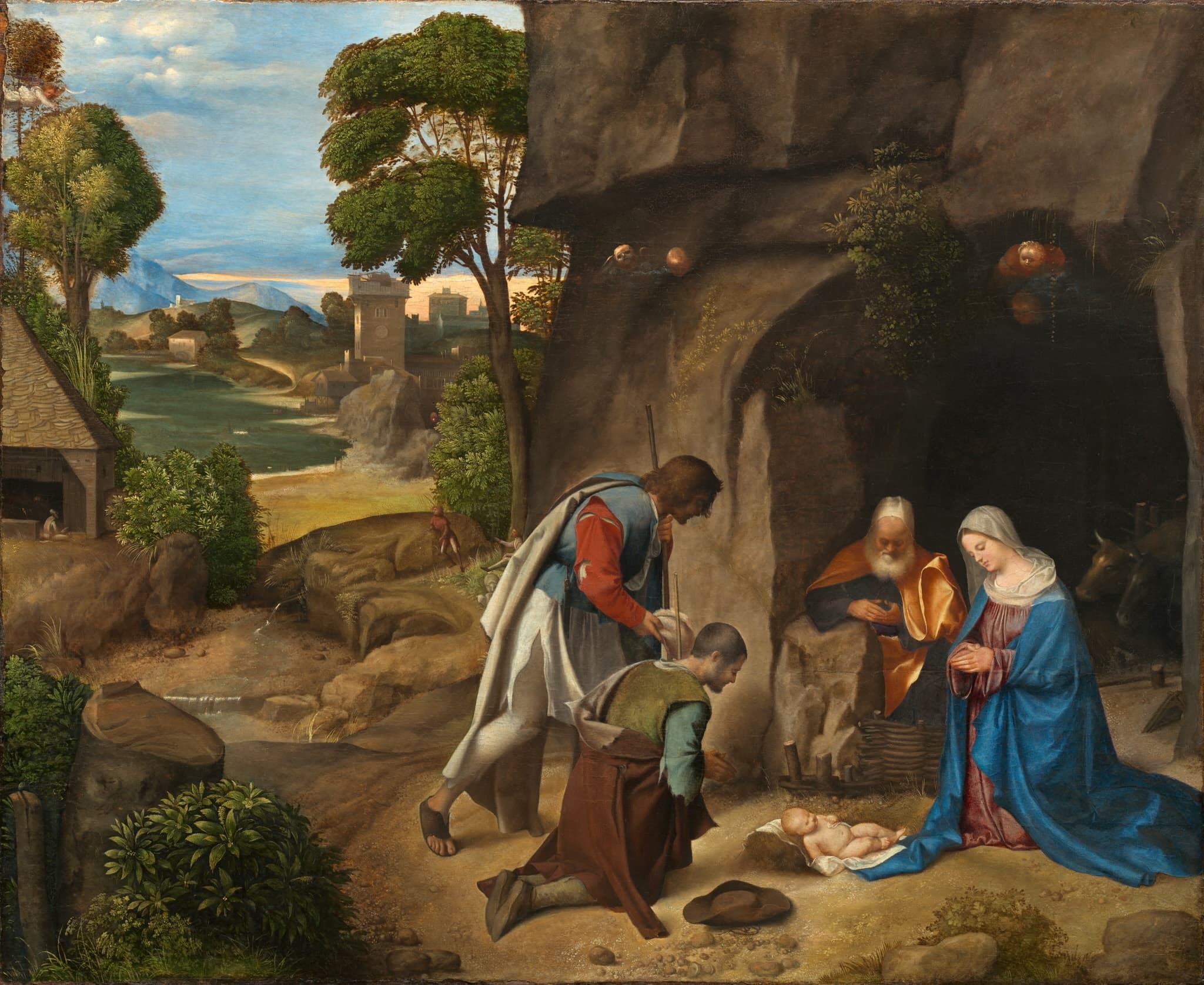
Adoration of the Shepherds (Allendale Nativity)
Giorgione, 1505 • Oil on panel
Read full analysis of Adoration of the Shepherds (Allendale Nativity) →Valuation Analysis
Valuation conclusion: This valuation presumes the National Gallery of Art’s (Kress Collection) Allendale Nativity can be defended as an autograph Giorgione by convergent scholarly opinion and technical evidence. Under that scenario, a realistic market window for a sale today is approximately $100–$150 million, reflecting the scarcity of securely attributed Giorgione autographs, the trophy status such a work would attain, and premiums typically paid by institutions or UHNW collectors for unique High‑Renaissance masterpieces [1].
Methodology: I used a comparable‑analysis approach: (1) place the work in the context of known transactions for top‑tier Old Masters and rediscovered high‑quality Renaissance works; (2) adjust for the Allendale picture’s specific provenance (Duveen→Kress; museum accession), condition risk, and attribution risk; and (3) apply a market premium for rarity and sale route (private treaty to a museum or direct sale to a trophy collector) versus public auction dynamics. The painting’s last recorded dealer‑to‑museum transaction (Duveen→Kress, reported $400,000 in 1938) provides a historical floor but must be scaled for rarity, market depth, and the difference between a 1938 dealer price and a modern trophy sale [2].
Comparable evidence and calibration: Direct auction comparables for undisputed Giorgione autographs are effectively absent—most accepted Giorgione works are museum‑held—so proxies include high‑end Old Master sales (unique Michelangelo drawings, top Titian rediscoveries) and recent rediscoveries (e.g., museum‑quality Artemisia sales). These comparables show institutional/buyer capacity in the tens of millions to low‑hundreds of millions for unique Renaissance masterpieces; I therefore place an autograph Giorgione in the $100–150M bracket to reflect both that ceiling potential and realistic buyer/market appetite today.
Risk and discounting: The principal value risk is attribution. If technical imaging, pigment/panel analysis, or leading Giorgione/Titian scholars do not endorse a secure autograph attribution, market consensus will treat the picture as workshop/attributed and the realistic price band compresses to roughly $5–30M depending on quality and condition. Condition issues, heavy restorations, or provenance gaps further reduce price. Conversely, unanimous scholarly backing and clean technical proof would collapse the attribution discount and justify the high‑end trophy range.
Practical implications & next steps: to refine this range to a formal, saleable estimate, assemble the full technical dossier (infrared reflectography, x‑radiography, pigment analysis, dendrochronology if panel), obtain written opinions from leading Giorgione/Titian scholars, and solicit confidential market interest from major institutions and top dealers. A defensible autograph attribution + museum‑quality condition + unambiguous provenance materially increases probability of achieving the $100–150M result; absent those, price expectations should default to the lower brackets noted above [1][2].
Key Valuation Factors
Art Historical Significance
High ImpactGiorgione’s autograph corpus is exceptionally small and central to the story of the Venetian High Renaissance. Any securely attributed Giorgione acquires immediate museum and collector attention because the works are rare, historically important, and often integral to exhibitions and scholarship. The Allendale Nativity, as a Nativity subject tied to Giorgione’s circle, commands added interest if stylistic and technical indicators point to his hand—its significance is amplified by the scarcity of comparable works on the market and by institutions’ desire to fill gaps in canonical collections. High historical importance therefore creates a large upward pricing pressure when attribution is secure.
Attribution & Scholarly Consensus
High ImpactAttribution risk is the single most decisive value driver. Giorgione attributions are historically contested and many works have been reattributed to Titian or studio hands. Market participants require convergent evidence—peer‑reviewed scholarship, respected written opinions, and scientific imaging—to remove the attribution discount. If leading scholars and technical reports endorse autograph status, value can jump exponentially. If the work remains contested or is downgraded, expect a steep discount (often an order of magnitude) relative to an undisputed autograph sale price.
Provenance & Sale History
High ImpactA continuous, well‑documented provenance anchored by reputable owners (notably Cardinal Fesch, the Allendale/Beaumont ownership, Duveen involvement, and the Kress/NGA accession) materially supports market confidence. The Duveen→Kress dealer transfer and subsequent museum accession are positive indicators; however, any provenance gaps or ambiguous earlier ownership entries would introduce risk and reduce buyer willingness to pay a trophy multiple. Provenance that ties the picture into major collections and exhibition histories increases institutional interest and market value.
Condition & Technical Evidence
High ImpactCondition and conservation history directly affect marketability and price. Original paint survival, minimal invasive restoration, and clear underdrawing/working methods consistent with Giorgione are strong value enhancers. Conversely, heavy overpainting, significant losses, or uncertain panel dating reduce value and often lead to down‑grading of attribution. Scientific testing (IRR, X‑ray, pigment analysis, dendrochronology if applicable) is crucial: positive technical concordance with Giorgione’s known materials and methods is required to attain high‑end pricing.
Rarity, Market Demand & Sale Route
High ImpactThe buyer universe for an accepted Giorgione is narrow but deep—major museums and ultra‑high‑net‑worth collectors who prize unique Renaissance masterpieces. A private treaty sale to an institution can capture value above public auction ranges; conversely, a contested attribution sold in a public evening sale will attract discounts. Rarity drives trophy premiums: when a genuine Giorgione surfaces, competition is intense and prices can escalate well above typical Old Masters comparables. The chosen sale channel and timing (aligned with major exhibitions or scholarly announcements) materially influence final realization.
Sale History
Palazzo Ricci sale (Rome)
Christie's, London (Allendale purchase)
Duveen Brothers → Samuel H. Kress (private dealer sale)
Giorgione's Market
Giorgione occupies a distinctive market position: an artist of outsized historical importance but with a very small, disputed autograph corpus. Because many accepted works are museum‑held, there is effectively no consistent auction benchmark for an undisputed Giorgione. When a painting is universally accepted as autograph, it becomes a trophy asset and can command extraordinary private‑sale prices; when attribution is uncertain, works are generally sold as 'circle/school' and realize far lower sums. The market therefore bifurcates sharply along attribution lines.
Comparable Sales
Adoration of the Shepherds (Allendale Nativity)
Giorgione
Direct prior private‑market transaction for this exact painting; most relevant historic market data point and shows dealer-to-museum pricing.
$400K
1938, Private sale (Duveen Brothers → Samuel H. Kress, reported 1938)
~$9.0M adjusted
Judith Slaying Holofernes
Artemisia Gentileschi
Rediscovered/museum‑quality Old Master with dramatic religious subject sold in the mid‑single‑digit millions—useful as a lower‑bound proxy for high‑quality rediscoveries with contested attribution.
$5.7M
2026, Christie's New York (Old Masters, Feb 2026)
Untitled drawing (Michelangelo — Christie's Classics Week)
Michelangelo Buonarroti
Top‑tier Old Masters result showing institutional/private capacity to pay tens of millions for unique Renaissance works—useful as a ceiling benchmark for singular, securely attributed Renaissance pieces.
$27.2M
2026, Christie's New York (Classics Week, Feb 2026)
Current Market Trends
The Old Masters and Venetian‑Renaissance markets contracted across the 2010s→2024 but showed selective recovery in 2025–early‑2026, driven by blockbuster single‑owner sales and high‑quality institutional acquisitions. Demand for authenticated, museum‑quality works is strong; attribution confirmations and exhibition exposure remain the primary short‑term catalysts for price uplift.