How Much Is Portrait of a Young Woman ("Laura") Worth?
Last updated: April 10, 2026
Quick Facts
- Methodology
- comparable analysis
Held by the Kunsthistorisches Museum (Vienna) and widely catalogued as Giorgione’s 'Laura', this painting would, if legitimately deaccessioned and offered to the market, realistically command between US$50–150 million. The wide band reflects Giorgione’s extreme scarcity, the painting’s high‑quality Habsburg provenance, and the decisive impact of technical/attribution certainty on final price.
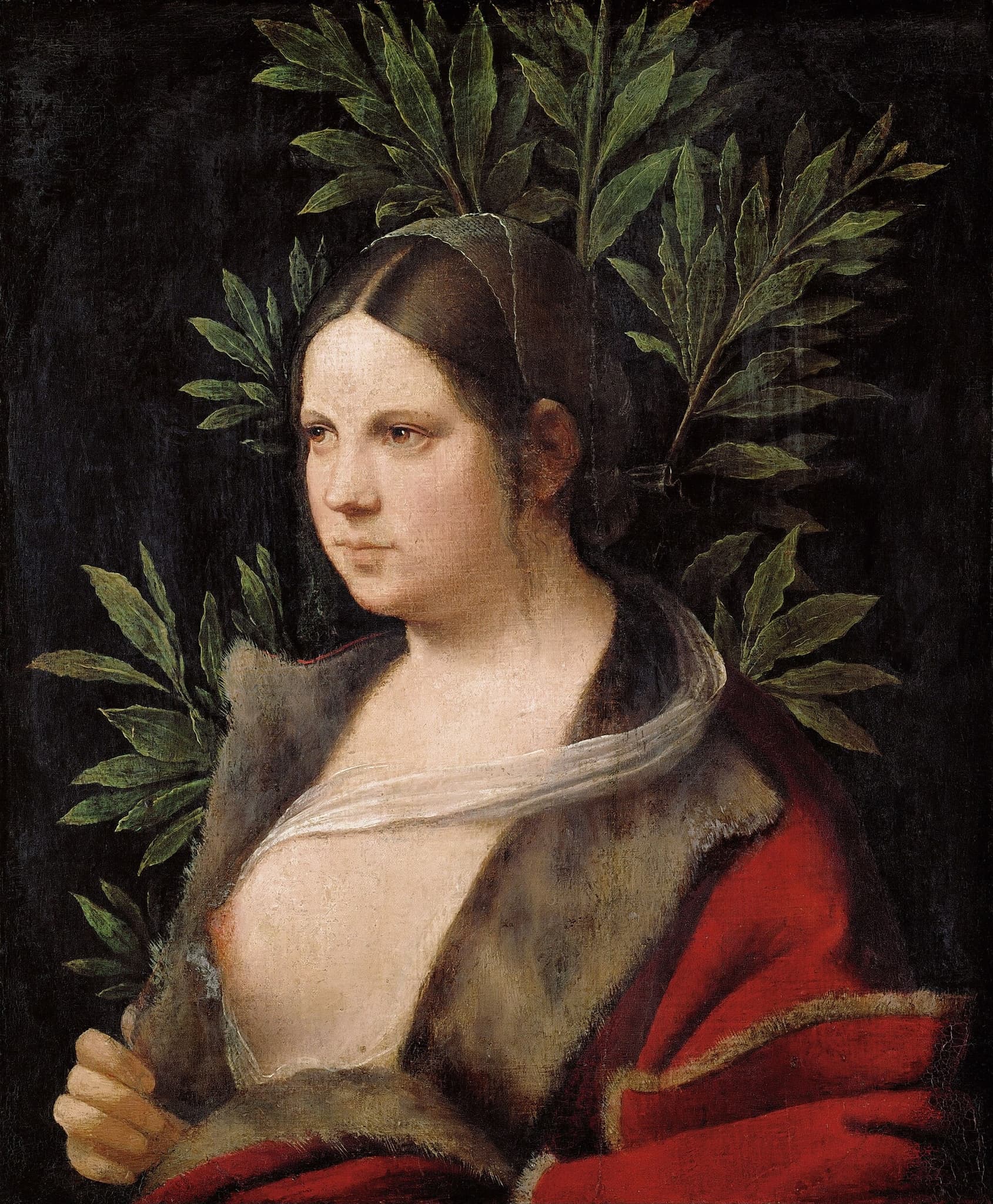
Portrait of a Young Woman ("Laura")
Giorgione, 1506 • Oil on wood
Read full analysis of Portrait of a Young Woman ("Laura") →Valuation Analysis
Valuation conclusion: This valuation places the market value of Portrait of a Young Woman ("Laura"), c.1506, attributed to Giorgione and held by the Kunsthistorisches Museum (Vienna) [1], at approximately US$50–150 million if the work were to be legitimately deaccessioned and offered on the open market or via a private treaty to top institutions/collectors. This range assumes a secure autograph attribution, strong technical confirmation, and sound condition; the painting's museum ownership and continuous high‑quality provenance make a market sale unlikely and would limit the bidder pool to museums and a handful of ultra‑high‑net‑worth individuals.
Methodology: I used a comparable‑analysis approach, because there is no modern public‑auction benchmark for an undisputed Giorgione oil. The range is derived from (a) the scarcity premium attached to Giorgione’s small autograph corpus, (b) auction and private‑treaty anchors for top‑tier Renaissance trophies and high‑quality Venetian works (for example, the structural ceiling demonstrated by Leonardo’s Salvator Mundi and high‑level Titian sales) [2][3], and (c) the observed market practice that canonical museum‑quality Old Masters usually transact by private treaty or institutional acquisition rather than in open evening auctions [4].
Why the band is wide: Attribution certainty is the dominant driver. A work universally accepted as autograph Giorgione with an unbroken high‑quality provenance and technical dossier would sit at the upper end of the band; any substantive scholarly dispute, significant restoration history, or unresolved provenance gaps would materially depress price — often by orders of magnitude. Institutional/legal constraints (deaccession rules, export controls, reputational factors) further limit liquidity and can reduce realizable proceeds even when theoretical value is high.
Anchors and comparables: The lower bound (≈US$50m) reflects what an exceptional Giorgionesque portrait might attract when compared with recent high‑quality Venetian Old Master sales and aggressive institutional buying; the upper bound (≈US$150m) represents the trophy premium that could be achieved in a rare direct sale to a major museum or single collector if attribution and condition are indisputable — still well below the extraordinary outlier ceiling set by Leonardo’s Salvator Mundi but consistent with the top‑end pricing of canonical Renaissance masterpieces in private markets [2][3]. The public record for works attributed to Giorgione is sparse (most canonical oils are museum‑held), so these anchors are necessarily extrapolative [4].
Recommended next steps to firm the estimate: assemble full provenance documentation; obtain or review IRR/X‑radiography, dendrochronology (if panel), and pigment/binder analysis; secure a current condition report; and solicit written opinions from leading Giorgione/Titian specialists and the Kunsthistorisches Museum. Those actions would narrow the band substantially and enable a marketable reserve or asking price appropriate to the buyer channel (museum sale vs private collector treaty) [5].
Key Valuation Factors
Art Historical Significance
High ImpactGiorgione’s autograph corpus is very small and each securely attributed oil is of major scholarly importance. 'Laura' is long catalogued in major museum literature and forms part of the narrative of early 16th‑century Venetian portraiture. That rarity and cultural significance place a structural premium on price: collectors and museums value canonical, well‑documented works from this period as both scholarly trophies and institutional anchors. The artwork’s role in exhibitions and scholarship also increases its provenance value and long‑term desirability, which sustains high valuations among the tiny pool of eligible buyers.
Attribution Certainty
High ImpactAttribution is the single most consequential variable. A consensus, museum‑level attribution to Giorgione supported by technical imaging and material analysis will push the painting to the top end of the band. Conversely, unresolved disputes or prevailing alternative attributions (Titian, Palma Vecchio, workshop) collapse buyer confidence and reduce the effective market to dealers and lower‑tier collectors. The difference between a secure autograph label and 'circle of' or 'workshop of' commonly represents a multiple‑order decline in value for Old Masters.
Provenance / Ownership History
High ImpactThe painting’s early and continuous provenance — recorded in notable 17th‑century collections (including Bartolomeo della Nave and the Hamilton and Leopold Wilhelm collections) and now in the Kunsthistorisches Museum — is a major value driver. Clean, high‑status provenance mitigates title and authenticity risk, simplifies loans and exhibitions, and makes the work more attractive to institutions. Any gaps, contested ownership claims, or problematic wartime provenance would materially reduce marketability and price.
Condition & Technical Dossier
Medium ImpactPhysical state, the extent and quality of restorations, and the technical data set (IRR, X‑ray, pigment analysis, dendrochronology) strongly influence both attribution confidence and market value. Stable support and original paint surface preservation command premium prices. Conversely, significant overpainting, structural instability, or uncertain retouches require costly conservation and reduce buyer appetite. A complete, modern technical dossier is essential to justify the upper‑tier valuation band.
Market Liquidity / Legal & Institutional Constraints
Medium ImpactCanonical Giorgione oils are almost never offered publicly; most are institutionally retained, which makes real‑world liquidity low. Deaccession rules, export restrictions, and reputational factors further complicate sale prospects. These constraints mean that even if theoretical value is high, the practical realizable price depends on a rare convergence: legal clearance, a willing institutional seller, and a buyer (usually another museum) prepared to pay a trophy premium. That illiquidity increases the bid‑ask spread in practice.
Sale History
Portrait of a Young Woman ("Laura") has never been sold at public auction.
Giorgione's Market
Giorgione is among the scarcest and most prized names of the Venetian High Renaissance; his authentic oil paintings are concentrated in major museum collections and almost never appear in the open market. Because public auction comparables for autograph Giorgione oils are essentially absent, market valuations are inferred from high‑end Venetian and Renaissance trophies and from private treaty precedent. Institutional demand, scholarly reappraisals and reattributions drive interest; when a credible Giorgione is available, it becomes a competition primarily among museums and a very small set of elite collectors.
Comparable Sales
Salvator Mundi
Leonardo da Vinci
Trophy‑tier benchmark for an uncontested, canonical Renaissance masterpiece; establishes a structural market ceiling that a securely attributed Giorgione could approach in private/museum sale.
$450.3M
2017, Christie's New York
~$540.4M adjusted
The Rest on the Flight into Egypt
Titian
Rare modern auction sale of a high‑quality Venetian High Renaissance painting (contemporary circle of Giorgione/Titian); a direct market anchor for museum‑quality Venetian works and portrait/figure paintings.
$22.2M
2024, Christie's London
~$22.9M adjusted
Le Melon Entamé
Jean‑Siméon Chardin
Top Old Master lot of 2024 showing institutional/collector willingness to pay high multi‑million sums for museum‑quality canonical works; useful for broader Old Masters market context though different genre/region.
$28.9M
2024, Christie's Paris
~$29.8M adjusted
The walls of a fortified town seen across a river (drawing, attributed to Giorgione)
Giorgione (attributed)
One of the few public‑market items carrying the Giorgione name in auction databases, but a drawing (not an autograph oil) — underscores the paucity of modern sale comparables for Giorgione paintings.
$270K
2005, Christie's London
~$405K adjusted
Current Market Trends
The Old Masters market has been selective: a contraction in the very top end (2024) was followed by a targeted rebound (2025) for museum‑quality works. Demand is strongest for securely attributed, well‑provenanced pieces; reattributions and high‑profile exhibitions routinely stimulate interest and can increase achievable prices for canonical names like Giorgione.
Sources
- Kunsthistorisches Museum — Portrait of a Young Woman ('Laura') catalogue entry
- Christie's press: Leonardo da Vinci, Salvator Mundi (2017 sale) — market ceiling example
- Coverage of a recent Titian high‑quality sale (market anchor for Venetian High Renaissance)
- MutualArt — public auction records for works offered under the Giorgione name (drawing example)
- Art Basel & UBS, The Art Market 2025 — market context and trends