How Much Is Man at His Bath (Homme au bain) Worth?
Last updated: March 20, 2026
Quick Facts
- Methodology
- comparable analysis
Based on comparable sales, documented provenance and museum acquisition, I estimate the current market value for Gustave Caillebotte's Man at His Bath (Homme au bain), 1884 at $4,000,000–$20,000,000. In a standard auction or private‑treaty sale the most likely realized price will sit in the mid‑range; strong institutional competition could push the result above $20M.
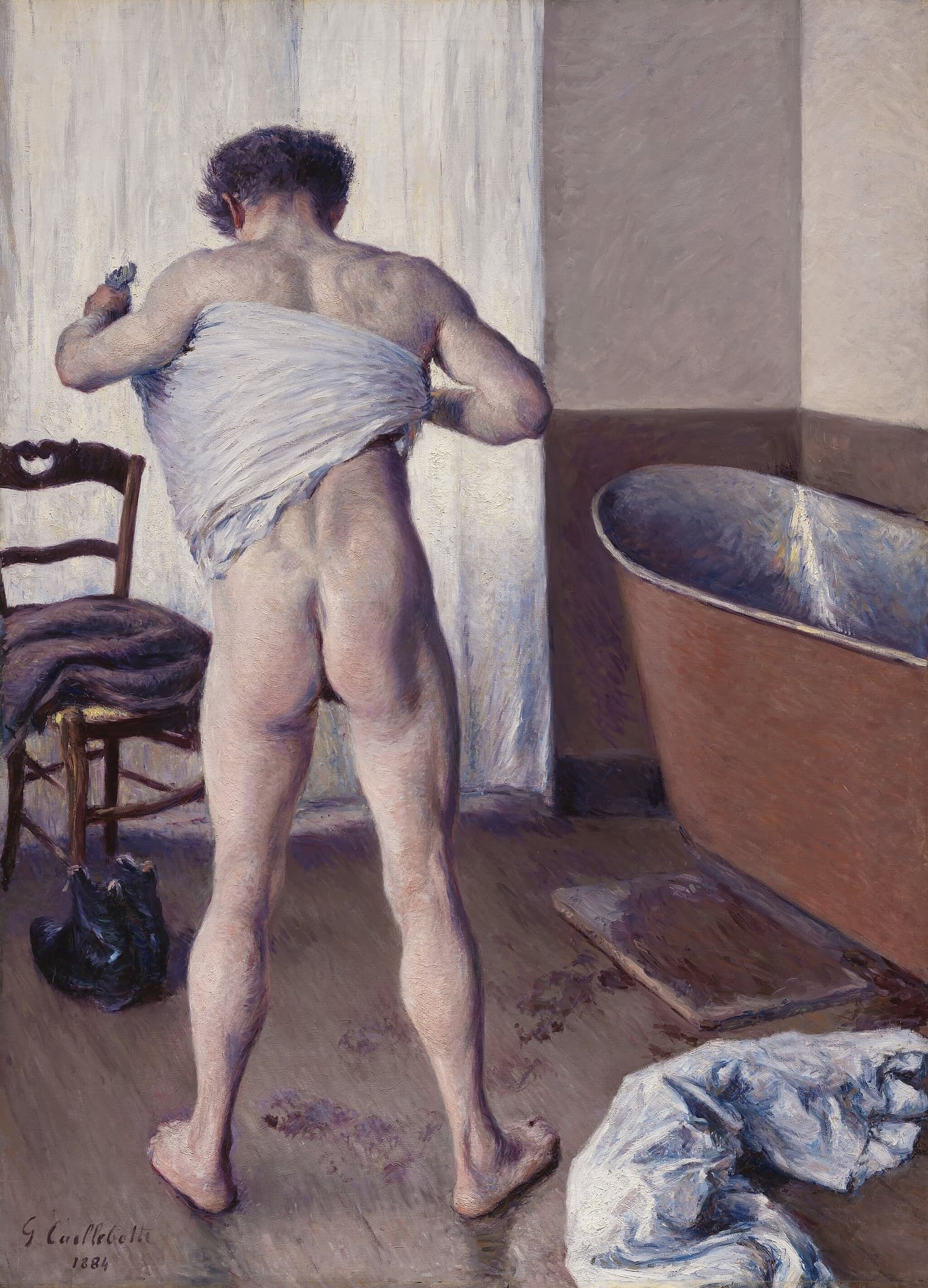
Man at His Bath (Homme au bain)
Gustave Caillebotte, 1884 • Oil on canvas
Read full analysis of Man at His Bath (Homme au bain) →Valuation Analysis
Valuation conclusion: I estimate a current market range of $4,000,000–$20,000,000 for Gustave Caillebotte's Man at His Bath (Homme au bain), 1884. This valuation is based on a comparables‑driven analysis that combines the painting's documented provenance and exhibition history, the Museum of Fine Arts, Boston's 2011 acquisition (reported at roughly $15–17 million) [1][5], and public auction benchmarks for large, museum‑quality Caillebotte canvases (notably Jeune homme à sa fenêtre at Christie’s, 2021) [2]. The range reflects three sale scenarios: a conservative result under uncertain condition/provenance, a market‑average outcome for a well‑provenanced museum‑quality work, and a trophy outcome if multiple institutions compete.
Provenance & exhibition weight: Museum acquisition by the MFA and early exhibition history (Les XX, Brussels) materially increase market confidence and reduce attribution risk, which supports pricing toward the mid and upper parts of the stated range [1]. The painting's path (artist family → private collections → MFA) is stronger than anonymous lots and typically commands a premium in the market.
Comparables and market anchors: The artist's auction record (Jeune homme à sa fenêtre, Christie’s 2021) demonstrates the ceiling when institutional bidders and competitive conditions are present [2]. Other high‑end comparables (Chemin montant and Richard Gallo, 2019) sold in the high‑millions and provide additional upper‑tier anchors [3][4]. Conversely, recent regional and specialist‑house results for less significant Caillebotte works (Bonhams, Christie’s Paris) show outcomes in the six‑ to low‑seven‑figure band and anchor the lower end. These clusters justify the chosen $4M–$20M corridor.
Condition and authentication caveats: I have not examined the painting in hand. Condition issues (lining, inpainting, structural instability) or unresolved technical questions could materially reduce value; conversely, a clean technical dossier (X‑ray, IR, pigment analysis) and scholarly authentication would support a premium. A conservator's condition report and technical imaging are required to narrow the estimate and set a firm reserve or asking price.
Practical recommendation: For maximum value pursue an institutional/private‑treaty route with major Impressionist specialists or an evening auction sale with conservative reserve and targeted marketing. Obtain a formal, in‑hand appraisal and condition/technical report before listing. This estimate is non‑binding and should be validated by inspection and specialist consultation prior to sale or insurance decisions.
Key Valuation Factors
Art Historical Significance
High ImpactPainted in 1884, Man at His Bath is from Caillebotte's mature period and addresses a subject—near life‑size male bather—that is relatively uncommon in his oeuvre and among mainstream Impressionists. That rarity increases scholarly interest and institutional desirability. The work's scale and finished handling suggest a fully resolved studio canvas (not merely a study), which raises its standing relative to workshop pieces. Its exhibition appearance (Les XX, 1888) and subsequent recognition further reinforce its significance. Art‑historical importance is therefore a major value driver: it elevates collector and museum demand and supports placement in the mid‑to‑high market tier.
Provenance & Exhibition History
High ImpactThe painting's provenance chain—retained in the artist's family, passing into private collections and then acquired by the Museum of Fine Arts, Boston—provides strong documentary support and reduces attribution risk. Museum acquisition is a powerful market credential that often allows sellers to command higher estimates and attracts institutional bidders. Early exhibition history (e.g., Les XX) and catalogue citations materially increase marketability. Provenance of this quality meaningfully compresses buyer uncertainty and typically justifies premiums relative to comparables lacking a clear exhibition or ownership record.
Condition & Technical State
Medium ImpactCondition remains an open and influential variable because an in‑hand inspection has not been performed. Structural issues (lining, relining, tears), extensive inpainting, or unstable support can apply substantial discounts; conversely, a well‑preserved original surface and positive technical imaging (X‑ray, IRR, pigment analysis) will support top‑end pricing. A conservator's report and technical dossier are necessary to quantify likely discounts or premiums—lack of that documentation increases pricing risk and widens the appropriate estimate band.
Market Comparables & Scarcity
High ImpactCaillebotte’s market displays a bifurcation: trophy canvases fetch tens of millions (e.g., Jeune homme à sa fenêtre, Christie’s 2021) while other museum‑quality works have realized mid‑ to high‑millions (2019 sales), and regional/lesser works trade in the six‑figures. Because many of his best works are museum‑held, scarcity amplifies demand when suitable canvases enter the market. This scarcity, combined with strong high‑end comparables, is the principal quantitative basis for the $4M–$20M valuation band and allows for a notable upside in competitive institutional contests.
Sale Venue & Demand
Medium ImpactMethod of sale strongly affects outcome. Evening auction sales with heavyweight promotion and visible institutional interest typically produce the highest public results. Private‑treaty sales can achieve comparable or better net proceeds when carefully targeted, but require specialist relationships. Current buyer caution in 2024–25 argues for careful marketing, conservative reserves, or private negotiation depending on timing and objectives. The right venue combined with exhibition/loan plans can materially increase realized value.
Sale History
Museum of Fine Arts, Boston
Gustave Caillebotte's Market
Gustave Caillebotte is an increasingly prominent figure in late‑19th‑century French collecting circles. While not as deep a market as Monet or Renoir, Caillebotte benefits from scarcity—many of his important canvases are institutional holdings—and strong recent institutional interest and scholarship. Price outcomes are lumpy: a small number of masterpieces have reached tens of millions (notably the 2021 Christie’s sale) while smaller or less significant works trade in the six‑ to low‑seven‑figure range. Institutional acquisitions and blockbuster loans have strengthened demand for museum‑quality examples, but liquidity remains concentrated and selective.
Comparable Sales
Jeune homme à sa fenêtre (Young Man at His Window)
Gustave Caillebotte
Artist auction record and museum‑quality portrait; demonstrates the trophy ceiling for Caillebotte and institutional competition for major canvases.
$53.0M
2021, Christie's (New York)
~$61.0M adjusted
Chemin montant (Rising Road)
Gustave Caillebotte
Large late‑19th‑century Caillebotte sold at high value; comparable in date and market tier to museum‑quality works and useful as a high‑end benchmark.
$22.1M
2019, Christie's (London)
~$27.4M adjusted
Richard Gallo et son chien Dick, au Petit‑Gennevilliers (1884)
Gustave Caillebotte
Mature 1884 canvas by Caillebotte (same year as Man at His Bath); shows institutional/collector willingness to pay seven‑figure sums for comparable‑tier works.
$19.7M
2019, Sotheby's (New York)
~$24.4M adjusted
Un balcon, Boulevard Haussmann (c.1880)
Gustave Caillebotte
A 2025 Christie’s Paris result showing recent mid‑market pricing for Caillebotte; useful to calibrate the lower band for non‑trophy works.
$3.0M
2025, Christie's (Paris)
Portraits dans un intérieur (1877)
Gustave Caillebotte
Lower/mid‑market Bonhams result for an interior painting; anchors the bottom of the market for Caillebotte works without trophy provenance or museum exhibition histories.
$864K
2023, Bonhams (New York)
~$916K adjusted
Current Market Trends
The market since 2021 has bifurcated: an occasional trophy tier that can achieve very high prices and a cautious mid‑market where well‑provenanced works sell steadily. Auction volumes softened in 2023–2025, increasing seller selectivity. Institutional acquisitions and high‑profile exhibitions have amplified demand for clean, museum‑quality Caillebotte canvases, but fewer top works on the market means outcomes are more dependent on venue, promotion, and competing institutional interest.
Sources
- Museum of Fine Arts, Boston — Acquisition press release: 'MFA Boston, Acquisition of Man at His Bath' (2011)
- Christie's — Jeune homme à sa fenêtre, sale/result (11 Nov 2021) — Christie’s year‑end summary
- Christie's press release — Chemin montant (27 Feb 2019) sale summary
- Sotheby's — Richard Gallo et son chien Dick (12 Nov 2019) — sale coverage
- Boston Globe — reporting on MFA fundraising/purchase coverage (Sept 2011)