How Much Is Rue Halévy, View from the Sixth Floor (Rue Halévy, vue du sixième étage) Worth?
Last updated: March 29, 2026
Quick Facts
- Last Sale
- $13.9M (2019, Sotheby's, New York — Impressionist & Modern Evening Sale)
- Methodology
- recent sale
Anchored to the verified Sotheby’s sale of La Rue Halévy, vue du sixième étage (1878) at USD 13,932,000 on 2019-05-14, I estimate a current auction range of USD 10,000,000–20,000,000 for the same work. The lower bound assumes typical market variability, potential condition or provenance weaknesses; the upper bound assumes excellent condition, complete provenance, catalogue‑raisonné entry and sale in a major evening auction.
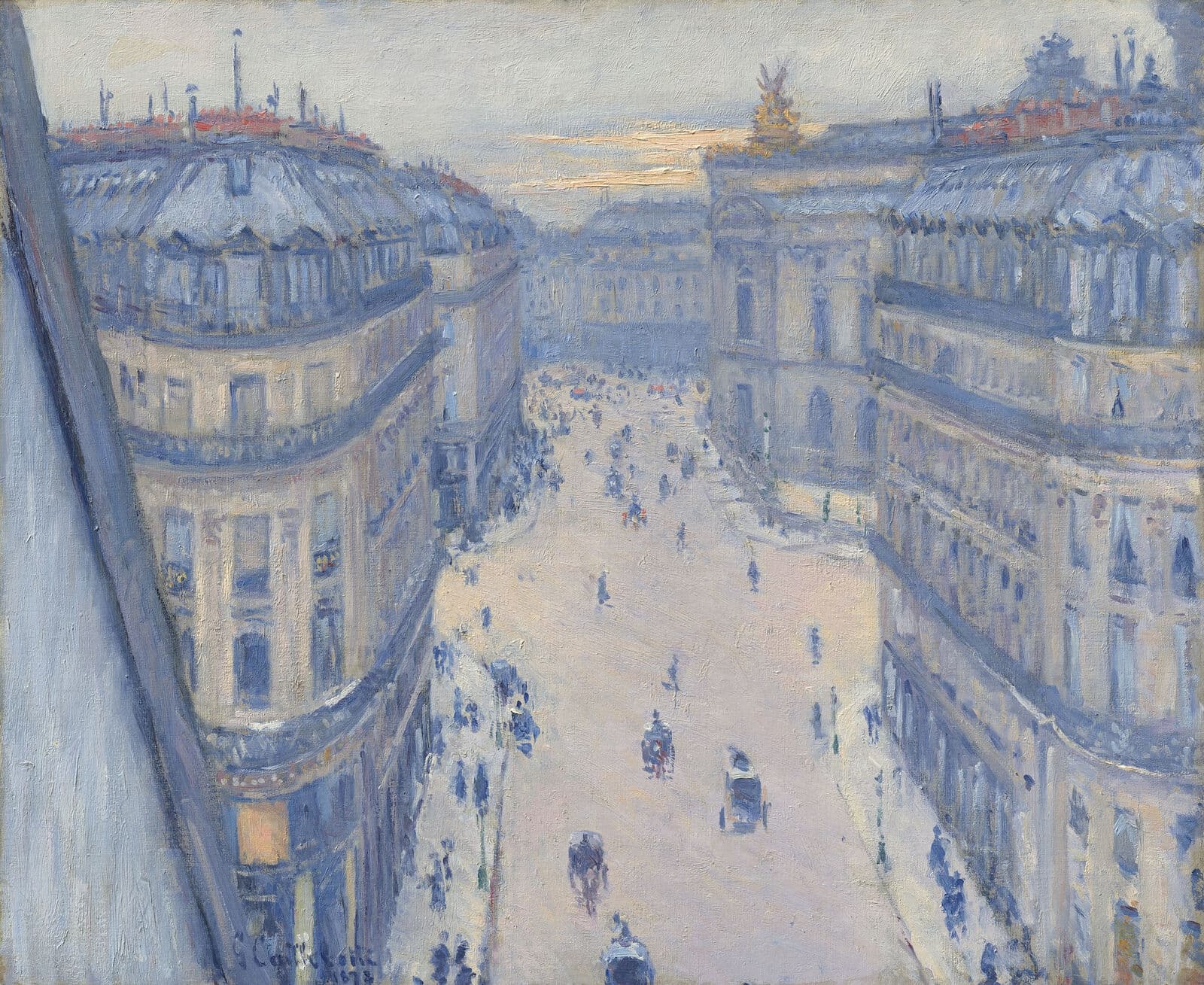
Rue Halévy, View from the Sixth Floor (Rue Halévy, vue du sixième étage)
Gustave Caillebotte, 1878 • Oil on canvas
Read full analysis of Rue Halévy, View from the Sixth Floor (Rue Halévy, vue du sixième étage) →Valuation Analysis
Anchor and immediate conclusion. The primary market anchor for this exact painting is the Sotheby’s New York sale of 14 May 2019, where La Rue Halévy, vue du sixième étage (1878) sold for USD 13,932,000 (price achieved: hammer + buyer’s premium) [1]. Using that confirmed, identical‑work transaction as the starting point, I place a current auction valuation range for the same canvas at USD 10,000,000–20,000,000, with movement within that band driven by condition, provenance/exhibition history, sale context and broader market liquidity.
Comparables and ceiling. The top of the Caillebotte market (e.g., Young Man at His Window, Christie’s, Nov 2021, USD 53,030,000) establishes a clear high‑end ceiling for truly museum‑quality single works and explains why the upper bound of the subject range sits in the low‑tens of millions [2]. Other 2019–2021 comparables (for example, Chemin Montant and similar elevated‑view cityscapes) traded in the low‑to‑mid tens of millions, demonstrating that well‑provenanced, large, and exhibition‑ready Caillebotte canvases can push above the subject’s realized 2019 figure.
Adjustments and rationale. The downward adjustment from the 2019 result to the lower bound (USD 10M) is conservative and reflects possible negative outcomes at resale: deterioration in condition, questionable or incomplete provenance, lack of catalogue‑raisonné confirmation, or sale in a weaker sales context (day sale or non‑prime auction week). The upward movement to USD 20M assumes optimal attributes: large format, excellent, original paint surface with minimal restoration, continuous, distinguished provenance, inclusion in major exhibitions and a marquee evening‑sale placement at a top house—with active bidding by institutions or well‑capitalized private collectors.
Method and uncertainties. This valuation is a market‑value opinion anchored to the most recent identical‑work sale (methodology: recent_sale) and calibrated against high‑end artist comparables and observed market behaviour since 2019. Key uncertainties that could materially alter the range are (1) undisclosed restoration/relining, (2) gaps or disputes in provenance, (3) loss of catalogue‑raisonné entry or committee endorsement, (4) market liquidity and macroeconomic shifts at time of sale, and (5) export or legal encumbrances.
Recommended next steps to firm the estimate. Obtain high‑resolution images (front/back), exact dimensions, and a full conservator’s condition report; confirm the work’s entry/citation in the accepted catalogue raisonné and the provenance/exhibition history as published in the Sotheby’s lot catalogue [1]; consider technical imaging (IRR, X‑ray) if provenance or condition is in question. For disposition, approach major evening sales (Sotheby’s/Christie’s) for pre‑sale estimates or a private‑sale appraisal—both channels can maximize value depending on buyer appetite and sale timing.
Key Valuation Factors
Art Historical Significance
High ImpactGustave Caillebotte's elevated Parisian street views are a distinctive and important strand of his oeuvre and of late‑19th‑century urban realism. La Rue Halévy (1878) belongs to the group of high‑vantage compositions that document modern Paris and demonstrate Caillebotte's unique approach to perspective and compositional framing. While not quite at the public renown of Paris Street; Rainy Day or The Floor Scrapers, Rue Halévy is nonetheless a scholar‑and‑museum‑worthy example of the artist’s themes and technique. That art‑historical standing attracts institutional interest and a collector base willing to pay a premium for well‑preserved, well‑documented examples—hence its strong positive impact on valuation.
Provenance & Exhibition History
High ImpactDocumented, continuous provenance and exhibition citations materially increase buyer confidence and value. The Sotheby’s 2019 catalogue lists a desirable chain of ownership and exhibition references for this canvas; when a work can be cited in a catalogue raisonné and has appeared in major retrospectives or museum loans, market liquidity and price resilience are stronger. Conversely, gaps in provenance, disputed ownership or absence from authoritative scholarly records depress bids. For this painting, published provenance tied to well‑known collectors/dealers is a significant positive factor and one of the main reasons the identical work achieved a strong 2019 result.
Condition & Technical State
High ImpactCondition is a primary determinant of realized price for Impressionist oils. Original paint surface integrity, minimal overpainting, clean varnish, stable canvas and documented conservation history all support higher bids; major relining, heavy inpainting, structural damage or unstable craquelure reduce value—often substantially. A modern, professionally prepared condition report with X‑rays and conservation notes is essential to validate the estimate and to avoid buyer discounting at auction. The presence of a clean conservation history and positive technical findings can move a painting from the lower to the upper end of the valuation band.
Rarity & Comparables
Medium ImpactTrue museum‑quality Caillebotte canvases have become scarce in the commercial market after recent institutional acquisitions, which simultaneously raises profile and reduces supply. High‑quality cityscapes that surface at major houses attract strong competition; comparables such as Chemin Montant (2019) and the 2021 Christie’s record sale provide a context for possible upside. However, not every elevated‑view sells at those levels; rarity helps, but final prices depend on specific attributes (size, finish, provenance). This factor supports a mid‑to‑high valuation when other attributes align, but by itself it is not determinative.
Market Liquidity & Timing
Medium ImpactAuction timing and sale context (major evening sale versus day sale; competing marquee lots; guarantees; private sale opportunities) can swing final results materially. Market liquidity for mid‑to‑high tier Impressionist works has been variable post‑2021: institutions will pay strongly for canonical masterpieces but mid‑tier works exhibit sensitivity to estimates and macroeconomic headwinds. Selling in a marquee evening sale during a strong market window, with marketing and institutional interest, increases the probability of achieving the upper range; poor timing or weaker sale context will push toward the lower bound.
Sale History
Sotheby's, New York — Impressionist & Modern Evening Sale
Christie's, New York
Christie's, London
Gustave Caillebotte's Market
Gustave Caillebotte occupies a strong, increasingly institutionally validated position within the Impressionist market. His top works have produced headline auction results (artist record: Young Man at His Window, Christie’s, 2021, ~USD 53M) and major museums (Getty, Musée d’Orsay) have been active buyers, which both elevates profile and removes top examples from circulation. As a result, the market now shows a bifurcation: exceptional, museum‑quality masterpieces command very high prices, while the broader secondary market for mid‑tier works tends to trade in the high six‑figures to low‑seven‑figure band depending on size, condition and provenance. Collectors prize Caillebotte’s urban modernity and technical refinement.
Comparable Sales
La Rue Halévy, vue du sixième étage (Rue Halévy, View from the Sixth Floor)
Gustave Caillebotte
Exact match — the identical work and the primary market anchor for valuation (published provenance and catalogue entry).
$13.9M
2019, Sotheby's, New York (Impressionist & Modern Evening Sale)
~$16.6M adjusted
Jeune homme à sa fenêtre (Young Man at His Window)
Gustave Caillebotte
Artist auction record and museum‑quality masterpiece — establishes the high‑end ceiling for Caillebotte in the current market.
$53.0M
2021, Christie's, New York
~$59.7M adjusted
Chemin Montant (Rising Road / Chemin Ascendant)
Gustave Caillebotte
Top‑tier Caillebotte sold in 2019 in London — similar period and market tier; useful high‑end comparable to contextualize Rue Halévy's 2019 result.
$22.2M
2019, Christie's, London
~$26.5M adjusted
Current Market Trends
Since 2019 the Caillebotte market has seen stronger institutional demand for canonical works, fewer masterpieces offered publicly and greater scarcity at the top. Mid‑market transactions are more price‑sensitive and timing‑dependent. Recent museum acquisitions and high‑visibility exhibitions have raised the artist’s profile, supporting values for well‑provenanced, exhibition‑ready works, but macroeconomic and auction‑week dynamics continue to influence realized results—making sale context and marketing decisive for achieving upper‑end outcomes.
Sources
- Sotheby’s — Impressionist & Modern Art Evening Sale, Lot 17: Gustave Caillebotte, La Rue Halévy, vue du sixième étage (2019 catalogue & sale result)
- Christie's press / sale reporting — Young Man at His Window (Christie's New York, 11 Nov 2021) — artist auction record coverage
- Market recap / London 2019 Impressionist sales (reference for Chemin Montant result and context)