How Much Is The Orange Trees (Les Orangers) Worth?
Last updated: March 29, 2026
Quick Facts
- Methodology
- comparable analysis
Based on catalogue‑raisonné status, continuous descent provenance and museum ownership (MFAH), The Orange Trees (Les Orangers), 1878, is estimated at approximately $3.0–8.0M if offered on the open market. The lower figure assumes a quick sale or condition/provenance questions; the upper figure assumes excellent condition, clear exhibition/publication history and a favourable sale channel.
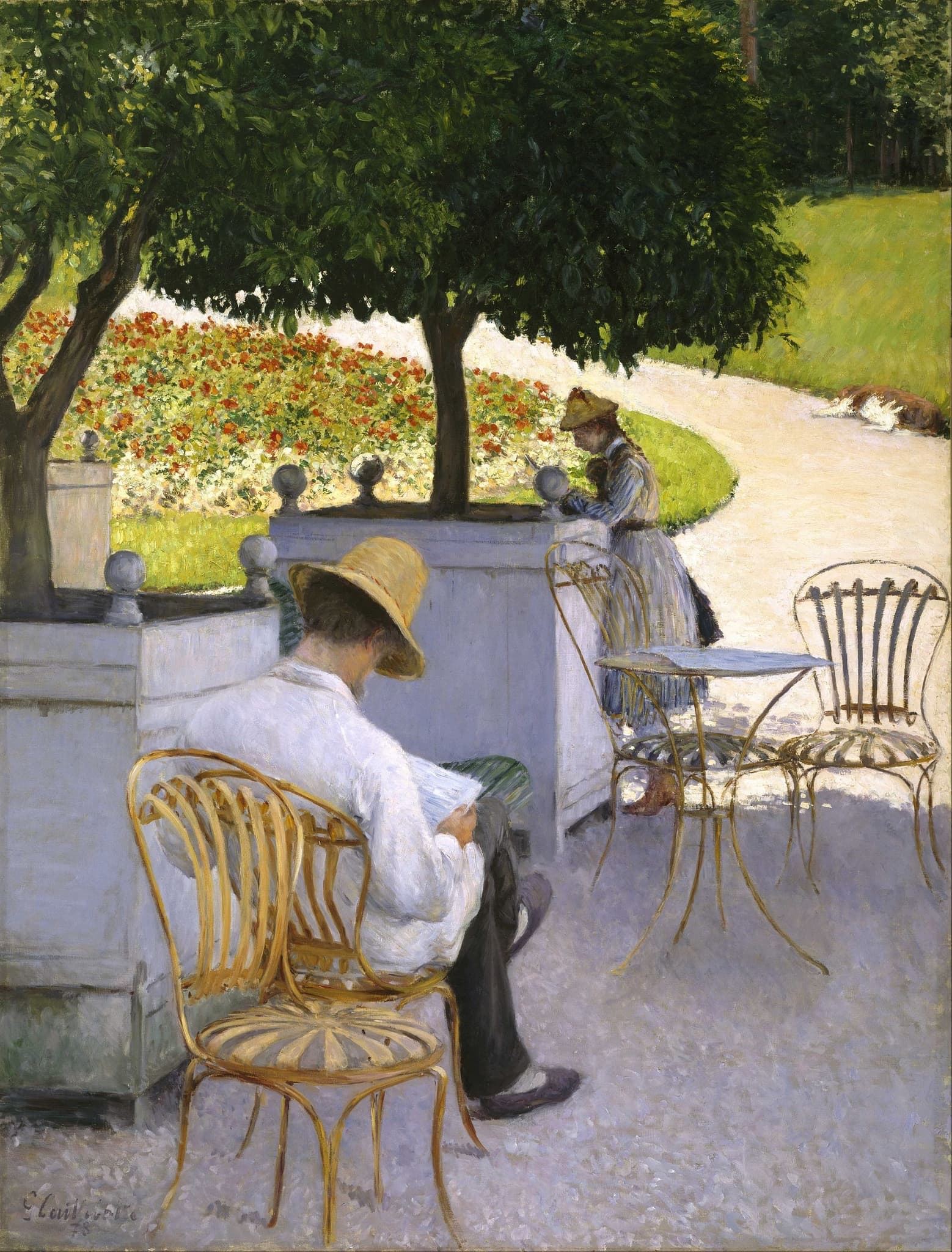
The Orange Trees (Les Orangers)
Gustave Caillebotte, 1878 • Oil on canvas
Read full analysis of The Orange Trees (Les Orangers) →Valuation Analysis
Valuation conclusion: I estimate Gustave Caillebotte's The Orange Trees (Les Orangers), 1878, at approximately $3,000,000–$8,000,000 if it were to come to market. The canvas is catalogue‑raisonné and held in the permanent collection of the Museum of Fine Arts, Houston (MFAH), which materially affects market dynamics and liquidity [1].
Comparables and market anchors drive the range: Recent trophy and high‑end Caillebotte transactions establish a multi‑million to tens‑of‑millions ceiling (e.g., Jeune homme à sa fenêtre sold to the Getty in 2021 for a headline figure that anchors the artist’s top market tier) [2]. Other major evening‑sale results (e.g., Chemin montant) and high‑profile institutional acquisitions (La Partie de bateau / Musée d’Orsay) demonstrate that the very best Caillebotte canvases attract institutional bidders and can reach well into the tens of millions [3][4]. By contrast, numerous market trades for less canonical Caillebotte garden/domestic works in 2019–2025 show realized prices in the high six‑figures to low single millions; Les Orangers, as a large garden composition with solid provenance but not a universally‑cited signature masterpiece, sits closer to that mid‑market band.
Why this specific range? The lower bound ($3M) reflects the realistic outcome where a seller requires speed, or where there are conservation or documentation issues that deter evening‑sale competition. The upper bound ($8M) assumes the work is in very good condition, benefits from documented provenance/exhibition citations, and is marketed via an optimal channel (major sale room or targeted private treaty to institutions/major collectors). MFAH ownership both confirms authenticity/importance and reduces the practical likelihood the work will appear on the market — if it did, that scarcity could also push competitive bidding higher, but deaccession/legal constraints and market timing often cap outcomes relative to free private sales.
Key caveats and recommended next steps: This estimate presumes clear title and no major restoration issues. A formal, transaction‑grade valuation requires an in‑hand condition and conservation report, access to the MFAH provenance file and catalogue‑raisonné documentation, and market testing with Impressionist specialists at major houses (Christie’s / Sotheby’s / Phillips) to determine channel and guaranteed vs. non‑guaranteed strategies. For institutional/deaccession sales, legal and curatorial processes will materially affect achievable price. The MFAH object record and catalogue‑raisonné entry are primary references for provenance and attribution [1].
Bottom line: Les Orangers is a desirable, well‑documented Caillebotte garden composition that would realistically trade in the low‑to‑mid single‑digit millions under normal market conditions, with upside to the high single digits in exceptional circumstances and sale channels.
Key Valuation Factors
Art Historical Significance
Medium ImpactGustave Caillebotte is an established and increasingly prized figure within Impressionist scholarship. Les Orangers (1878) is a mature garden composition that demonstrates the artist's late‑1870s domestic/garden interests rather than his most celebrated urban panoramas. The work is catalogued in the standard raisonné and is academically attributable to the artist; that status supports market confidence but does not automatically place the canvas among the very small number of trophy‑level Caillebotte masterpieces that set record prices. The painting’s intrinsic art‑historical value is therefore meaningful and supportive of secondary‑market demand but sits below the highest echelon of Caillebotte’s best‑known canvases.
Provenance & Exhibition History
High ImpactContinuous descent from the Caillebotte family, private acquisition by John A. and Audrey Jones Beck in 1968, and subsequent donation to MFAH in 1998 provide strong, transparent provenance and institutional custody. Museum ownership and a catalogue‑raisonné entry materially reduce attribution risk and increase market attractiveness to institutions and blue‑chip collectors. Provenance of this quality typically supports higher estimates relative to comparably attractive but undocumented works and is one of the principal reasons Les Orangers sits toward the mid‑market to upper‑mid‑market band.
Condition & Technical Status
Medium ImpactNo public, recent conservation report is available in the open record here; MFAH holds in‑house conservation files that would be determinative. Condition issues (heavy relining, inpainting, pigment loss) could materially reduce market value, while original ground, minimal intervention and confirmed materials consistent with Caillebotte’s palette would support the upper estimate. A full technical and conservation assessment (X‑ray, IRR, pigment analysis) is a prerequisite for a transaction‑grade appraisal.
Scarcity & Market Comparables
High ImpactTop‑tier Caillebotte canvases have realized tens of millions (notably the Getty purchase in 2021) while many garden/domestic works trade in the high six‑figures to low millions. This bifurcated market means Les Orangers is unlikely to reach the record tier unless it is reclassified as a historic ‘trophy’ by scholars and institutions. Comparable recent auction results and high‑profile institutional purchases set the ceiling, but scarcity of true masterpieces and the painting’s subject/placement within the oeuvre suggest a practical market position in the $3M–$8M band.
Sale Channel & Market Timing
Medium ImpactWhether sold via evening sale, morning/day sale, or private treaty will materially affect outcome. Institutional deaccession sales, legal restrictions, and the likelihood that MFAH (as current owner) would only consent to carefully managed sales reduce probability of an open competitive auction appearance. A well‑executed private treaty to institutions or a curated evening sale with guarantees could push a price toward the upper bound, while an urgent or legally constrained sale would compress value toward the lower bound.
Sale History
Private sale (through Feilchenfeldt Galleries, Zurich)
Gift to Museum of Fine Arts, Houston (MFAH)
Gustave Caillebotte's Market
Gustave Caillebotte has moved from a secondary Impressionist market position to a sought‑after, scarcity‑driven market tier. A handful of museum‑quality canvases have set multi‑million to multi‑tens‑of‑millions records (headline sales and institutional acquisitions in the 2020s), while a broader supply of garden, portrait and interior works continues to trade in the high six‑figures to low millions. Institutional buying and major exhibitions have re‑rated the artist, increasing demand for well‑documented, large canvases, but true trophy works remain rare and typically enter museum collections.
Comparable Sales
Jeune homme à sa fenêtre (Young Man at His Window)
Gustave Caillebotte
Artist's public auction record and museum purchase (Getty). Anchors the top of Caillebotte's market for museum‑quality, mid‑1870s works.
$53.0M
2021, Christie's New York (Evening Sale)
~$59.7M adjusted
Chemin montant (Rising Road)
Gustave Caillebotte
Major evening‑sale result for a large landscape/figure work (2019). Shows strong institutional/collector bidding for top works below the auction record.
$22.2M
2019, Christie's London (Evening Sale)
~$26.5M adjusted
La Partie de bateau (A Boating Party)
Gustave Caillebotte
High‑profile museum acquisition reported at ~€43M. Signals institutional valuation for trophy Caillebotte canvases and tight supply at the top.
$47.0M
2023, Private/institutional acquisition (Musée d'Orsay; LVMH‑funded announcement)
~$49.9M adjusted
Un balcon, Boulevard Haussmann (Un Balcon)
Gustave Caillebotte
Recent 2025 sale of an urban/balcony subject by Caillebotte at a mid‑market price — useful as a near‑term day‑sale comparable for scale/subject proximity.
$3.0M
2025, Christie's Paris
Capucines (c. 1892)
Gustave Caillebotte
Representative mid‑market sale (2023) showing liquidity in six‑figure to low‑seven‑figure range for less canonical Caillebotte works.
$1.4M
2023, Christie's London
~$1.5M adjusted
Current Market Trends
The market shows a flight‑to‑quality dynamic: top‑tier Impressionist works attract institutional bidders and command premium prices, while mid‑market lots remain the most liquid. Recent cultural programming and museum purchases have strengthened Caillebotte’s upper market, but a softer overall auction climate increases the importance of sale channel and timing for achieving top results.
Sources
- Museum of Fine Arts, Houston — collection record: Les Orangers (The Orange Trees), Gustave Caillebotte, 1878 (accession no. 98.273)
- Christie's — 2021 sale reporting (Jeune homme à sa fenêtre) — Christie's press materials
- Christie's / market reporting — Chemin montant (2019 evening sale result) (contemporary reporting)
- AP News — Musée d'Orsay acquisition reporting (La Partie de bateau), press summary of institutional acquisition and reported valuation