How Much Is Danseuse assise aux bas roses (Dancer Seated with Pink Stockings) Worth?
Last updated: March 30, 2026
Quick Facts
- Last Sale
- $14.5M (1997, Christie's New York)
- Methodology
- comparable analysis
If the work is the identical, authenticated Danseuse assise aux bas roses that Christie's sold in New York on 12 May 1997 (oil/pastel on board, 56.8 x 46.4 cm), the current market valuation is US$10,000,000–US$36,000,000. This band assumes confirmed authenticity, catalogue‑raisonné entry, and a condition comparable to the 1997 lot; material deviations in any of those factors will move the price materially.
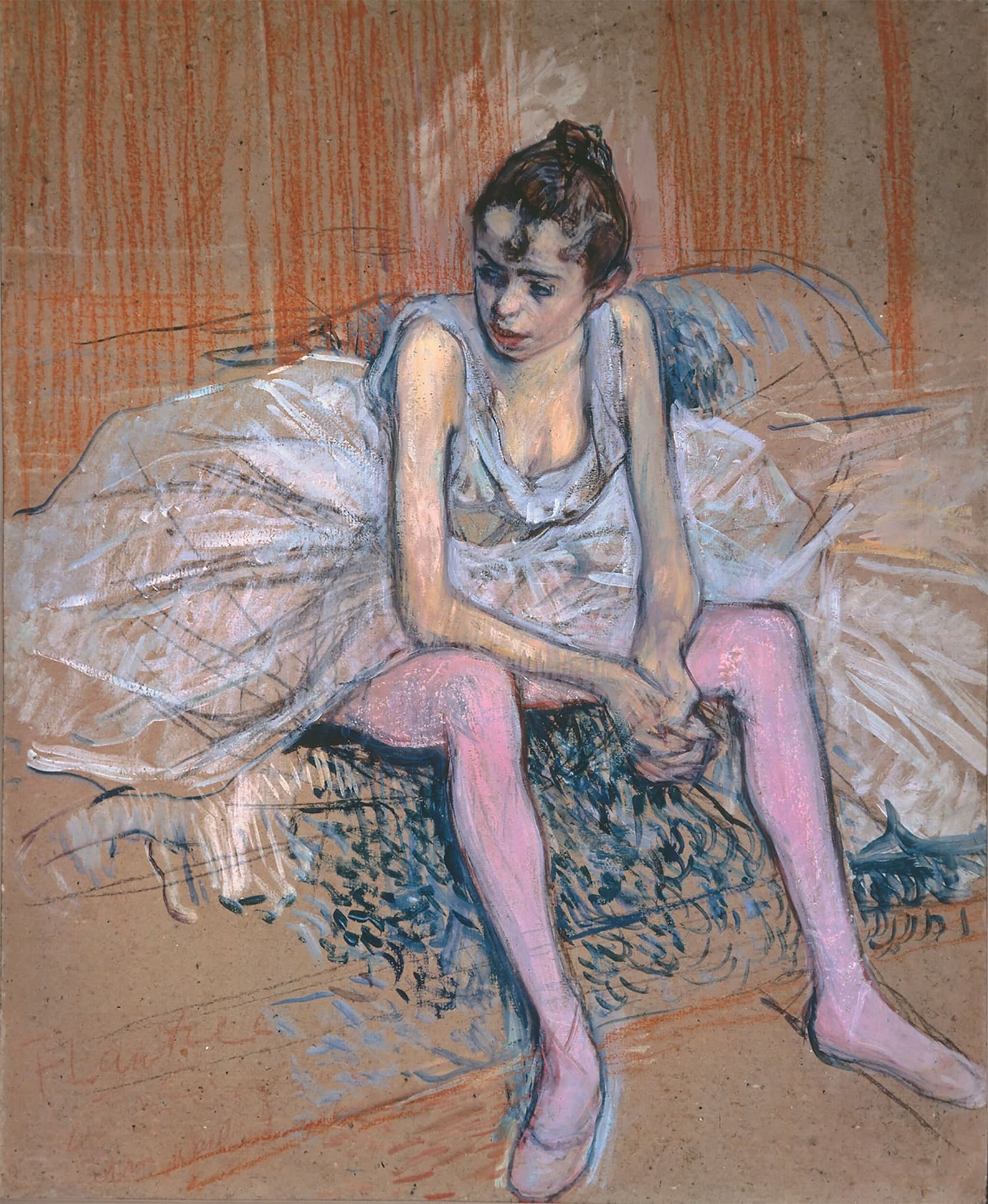
Danseuse assise aux bas roses (Dancer Seated with Pink Stockings)
Henri de Toulouse-Lautrec, 1890 • Oil
Read full analysis of Danseuse assise aux bas roses (Dancer Seated with Pink Stockings) →Valuation Analysis
Valuation conclusion: The best public market anchor for Danseuse assise aux bas roses is the Christie's New York sale of 12 May 1997, when an identical work sold for US$14,522,500; that realized price is the primary datum for this valuation [1]. Adjusting that sale and comparing it to the artist's post‑2000 auction record (La blanchisseuse, Christie’s 2005) and recent high‑quality studies (e.g., Jane Avril, Christie’s Paris 2025) frames a realistic present‑day band of approximately US$10.0–36.0 million for the same authenticated work in comparable condition and provenance [1][2][3].
How the range is derived: The low end (US$10M) reflects conservative pricing if condition issues, gaps in provenance, or absence from key literature reduce competitive buyer interest. The mid and upper territory is driven by the 1997 realized price (a strong late‑20th century datum) and the demonstrated willingness of the market to pay tens of millions for top‑tier Lautrec oils/studies; the 1997 figure inflation‑adjusts roughly to the high‑tens of millions and the 2005 record suggests a plausible ceiling if the picture is museum‑quality and offered in a prime evening sale [1][2].
Key value drivers: Authentication and catalogue‑raisonné inclusion, condition and conservation history, museum/exhibition provenance and literature citations, and the sale context (evening sale, single‑owner or museum consignment) dominate final price. Technical confirmation (x‑ray/IR, pigment/binder analysis) and a professional condition report are essential to validate the high end of the bracket. A notable provenance or inclusion in major exhibitions/catalogues will often add a premium; conversely, extensive restoration or an incomplete provenance will reduce buyer confidence and lower realizations.
Practical takeaways: If you can confirm via photographs, dimensions and catalogue entries that this is the same Christie’s lot (and secure a current condition report showing no major losses or heavy overpaint), you should expect marketing to major houses to produce estimates in the multi‑million range and potential realized prices in the low double‑digit millions. If the work is different, damaged, or lacks RA/exhibition support, adjust expectations toward the low end or below. Recommended next steps: obtain high‑resolution recto/verso images and a conservator report, confirm catalogue‑raisonné/listing and provenance paperwork, and request a pre‑consignment market opinion from a major house referencing the Christie’s 1997 lot [1][2].
Key Valuation Factors
Art Historical Significance
High ImpactThis subject — a seated dancer in pink stockings — falls squarely within Toulouse‑Lautrec's central iconography of cabaret and dance. The work's date (circa 1890) situates it in the artist's mature period of engagement with performers and nightlife, which collectors and institutions prize for both aesthetic and historical reasons. If the picture has unique compositional qualities, is by a known sitter, or is illustrated in major monographs or exhibition catalogues, that raises scholarly value and buyer competition. If the work is merely a studio study without exhibition/literature presence, its art‑historical weight is moderate to low despite being by a major artist.
Provenance & Exhibition History
High ImpactProvenance and exhibition record are decisive. A continuous, published provenance and exhibition citations (especially museum displays) dramatically increase buyer confidence and typically secure premium pricing. The Christie's lot entry for the 1997 sale included a literature/exhibition list and a catalogue‑raisonné reference; when present, such documentation converts a high‑end estimate into an actionable market result. Conversely, provenance gaps, private‑sale ambiguity, or ownership disputes substantially reduce marketability and realized prices.
Condition & Technical/Scientific Authentication
High ImpactPhysical condition — support, ground stability, paint loss, inpainting and any major restorations — directly affects value. Works on board that remain structurally sound and retain original surface will trade stronger than heavily relined, overpainted or abraded examples. Technical imaging and pigment analysis that corroborate 1890s materials and technique increase attribution confidence. A recent conservator's report and imaging packet are prerequisites for any top‑end estimate and will materially shift a presale expectation.
Market Comparables & Sale Context
High ImpactComparable auction results anchor pricing: the identical lot's 1997 sale at Christie’s (US$14.522M) establishes a concrete market datum, while the 2005 La blanchisseuse sale and 2025 high‑quality study results show the market ceiling and present demand. Sale format (evening sale vs day sale), geographic venue, catalogue placement and competing institutional interest will influence final hammer. Well‑timed consignments to major sales with strong estimates and marketing typically achieve premium results.
Sale History
Christie's New York
Christie's New York
Christie's Paris
Henri de Toulouse-Lautrec's Market
Henri de Toulouse‑Lautrec is a blue‑chip late‑19th‑century artist whose market is bifurcated: posters and prints form a deep, price‑stratified segment while oils and major studies command the highest prices. The artist's public auction record sits in the multi‑million range and his best paintings/studies can achieve high single‑digit to low double‑digit millions depending on quality and provenance. Institutional interest, exhibition visibility and rarity of museum‑quality canvases sustain the top end of the market; works lacking documentation trade at substantially lower levels.
Comparable Sales
Danseuse assise aux bas roses (Dancer Seated with Pink Stockings)
Henri de Toulouse-Lautrec
Identical work — oil/pastel on board, same size and signature; primary market anchor (Christie's NY 1997 price realized).
$14.5M
1997, Christie's New York
~$28.4M adjusted
La blanchisseuse (The Laundress)
Henri de Toulouse-Lautrec
Artist auction record for an important oil painting — provides the market ceiling for major Lautrec paintings/studies and signals buyer willingness for top-tier works.
$22.4M
2005, Christie's New York
~$36.0M adjusted
Jane Avril au Divan Japonais
Henri de Toulouse-Lautrec
Recent high-quality study/pastel by the artist (2025) — demonstrates current demand for studies/works on paper and helps calibrate expectations below the top oil market.
$5.9M
2025, Christie's Paris
Current Market Trends
Since 2021 the Impressionist/Post‑Impressionist sector has seen episodic spikes and selective correction; by 2024–25 demand consolidated around museum‑quality works and story‑led lots. Anniversary exhibitions and focused curatorial attention (e.g., 160th‑anniversary shows) strengthened interest in Toulouse‑Lautrec, but buyers remain selective — well‑provenanced and well‑published works outperform the broader catalogue.