How Much Is La Clownesse Cha-U-Kao (Cha-U-Kao at the Moulin Rouge) Worth?
Last updated: March 30, 2026
Quick Facts
- Methodology
- comparable analysis
For an authenticated oil‑on‑cardboard of Toulouse‑Lautrec’s Cha‑U‑Kao in fair‑to‑good condition with solid provenance, a realistic market range is US$1,000,000–US$5,000,000. Final placement within that band (or above it) depends primarily on attribution certainty, condition of the cardboard support, exhibition/provenance history and whether the work is a museum‑quality, fully finished composition.
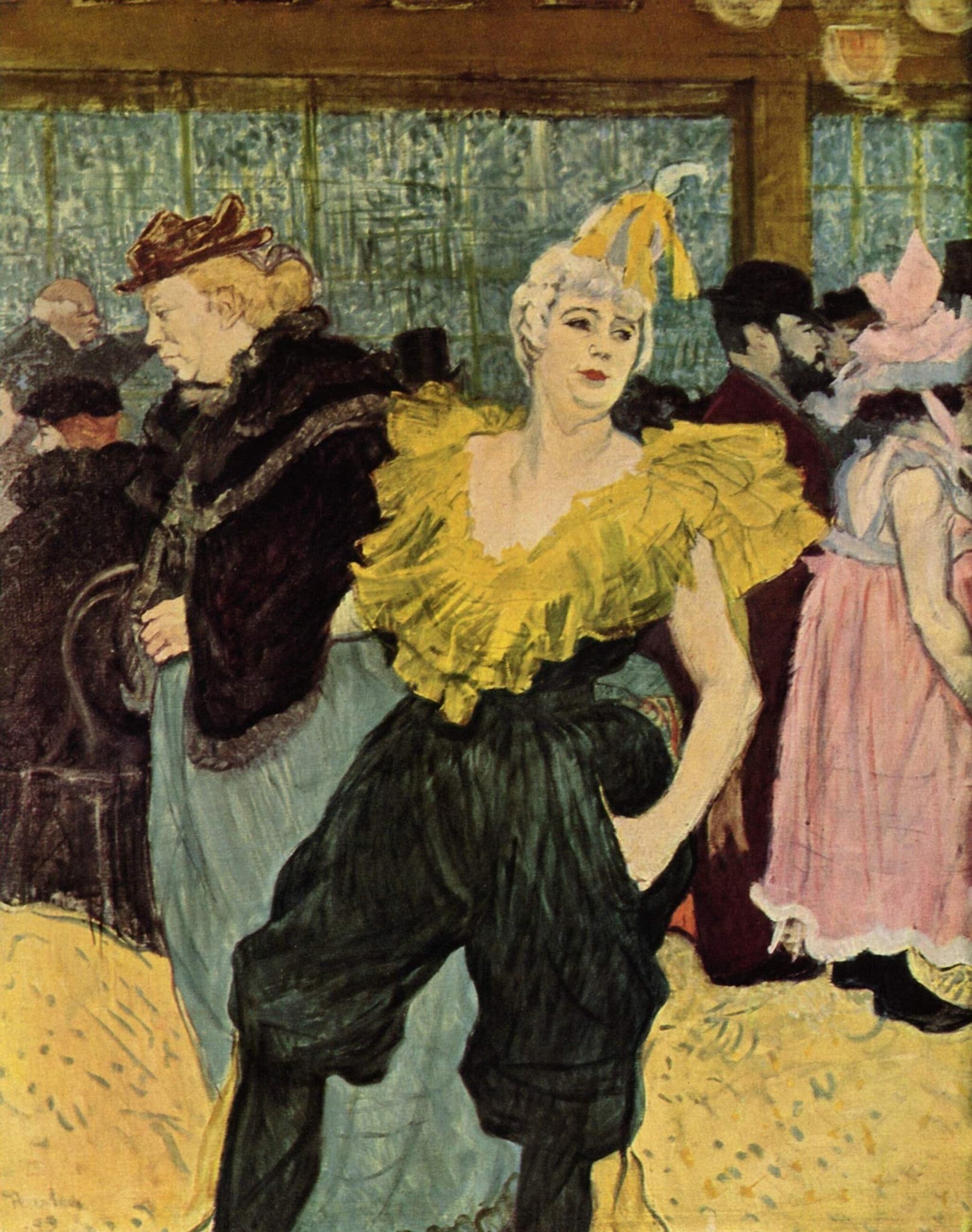
La Clownesse Cha-U-Kao (Cha-U-Kao at the Moulin Rouge)
Henri de Toulouse-Lautrec, 1895 • Oil on cardboard/canvas
Read full analysis of La Clownesse Cha-U-Kao (Cha-U-Kao at the Moulin Rouge) →Valuation Analysis
Valuation rationale and market context
This valuation synthesizes comparable auction results, institutional holdings, and current market dynamics for Henri de Toulouse‑Lautrec. Given available evidence, a working market estimate for an authenticated oil‑on‑cardboard of the Cha‑U‑Kao subject in fair‑to‑good condition with solid (but not exceptional) provenance is US$1,000,000–US$5,000,000. The figure assumes secure attribution to Toulouse‑Lautrec and reasonable conservation; unresolved authorship or major restoration needs will materially depress value.
Two principal oil versions of La Clownesse Cha‑U‑Kao are held in major public collections (notably the Musée d’Orsay and the Oskar Reinhart Collection), and those canonical examples effectively remove the most authoritative works from the market, compressing supply and establishing a high implicit benchmark for any comparable private lot [1]. Institutional provenance (early ownership by Maurice Joyant, the Camondo bequest and exhibition citations) is exactly the type of history that lifts estimates and buyer confidence.
Recent auction evidence for similar Toulouse‑Lautrec works on cardboard demonstrates multi‑million potential where provenance, scale and finish are strong. Christie’s Paris realized €5.34M (≈ US$6.06M) for Jane Avril au Divan Japonais in April 2025 — a directly relevant performer portrait on cardboard that functions as a pragmatic high‑end comparable for a top Cha‑U‑Kao oil [2]. At the other end of the spectrum, high‑quality prints and lithographs of the Cha‑U‑Kao motif have achieved mid‑six‑figure prices, while posters and small studies commonly trade in the low‑to‑mid five‑figure band, illustrating the tiered market for this subject.
Key variables that will move a final price within or beyond the stated range are attribution certainty (catalogue raisonné entry, signature and technical corroboration), physical condition (cardboard warping, paint loss, inpainting, backing interventions), and provenance/exhibition history. Technical imaging (infrared, X‑ray), pigment and fiber analysis, and documented exhibition citations are decisive in converting a mid‑range estimate into a sale in the upper range. If the work is a fully worked, large‑scale oil with stellar provenance and museum‑quality condition it could reach or exceed the top of the stated band; if it is a small study, of uncertain attribution, or in poor condition, it will fall below it.
Recommended next steps to refine an asking or reserve price: obtain high‑resolution photography and condition reports, secure technical analysis and any catalogue‑raisonné references, and submit a complete dossier to a major Impressionist specialist at Christie’s, Sotheby’s or Bonhams for a formal pre‑sale opinion. With that documentation the present US$1,000,000–US$5,000,000 range can be narrowed into a precise estimate and appropriate marketing strategy.
Key Valuation Factors
Art Historical Significance
High ImpactLa Clownesse Cha‑U‑Kao is a recognizable and recurrent subject in Toulouse‑Lautrec’s Montmartre repertoire, linking the work to his best‑known themes of nightlife, performance and gendered portraiture. Because Cha‑U‑Kao appears across oils, drawings and lithographs, an oil that is compositionally distinctive or technically mature is treated as an important example of the artist’s late 19th‑century practice. Institutional holdings (Musée d’Orsay; Oskar Reinhart) and frequent scholarly citation confirm the motif’s pedigree, so a museum‑quality Cha‑U‑Kao carries elevated collector and institutional interest relative to generic studies or later reproductions.
Attribution/Authenticity
High ImpactA secure attribution—catalogue raisonné entry, consistent materials and technique, and corroborating technical imaging—is the decisive value driver. Authentication reduces buyer risk and broadens the buyer base (including institutions). Lack of clear catalogue references, unusual materials, or conflicting stylistic evidence will reduce demand and price sharply. Technical work (infrared reflectography, X‑ray, pigment and fiber analysis) and documentary provenance that ties the painting to early collectors or exhibitions substantially increase salability and realized value.
Condition/Support
High ImpactCardboard supports are vulnerable to warping, edge loss, flaking and previous restoration; these issues materially affect market value. Paint stability, presence of original ground/varnish, extent of inpainting and any structural interventions must be documented. A stable, minimally restored oil commands a premium; extensive conservation needs or major interventions can reduce value by tens of percent or more. A professional condition report and conservation history are essential to set a realistic reserve or insurance value.
Provenance/Exhibition History
High ImpactClear, early provenance and exhibition citations are powerful value multipliers. Works traced to early collectors, reputable dealers, or included in major exhibitions or monographs gain institutional validation and buyer confidence. Loans to respected museums and catalogue citations can elevate a work from commercial to museum‑quality status. Conversely, gaps in ownership, unverified private transfers, or lack of exhibition history will suppress interest and realized price.
Market Comparables & Rarity
Medium ImpactThe market exhibits distinct tiers: museum‑quality oils can reach multi‑million results, rare high‑grade prints reach mid‑six figures, and posters/smaller studies typically trade in the thousands–low tens of thousands. Canonical museum examples reduce supply of top Cha‑U‑Kao oils, making authenticated private examples comparatively rare and desirable. Auction benchmarks for performer portraits on cardboard show buyer appetite at the multi‑million level; scarcity of fresh, authenticated oils supports values nearer the mid‑range for good examples and higher for exceptional instances.
Sale History
La Clownesse Cha-U-Kao (Cha-U-Kao at the Moulin Rouge) has never been sold at public auction.
Henri de Toulouse-Lautrec's Market
Henri de Toulouse‑Lautrec is a blue‑chip figure of the Belle Époque whose paintings, prints and posters retain strong institutional and collector demand. His market is tiered: museum‑quality oils and iconic works command multi‑million prices and remain trophy items, while lithographs and posters form a vigorous specialist market with separate price dynamics. Recent notable sales and institutional exhibitions have reinforced demand for top pieces; however, mid‑tier liquidity is more price‑sensitive and depends heavily on provenance and condition.
Comparable Sales
Jane Avril au Divan Japonais
Henri de Toulouse-Lautrec
Same artist, same period and medium (work on cardboard), similar subject (performer/dancer in Paris entertainment venues). Recent high-profile sale that sets the market level for top-quality Lautrec cardboard paintings.
$6.1M
2025, Christie's Paris
La Blanchisseuse
Henri de Toulouse-Lautrec
Artist's auction record and a major museum-quality painting — establishes the ceiling for the market for top-tier Toulouse-Lautrec paintings and illustrates how high-value unique works can sell.
$22.4M
2005, Christie's New York
~$35.2M adjusted
La Clownesse assise (Elles portfolio impression)
Henri de Toulouse-Lautrec
Directly related subject/composition (Cha‑U‑Kao) but a print rather than an oil; a rare, high-quality impression realized mid-six-figures, showing strong collector demand for this subject in the graphic-arts market.
$287K
2015, Christie's South Kensington (Prints & Multiples)
~$375K adjusted
Le Postillon (small watercolour/graphite)
Henri de Toulouse-Lautrec
Recent sale of a small work on paper by the artist; useful as a lower-tier comparable to scale expectations for minor studies/drawings versus full oils on cardboard.
$60K
2025, Sotheby's (online sale)
Caudieux (poster)
Henri de Toulouse-Lautrec
Example from the Belle Époque poster market — shows that classic Lautrec posters typically trade in the low-to-mid five-figure range, relevant for valuations of reproductions/graphic works of the Cha‑U‑Kao subject.
$33K
2024, Poster Auctions International (PAI)
~$33K adjusted
Current Market Trends
Current market conditions favor a flight to quality: top museum‑quality Impressionist and Post‑Impressionist works outperform the broader market, while mid‑tier lots face more selective bidding. Institutional exhibitions and updated scholarship through 2024–2025 have elevated demand for Toulouse‑Lautrec material. Posters and prints remain active in specialist channels, but prices are much lower than unique oils. Effective marketing, provenance and technical documentation are essential to achieve top results.