How Much Is Marcelle Lender Dancing the Bolero in 'Chilpéric' Worth?
Last updated: March 30, 2026
Quick Facts
- Methodology
- comparable analysis
Assuming the work is an authenticated Henri de Toulouse‑Lautrec oil-on-canvas 'Marcelle Lender Dancing the Bolero in Chilpéric', I value it at approximately $2.0–8.0 million based on recent auction comparables for museum-quality performer portraits and oils. If the object is a vintage color lithograph/poster of Marcelle Lender, value is orders of magnitude lower (roughly $10,000–$150,000); confirm medium and state to finalize the appraisal.
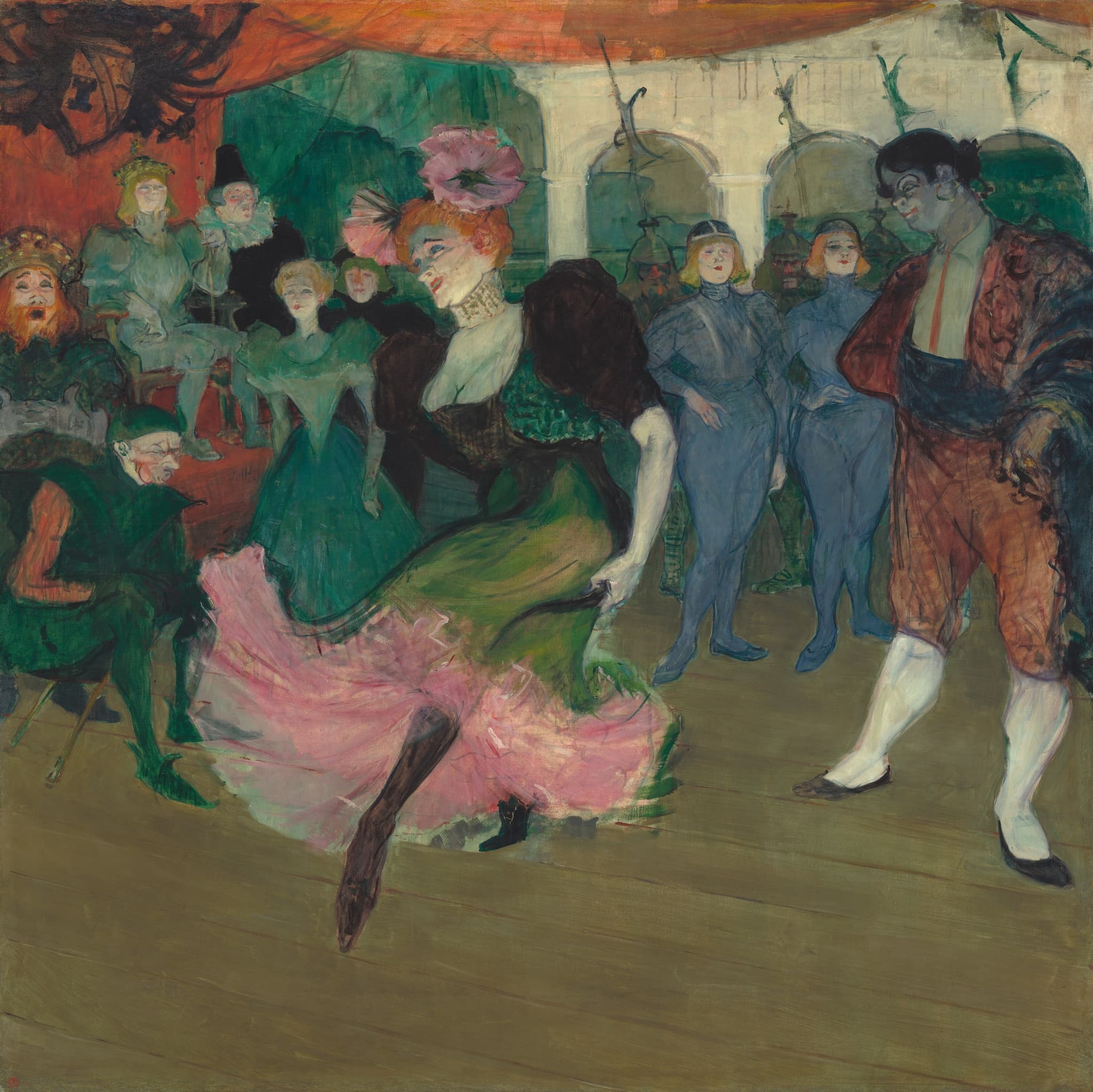
Marcelle Lender Dancing the Bolero in 'Chilpéric'
Henri de Toulouse-Lautrec • Oil on canvas
Read full analysis of Marcelle Lender Dancing the Bolero in 'Chilpéric' →Valuation Analysis
Scope and assumption. This valuation is prepared on the assumption that the object before you is an original oil-on-canvas by Henri de Toulouse‑Lautrec titled 'Marcelle Lender Dancing the Bolero in Chilpéric' and that the work can be objectively attributed to the artist. A painting with this title and standard catalogue/provenance exists in the National Gallery of Art collection, which provides a firm catalogue and provenance benchmark for the composition [1]. Where the object is instead a vintage color lithograph/poster, the comparable market is very different and substantially lower in price.
Methodology. I used a comparable-analysis approach that weights: (a) recent auction realizations for performer portraits and oils by Toulouse‑Lautrec (notably the high-profile Christie’s Paris performer lot in April 2025) [2]; (b) the historical auction ceiling for the artist (La Blanchisseuse, Christie’s NY, 2005) as an absolute reference point [3]; and (c) multiple market datapoints for Marcelle Lender lithographs and related prints to delineate the posters/prints band (Bonhams, Santa Fe, etc.) [4]. Unique oils are priced on rarity, condition, provenance and market demand and therefore trade several orders of magnitude above multiples such as lithographs.
Primary value drivers. The principal variables are (1) secure attribution and catalogue raisonné/technical confirmation; (2) condition and conservation history; (3) provenance and exhibition/publication history (the NGA/Whitney provenance chain is highly favorable where applicable) [1]; and (4) current market appetite for late‑19th‑century performer portraits. Technical tests (IR, X‑radiography, pigment analysis, canvas thread count) and expert connoisseurship will materially affect the market band.
Price-band rationale. The lower bound of the band (~$2.0M) reflects an authentic but comparatively modest studio work, or a work with conservation issues or limited scholarly backing that would constrain institutional and top‑tier private competition. The upper bound (~$8.0M) reflects a museum‑quality, fresh‑to‑market oil in excellent condition, with unambiguous attribution and strong provenance that would attract both institutions and leading private collectors; this band is supported by recent mid‑six‑figure to multi‑million results for comparable performer portraits and drawings and the known auction record ceiling for the artist’s best oils [2][3].
Next steps to firm value. Verify medium (paper vs. canvas) with high‑resolution images; obtain a technical condition and pigment report; consult recognised Toulouse‑Lautrec specialists and the NGA curators for provenance confirmation; and obtain pre‑sale opinions from major Impressionist/Modern departments. With those inputs the estimate can be narrowed into a more precise reserve/estimate strategy for sale or insurance purposes.
Key Valuation Factors
Art Historical Significance
High ImpactMarcelle Lender is a recognized sitter in Toulouse‑Lautrec’s iconography and the subject is central to his depictions of Parisian popular theatre and celebrity. The iconic lithograph/poster of 1895 is widely reproduced and collected; by contrast, an original oil of the same subject is rare and therefore of considerably greater art‑historical weight. A verified oil connects to museum narratives about Lautrec’s practice of portraying performers and enhances the work’s curatorial appeal. Because institutions prioritize unique, exhibitable paintings, confirmed museum‑quality oils of this subject materially increase buyer competition and therefore market value.
Attribution & Authentication
High ImpactSecure attribution is decisive. Inclusion in a catalogue raisonné, consistency with known autograph brushwork, and corroborating technical analysis (pigment identification, ground preparation, IR reflectography and X‑radiography) convert a speculative work into blue‑chip material. Without strong authentication the market will treat the object as 'circle', 'studio' or a later copy — categories that drastically reduce value. Authentication also affects which market channel is appropriate (major evening sale vs. specialist sale or dealer private treaty) and whether institutions will be competitive bidders.
Condition & Conservation
High ImpactCondition strongly calibrates price. For oils, assessments should include paint film stability, inpainting/restoration extent, relining history, and any structural support issues; for prints, paper tone, margins, tears, and restoration are critical. Even expertly restored works sell at a discount to unrestored, pristine examples, and buyers will reduce their willingness to pay for works with intrusive restoration. A full conservator's report will be required for an auction house estimate and is a mandatory deliverable for institutional buyers.
Provenance & Exhibition History
High ImpactA documented chain of ownership and exhibition/publication record add significant purchaser confidence and typically elevate realized prices. The known chain for the NGA example (artist estate → Maurice Joyant → Mme Dortu → John Hay Whitney → NGA) is a model provenance that increases institutional interest and buyer confidence. Works with gaps in provenance or associations with poorly documented private sales face greater attribution risk and correspondingly lower market valuations.
Market Demand & Comparables
Medium ImpactDemand is bifurcated: posters and prints remain accessible and liquid at low‑to‑mid five‑figure levels, while drawings and oils command mid‑six to multi‑million results when fresh to market and well‑provenanced. Recent performer portraits and drawings have realized in the low millions to several million dollars, demonstrating buyer appetite for this subject area. The specific market channel, timing (major auction weeks) and catalogue presentation will moderate interest and final price.
Sale History
Christie's New York
Christie's Paris
Bonhams London
Santa Fe Art Auction
Henri de Toulouse-Lautrec's Market
Henri de Toulouse‑Lautrec occupies a prominent, collectible position in the late‑19th‑century/ Belle Époque market. His unique oils and major drawings remain the primary drivers of high‑end value and can achieve multi‑million results when museum‑quality, fresh to market, and properly provenanced. By contrast, his posters and lithographs, though culturally iconic and widely exhibited, trade at substantially lower price points because of multiple impressions and broader market supply. Collectors prize performer portraits and Montmartre subjects; institutional exhibition programs and anniversary shows periodically boost demand for works on paper and paintings alike.
Comparable Sales
La Blanchisseuse (The Laundress)
Henri de Toulouse-Lautrec
Artist's auction record and a museum‑quality oil — a ceiling benchmark for high‑end Toulouse‑Lautrec paintings (useful to define the top end if a canonical Marcelle Lender oil came to market).
$22.4M
2005, Christie's New York
~$35.8M adjusted
Jane Avril au Divan Japonais
Henri de Toulouse-Lautrec
Recent high‑end sale of a Lautrec performer portrait/drawing — close in subject matter (cabaret/performer) and demonstrates strong current demand for museum‑quality performer images by the artist.
$5.9M
2025, Christie's Paris
La femme tatouée
Henri de Toulouse-Lautrec
Recent oil painting sale by the artist — comparable medium (oil) and subject (female figure), useful as a near‑term market datapoint for Lautrec oils.
$2.9M
2024, Christie's London
~$3.0M adjusted
Mademoiselle Marcelle Lender (color lithograph)
Henri de Toulouse-Lautrec
Same sitter/composition in print form — directly shows market recognition and pricing for Marcelle Lender images (works on paper/poster market), though different medium and far lower value than oils.
$10K
2018, Bonhams, London
~$13K adjusted
Current Market Trends
The current market shows resilient demand for high‑quality works on paper and posters as accessible entry points, while the ultra‑high end for single paintings is selective and reliant on provenance and scarcity. Anniversary exhibitions and major museum programming have recently stimulated interest in Lautrec’s printed output and performer portraits. Sellers of major oils should time consignments to major auction weeks and prepare robust scholarly and technical dossiers to maximize buyer competition.