How Much Is Fishermen at Sea Worth?
Last updated: April 10, 2026
Quick Facts
- Methodology
- comparable analysis
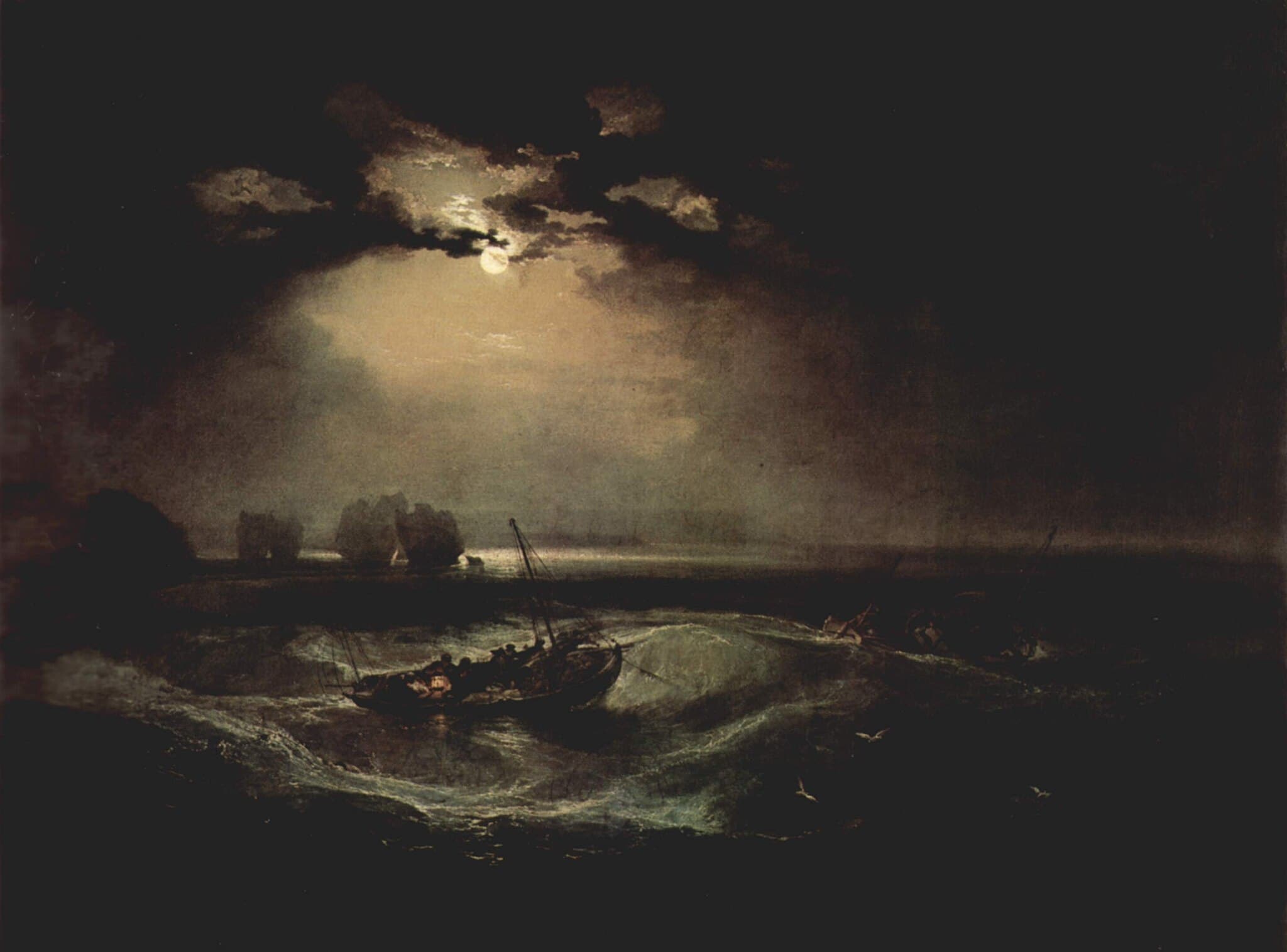
Fishermen at Sea (1796) is an early, museum‑quality oil by J. M. W. Turner in Tate Britain (accession T01585) and is effectively off‑market. Based on auction comparables, institutional provenance and market dynamics for canonical Turners, a reasoned hypothetical market range is USD 10–40 million.
Valuation Analysis
Valuation conclusion: Fishermen at Sea is a canonical early Turner held by Tate Britain (accession T01585) and therefore has no modern public‑sale record; any commercial price is hypothetical and contingent on availability, legal/export permission and condition [1]. Using recent high‑end Turner auction results (the Sotheby’s sale of Rome, from Mount Aventine in 2014) as a ceiling reference and mid‑market rediscoveries as lower anchors, the painting is best positioned in a working market band of USD 10–40 million in a hypothetical open sale scenario [2][3].
This range reflects three primary forces: (a) intrinsic art‑historical importance (it is an early exhibited oil that helped establish Turner’s reputation), (b) museum‑level provenance and exhibition history that command premiums, and (c) market precedents showing both blockbuster late‑period Turners that reach tens of millions and rediscovered early oils that have realized low‑ to mid‑seven figures when they surface. The 2014 Sotheby’s Roman view establishes the robust upper bound for rare, late masterpieces by Turner; recent rediscoveries of early oils demonstrate active demand but materially lower realized sums when works are smaller or less monumental [2][3][4].
Practical application of those comparables to Fishermen at Sea: because it is an important early oil with strong provenance and a distinguished exhibition history, it would trade well above routine studio or workshop attributions and above the small rediscovery outcomes. It lacks the scale and late‑period chromatic experimentation that produced the artist’s record results, so it would realistically sit below the absolute artist ceiling but could reach low‑to‑mid tens of millions in a competitive sale—hence the USD 10–40M band. The wide spread reflects key variables: condition/conservation, any restoration history, the presence of technical authentication and supporting scholarship, the sale venue (London vs. New York), and legal/export/deaccession constraints that could limit buyer participation.
Key caveat: Tate ownership and UK cultural‑property controls make a sale unlikely; deaccession policies, national interest reviews and export licensing can materially restrict or delay any transaction and therefore affect both the probability and the price. This estimate assumes the work becomes legally available and is in sound condition with standard technical documentation. Final pricing would require an up‑to‑date condition report, exhibition/provenance dossier and direct auction or private‑sale marketing to institutional buyers and major private collectors.
Key Valuation Factors
Art Historical Significance
High ImpactFishermen at Sea is widely regarded as one of Turner’s earliest important oils and was exhibited at the Royal Academy in 1796. The composition exemplifies his early marine idiom and atmospheric handling; it appears repeatedly in Turner scholarship and survey literature as a formative work. This level of art‑historical significance increases institutional demand and confers a premium in the marketplace: museums and major collectors prize works that demonstrate an artist’s development and that can anchor exhibitions or publications. In practice this raises both the floor and potential ceiling compared with comparable unattributed or workshop pieces.
Provenance & Collection
High ImpactThe painting’s provenance—early exhibition at the Royal Academy, ownership history through private hands (including the Cholmeley family), long loans and eventual acquisition by Tate Britain (accession T01585, acquired 1972)—confers strong provenance value. Museum ownership signals authenticity, scholarship and public visibility, attracting premium bidding when such works appear. Conversely, museum custody also creates practical barriers to marketability (deaccession rules, legal/ethical scrutiny). Overall, Tate provenance substantially strengthens value but also makes a real sale exceptional and logistically complex.
Market Comparables & Demand
High ImpactComparable sales show a bifurcated Turner market: blockbuster late canvases have achieved tens of millions (Sotheby’s Rome, from Mount Aventine, 2014), while rediscovered early oils and works without large‑scale monumentality have sold in the low‑to‑mid millions. Demand for canonical Turners is strong but supply is extremely limited; when museum‑quality works are market‑accessible they attract institutional and wealthy private bidders. These dynamics justify a multi‑million valuation for a museum‑quality early oil but temper expectations relative to late monumental canvases.
Condition & Conservation
Medium ImpactNo public, recent technical or conservation report for this Tate work is available in open sources. Condition materially affects value: well preserved, original paint and an uncontroversial restoration history support higher results; significant overpainting, relining, or structural issues reduce realizable price. Technical studies (pigment analysis, IR/UV, X‑radiography) that confirm originality and clarify studio/workshop involvement typically raise buyer confidence and can move a lot toward the upper end of the range.
Legal/Deaccession & Export Constraints
High ImpactBecause the painting is held in a national collection, UK legal and ethical frameworks around deaccession, export licensing and national significance apply. Deaccession by major museums is rare and often controversial; export licenses for culturally significant works can be denied or deferred. These constraints reduce the practical liquidity of the object and can deter some private bidders, but if the work did legitimately reach the market it would likely attract intense institutional interest and competitive bidding from a narrower pool of qualified buyers.
Sale History
Fishermen at Sea has never been sold at public auction.
J. M. W. Turner's Market
J. M. W. Turner is the preeminent 19th‑century British landscape and seascape painter and occupies blue‑chip status in the Old Masters/19th‑century sector. His market is characterized by a small supply of museum‑quality works, occasional headline auction records (the 2014 Rome view established a multi‑million ceiling) and episodic rediscoveries that trade at lower price points. Collectors and institutions prize canonical Turners for scholarship, exhibition potential and rarity, creating steady demand at the top end but with a segmented market for lesser or uncertain attributions.
Comparable Sales
The Rising Squall, Hot Wells
J. M. W. Turner
Early Turner seascape; recent rediscovery sold in London and demonstrates market demand/pricing for early oils when they surface.
$2.6M
2025, Sotheby's London (Old Masters)
Rome, from Mount Aventine
J. M. W. Turner
Artist auction record / late masterpiece; sets the market ceiling for Turner and indicates how high museum-quality Turners can sell.
$47.4M
2014, Sotheby's London
~$64.3M adjusted
Modern Rome – Campo Vaccino
J. M. W. Turner
Another blockbuster late Roman view by Turner; confirms the high-end market for large, canonical Turners.
$44.9M
2010, Sotheby's London
~$66.0M adjusted
The Blue Rigi
J. M. W. Turner
Iconic Turner watercolour; demonstrates that museum-quality small/works-on-paper by Turner can reach double-digit millions and serve as a benchmark.
$10.8M
2006, Christie's London
~$17.2M adjusted
Current Market Trends
The mid‑2020s market shows a flight to quality for Old Masters and historically validated 19th‑century works, aided by Turner anniversary programming and institutional exhibitions. Scarcity of top Turner works, renewed institutional interest and episodic rediscoveries support multi‑million outcomes for museum‑grade canvases, though macroeconomic caution and deaccession/export rules remain important risk factors.