How Much Is Norham Castle, Sunrise Worth?
Last updated: April 10, 2026
Quick Facts
- Methodology
- comparable analysis
Norham Castle, Sunrise (c.1845) by J.M.W. Turner (Tate accession N01981) is held in the Turner Bequest at Tate Britain and therefore not market‑available. If a comparable autograph oil of this scale and quality were offered on the open market, a conditional estimate is approximately $3,000,000–$30,000,000 USD, reflecting a wide band driven by attribution, condition, provenance and exhibition history.
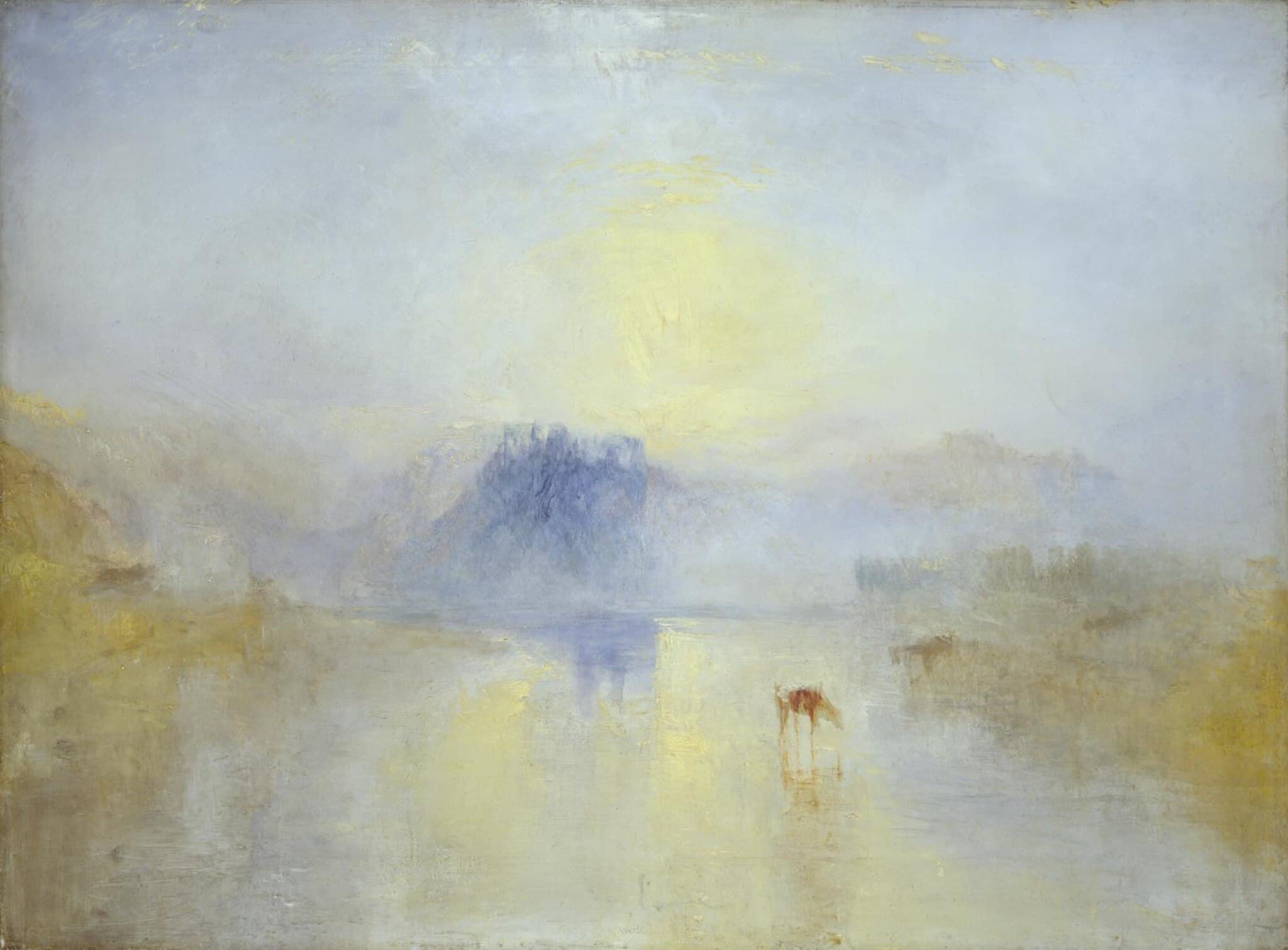
Norham Castle, Sunrise
J. M. W. Turner, 1845 • Oil on canvas
Read full analysis of Norham Castle, Sunrise →Valuation Analysis
Conclusion and context: Norham Castle, Sunrise (oil on canvas, c.1845; 90.8 × 121.9 cm) is in the Tate collection as part of the Turner Bequest and has no recent auction record [1]. Because it is museum‑held it is effectively not marketable in the ordinary sense; the figure below therefore represents a conditional open‑market range for an autograph late Turneresque oil of this scale and importance should one ever appear for sale.
Comparables and anchors: Turner's late oils have produced both trophy prices and a broad secondary market. Major late oils — for example Rome, from Mount Aventine (2014) — established a high‑end anchor in the tens of millions of dollars [2]. Other large late oils (e.g., Ehrenbreitstein) have realised mid‑ to high‑seven figures to low‑eight figures depending on provenance and condition [3]. At the lower end, well‑provenanced but less monumental oils have sold in the low single millions (Christie’s examples include market outcomes in the $4–5M band) [4]. These comparables justify a conditional bracket spanning mid‑millions to tens of millions.
Why the range is wide: The principal variables are (1) unambiguous autograph status (studio or later copy reduces value materially), (2) scale and pictorial ambition, (3) condition and any historic restorations, and (4) provenance/exhibition history (Turner Bequest or lifetime exhibition history elevates significance). A large, autograph, well‑provenanced Norham oil in excellent condition and offered with a strong scholarly narrative could approach the upper end of the range; a small, workshop or uncertain‑attribution variant would sit toward the low end.
Practical note on marketability: Because the Tate picture (N01981) is part of the national collection it is not for sale and therefore has no market price [1]. Institutional ownership and national patrimony make such works effectively priceless in cultural terms and typically insured at a replacement/indemnity figure set by the museum. For a privately held Norham canvas with similar attributes, the conditional $3M–$30M range is appropriate guidance pending technical authentication and a full condition report.
Recommended next steps: For any owner or stakeholder seeking a firmer valuation: commission technical analysis (pigment/IR/X‑ray), secure Turner‑specialist authentication, obtain a conservator’s condition report, and assemble full provenance/exhibition documentation. With those deliverables a market estimate can be narrowed substantially and a pre‑sale strategy (loan + catalogue + major‑sale placement) can be designed to maximise value.
Key Valuation Factors
Art Historical Significance
High ImpactNorham Castle is an established and recurrent Turner motif; the c.1845 oil of this subject is part of his mature late oeuvre and therefore carries substantial scholarly and cultural weight. The Tate example (Turner Bequest) has been exhibited and published, reinforcing the image’s art‑historical pedigree. Works with direct ties to major themes in Turner’s late practice (light, atmosphere, ruinous architecture) draw institutional interest, which elevates both market appetite and insurance replacement considerations. The subject’s recognisability increases the painting’s market acceptability to both private collectors and institutions.
Attribution & Authenticity
High ImpactAttribution is the single most important value driver. A fully authenticated autograph oil by Turner (confirmed by Turner specialists and technical examinations) commands a substantial premium versus a studio or later copy. Technical work (pigment analysis, infrared reflectography, X‑radiography, canvas weave) and endorsement from recognized Turner scholars or Tate curators materially shift market expectations. Even small unresolved doubts about autograph status can reduce value by an order of magnitude, so clear authentication is essential to reach the higher end of the estimate.
Provenance & Exhibition History
High ImpactProvenance back to the 19th century, especially links to the Turner Bequest, important collectors, or documented lifetime exhibitions, significantly increases value. Works with a documented loan and exhibition history (major museum shows, catalogue entries) attract institutional buyers and competitive bidding. Conversely, gaps in provenance, private anonymity, or histories involving multiple undocumented restorations weaken buyer confidence and reduce marketability. Clear, published provenance can move a conditional estimate several million dollars upward.
Condition & Conservation
Medium ImpactPhysical state — craquelure, relining, overpaint, varnish discoloration, structural issues — directly affects both aesthetics and price. A high‑quality conservator’s report that shows original paint layer integrity and acceptable conservation interventions supports higher estimates. Significant restorations or heavy retouching suppress buyer interest and require discounting. For Turners, surface light effects are critical; any loss of subtle glazing or degraded varnish that alters the atmospheric quality will reduce the painting’s market appeal and value.
Market Comparables & Demand
High ImpactRecent auction history for major Turner oils demonstrates a two‑tier market: trophy late oils can realise tens of millions while smaller or less singular oils sell in the mid‑single millions. High‑profile sales (e.g., late oils sold at Sotheby’s/Christie’s) provide upper anchors, while more modestly scaled works establish the lower bound. Market demand is influenced by scholarship, rediscoveries, and institutional buying power; when a Turner oil offers a compelling scholarly narrative or is timed with major exhibitions, realized prices skew upward.
Sale History
Norham Castle, Sunrise has never been sold at public auction.
J. M. W. Turner's Market
J.M.W. Turner is a canonical and highly collectible British master. His market is characterised by scarcity of museum‑quality oils on the open market (many important works are in public collections via the Turner Bequest), strong institutional demand, and occasional trophy sales that set high price anchors. Top late‑oil results have reached tens of millions at auction, while well‑provenanced but smaller oils trade in the single‑ to low‑multi‑million range. Scholarship, rediscoveries and museum programming materially influence buyer interest and pricing.
Comparable Sales
Rome, From Mount Aventine
J. M. W. Turner
Large, autograph late-period Turner oil that set the artist's auction record; good upper-market anchor for major late oils comparable in ambition/scale to Norham Castle (c.1845).
$47.5M
2014, Sotheby's London
~$63.0M adjusted
Modern Rome – Campo Vaccino
J. M. W. Turner
Another top-tier, large late Turner oil (1830s) that established market demand for major late landscapes; useful as an upper-market comparable for high‑quality late oils.
$44.9M
2010, Sotheby's London
~$64.6M adjusted
Ehrenbreitstein
J. M. W. Turner
Large late-period Turner oil of similar date/genre; realised a strong mid‑tens‑of‑millions price and is a closer market analogue for high‑quality late landscapes though below the record trophies.
$24.0M
2017, Sotheby's London
~$30.7M adjusted
Pope's Villa at Twickenham
J. M. W. Turner
A well‑provenanced Turner oil that sold in the low single millions—useful as a lower‑market benchmark for museum‑quality but non‑trophy oils or smaller/earlier works.
$4.6M
2023, Christie's New York
~$4.8M adjusted
Current Market Trends
Current market conditions are selective: institutional programming (notably anniversary exhibitions) and rediscoveries boost interest, yet auction results show volatility. A "two‑speed" market persists — trophy works command deep pockets while mid‑tier lots face caution. Provenance, condition and a compelling scholarly narrative are decisive in 2024–2026.