How Much Is Rome, from Mount Aventine Worth?
Last updated: April 10, 2026
Quick Facts
- Last Sale
- $47.5M (2014, Sotheby's London (Old Master & British Paintings Evening Sale))
- Methodology
- comparable analysis
This valuation is anchored to the confirmed Sotheby’s London sale of Rome, from Mount Aventine (1835) in 2014 and adjusted for market movement, scarcity and recent comparable sales. Assuming the work is the canonical, well‑provenanced, museum‑quality canvas sold in 2014 and is in comparable condition, a reasonable current market range is $45–80 million.
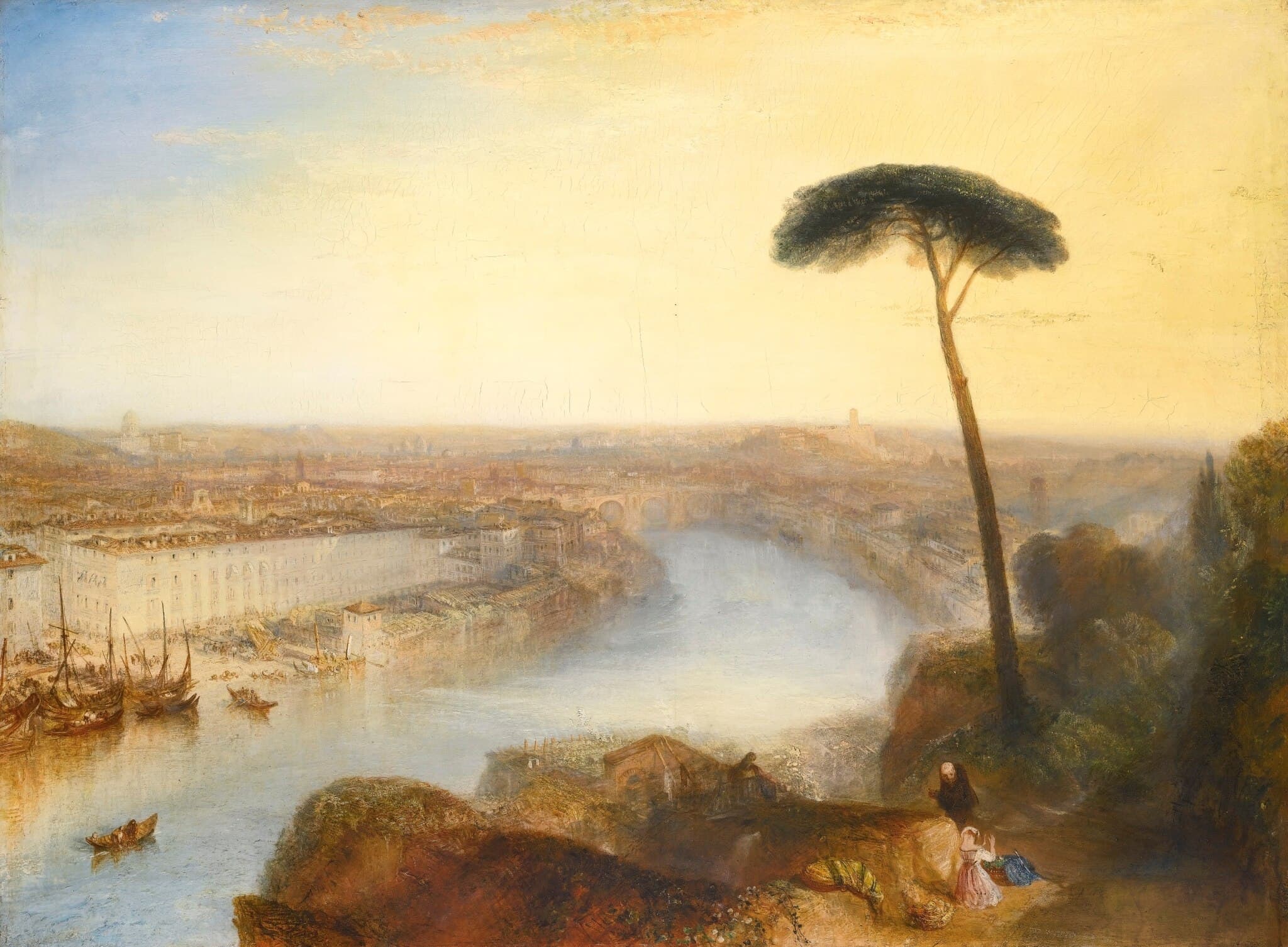
Rome, from Mount Aventine
J. M. W. Turner, 1835 • Oil on canvas
Read full analysis of Rome, from Mount Aventine →Valuation Analysis
Anchor and approach: The primary market anchor for this specific picture is the Sotheby’s London sale of 3 December 2014, when Rome, from Mount Aventine (1835) sold at auction for £30.3m (reported ~USD 47.5m at the time) [1]. I derive the present range by starting from that realised result, comparing it with large late Turner oils sold since (notably a major Venetian/Rome‑type Turner at Christie’s in 2022) [2], and then adjusting for intervening market movement, the Turner-specific supply scarcity, and observed top‑end liquidity shifts.
Why the 2014 sale matters: The 2014 lot is the closest single comparable — same artist, subject, date-range and a museum‑quality finish. That sale demonstrates latent demand for large, canonical Turners when provenance, condition and exhibition history are strong [1]. Other substantial late oils have sold in the tens of millions since then, while watercolours and smaller works remain in the mid‑six to low‑seven figures, underlining the scale gap between canonical oils and smaller Turners [2].
Adjustments and market context: Adjusting the 2014 result upward captures inflation, persistent collector/institutional appetite for top‑tier Turners, and the effect of major Turner programming (Turner‑250 institutional activity in 2025) that has kept scholarly and buyer interest high. Offsetting those upward pressures is a contraction in trophy consignments and intermittent top‑end liquidity since 2023–24, which tempers certainty that every comparable would exceed the 2014 result. Taken together these forces support a mid‑to‑high tens of millions band as a realistic present market range.
Key assumptions & caveats: This range presumes the work is authentic, the same canonical canvas with the documented provenance/exhibition history cited in auction literature, and in comparable condition (original paint, minimal invasive restoration). If any of those assumptions fail (uncertain attribution, heavy restoration, missing provenance/literature), value could fall into the lower millions. Conversely, fresh institutional interest, a competitive single‑owner sale or a high‑profile exhibition could push the price above the upper bound.
Practical recommendation: To firm a sale or insurance figure, obtain high‑resolution images, an up‑to‑date condition report, catalogue‑raisonné references and a formal appraisal from a major auction house specialist. With those in hand the estimate can be narrowed to a single‑point valuation for insurance or to a presale estimate for marketing.
Key Valuation Factors
Art Historical Significance
High ImpactAs an 1835 Rome view from Turner’s mature period, the work sits within a key phase of his landscape and veduta production when his handling of light and atmospheric effect was fully developed. If this is the canvas that exhibited in contemporary venues and later entered major loans (as described in auction documentation for the 2014 sale), its art‑historical importance is substantial: such works anchor scholarly narratives about Turner’s late topographical practice and are frequently cited in monographs and exhibition catalogues. That significance materially increases institutional demand and collector willingness to pay a premium, relative to unsigned or study‑scale works.
Provenance & Exhibition History
High ImpactProvenance that traces a work through notable 19th‑century owners, long public loans, and documented exhibition history is one of the strongest value multipliers for Turner. The painting sold in 2014 carried a distinguished chain (including long‑term family ownership and museum loans) and published references — features that reduce attribution risk and attract both museums and blue‑chip private buyers. Each confirmed exhibition citation or catalogue raisonné entry converts uncertain market interest into actionable demand, often moving a painting from the mid‑market into the trophy bracket.
Condition & Conservation
High ImpactCondition is critical at this level. A large late Turner in original or gently altered condition (unlined, stable paint film, minimal overpaint and conservative varnishing) will command markedly higher bids than a canvas with heavy relining, invasive restoration, or unstable paint. Sotheby’s described the 2014 canvas as unusually well preserved, which helped drive competitive bidding. A current, professional condition report (and any technical analysis) is necessary to justify the top of the estimated range; substantial conservation interventions will reduce marketability and price.
Comparables & Market Precedent
High ImpactThe best single comparable is the 2014 Sotheby’s sale (the same painting) which sets a proven top‑end benchmark. Other late Turner oils sold in the following decade show a broad band of outcomes (mid‑tens to low‑tens of millions), with single‑owner and rediscovered works occasionally achieving premium results. These precedents establish a realistic envelope for pricing: comparable, well‑documented canvases fall in the tens of millions, while weaker or smaller works trade far lower. The comparables justify a multi‑tens‑of‑millions estimate rather than the low‑millions bands appropriate to studies or uncertain attributions.
Liquidity, Sale Route & Legal Considerations
Medium ImpactTop‑end liquidity for canonical Turners is episodic. Auction offers transparency and can achieve headline prices when two or more major bidders compete; private sales can achieve similar results but rely on dealer networks. Export restrictions, national treasure status or pre‑emptive museum interest can complicate a sale and either dampen or enhance final price (museums may pay premiums to secure iconic works). Sellers should weigh an auction marketing campaign against private sale negotiation depending on timing, buyer appetite and tax/export implications.
Sale History
Sotheby's London (Old Master & British Paintings Evening Sale)
Christie's (London)
J. M. W. Turner's Market
J. M. W. Turner is among the most coveted British artists; his oils, particularly late canonical canvases, are rare on the market because the major institutional collections hold many of his highest‑profile works. When fine Turners do appear, they attract intense competition from both institutions and wealthy private collectors. Auction records (notably the 2014 Rome, from Mount Aventine sale) show that museum‑quality oils can reach multi‑tens of millions, while works on paper and smaller oils trade in lower bands. Supply scarcity and strong scholarship underpin durable demand at the top end.
Comparable Sales
Rome, from Mount Aventine
J. M. W. Turner
Exact same painting: identical artist, date (1835), medium, dimensions, provenance and exhibition history — serves as the primary market anchor / world auction record for Turner.
$47.5M
2014, Sotheby's London (Old Master & British Paintings Evening Sale)
~$61.3M adjusted
Depositing of John Bellini’s Three Pictures in La Chiesa Redentore, Venice
J. M. W. Turner
Large, late Turner oil (Venetian/Rome-type view) sold in a major New York single-owner sale — comparable in period, quality and market context to large Turner oils.
$33.6M
2022, Christie's New York (Paul G. Allen sale)
~$37.0M adjusted
The Rising Squall, Hot Wells, from St Vincent’s Rock, Bristol
J. M. W. Turner (recently re-attributed)
Re-discovered/reattributed Turner oil that dramatically outperformed expectations — shows the market premium for secure attributions/rediscoveries but is much smaller in scale and provenance than canonical museum-size oils.
$2.6M
2025, Sotheby's London (Old Masters sale)
Lake of Geneva from Above Vevey
J. M. W. Turner
Late-period Turner watercolour sold at a specialist paper sale — not the same medium or scale as Rome, but useful to show market strength for Turner works on paper and the price gap between oils and works on paper.
$663K
2025, Sotheby's London (Master Works on Paper)
Current Market Trends
Since 2023 the top‑end auction market has been more selective, with fewer trophy consignments and intermittent liquidity; nonetheless, targeted rediscoveries and major institutional programming (e.g., Turner‑250) boost interest in canonical works. Museums remain active but often outbid in private markets, so provenance, condition and exhibition pedigree drive outcomes more decisively than broad macro conditions.
Sources
- Sotheby’s — Lot 44, Old Master & British Paintings Evening Sale (3 December 2014) — Rome, from Mount Aventine (J.M.W. Turner)
- Christie’s — Depositing of John Bellini’s Three Pictures ... (J.M.W. Turner) — Sale (9 November 2022)
- Los Angeles Times — “J.M.W. Turner painting goes for record $47.5 million at auction” (3–4 Dec 2014)
- Artnet News — Coverage of recent rediscovered Turner sale and market commentary (July 2025)