How Much Is The Fighting Temeraire Worth?
Last updated: February 21, 2026
Quick Facts
- Methodology
- comparable analysis
If hypothetically marketable, J. M. W. Turner’s The Fighting Temeraire would command approximately $150–300 million. The range reflects multiples of Turner’s $47.4m auction record, cross-category trophy benchmarks (e.g., Munch, Klimt, Botticelli), and the painting’s unique status as a national icon and the apex of Turner’s oeuvre. In practice, it is not a tradable asset while in the National Gallery’s collection.
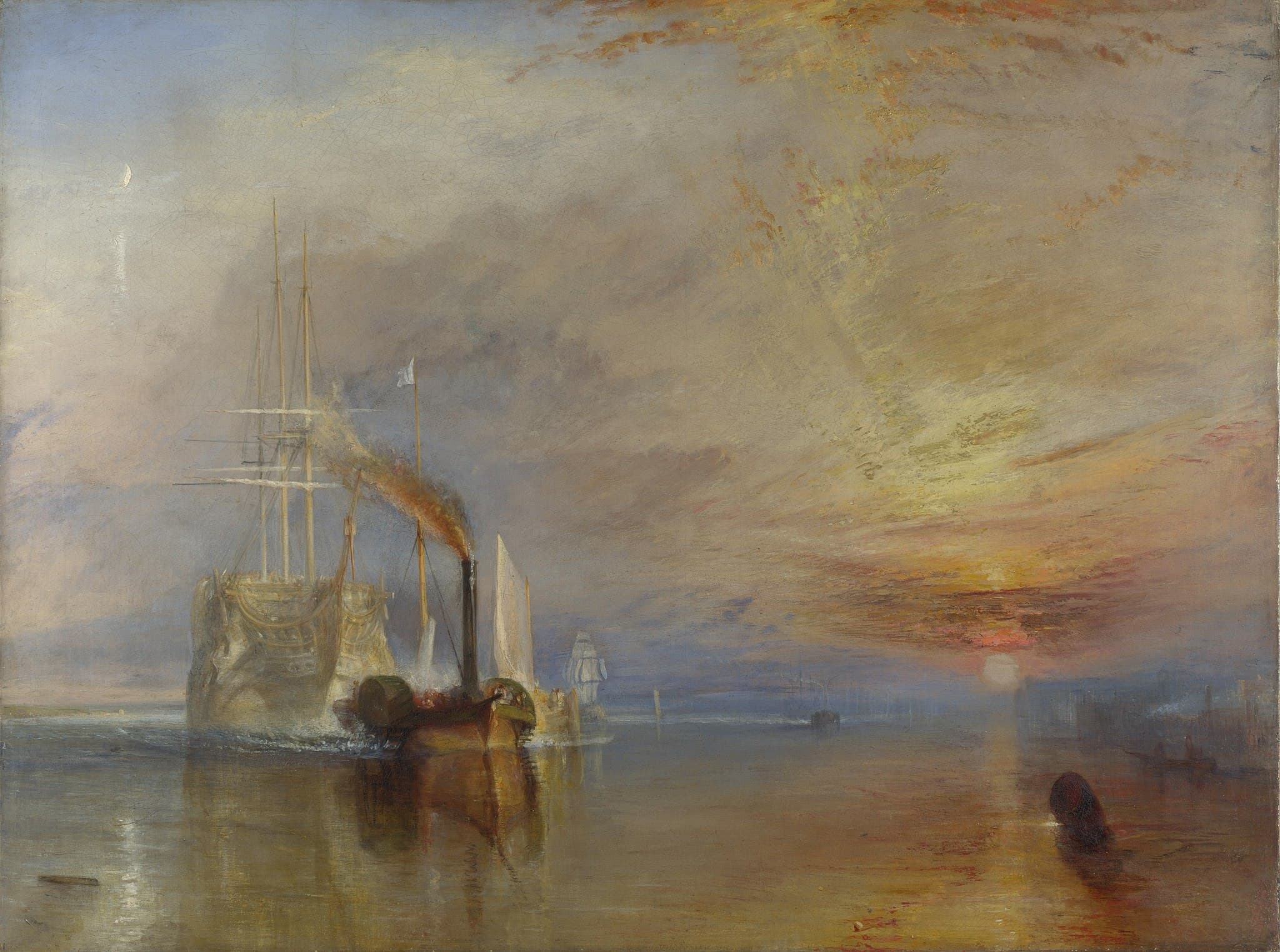
The Fighting Temeraire
J. M. W. Turner, 1839 • Oil on canvas
Read full analysis of The Fighting Temeraire →Valuation Analysis
Conclusion: In an unconstrained, arms-length setting, J. M. W. Turner’s The Fighting Temeraire (1839) would likely realize $150–300 million. The painting is widely regarded as Turner’s signature masterpiece and a national icon; Turner kept it until his death and, via the Turner Bequest, it entered the National Gallery in 1856, where it remains subject to UK national‑museum restrictions on disposal [1][7]. This is a hypothetical fair‑market indication rather than a practical liquidation price.
Comparables and pricing logic: The range is anchored by the artist’s established ceiling at public auction and then extrapolated for a singular, canon‑defining icon. Turner’s oil record is Rome, from Mount Aventine at $47.4m (Sotheby’s London, 2014), closely followed by Modern Rome – Campo Vaccino at $44.9m (Sotheby’s London, 2010) [2][3]. Those works are major late oils, but they are not of Temeraire’s singular cultural resonance. Cross‑category trophies show the market’s capacity for icons well into nine figures: Munch’s The Scream at $119.9m (2012), Klimt’s Lady with a Fan at $108.4m (2023), and Botticelli’s Young Man Holding a Roundel at $92.2m (2021) [4][5][6]. For truly once‑in‑a‑generation works, prices can leap several multiples over an artist’s prior record; a 3–6x multiple on Turner’s ~$47m anchor yields the $150–300m corridor.
Why Temeraire merits a substantial premium: Art‑historically, the painting is a summation of Turner’s late style—an elegy to the age of sail and a meditation on modernity—regularly singled out alongside Rain, Steam and Speed and The Slave Ship as the pinnacle of his achievement [1]. Its public recognition is unmatched: it topped the BBC’s national poll as the UK’s favourite painting and appears on the Bank of England’s polymer £20 note, embedding it in everyday cultural memory [9][10]. Such visibility expands the bidder pool to cross‑category collectors and institutions that chase universally legible masterpieces.
Scarcity and current market tone: Museum‑grade Turner oils are vanishingly scarce on the market. Aside from the 2014 and 2010 late‑oil landmarks, few top examples have surfaced; a significant late Romantic oil made c.$24m in 2017, reinforcing demand at the high end [1]. More broadly, Old Master trophy appetite remains intact when quality and narrative are exceptional, as evidenced by the 2025 Canaletto record at ~$43.9m [8]. Against this backdrop, a work of Temeraire’s stature would likely trigger intense private competition.
Caveats and assumptions: The work resides in the UK national collection; deaccession or export is extraordinarily unlikely under current statutory and policy frameworks [7]. This valuation assumes excellent museum condition and a free, international sale process (e.g., private treaty) unconstrained by legal or indemnity considerations. Within those parameters, $150–300 million is a defensible, data‑led indication, with upside possible in a best‑case private contest.
Key Valuation Factors
Art Historical Significance
High ImpactThe Fighting Temeraire is widely considered Turner’s supreme masterpiece and a touchstone of his late style. It fuses technical brilliance—luminous atmospherics, dissolving form, and color innovation—with a profound narrative on progress and loss, depicting the iconic warship towed to be broken up. Within Turner’s oeuvre, it stands alongside Rain, Steam and Speed and The Slave Ship as a pinnacle, frequently highlighted in scholarship and museum displays. This exceptional art-historical weight supports a valuation that meaningfully exceeds the prices of even major late Turner oils that have come to market. Its singularity within British art history justifies a top-tier, cross-category premium that pushes the work into nine-figure territory.
Cultural Icon Status
High ImpactFew images in British art are as publicly recognizable. The painting won the BBC poll as the nation’s favorite and appears on the Bank of England’s £20 note, placing it in daily circulation and cultural memory. This level of recognition expands demand beyond specialist Old Master buyers to cross-category collectors who pursue universally legible cultural trophies. Such works have demonstrated the ability to transcend an artist’s prior auction ceiling by several multiples. The painting’s “brand equity” as a national symbol would be a decisive catalyst for aggressive bidding in any unconstrained sale, supporting a price outcome aligned with landmark results for icons by Munch, Klimt, and Botticelli.
Market Rarity and Supply
High ImpactMuseum-caliber Turner oils of apex importance almost never reach the market. The artist’s top auction benchmarks—$47.4m (2014) and $44.9m (2010)—were for major late oils but not works of Temeraire’s unique cultural stature. With the vast majority of Turner’s greatest oils in museums, theoretical availability of a singular icon would be unprecedented for living collectors. Extreme scarcity, combined with deep global demand for canonical masterpieces, underpins the use of a multi‑x record multiple to reach the indicated range. In the present supply-constrained Old Masters environment, this scarcity premium would likely be amplified, especially in a private-sale context.
Legal/Marketability Context
Medium ImpactThe painting is held by the National Gallery, London, having entered through the Turner Bequest; UK national‑museum statutes and institutional policy impose strict constraints on deaccession and export. Practically, this means the work is not a tradable market asset. For valuation purposes, we present a hypothetical fair‑market value assuming an unconstrained sale (e.g., private treaty without legal restrictions). While these constraints make an actual transaction extraordinarily unlikely, they also underscore the painting’s effective uniqueness to the market, which in turn supports a higher theoretical value than typically achieved by even major Turner oils that do trade.
Condition, Scale, and Display History
Medium ImpactThe painting benefits from long-term museum stewardship, scholarly attention, and careful display, including prominent National Gallery installations and a high-profile 2024 bicentenary loan. Its substantial, gallery-scale format and the atmospheric power of Turner’s late technique enhance its trophy appeal. While object-level indemnity valuations are not public, the handling and prominence of the work suggest excellent preservation consistent with top-tier institutional care. Assuming a materially sound condition report—which is typical for the National Gallery’s core holdings—these attributes reinforce buyer confidence and support the upper band of a cross-category estimate.
Sale History
The Fighting Temeraire has never been sold at public auction.
J. M. W. Turner's Market
J. M. W. Turner is among the most sought-after artists of the Old Master/Romantic era, with deep demand for late oils and choice watercolors. The auction record for a Turner oil is $47.4m (Sotheby’s London, 2014, Rome, from Mount Aventine), with Modern Rome – Campo Vaccino at $44.9m (2010) close behind. A top Venetian view achieved $35.8m in 2006. Significant works that surface today are scarce; recent supply has been dominated by strong watercolors and the occasional rediscovery, typically trading in the mid‑six to low‑seven figures, with rare early oils in the low‑seven figures. The category’s depth and cross‑category appeal remain robust for best‑in‑class Turner material, but true museum‑grade late oils are exceptionally rare.
Comparable Sales
Rome, from Mount Aventine
J. M. W. Turner
Same artist; late/mature-period masterpiece (grand Roman view), large oil, museum-caliber; still the auction record for Turner—key ceiling for the artist’s market.
$47.4M
2014, Sotheby's London
~$63.7M adjusted
Modern Rome – Campo Vaccino
J. M. W. Turner
Same artist; closely contemporary to Temeraire (painted 1839), large late oil of iconic subject; record-setting Turner sale at the time—prime benchmark for late-period trophies.
$44.9M
2010, Sotheby's London
~$65.5M adjusted
Giudecca, La Donna della Salute and San Giorgio
J. M. W. Turner
Same artist; top-tier late Venetian view, large oil with Turner's signature atmosphere and light—established a then-record for British art; strong market proxy for late masterworks.
$35.9M
2006, Christie's New York
~$56.6M adjusted
Ehrenbreitstein, or the Bright Stone of Honour and the Tomb of Marceau, from Byron’s ‘Childe Harold’
J. M. W. Turner
Same artist; major late Romantic oil (1835–37) and one of the last significant Turner oils to surface; confirms depth of demand for museum-grade late Turners.
$24.0M
2017, Sotheby's London
~$31.1M adjusted
The Scream
Edvard Munch
Cross-category trophy comp: a national/cultural icon with global name recognition that established nine-figure pricing for canonical masterpieces—useful to bracket upside for an icon like Temeraire.
$119.9M
2012, Sotheby's New York
~$166.1M adjusted
Lady with a Fan (Dame mit Fächer)
Gustav Klimt
Cross-category Old Master/19th–early 20th-century benchmark: recent European auction record for a museum-grade icon; demonstrates current market capacity for nine-figure trophies.
$108.4M
2023, Sotheby's London
~$112.9M adjusted
Current Market Trends
Old Masters and 19th‑century works saw a soft 2024 amid thin top-end supply, then rebounded in 2025 on realistic estimates and strong consignments. The July 2025 Canaletto record (~$43.9m) confirmed that correctly priced, museum-grade material can soar, drawing cross‑category buyers. Within Turner’s market, supply scarcity persists; apex oils rarely surface, which sustains strong pricing for the few that do, while mid‑tier works face selective demand. Against this backdrop, an iconic, once‑in‑a‑generation Turner would likely benefit from concentrated global competition, with nine‑figure potential consistent with recent results for universally recognized cultural trophies in adjacent categories.
Sources
- National Gallery, London – The Fighting Temeraire (NG524)
- Guinness World Records – Most expensive Turner painting sold at auction (2014)
- The Guardian – Getty Museum buys Turner for record £29.7m (2010)
- DW – Edvard Munch’s The Scream fetches record sum (2012)
- Bloomberg – Klimt’s Lady with a Fan sells for $108.4m (2023)
- Sotheby’s – Newsflash: Botticelli portrait sells for $92.2m (2021)
- UK Parliament (Hansard) – National Heritage Act 1983: Debate on deaccession restrictions (2022)
- Christie’s Press – Classic Week led by Canaletto’s record-breaking masterpiece (2025)
- The Guardian – Turner tops BBC poll as nation’s favourite painting (2005)
- Bank of England – The £20 note: J.M.W. Turner