How Much Is The Slave Ship (Slavers Throwing Overboard the Dead and Dying — Typhoon Coming On) Worth?
Last updated: April 10, 2026
Quick Facts
- Last Sale
- $65K (1899, Museum of Fine Arts, Boston (acquisition/purchase))
- Methodology
- comparable analysis
The Slave Ship (1840) by J.M.W. Turner is a canonical late Turner oil in the Museum of Fine Arts, Boston and is effectively off-market. If hypothetically offered, a market-based estimate is USD $30–120 million (best estimate USD $50–80 million), subject to condition, legal/institutional constraints and buyer appetite.
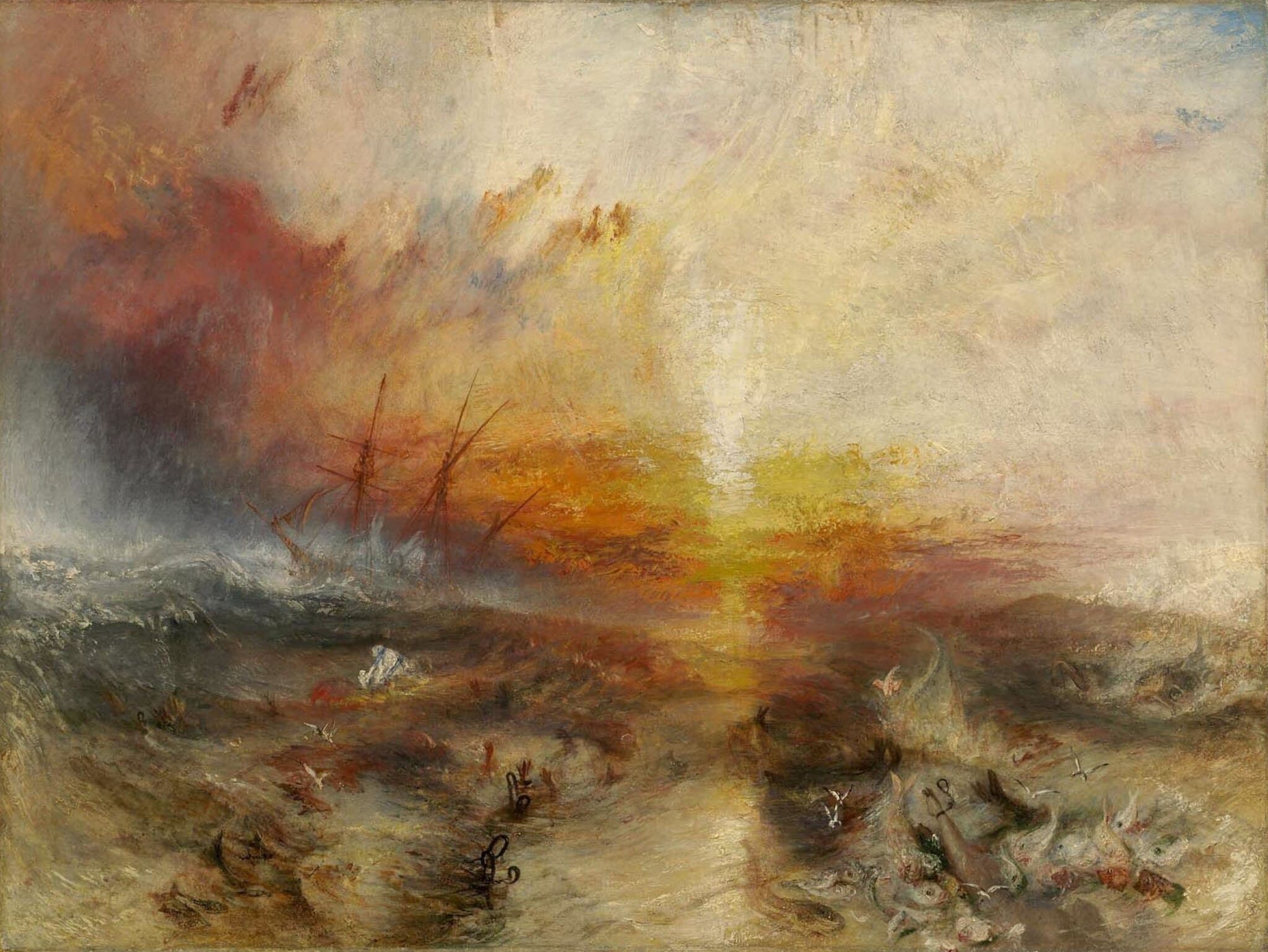
The Slave Ship (Slavers Throwing Overboard the Dead and Dying — Typhoon Coming On)
J. M. W. Turner, 1840 • Oil on canvas
Read full analysis of The Slave Ship (Slavers Throwing Overboard the Dead and Dying — Typhoon Coming On) →Valuation Analysis
Overview: This valuation addresses J.M.W. Turner’s The Slave Ship (1840), currently in the permanent collection of the Museum of Fine Arts, Boston (acquired 1899) [1]. The work is one of Turner’s most widely recognized and historically charged oils and—because it is museum‑held and culturally prominent—is effectively not available on the open market except in highly exceptional circumstances.
Method and comparables: I used a comparables‑based approach, triangulating realized auction results for major Turner oils and high‑quality 19th‑century landscape pictures to define a plausible market band. Representative auction precedents for top Turner oils (e.g., Rome, From Mount Aventine, Sotheby’s 2014) and other high‑quality finished Turners sold in the 2010s–2020s set a practical ceiling in the multi‑tens of millions of dollars when works are freely tradable and unconstrained by institutional encumbrances [2].
Range rationale: The wide USD $30–120 million band reflects two competing realities. On the positive side: exceptional art‑historical importance, iconic status and extreme scarcity of museum‑quality Turners entering the market support a high valuation. On the constraining side: institutional ownership, donor or deaccession restrictions, potential export/legislative hurdles, and the uncertain buyer pool for nineteenth‑century masterpieces meaningfully limit marketability and can suppress competitive bidding. A balanced mid‑range or “best estimate” therefore sits at roughly USD $50–80 million under hypothetical, sale‑ready conditions.
Key drivers and risks: The principal value drivers are the painting’s canonical status, demonstrable institutional provenance and the scarcity premium for major Turners. Primary risks are institutional/legal constraints, the painting’s conservation and condition profile (which requires a formal report), and the general volatility of top‑end Old Masters/19th‑century markets (recent seasons show both strong rediscoveries and occasional underperformers) [3].
Practical considerations: To approach the upper end of the range a seller would need an up‑to‑date technical and condition report, an international pre‑sale exhibition and targeted marketing to museums and ultra‑high‑net‑worth collectors, ideally combined with an auction house guarantee or competitive private treaty process. Even with optimal marketing, public/political opposition to deaccession of an iconic museum piece would be a material and possibly determinative constraint [1],[4].
Conclusion: Treat this valuation as hypothetical: The Slave Ship’s cultural significance is effectively priceless, but market mechanics and real‑world constraints justify the conditional USD $30–120 million band (best estimate USD $50–80 million) derived from comparable major Turner sales and current market dynamics.
Key Valuation Factors
Art Historical Significance
High ImpactThe Slave Ship is one of Turner’s signature late oils, noted for its revolutionary colouristic handling and its political/historical resonance with the Zong massacre and abolitionist discourse. Its centrality in Turner scholarship, frequent reproduction in textbooks and inclusion in major exhibitions amplify demand among institutions and collectors for any opportunity to acquire such a canonical work. That prominence translates into a premium over ordinary Turner oils when market access exists, because buyers prize works that carry both aesthetic innovation and documentary resonance in art history.
Scarcity & Provenance
High ImpactProvenance and scarcity materially support high valuations. The work has been museum‑held since its 1899 acquisition by the MFA Boston, which means it has not circulated in the modern auction market; comparable high‑quality Turners are rare in private hands. Museum ownership both elevates cultural status and reduces supply—scarcity typically increases price for comparable works when they do appear. Provenance that traces ownership through prominent nineteenth‑century collectors also reassures buyers on authenticity and exhibition history, enhancing market value.
Condition & Conservation
Medium ImpactA contemporary market valuation requires a current condition and conservation report. Historic restorations, relining, varnish darkening or structural issues can depress value materially; conversely, excellent condition and documented, minimal interventions support premium pricing. For a painting this old and of this scale the existence, timing and quality of conservation work are decisive factors—they determine whether major institutional bidders will participate and whether auction houses will recommend a high‑visibility sale without contingencies.
Legal / Institutional Constraints
High ImpactThe painting’s museum ownership creates the single largest market constraint. Donor covenants, institutional deaccession policies, and public/political scrutiny can prevent or delay any sale. In practice, a sale of an iconic object from a major public collection is rare, contentious and often legally complex; these constraints reduce the likelihood of an open competitive auction and can limit the buyer pool (for example to institutions or constrained private buyers), suppressing realized price relative to unobstructed market comparables.
Sale History
The Slave Ship (Slavers Throwing Overboard the Dead and Dying — Typhoon Coming On) has never been sold at public auction.
J. M. W. Turner's Market
J.M.W. Turner is the preeminent British painter of the nineteenth century and remains highly collectible among institutions and private collectors. Major Turner oils are scarce in private hands and, when they appear, typically sell in the multi‑million‑dollar range; the artist’s auction record for a single oil sits in the tens of millions. Turners of high quality attract institutional bidders and international collectors, but results show volatility at the top end: strong headline sales coexist with instances of underperformance when market appetite is uneven. Overall, supply constraints and high cultural standing maintain robust long‑term demand.
Comparable Sales
Rome, From Mount Aventine
J. M. W. Turner
Artist's auction record; large late Turner oil with museum-quality provenance — shows the top-end ceiling for major Turner oils.
$47.5M
2014, Sotheby's London
~$65.4M adjusted
Modern Rome — Campo Vaccino
J. M. W. Turner
Major finished Italianate Turner oil sold to an institutional buyer (Getty) — indicates institutional willingness to bid at the high end for canonical Turners.
$44.9M
2010, Sotheby's London
~$67.2M adjusted
Ehrenbreitstein
J. M. W. Turner
Large Turner oil realised a strong mid/high result in the Old Masters market — useful mid-range comparable for major oils.
$24.0M
2017, Sotheby's London
~$31.9M adjusted
Current Market Trends
As of 2024–2026 the Old Masters and 19th‑century British market has shown selective strength: rediscoveries and high‑quality works often outperform expectations, while marquee oils can be sensitive to market cadence and macro conditions. Anniversary programming and major exhibitions (eg. Turner 250) have boosted visibility and short‑term demand. Private treaty sales, auction guarantees and institutional buying remain key mechanisms for moving top‑tier works; overall, demand is strong for museum‑quality pieces but the top end remains volatile.
Sources
- Getty / CONA — Provenance and MFA accession record for The Slave Ship (J.M.W. Turner)
- The Guardian — coverage of Sotheby’s sale of Turner’s Rome, From Mount Aventine (Dec 2014)
- The Art Newspaper — market coverage of recent Old Masters/Turner results (illustrative of volatility and rediscoveries)
- Museum of Fine Arts, Boston — Collections entry for The Slave Ship (accession context and institutional ownership)