How Much Is Grande Odalisque Worth?
Last updated: April 4, 2026
Quick Facts
- Methodology
- comparable analysis
Hypothetical open-market value for Ingres’s La Grande Odalisque: $150–300 million. The estimate reflects its apex status within the artist’s oeuvre, extreme scarcity of comparable Ingres oils, and cross-category demand evidenced by recent Old Master trophy benchmarks.
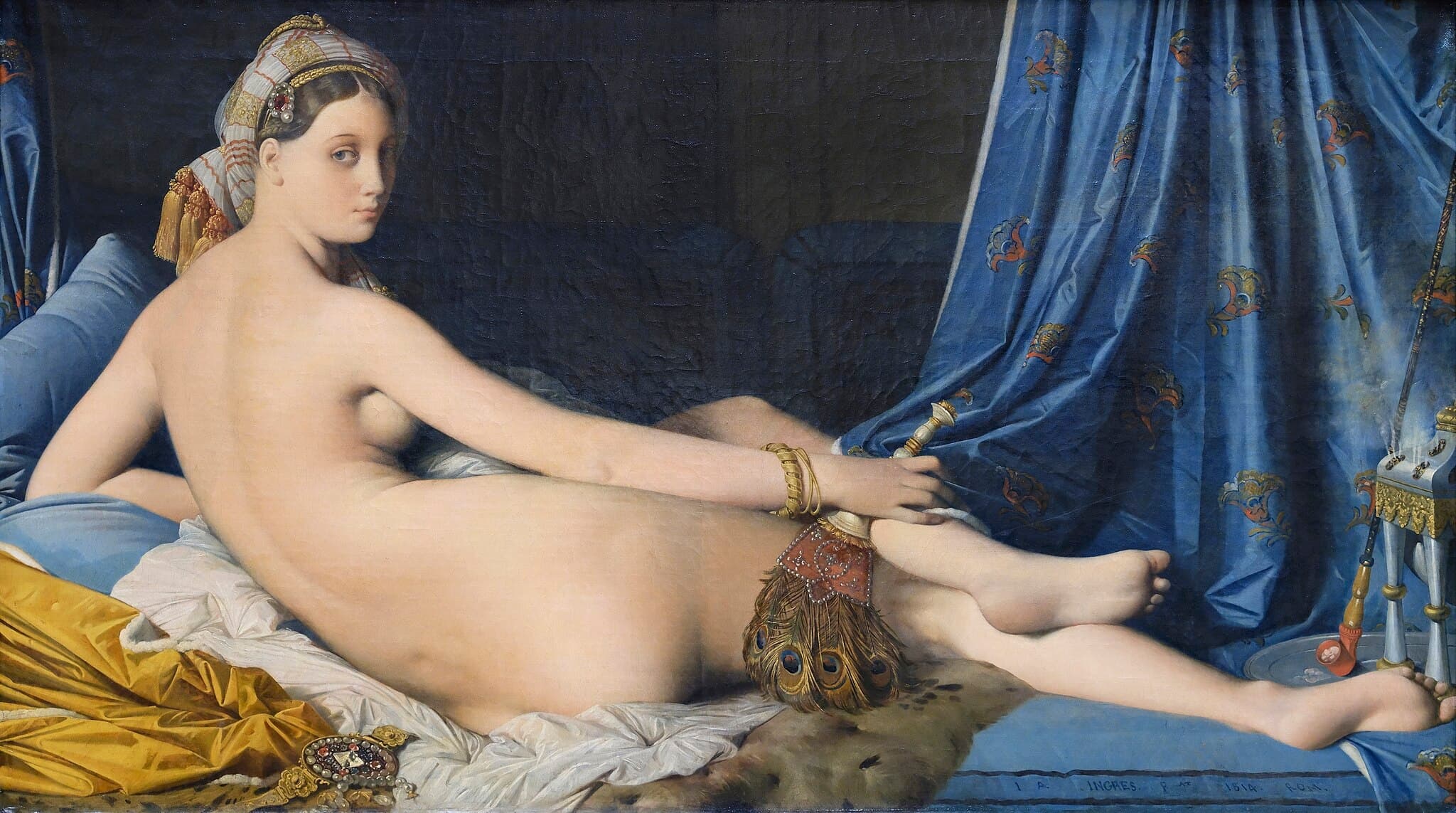
Grande Odalisque
Jean-Auguste-Dominique Ingres, 1814 • Oil on canvas
Read full analysis of Grande Odalisque →Valuation Analysis
Conclusion: In an unrestricted, fully exportable sale, Jean‑Auguste‑Dominique Ingres’s La Grande Odalisque would reasonably command $150–300 million. This is an icon of 19th‑century painting held by the Musée du Louvre and inalienable under French law; therefore, this pricing is a hypothetical trophy valuation rather than a realizable deaccession estimate [1][2].
Why this range: Odalisque sits at the apex of Ingres’s oeuvre—arguably his most famous nude and a cornerstone of Neoclassicism and 19th‑century Orientalism—enjoying global recognition far beyond the typical Old Master audience [1]. The image is reproduced in countless surveys and is institutional canon. Its “brand equity,” combined with the virtually non‑existent supply of first‑rank Ingres oils, creates near‑zero substitution risk.
Comparable anchors across categories: Direct auction precedents for prime Ingres oils do not exist; the artist’s public auction record for an oil is orders of magnitude below what an apex masterpiece would achieve, reflecting scarcity rather than demand limits [7]. Pricing therefore relies on cross‑category Old Master trophies that demonstrate what the market pays for unique, museum‑grade works. Leonardo’s Salvator Mundi achieved $450.3m (2017) in a heavily marketed, cross‑category sale, establishing the modern ceiling for Old Masters [3]. At the upper end of institutional acquisitions, the Rembrandt pendant portraits jointly acquired by the Louvre and Rijksmuseum were valued at €160m (2016), underscoring nine‑figure appetite for unimpeachable masterpieces [5]. Botticelli’s Portrait of a Young Man Holding a Roundel realized $92.2m (2021), showing contemporary depth for instantly recognizable Renaissance works [4]. Within France, Chardin’s Le Melon entamé reached €26.73m in 2024, illustrating robust demand for best‑in‑class historical pictures in the current era [6].
Positioning Odalisque within these benchmarks: Ingres does not carry Leonardo‑level brand power, and the Old Master segment is generally thinner than Modern/Contemporary. Yet Odalisque is a signature image with global visibility that can attract cross‑category trophy buyers, including new‑to‑Old‑Masters participants. On that basis, a base‑to‑bull range of $150–300m is justified: the lower bound reflects Old Master market depth relative to Modern giants, while the upper bound prices in the trophy premium for a work with singular fame and virtually no direct substitutes within Ingres’s corpus.
Key sensitivities: The high end of the range presumes flawless optics (clear condition, unassailable provenance, and unrestricted transfer), first‑tier global marketing, and multiple motivated bidders. Legal inalienability and patrimony/export constraints currently preclude a sale; this valuation explicitly assumes those restrictions are lifted for the purpose of pricing [2]. Absent those assumptions, the figure is best interpreted as an insurance‑style or trophy benchmark rather than a realizable transaction estimate.
Key Valuation Factors
Art Historical Significance
High ImpactLa Grande Odalisque is one of the most recognizable nudes in Western art and a cornerstone of Ingres’s legacy. It crystallizes key debates around Neoclassicism, ideal proportion, and 19th‑century Orientalism. As a constant presence in major art‑historical narratives and a flagship image of the Louvre, it carries cultural capital that extends well beyond the Old Masters niche. This level of canonization typically commands a global trophy premium, attracting cross‑category bidders who pursue universally known icons rather than category‑specific connoisseur pieces.
Rarity and Market Scarcity
High ImpactFully realized, signature Ingres oils almost never reach the market; most trade volume lies in drawings and studies. There is no market substitute for Odalisque within the artist’s oeuvre, and there are extremely few comparably famous 19th‑century nudes with clean, museum‑grade provenance. This scarcity compresses price discovery but increases the likelihood of an aggressive bidding environment if an unrestricted sale occurred, as key buyers concentrate intensely on the one opportunity available.
Cross-Category Trophy Appeal
High ImpactThe work’s broad cultural recognition positions it to draw buyers from outside the Old Master sphere, similar to how Leonardo and Botticelli trophies crossed categories. For globally known images, the buyer pool is not limited to period specialists; UHNW collectors and institutions focused on encyclopedic narratives compete on brand value and cultural significance. This dynamic is essential for achieving mid‑ to high‑nine‑figure prices in historical categories typically characterized by thinner liquidity.
Provenance and Institutional Status
Medium ImpactThe painting’s long residence in the Louvre and French state ownership provide unimpeachable provenance and best‑in‑class care. However, those same facts make it legally inalienable under French patrimony law. Our valuation explicitly assumes a hypothetical scenario in which deaccession, export, and transfer are fully permitted. Under current law, the work is not a market participant; thus the figure should be read as a trophy/insurance benchmark rather than a realizable auction estimate.
Sale History
Grande Odalisque has never been sold at public auction.
Jean-Auguste-Dominique Ingres's Market
Ingres is a canonical 19th‑century French master whose public market is dominated by drawings and studies; finished, important oils are extraordinarily scarce at auction. His documented auction record for an oil is in the low single‑digit millions, and top drawings have approached $2 million—levels that reflect supply patterns more than demand ceilings. Because true masterpieces have not tested the public market in the modern era, any valuation for a work like La Grande Odalisque must extrapolate from cross‑category Old Master trophies and institutional private treaties. Collector demand is deep among museums and advanced connoisseurs; broader appeal hinges on the image’s fame, where Odalisque is exceptional.
Comparable Sales
Salvator Mundi
Leonardo da Vinci
Cross-category Old Master trophy; publicly sold icon demonstrating the ceiling for unique museum-grade masterpieces; useful to anchor upside for an apex Ingres nude.
$450.3M
2017, Christie's New York
~$585.4M adjusted
Portraits of Maerten Soolmans and Oopjen Coppit (pendants)
Rembrandt van Rijn
Private-treaty museum acquisition at the top of the Old Masters market; shows nine-figure pricing for institution-caliber works and scarcity dynamics comparable to an icon like La Grande Odalisque.
$177.0M
2016, Private treaty (Louvre/Rijksmuseum joint acquisition)
~$240.7M adjusted
Portrait of a Young Man Holding a Roundel
Sandro Botticelli
Recent public Old Master trophy; demonstrates what a globally recognizable Renaissance masterpiece can fetch today—helpful for base-to-bull case framing for a museum-grade Ingres.
$92.2M
2021, Sotheby's New York
~$115.2M adjusted
Le Melon entamé
Jean‑Siméon Chardin
Top Old Master result in France (2024); evidences strong domestic demand for museum-quality paintings, situating the French market context even if subject/period differ from Ingres.
$28.8M
2024, Christie's Paris
~$29.6M adjusted
Portrait de la comtesse de La Rue
Jean‑Auguste‑Dominique Ingres
Same artist—current auction record; shows how rarely important Ingres oils surface and how untested the public top end is; different subject/scale from La Grande Odalisque.
$2.7M
2009, Christie's Paris
~$4.0M adjusted
Jupiter et Thétis
Jean‑Auguste‑Dominique Ingres
Same artist; mythological nude subject closer to Odalisque. One of the few substantial Ingres oils to appear publicly; older price underscores scarcity and historical underpricing versus Odalisque’s icon status.
$2.4M
1989, Christie's Monaco
~$6.2M adjusted
Current Market Trends
Old Masters and 19th‑century works represent a smaller share of overall auction turnover but remain selectively strong at the top, with marquee masterpieces attracting intense competition and cross‑category bidding. Recent years saw headline results—e.g., Botticelli’s $92.2m portrait and France’s top 2024 Old Master result for Chardin—demonstrating robust appetite for rare, museum‑caliber material. While liquidity is thinner than in Modern and Contemporary, the trophy segment continues to command premium pricing when works are iconic, fresh, and impeccably provenanced. In such contexts, cross‑category buyers often set prices that exceed traditional Old Master benchmarks.
Sources
- Louvre Collections — La Grande Odalisque (RF 1158)
- Code du patrimoine (France), art. L.451‑5 — Inalienability of public collections
- Christie’s — Leonardo da Vinci, Salvator Mundi sells for $450.3m (2017)
- Sotheby’s — Botticelli, Portrait of a Young Man Holding a Roundel sells for $92.2m (2021)
- Musée du Louvre — Rembrandt pendants jointly acquired with Rijksmuseum for €160m (2016)
- Christie’s Paris — 12 June 2024 Old Masters; Chardin’s Le Melon entamé at €26.73m
- Nicholas Hall — Jean‑Auguste‑Dominique Ingres: Selected market benchmarks