How Much Is The Sower Worth?
Last updated: April 1, 2026
Quick Facts
- Methodology
- comparable analysis
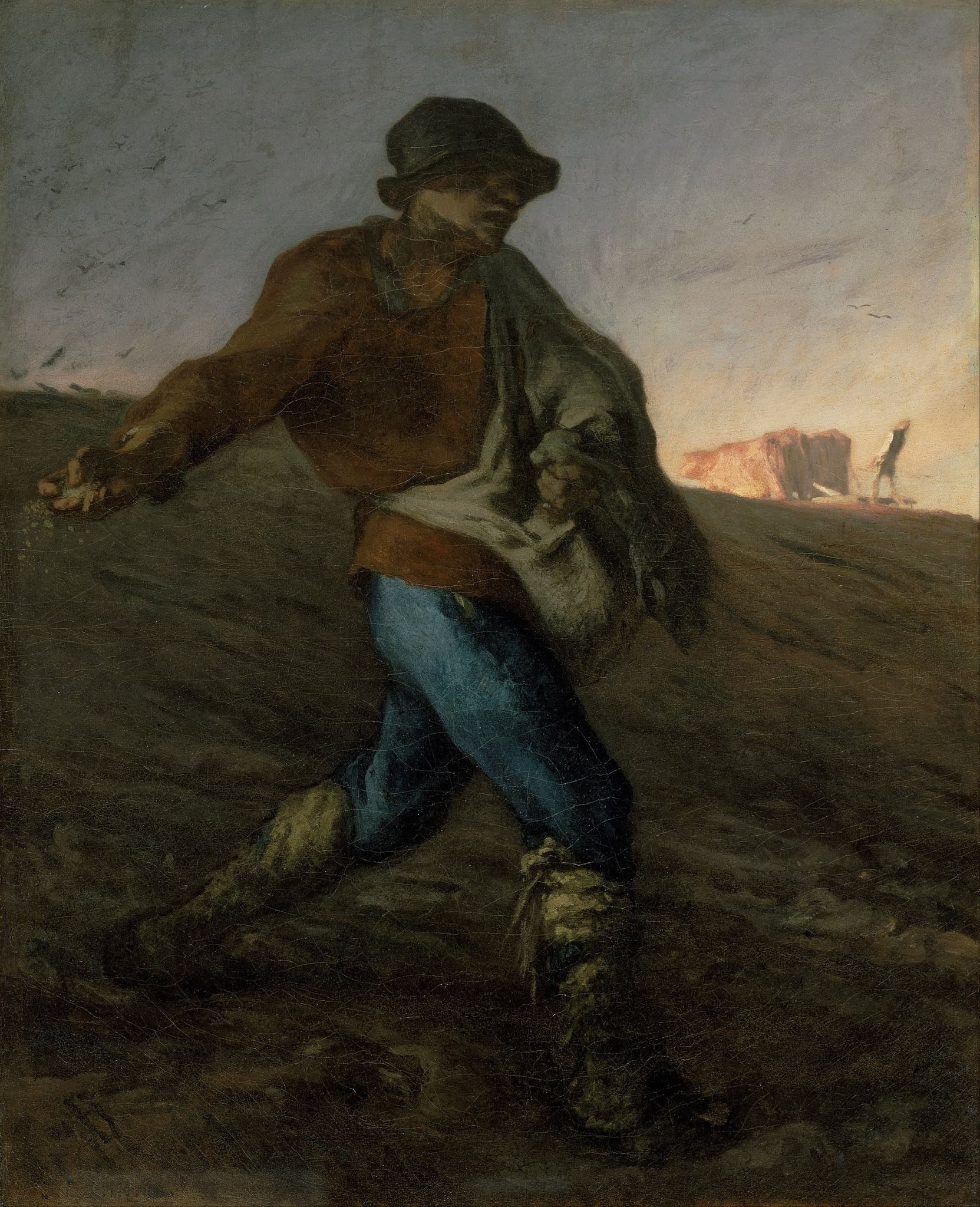
For an authenticated, museum‑quality, autograph 1850 oil of Jean‑François Millet’s The Sower, I estimate a market value between $5,000,000 and $25,000,000. The realistic auction expectation is toward the lower half absent exceptional provenance or blockbuster exhibition history; attribution, condition, and documented provenance can move the work substantially within this band.
Valuation Analysis
Valuation conclusion: Based on publicly available comparables, institutional holdings and current market dynamics I value an authenticated, museum‑quality autograph oil of Jean‑François Millet’s The Sower (c.1850) at approximately $5,000,000–$25,000,000. This range reflects the scarcity of top‑tier Millet oils in the market, the iconographic importance of the Sower motif within Millet’s oeuvre, and the divergence between public auction comparables (which are limited and skew toward works on paper) and replacement/insurance values for canonical museum works.
Direct public‑sale comparables are constrained because the canonical 1850 Sower is museum‑held (Museum of Fine Arts, Boston) and therefore has no modern auction record [1]. The highest publicly reported Millet auction realization on record is a work on paper at Christie’s in 2014 (reported ~ $1.985M) [2], while recent major‑house oil sales of Millet typically fall in the low‑to‑mid‑six‑figure band (example: Paysanne veillant son enfant, Christie’s, 2024, realized ~$302,400) [3]. Prints and lithographs of The Sower show steady demand for the composition but trade at far lower levels (Swann Galleries, 2023 lithograph realized $7,250) [4]. These comparables demonstrate why an authenticated, large, well‑provenanced autograph oil must command a multi‑million valuation to reflect institutional replacement cost and collector scarcity, whereas lesser attributions fetch much lower prices.
Range drivers and rationale: The low end of the band reflects an achievable auction outcome for a good but not exceptional autograph canvas (limited exhibition history, some condition issues, or gaps in provenance). The high end represents a replacement/insurance/institutional value for an immaculately preserved, fully documented autograph 1850 canvas with major exhibition and publication history; such pieces are rarely offered publicly and therefore command a scarcity premium. Given recorded public results and current market appetite for top‑tier 19th‑century works, $5M–$25M brackets realistic market outcomes depending on the variables above.
Key uncertainty and recommended next steps: Attribution and condition are decisive—an authenticated autograph painting confirmed by technical analysis and catalogue‑raisonné placement will sit in the multi‑million band; a studio replica or later copy will fall to the mid‑five to low‑six figures or less. I recommend prompt technical imaging (X‑ray, infrared reflectography), pigment and binder analysis, a detailed condition report, and provenance research; following those steps, consult a Millet specialist and appropriate major‑house 19th‑century specialists to refine the estimate and advise sale strategy.
Key Valuation Factors
Art Historical Significance
High ImpactThe Sower is one of Millet’s signature motifs and occupies a central place in his oeuvre and the Barbizon/Realist archive. An autograph 1850 oil of this subject carries outsized cultural and curatorial importance because it embodies Millet’s subject focus on rural labor and influenced later artists (notably Van Gogh). Because major versions are already held by significant institutions, any fresh‑to‑market, museum‑quality autograph canvas benefits from both collector demand and institutional interest. That cultural prominence translates into a scarcity premium: buyers of top‑tier 19th‑century paintings are selective and prize canonical subject works, which supports multi‑million valuations when attribution, condition and provenance align.
Attribution & Condition
High ImpactAttribution is the single largest determinant of value. A securely attributed, fully autograph Millet—confirmed by connoisseurship, catalogue‑raisonné inclusion and technical testing (X‑ray, IRR, pigment analysis)—will be priced at an order of magnitude above a studio replica or later copy. Condition issues (heavy overpaint, relining, losses, unstable ground) materially reduce marketability and realized price; conversely, well‑executed conservation that preserves original material can enhance buyer confidence and command higher bids. Technical and conservation reports are therefore essential pre‑sale documents and will materially narrow the valuation range.
Provenance & Exhibition History
High ImpactDocumented provenance (notable private collections, gallery or auction records) and a record of institutional loans/exhibitions/publication materially increase both buyer confidence and price realization. Works with catalogue and exhibition history often attract institutional buyers or high‑net‑worth collectors prepared to pay premiums; exhibition placement in major shows can justify price uplifts that exceed typical auction multiples. Conversely, provenance gaps or evidence of problematic ownership can materially impair marketability. For a canonical Millet, a clear provenance and exhibition pedigree can move a painting toward the top of the $5M–$25M band.
Market Scarcity & Comparables
High ImpactHigh‑quality Millet oils rarely come to market, which creates scarcity-driven premiums for well‑documented canvases. Public records are skewed toward works on paper, prints and occasional studies—these sell for thousands to hundreds of thousands, while large autograph oils that reach auction tend to realize in the low‑to‑mid‑six figures unless they have exceptional provenance/exhibition pedigree. The lack of frequent high‑end public comparables increases reliance on replacement/insurance valuations and institutional interest, which is why authentic museum‑quality Millets are bracketed at multi‑million dollar levels in a valuation exercise.
Sale History
The Sower has never been sold at public auction.
Jean-Francois Millet's Market
Jean‑François Millet is a major 19th‑century French Realist whose peasant subjects (The Sower, The Gleaners, The Angelus) are highly valued culturally. His market is specialised: canonical oils are largely museum‑held and rarely appear at auction, while prints, drawings and studies constitute most public‑sale activity. Public auction highs are limited and skew toward works on paper (the best publicly reported auction result was ~ $1.985M for a paper work in 2014); recent major‑house oil sales typically realize in the low‑to‑mid‑six‑figure band. Collectors and institutions prize authenticated, well‑provenanced oils, creating a scarcity premium for top examples.
Comparable Sales
L'Horizon (La plaine)
Jean-François Millet
Highest publicly reported Millet auction result (work on paper) — establishes the public‑market upper bound for the artist; relevant as a top‑end comparable even though the medium differs from the canonical 1850 oil.
$2.0M
2014, Christie's New York
~$2.6M adjusted
Paysanne veillant son enfant (1858)
Jean-François Millet
Mid‑19th‑century oil of a peasant figure sold at a major house in 2024 — similar period and subject matter to The Sower and representative of the low‑to‑mid‑six‑figure results for quality Millet oils in recent sales.
$302K
2024, Christie's New York
~$308K adjusted
Le Semeur (lithograph, 3rd state)
Jean-François Millet
Direct iconographic match to The Sower in print form — demonstrates market demand for this composition in multiples (low thousands); useful context but not directly comparable to a museum‑quality oil.
$7K
2023, Swann Galleries, New York
~$8K adjusted
Current Market Trends
The Millet/Barbizon segment is niche but resilient: institutional exhibitions and notable museum acquisitions (2023–2025) have increased curatorial visibility and short‑term demand, yet broad market attention remains concentrated on blue‑chip Impressionists and contemporary art. Scarcity of museum‑quality oils supports premiums for authentic works, while attribution uncertainty and condition concerns drive selective buyer behavior. Timing sales to follow institutional exposure or major scholarship will typically maximize outcomes.