How Much Is Girl Interrupted at Her Music Worth?
Last updated: March 13, 2026
Quick Facts
- Last Sale
- $26K, Private sale (Knoedler to Henry Clay Frick)
- Current Location
- The Frick Collection
- Methodology
- comparable analysis
As an accepted Johannes Vermeer in the Frick Collection, "Girl Interrupted at Her Music" would be a museum‑quality, trophy Old Master if offered publicly. Based on scarce supply of authenticated Vermeers, high institutional demand, and auction/market comparables, a realistic hypothetical market range is $100–$150 million (USD). This valuation is strictly hypothetical — the work is museum‑held and a sale is unlikely without extraordinary circumstances.
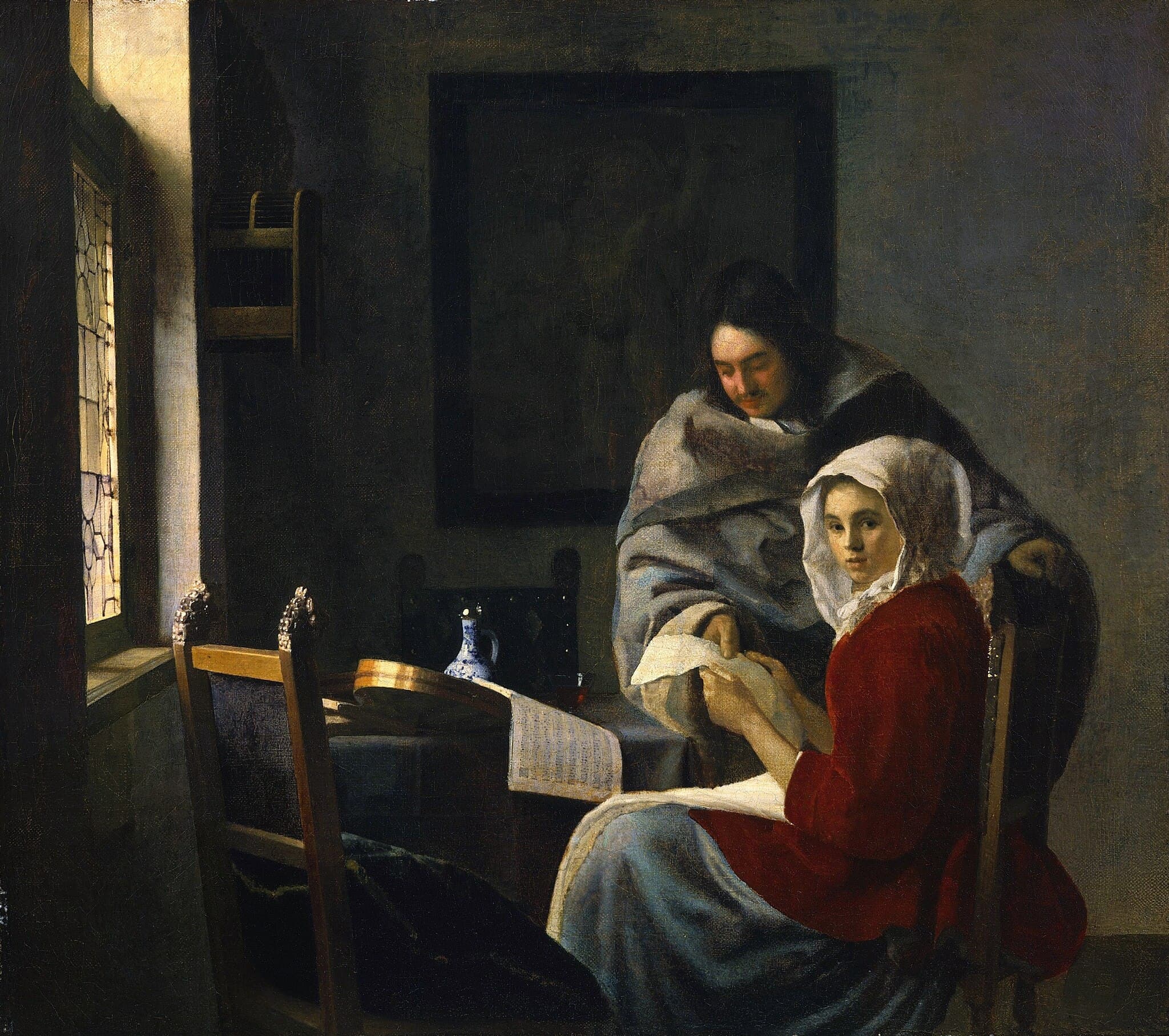
Girl Interrupted at Her Music
Johannes Vermeer • Oil on canvas
Read full analysis of Girl Interrupted at Her Music →Valuation Analysis
Valuation conclusion: I estimate a hypothetical market value for Johannes Vermeer’s "Girl Interrupted at Her Music" of $100–$150 million. The painting is an accepted Vermeer in the Frick Collection, acquired by Henry Clay Frick in 1901 [1]. That institutional ownership, combined with the artist’s extreme scarcity on the open market, makes any market price a theoretical exercise rather than an executable market listing.
The estimate uses a comparable‑analysis approach anchored to the few public benchmarks for Vermeer and top‑tier Old Masters. The last clear public benchmark for a securely discussed Vermeer is the 2004 Sotheby’s sale of a virginal scene (commonly used as the modern auction reference) [2]. Adjustments to that benchmark reflect two effects: (1) the structural scarcity and trophy status of authentic Vermeers (which can push private sale ceilings well above public auction highs), and (2) recent renewed appetite at the very top end of the Old Master market (2024–2026) where museum‑quality works have achieved higher competitive bidding for fresh, well‑provenanced material.
Key drivers include secure attribution, pristine or conservatively restored condition, and an unambiguous museum‑quality provenance. Conversely, any credible challenge to attribution or major conservation problems would sharply depress value (as observed in sales where attribution was debated) [3]. Exhibition history and current scholarly attention (e.g., major Vermeer retrospectives and conservation publications) also uplift perceived value by increasing bid confidence and institutional interest [4].
Caveats: this is a hypothetical market value for a museum‑held masterpiece. The Frick’s ownership and likely legal/export protections make an actual sale extremely unlikely and would attract unique institutional, legal and reputational considerations that could materially raise or limit bid participation. Final realized price would depend on sale route (private treaty vs. auction), guarantee structure, and the contemporaneous market environment.
Key Valuation Factors
Art Historical Significance
High ImpactAs an accepted canvas by Johannes Vermeer, the work carries high art‑historical significance. Vermeer’s accepted corpus is extremely small (roughly three dozen works), so any authenticated painting automatically becomes a major object of scholarship, museum programming, and collector interest. The subject (a woman at music) sits squarely within Vermeer’s core thematic repertoire and is comparable in subject to other high‑interest virginal scenes; that contextual relevance elevates the painting’s desirability in both curatorial and market terms. Scholarly endorsement and exhibition history materially increase the pool of serious institutional and private bidders, which drives trophy pricing.
Provenance & Museum Ownership
High ImpactThe painting’s continuous, traceable provenance culminating in Henry Clay Frick’s 1901 purchase confers premium market confidence. Museum ownership (Frick Collection) is a double‑edged factor: it elevates the work’s prestige and theoretical market ceiling (institutions compete for masterpieces) but makes an actual sale unlikely and legally complex. If the Frick were to deaccession, institutional buyers and consortia would likely participate, pushing prices higher; conversely, public and institutional resistance to deaccession could limit active bidding or reduce the pool to private collectors able to navigate reputational scrutiny.
Attribution Certainty & Technical Condition
High ImpactA secure attribution to Vermeer, supported by technical imaging (IR, x‑ray), pigment analysis and conservation records, is essential to achieving a nine‑figure result. Any credible attribution dispute or evidence of heavy overpainting/unsympathetic restoration would contract the valuation dramatically (often into mid‑six or seven figures). Conversely, strong technical validation and excellent condition can justify steep premiums because bidders pay not only for authorship but for originality and preservation. The market has repeatedly shown that attribution certainty is among the single most important determinants of realized value for Old Masters.
Market Scarcity & Demand
High ImpactVermeer supply to market is essentially zero; most works are museum‑held and rarely change hands. This scarcity transforms each authentic Vermeer into a trophy asset, generating intense, cross‑border competition when one appears. Public auction benchmarks are limited (the modern public reference is a 2004 virginal scene), but private sales and institutional interest can push the ceiling substantially higher than public records. Current market behavior (a 'flight to quality' at the top end) means museum‑quality Vermeers would likely attract both institutional and ultra‑high net worth buyers, supporting a nine‑figure valuation in the right sale conditions.
Exhibition & Scholarly Attention
Medium ImpactRecent retrospectives and conservation publications (including major Vermeer exhibitions) have raised public and scholarly interest in Vermeer and the Delft school. High‑profile loans and cataloguing elevate a work’s market profile and can materially increase buyer confidence. A painting that has been the subject of recent technical study or travelled in key exhibitions will command higher interest and a stronger bidding field than an otherwise identical work without that exposure. However, while exhibition history boosts value, it cannot override attribution or condition problems.
Sale History
Amsterdam sale (early 19th century)
Samuel Woodburn sale, London (Lot 128)
Private sale (Knoedler → Henry Clay Frick)
Johannes Vermeer's Market
Johannes Vermeer occupies one of the most constrained and sought‑after positions in the Old Master market. With a very small, nearly exhaustively catalogued oeuvre and the majority of works in prominent museum collections, Vermeer pictures rarely, if ever, appear for public sale. That scarcity, combined with enduring scholarly and public interest, produces trophy pricing dynamics: when one surfaces it attracts intense institutional and private demand. Public auction benchmarks are limited (the principal modern reference is a 2004 sale), and many high‑end transactions for Vermeer‑level quality occur privately or remain confidential.
Comparable Sales
A Young Woman Seated at the Virginals
Johannes Vermeer
Same artist; very similar subject (young woman at a keyboard instrument). This 2004 sale set the modern public-auction benchmark for Vermeer and is the primary market comparable.
$30.1M
2004, Sotheby's London
~$48.8M adjusted
Saint Praxedis
Johannes Vermeer (attribution debated)
Same artist attribution but debated at time of sale; useful as a lower-end Vermeer market indicator showing how attribution uncertainty depresses price.
$10.7M
2014, Christie's London
~$13.8M adjusted
Venice: The Return of the Bucintoro on Ascension Day
Canaletto
Top-tier Old Master trophy sale in 2025. Different artist but a strong cross-category benchmark that demonstrates market appetite and price levels for rare, museum-quality Old Master pictures.
$43.9M
2025, Christie's London
Current Market Trends
The Old Masters segment is exhibiting a two‑speed market: a weaker mid/low tier but renewed appetite for museum‑quality, fresh‑to‑market works. Recent high‑end results (2024–2026) show that buyers remain willing to pay premiums for well‑provenanced, exhibition‑worthy pictures. For a Vermeer, this means a potential upside beyond historical public records, but realized pricing will hinge on attribution certainty, presentation, and sale mechanics.
Sources
- Frick Collection — Vermeer archival/press material (Frick archives)
- The Guardian — coverage of the 2004 Sotheby’s Vermeer sale (modern public benchmark)
- Christie’s / public record — Saint Praxedis (attribution debated; 2014 sale illustrates attribution risk)
- Rijksmuseum — Vermeer exhibition press/research (recent scholarly attention influencing market perception)