How Much Is The Lacemaker Worth?
Last updated: March 13, 2026
Quick Facts
- Methodology
- comparable analysis
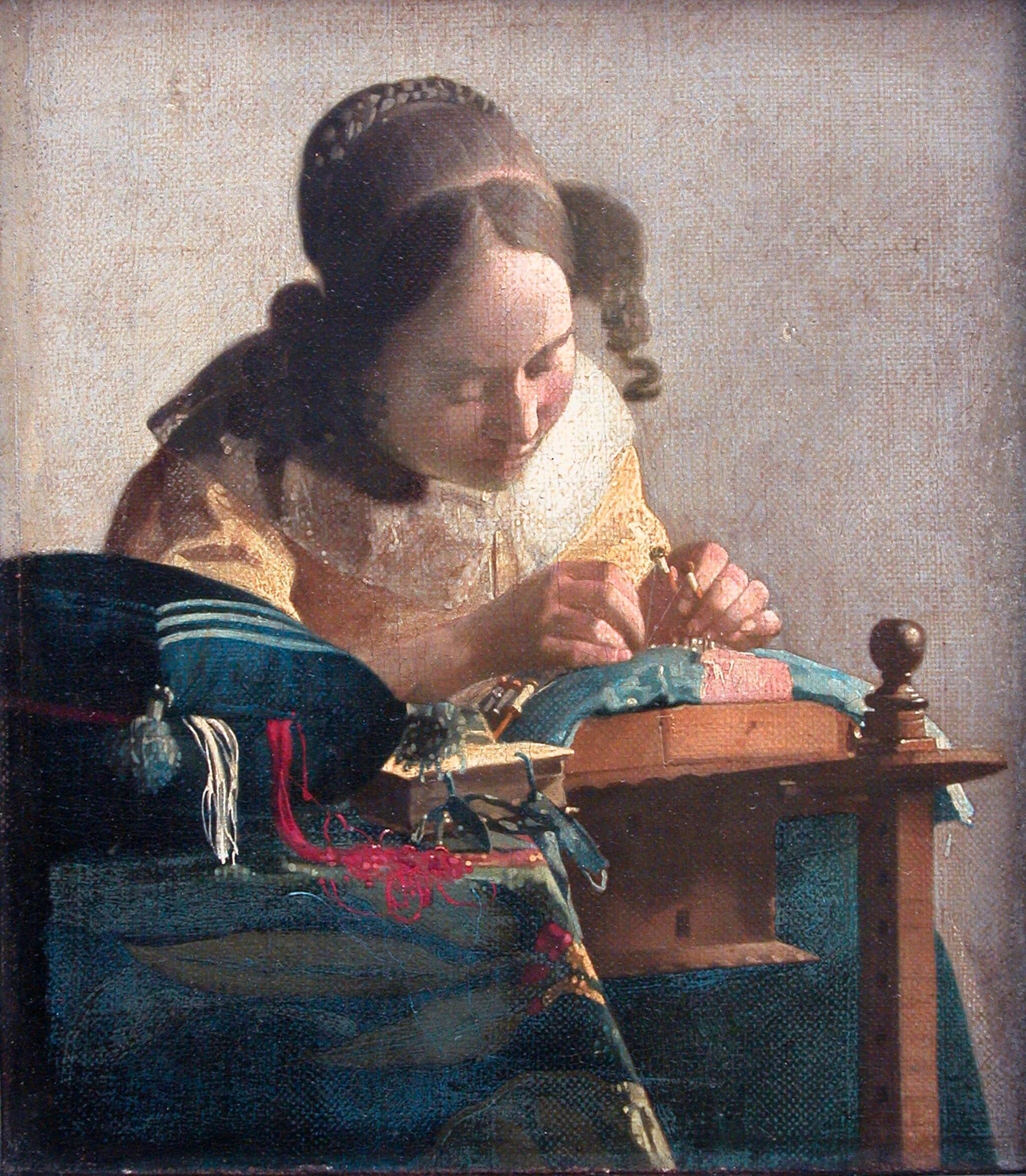
The Lacemaker (Johannes Vermeer), held by the Musée du Louvre, is effectively off the open market and has no modern public‑sale record. For a hypothetical, legally transferable sale of a Louvre Vermeer of this quality I estimate a conservative range of USD 100–150 million, reflecting extreme scarcity, museum provenance premium, and top‑tier Old Master pricing dynamics.
Valuation Analysis
Context and headline estimate: The Lacemaker (La Dentellière) by Johannes Vermeer is a Louvre collection painting (accession in national care) and has not been offered on the modern public market; it is effectively inalienable under French museum practice and national patrimony rules [1]. Any dollar estimate is therefore hypothetical. Using the few available Vermeer sale benchmarks, broader Old Master record purchases, and market dynamics for canonical museum‑quality works, a reasoned, conservative hypothetical range for a freely transferable sale today is USD 100–150 million.
Comparables and anchoring data: Direct auction comparables are extremely limited. Sotheby’s 2004 sale of A Young Woman Seated at the Virginals (realised about USD 30.0M) remains the principal modern public benchmark for an unquestioned Vermeer in private hands; adjusted for price movement it provides a partial anchor but not a direct ceiling [2]. Other public sales tied to Vermeer at lower levels (for example the 2014 Christie’s Saint Praxedis) demonstrate how attribution, condition and buyer confidence compress prices when any doubt exists [3]. At the same time, institutional purchases of major Old Masters and record private bids for unique masterpieces show that the market will pay far more than auction anchors when competition is intense and provenance is pristine.
Why USD 100–150 million: The lower bound of USD 100M is a conservative premium above adjusted historical Vermeer auction levels that accounts for the artist’s extreme scarcity (≈35–37 securely attributed works), the Louvre provenance premium, and the expectation that canonical museum‑quality masterworks command multiples of ordinary auction results. The upper bound of USD 150M reflects a contested sale scenario in which multiple museums, sovereign collectors or ultra‑high‑net‑worth buyers compete — the kind of event that has produced record sums for other single masterpieces. The Lacemaker’s small physical size and somewhat lower household name recognition versus Girl with a Pearl Earring moderate the ceiling relative to a blockbuster iconic image, which is why this range stops well below the largest art‑market outliers.
Key legal and practical caveats: The Louvre’s ownership and French patrimony protections mean sale would require exceptional deaccession and state approvals; in practice this makes an actual transaction extremely unlikely and any valuation theoretical rather than market‑tested [4]. Condition, technical findings and any hidden provenance issues would materially shift value — positive conservation reports and unambiguous provenance would push toward the high end, while significant restoration or contested attribution would depress price sharply.
Recommended next steps: For a formal, actionable valuation obtain the Louvre’s conservation dossier and full provenance files, commission an institutional appraisal from an Old Masters practice at a major auction house or independent specialist, and consult French cultural‑property counsel about declassification/exportability. With those documents a refined, transaction‑grade estimate can be produced; absent them, USD 100–150M is a defensible, conservative hypothetical for a bona fide Louvre Vermeer of this importance [5].
Key Valuation Factors
Art Historical Significance
High ImpactThe Lacemaker is considered a mature, late Vermeer that showcases his refined handling of light, texture and intimate composition. While it is not the single most iconic Vermeer image in popular culture, its scholarly standing is high; it is regularly cited in conservation literature and exhibition catalogues and functions as a touchstone for studies of Vermeer’s late technique. That art‑historical weight increases institutional desire to retain or acquire the work and supports a meaningful premium in any hypothetical market scenario because canonical, well‑documented masterworks are preferentially targeted by museums and top collectors.
Scarcity & Supply
High ImpactVermeer’s accepted corpus is tiny (commonly cited as roughly 34–37 paintings) and most are in national or major museum collections. This near‑zero supply means market entries are rare and headline‑making when they occur, producing outsized price impact relative to more plentiful Old Master names. Scarcity therefore exerts a very strong upward pressure on hypothetical value: when a securely attributed, museum‑quality Vermeer is potentially transferable, bidders face a once‑in‑a‑generation opportunity and prices can jump well above ordinary auction anchors.
Provenance & Legal Status
High ImpactThe Lacemaker’s long public provenance and Louvre ownership (acquisition into the French national collection in the 19th century) create both a premium and a practical barrier. French cultural‑property law and museum inalienability make deaccession difficult and export controlled, substantially reducing transaction probability. If declassification were achieved, the painting’s museum provenance would strengthen buyer confidence and push value higher; conversely, legal complexity and political sensitivity could deter bidders and reduce marketability, adding a risk premium to any price expectation.
Condition & Conservation
Medium ImpactPublicly available information on the painting’s recent conservation status is limited; conservation and condition are pivotal determinants of price. A picture in excellent, original condition with recent technical documentation (X‑radiography, paint stratigraphy, pigment analysis) substantially raises market value and buyer confidence. Conversely, evidence of heavy restoration, overpainting or structural compromise can materially reduce value and limit buyer interest. A formal valuation must be contingent on access to the Louvre’s conservation dossier to remove this uncertainty.
Market Comparables & Buyer Demand
High ImpactPublic Vermeer sales are scarce but instructive: Sotheby’s 2004 Virginals realised about USD 30M and Christie’s 2014 Saint Praxedis sold at a notably lower level when attribution questions existed. Top Old Master institutional purchases and unique masterpiece sales demonstrate that prices can reach into the high tens or low hundreds of millions when competition is strong. Potential buyers for a deaccessioned Louvre Vermeer would include major museums, sovereign funds, and ultra‑high‑net‑worth private collectors—a concentrated, deep‑pocketed buyer pool that can drive prices well above ordinary auction anchors.
Sale History
The Lacemaker has never been sold at public auction.
Johannes Vermeer's Market
Johannes Vermeer occupies a canonical, top‑tier position in the Old Masters market. With only a few dozen securely attributed paintings and most held by museums, Vermeer supply is effectively fixed; this scarcity combined with sustained scholarly esteem makes Vermeers exceptionally desirable and rarely tradeable. Public auction examples are infrequent and therefore exert limited price discovery; institutional demand and rare private transactions dominate valuation signals. In practice, attribution certainty, condition and museum provenance determine whether a Vermeer will attract major institutional competition or a narrower private bid, and that dynamic underpins the high and stable valuation profile for the artist.
Comparable Sales
A Young Woman Seated at the Virginals
Johannes Vermeer
Direct Vermeer auction benchmark: securely attributed Vermeer, interior/figure subject and similar intimate scale; one of the rare modern public sales that sets a market reference for the artist.
$30.0M
2004, Sotheby's, London
~$50.8M adjusted
Saint Praxedis
Johannes Vermeer (attributed)
Another modern public-sale example tied to Vermeer: small-scale work with contested attribution history; useful as a lower-tier Vermeer-market datapoint (shows price for works with attribution/quality questions).
$10.7M
2014, Christie's, London
~$14.4M adjusted
Portrait of Dr. Gachet
Vincent van Gogh
Major-masterpiece market ceiling: a blue-chip, museum-quality work by a canonical artist that sold to a private buyer at a very high price — useful as an upper-bound analogue for how far prices can rise for unique, museum-quality masterpieces.
$82.5M
1990, Christie's, New York
~$202.0M adjusted
Current Market Trends
The current market shows selective strength for top Old Masters amid broader art‑market softness. Blockbuster exhibitions and headline institutional acquisitions have amplified interest in canonical works, but liquidity remains uneven: the very best examples still command robust demand while mid‑tier Old Masters face pressure. For Vermeer specifically, supply is effectively zero and valuations are driven by institutional appetite, scholarly developments and rare private sales rather than frequent auction evidence.
Sources
- Musée du Louvre‑Lens press release: The Musée du Louvre‑Lens welcomes Johannes Vermeer’s The Lacemaker
- Washington Post coverage of Sotheby’s 2004 Vermeer sale
- Christie’s press release and lot information for Saint Praxedis (2014)
- French parliamentary / cultural‑property discussion on museum inalienability and patrimony (Assemblée nationale)
- Rijksmuseum press release: Vermeer retrospective (Amsterdam, 2023)