How Much Is Ophelia Worth?
Last updated: April 10, 2026
Quick Facts
- Last Sale
- $15K (1892, Private sale (to Sir Henry Tate, London))
- Methodology
- comparable analysis
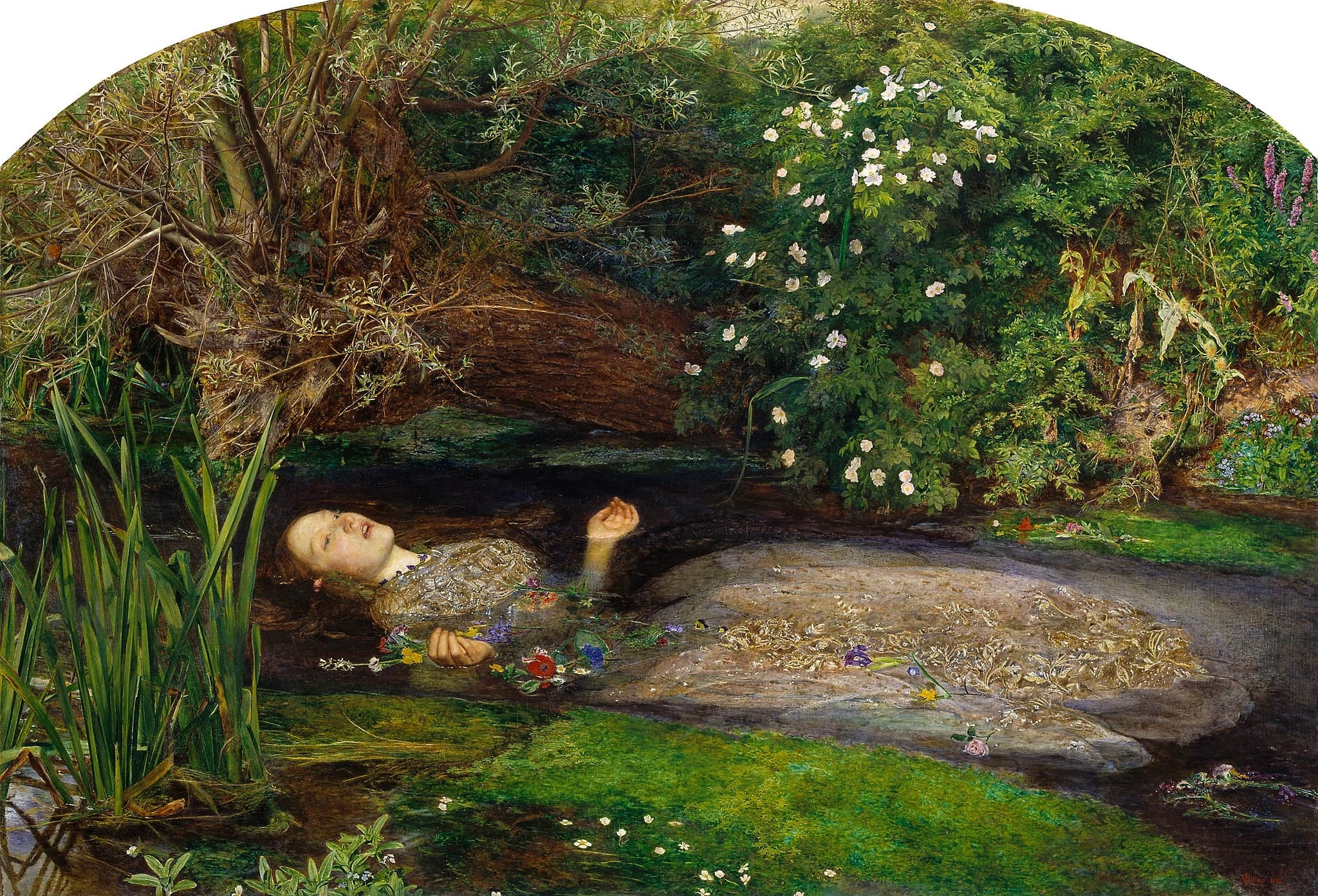
Ophelia (1851–52) is Millais’s most celebrated painting and a defining image of the Pre-Raphaelite movement, held by Tate Britain since 1894. Anchored by recent prices for top British historical masterpieces (Reynolds’s Omai at £50m; Turner at £30.3m) and Ophelia’s singular fame, a reasoned hypothetical private-treaty valuation today is $80–120 million.
Valuation Analysis
Conclusion: We estimate John Everett Millais’s Ophelia (1851–52) at $80–120 million in a hypothetical private‑treaty context. The painting is a canonical masterwork of the Pre‑Raphaelite Brotherhood, held by Tate Britain since 1894 and not a market object under normal circumstances [1].
Method: With no modern public sale for the prime painting, we use cross‑category British trophy comparables and artist/period benchmarks. At the upper tier of historic British art, the National Portrait Gallery/Getty joint acquisition of Reynolds’s Portrait of Mai (Omai) at £50 million in 2023 established a contemporary price point for a truly iconic work with broad cultural resonance [3]. J. M. W. Turner’s Rome, From Mount Aventine set a £30.3 million auction record in 2014, reaffirming the global ceiling for blue‑chip British historical pictures at auction [4].
Positioning Ophelia: Within Millais’s oeuvre, Ophelia is universally regarded as his signature image—prime period (1851–52), technically dazzling, and culturally ubiquitous [1][2]. While Pre‑Raphaelite auction records (including Millais’s Sisters at £2.30 million in 2013) sit in the low‑single‑digit millions, those results reflect the scarcity of A‑tier material in private hands rather than the ceiling for the movement’s most famous icon [5]. Ophelia’s brand recognition, art‑historical centrality, and cross‑category appeal place it far above intra‑PRB comparables and plausibly into the broader British‑trophy bracket defined by Omai and Turner.
Drivers of the range: (1) Singular fame and scholarship: Ophelia is among the most reproduced and studied 19th‑century British images, commanding global name recognition beyond the PRB niche [1][2]. (2) Irreplaceability: No prime autograph variant exists; peer works of similar caliber are largely museum‑held. (3) Quality and visibility: A jewel‑like, meticulously observed Pre‑Raphaelite subject painting in prime condition under major institutional care is the ideal “trophy” profile. (4) Comparables uplift: The £50m Omai acquisition demonstrates today’s capacity for nine‑figure‑equivalent outcomes (in USD) for British icons with public resonance [3]; Turner’s £30.3m sale anchors the auction route for masterpieces with international demand [4].
Process considerations: Any attempted deaccession/export would trigger the UK’s Waverley Criteria and matching‑offer procedures, affecting timetable and transaction structure rather than intrinsic value. In practice, a private‑treaty solution—potentially involving institutional partners or hybrid arrangements—would be the likeliest path to an $80–120 million outcome.
Bottom line: Ophelia is a once‑in‑a‑generation British masterpiece whose cultural stature justifies a valuation that surpasses intra‑PRB auction precedents and challenges the upper tier of historic British art prices established in the last decade [3][4][5].
Key Valuation Factors
Art Historical Significance
High ImpactOphelia is the quintessential Pre-Raphaelite subject picture: a prime-period (1851–52) masterwork by a PRB founder, uniting literary narrative, hyper-detailed naturalism, and chromatic brilliance. It is among the most discussed, reproduced, and exhibited images in Victorian art, constituting a cornerstone of 19th‑century British visual culture. Its placement at Tate Britain since 1894 and sustained scholarly attention elevate it from “important” to “canonical.” As a result, it commands cross-category interest from collectors of British historical art, literary subjects, and museum-quality trophies alike. This central, irreplaceable status is the single strongest driver of value at the top end.
Iconic Status and Global Recognition
High ImpactBeyond the Pre-Raphaelite niche, Ophelia has global name recognition and a robust afterlife in popular culture, publishing, and exhibition branding. Such widespread familiarity materially expands the buyer pool beyond category specialists, similar to the dynamics seen for Turner and Reynolds trophies. The image’s instant recognizability reduces “education risk” and supports premium pricing when a work is perceived as a must-have cultural touchstone. This kind of brand equity—rare in Victorian painting—helps push the valuation well above standard PRB auction ceilings and aligns it with the broader British-trophy tier.
Scarcity and Irreplaceability
High ImpactThere is no second prime autograph version of Ophelia, and works of comparable caliber in Millais’s early PRB period are overwhelmingly museum-held. Supply constraints are particularly acute for literary subject masterpieces of this exact moment (early 1850s) with full PRB finish and scale. As a result, any hypothetical opportunity to acquire Ophelia would be once-in-a-generation. This scarcity is a classic determinant of trophy pricing: it ensures not just competitive interest from private buyers but also a likely institutional or philanthropic response, further underpinning a premium outcome.
Comparables and Price Anchors
High ImpactWhile Millais’s public auction record is only in the low millions, that reflects the absence of A‑tier, early PRB masterpieces on the market. The appropriate anchors are cross-category British trophies: Reynolds’s Portrait of Mai (Omai) at £50m (2023) and Turner’s Rome, From Mount Aventine at £30.3m (2014). Ophelia’s fame and cultural centrality plausibly place it within or above that bracket in USD terms. The estimate therefore extrapolates upward from intra‑PRB prices and aligns with the top end of historic British art when an image has true global resonance.
Cultural-Property Process (UK)
Medium ImpactAny attempt to sell or export Ophelia would trigger the UK’s Waverley Criteria and matching-offer system. Practically, this tends to shift transactions toward private-treaty or hybrid institutional solutions and can extend timelines. However, it also concentrates philanthropic and public funding around a headline figure, often validating a premium valuation for a work of national importance. In short, the process influences deal structure and timing more than intrinsic value and can, in the right circumstances, support a figure at the top of the estimated range.
Sale History
Private sale (via Henry Farrer, London)
Sold for 300 guineas (~£315; c.$1,533 at gold-standard parity). Early transaction while the work was being completed/exhibited.
Henry Graves & Co., London (dealer purchase)
Recorded around £798 (~$3,885 at gold-standard parity). Year only known from period sources.
Private sale (to Sir Henry Tate, London)
Sold by George Fuller-Maitland to Sir Henry Tate for £3,000 (~$14,600 at gold-standard parity).
John Everett Millais's Market
Sir John Everett Millais (1829–1896) is a founder of the Pre‑Raphaelite Brotherhood and a blue‑chip name within Victorian art. The most desirable market material is his early PRB subject pictures (late 1840s–mid‑1850s), which are largely museum-held. Public auction records for Millais’s later 19th‑century works cluster from the mid‑six figures to low‑seven figures; the artist’s auction record is Sisters at £2.30 million (Christie’s London, 2013). The gap between these auction results and Ophelia’s proposed valuation reflects the latter’s singular status and the fact that true PRB icons almost never come to market. Demand is selective but deep for best‑in‑class works with strong subjects, condition, and provenance.
Comparable Sales
Sisters (1862)
Sir John Everett Millais
Same artist; important mid-1860s subject picture and the artist’s auction record. Calibrates what the market has paid publicly for a significant Millais oil.
$3.5M
2013, Christie's London
~$4.6M adjusted
Sleeping (c.1866–67)
Sir John Everett Millais
Same artist; previously the auction record before 2013. Another large, desirable Victorian subject picture that helps set the upper band for Millais at auction.
$3.4M
1999, Christie's London
~$6.2M adjusted
Isabella and the Pot of Basil
William Holman Hunt
Pre-Raphaelite founder; canonical literary subject with a single heroine and jewel-like finish. A key benchmark for top PRB subject pictures in the modern market.
$4.9M
2014, Christie's London
~$6.4M adjusted
Rome, From Mount Aventine
J. M. W. Turner
British masterpiece benchmark at auction. While not PRB, it anchors the trophy-level ceiling for historic British pictures with global appeal.
$47.6M
2014, Sotheby's London
~$61.9M adjusted
Portrait of Mai (Omai)
Sir Joshua Reynolds
Iconic British trophy acquired at £50m in 2023 via a UK cultural-property process. Serves as a contemporary, top-end price anchor for historic British art with immense public resonance.
$61.7M
2023, Private treaty (joint acquisition by the National Portrait Gallery and the Getty)
~$65.4M adjusted
Current Market Trends
The broader Old Masters/19th‑century field has been selective since 2024, with disciplined estimates and buyers concentrating on quality, condition, and narrative strength. London sales have shown steady liquidity for vetted material, while record‑setting outcomes are rarer and clustered around cross‑category trophies. Within British Victorian and Pre‑Raphaelite art, supply of A‑tier pictures is thin; when they appear, competition can be strong, but mid‑tier works require realistic pricing. Against this backdrop, a universally recognized, museum‑grade icon like Ophelia would be an outlier—commanding attention beyond category specialists and pricing in line with top British historical trophies rather than standard PRB comparables.
Sources
- Tate: Millais, Ophelia (N01506) collection entry
- Wikipedia: Ophelia (painting) – provenance and context
- National Portrait Gallery: Acquisition of Reynolds’s Portrait of Mai (Omai) for £50m (press release, 2023)
- The Guardian: Turner’s Rome, From Mount Aventine sets £30.3m auction record (2014)
- Christie’s: Post‑sale release – Millais auction record (Sisters) at £2,301,875 (2013)