How Much Is The Lady of Shalott Worth?
Last updated: April 10, 2026
Quick Facts
- Methodology
- extrapolation
This is the definitive Waterhouse image and a landmark of Victorian/Pre‑Raphaelite art. Extrapolating from the artist’s record and recent blue‑chip comparables, and allowing for a significant masterpiece premium, we estimate $30–50 million in a hypothetical, unconstrained sale or insurance context. The range sits above all recorded Waterhouse results and challenges the category ceiling, reflecting the work’s singular cultural status.
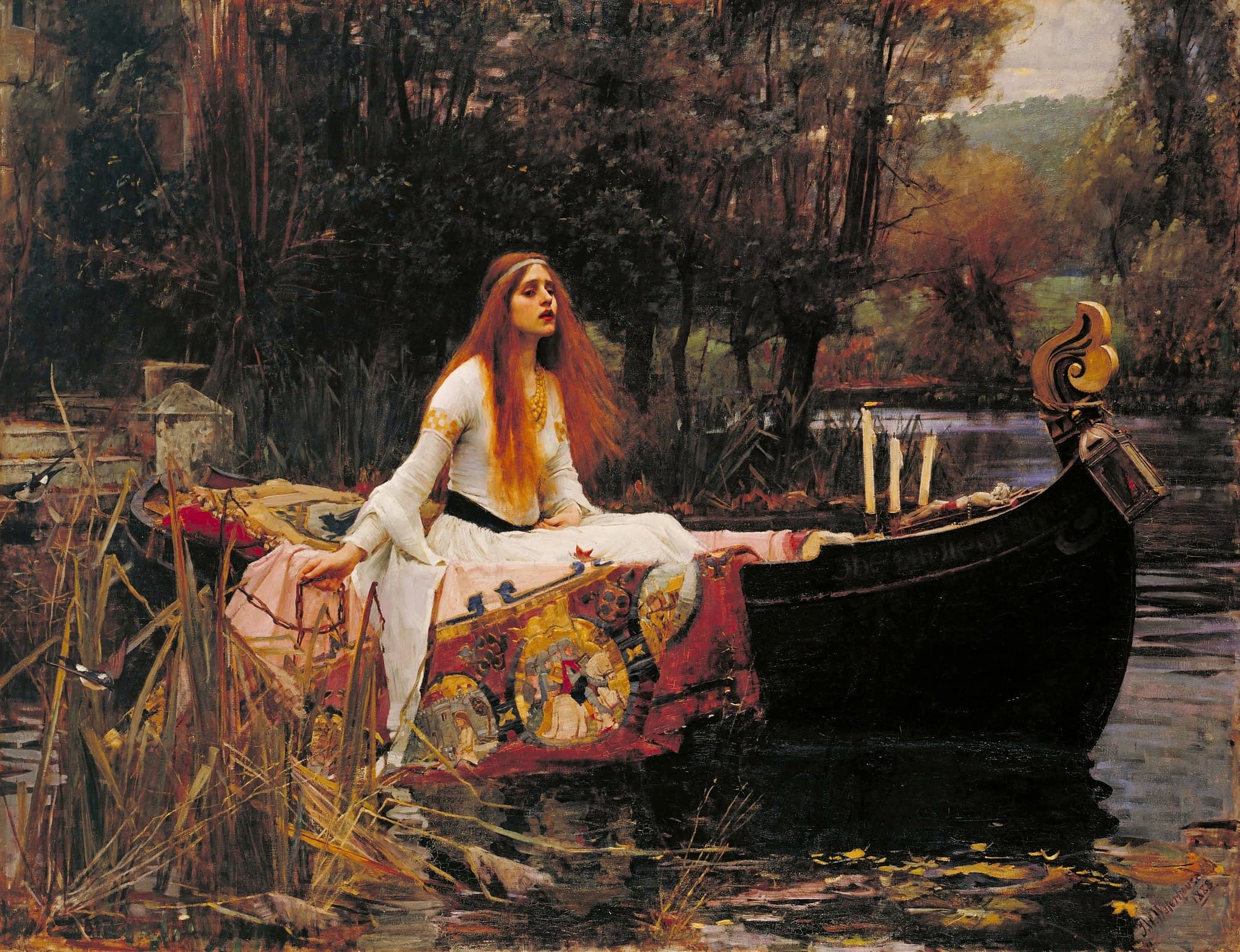
The Lady of Shalott
John William Waterhouse, 1888 • Oil on canvas
Read full analysis of The Lady of Shalott →Valuation Analysis
Final estimate: $30–50 million. John William Waterhouse’s The Lady of Shalott (1888) is the artist’s signature painting and one of the most reproduced images in Victorian art, held by Tate Britain since 1894 and credited “Presented by Sir Henry Tate 1894.” Its museum status and canonical stature place it at the apex of Waterhouse’s oeuvre and the broader Pre‑Raphaelite narrative [1].
Methodology. We extrapolate upward from the artist’s public market anchors, then layer a substantial “masterpiece premium” appropriate to a defining, institution‑grade icon. Waterhouse’s standing auction record is St Cecilia (1895) at £6.6m (≈$9.9m at the time; ≈$18m+ in today’s dollars) [2]. More recent prime‑period benchmarks include The Siren (1900) at c.£3.84m (≈$5.0m) [3] and The Soul of the Rose (1908) at $4,695,000 [4]. These results confirm sustained, international demand for the artist’s most poetic, literary subjects—albeit with very limited supply.
Category context. Within the Victorian/Pre‑Raphaelite field, the public auction ceiling remains Edward Burne‑Jones’s Love Among the Ruins at £14.85m (≈$22.4m) in 2013 [5]. The Lady of Shalott, however, is exceptional even against this backdrop: it is a large, exhibition‑scale oil (approx. 153 × 200 cm), universally recognized, and long established as the artist’s defining statement on a touchstone Tennysonian theme [1]. Such attributes typically command a multiple over routine record prices when a work is both the signature image of an artist and an emblem of an entire movement.
Deriving the range. Starting from Waterhouse’s inflation‑adjusted record (~$18m+), we add a significant icon premium to reflect (i) unique art‑historical primacy; (ii) scale and pictorial complexity beyond the recent $4.7–$5.0m single‑figure icons; and (iii) the cross‑category “trophy” appeal that true cultural landmarks can attract. Balancing this against the observed category ceiling (~$22m), we set a confident, evidence‑led band at $30–50 million, acknowledging that this work could plausibly reset the Pre‑Raphaelite benchmark in a competitive, unconstrained private‑treaty or marquee sale.
Positioning. The lower bound ($30m) recognizes the current category’s historical price limits, while the upper bound ($50m) reflects the potential for cross‑category bidding on a once‑in‑a‑generation masterpiece whose name recognition rivals Millais’s Ophelia within the period. As the painting resides in the UK national collection, this valuation is for hypothetical sale or insurance purposes. On any practical metric—art‑historical significance, cultural resonance, and market scarcity—The Lady of Shalott warrants a level well above all prior Waterhouse transactions and credibly at or above the category’s known high watermark [1][2][3][4][5].
Key Valuation Factors
Art Historical Significance
High ImpactPainted in 1888 at the height of Waterhouse’s powers, The Lady of Shalott is widely regarded as the artist’s masterpiece and a cornerstone of late Pre‑Raphaelite painting. It synthesizes Tennyson’s poetry, Arthurian romance, and Waterhouse’s mature pictorial language—sumptuous surfaces, narrative detail, and lyrical symbolism—into a definitive statement. As the canonical image in his oeuvre, repeatedly exhibited, published, and taught, it functions as both a scholarly touchstone and a public icon. Such primacy supports a substantial premium over the artist’s already strong auction benchmarks and justifies valuation above conventional category limits when pricing an insurance or hypothetical sale scenario.
Iconicity and Cultural Recognition
High ImpactThis painting is among the most recognized images in Victorian art, comparable in public mindshare to Millais’s Ophelia within the period. Its enduring reproduction across books, posters, and museum merchandising has created a global brand association between Waterhouse and The Lady of Shalott. That level of cultural penetration enlarges the potential buyer pool beyond specialist Victorian collectors, inviting interest from cross‑category “trophy” buyers who prioritize name recognition and art‑historical storytelling. In valuation terms, this broad, durable fame supports a significant uplift relative to the artist’s record and recent blue‑chip comparables.
Scale, Composition, and Quality
High ImpactAt approximately 153 × 200 cm, the canvas is an exhibition‑scale tour de force. The composition unites a psychologically charged narrative moment with masterful handling of water, textiles, and atmospheric light. The dense iconography—the tapestry, the boat, the lantern, autumn reeds—rewards close viewing and reproduces powerfully at all sizes. Few Waterhouse pictures match this one for size, pictorial ambition, and narrative completeness. In market terms, these attributes place it above the single‑figure icons that command $4.7–$5.0m at auction, strengthening the case for a multiple over the artist’s observed peaks.
Market Evidence and Category Ceiling
Medium ImpactKey market anchors include Waterhouse’s record for St Cecilia at £6.6m (≈$9.9m at the time; ≈$18m+ today) and recent top sales like The Siren (≈$5.0m) and The Soul of the Rose ($4.695m). The broader Pre‑Raphaelite auction ceiling is Burne‑Jones’s Love Among the Ruins at £14.85m (≈$22.4m). Pricing The Lady of Shalott at $30–50m moderately exceeds these public benchmarks to reflect its unique status as the defining Waterhouse and a movement emblem. The premium is justified by masterpiece attributes and cross‑category appeal, while the band remains disciplined relative to comparables and historical category limits.
Provenance and Institutional Status
Medium ImpactHeld by Tate Britain since 1894 (gift of Sir Henry Tate), the painting has unimpeachable provenance, continuous institutional care, and towering exhibition and publication histories. While a UK national‑collection holding is practically inalienable, the same credentials that limit salability in practice enhance insurable value: museum‑grade stature, condition stewardship, and scholarly prominence. In a hypothetical sale or private‑treaty setting unconstrained by deaccession policies, these factors would amplify competition and support a step‑change premium over the artist’s market record.
Sale History
The Lady of Shalott has never been sold at public auction.
John William Waterhouse's Market
John William Waterhouse is the most sought‑after of the late Pre‑Raphaelites for mythological and literary subjects with strong narrative charge. His auction record is St Cecilia (1895) at £6.6m (≈$9.9m at the time), a landmark result that still frames the top end of his market [2]. Recent blue‑chip sales—The Siren (1900) at around $5.0m and The Soul of the Rose (1908) at $4.695m—confirm deep demand for prime, iconic imagery when fresh to market [3][4]. Supply at the very top is extremely thin, which typically intensifies bidding when major works appear. Within Victorian art, Waterhouse is considered “blue‑chip,” albeit in a category with fewer participants than Impressionist/Modern or Contemporary.
Current Market Trends
The Victorian/Pre‑Raphaelite segment remains selective but resilient: curated sales with first‑rank, fresh works continue to perform, while lesser material can lag. The public category ceiling—Burne‑Jones’s £14.85m Love Among the Ruins—has stood since 2013, reflecting both the rarity of true icons and cautious supply. Recent years have seen limited top‑tier Waterhouse offerings, suggesting scarcity rather than diminished demand. In this environment, a museum‑grade, canonical image would likely attract cross‑category trophy buyers, creating the conditions for a price meaningfully above historical Waterhouse benchmarks and credibly at or beyond the established Pre‑Raphaelite high‑water mark.
Sources
- Tate: John William Waterhouse, The Lady of Shalott (1888), N01543
- MutualArt: John William Waterhouse — Auction Results and Record (St Cecilia, £6.6m, 2000)
- Sotheby’s: John William Waterhouse, The Siren (1900), London, 12 July 2018
- Christie’s: John William Waterhouse, The Soul of the Rose (1908), New York, 28 Oct 2019
- Christie’s Press Release: Burne‑Jones’s Love Among the Ruins sets world record (£14.85m), 11 July 2013