How Much Is Le songe du Roi David (The Dream of King David) Worth?
Last updated: March 20, 2026
Quick Facts
- Last Sale
- $26.5M (2025, Christie's New York)
- Methodology
- recent sale
For an authenticated, museum‑scale 1966 oil/tempera/sawdust canvas titled Le songe du Roi David that matches the Christie’s 17 Nov 2025 lot (Comité confirmation, Kawamura provenance), market value is US$20,000,000–US$30,000,000, with a concrete market anchor at the Christie’s result of US$26,510,000 (with premium). If the object differs in size, provenance, condition, or is a print/study, expect materially lower values.
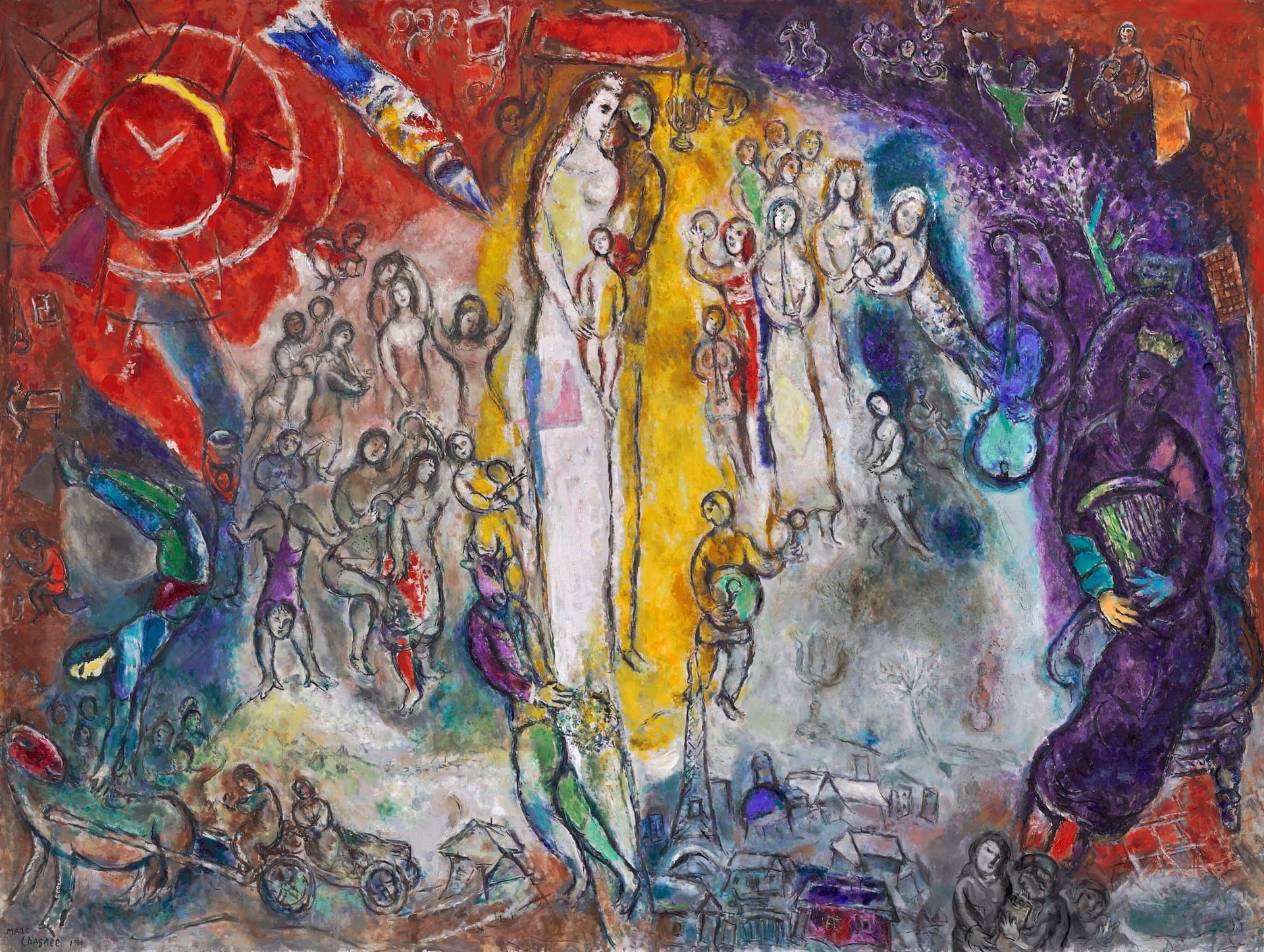
Le songe du Roi David (The Dream of King David)
Marc Chagall, 1966 • Oil, tempera and sawdust on canvas
Read full analysis of Le songe du Roi David (The Dream of King David) →Valuation Analysis
Valuation anchor and headline: The principal market anchor for this composition is the Christie’s New York sale on 17 November 2025, when a museum‑scale 1966 oil, tempera and sawdust composition titled Le songe du Roi David (approx. 81 3/4 × 108 1/2 in.) sold for a hammer of US$22,500,000 and a total price of US$26,510,000 with premium [1]. That realized price is the direct comparator for an identical work with the same medium, scale, Comité confirmation and museum provenance.
The estimate range provided (US$20–30M) reflects (a) the concrete realized result as the primary anchor, (b) a modest downward allowance to allow for fluctuation in market conditions and buyer competition, and (c) an upward allowance recognizing auction variability and occasional premium outcomes for exceptionally promoted, exhibition‑backed consignments. The approach is therefore a recent‑sale anchoring methodology: the best indicator of value for the same work is the price it achieved in open competition at a top house [1].
Context and comparables: Marc Chagall’s auction record and high‑end market behavior provide context for this anchor. The artist’s auction high remains in the upper‑tens of millions for canonical masterpieces, and important mid‑ to late‑career canvases have realized multi‑million prices in major sales [2]. That wider context supports the conclusion that a museum‑scale, well‑provenanced 1966 biblical canvas by Chagall is a mid‑to‑high‑eight‑figure market object, and that the Christie’s result is a realistic and recent market expression of that value.
Practical adjustments: if the work you are valuing differs from the Christie’s lot in any meaningful way—smaller dimensions, absence of Comité confirmation, weak or undocumented provenance, signs of significant restoration, or if it is a study/graphic/print—the realistic market expectation shifts downward, often markedly (mid‑six figures to low millions for many oils without top provenance; thousands to low six figures for prints/editions). Conversely, identical works with equal or stronger museum provenance, fresh catalogue‑raisonné citation, and a top‑house evening sale campaign could meet or modestly exceed the Christie’s figure depending on buyer competition and market timing.
Recommended next steps: to tighten this estimate to a point valuation, provide high‑resolution images, exact dimensions, condition report, and full provenance/exhibition/citation history. If the painting is the Christie’s lot itself, treat the US$26,510,000 result as the realized market price; if it is a different object, the US$20–30M bracket is a defensible market range for an equivalent museum‑quality painting sold under top conditions [1][2].
Key Valuation Factors
Art Historical Significance
High ImpactThis painting is part of Chagall’s late‑career engagement with biblical subjects, a strand of his work that has significant institutional representation (musée collections, tapestries, stained glass, and museum retrospectives). A museum‑scale, unique 1966 canvas of this subject is considered important within his oeuvre because it synthesizes Chagall’s recurrent iconography (biblical figures, dream imagery, saturated color fields) with later technical experimentation (tempera and sawdust). That combination increases scholarly interest and institutional demand, enhancing market value. Works tied to major cycles and exhibited in notable retrospectives command a premium versus unprovenanced, studio‑scale works or prints.
Provenance & Exhibition History
High ImpactProvenance that includes the artist's estate, established dealers, and museum ownership materially increases market confidence and price. The Christie’s lot traced through the artist estate to Jean Coulon and then to Kawamura Memorial DIC Museum of Art, plus multiple museum exhibitions and catalogue citations, are principal reasons the lot performed at the US$26.51M level. Strong exhibition history reduces attribution friction, expands the buyer pool (museums, blue‑chip collectors), and typically raises the floor and ceiling of expected prices compared with works lacking documented loans or catalogue references.
Authentication & Catalogue Raisonné Status
High ImpactFormal confirmation from the Comité Marc Chagall (or equivalent catalogue‑raisonné entry) is a decisive factor for top‑tier marketability. Committee authentication shortens sale lead time, reduces buyer hesitation, and increases estimates at major houses. The Christie’s lot benefitted from committee confirmation; absence of such confirmation or unresolved attribution concerns will reduce marketability and often lower estimates substantially. For consignments targeted at evening sales, committee sign‑off is effectively a precondition for premium pricing.
Condition & Medium (oil/tempera/sawdust)
Medium ImpactThe sawdust/tempera surfaces Chagall sometimes used introduce distinct conservation considerations: friability, differential aging, and complex restoration needs. Condition issues (loss, flattening, old restorations) can discount expected price materially. Conversely, well‑conserved surfaces with transparent restoration and a conservator’s report can preserve value. The medium itself is collectible and characteristic but demands a conservator’s assessment prior to sale; buyers will price in potential conservation risk unless documentation is clean.
Market Liquidity & Sale Venue
High ImpactLiquidity for top Chagall canvases is strong at major houses (Christie’s, Sotheby’s) in prime sale seasons, especially New York evening sales where institutional and marquee private buyers compete. The Christie’s sale demonstrates that a properly marketed museum‑quality lot will attract deep bidding and realize high results. Regional houses and Hong Kong/Seoul venues can produce strong outcomes for the right works, but evening sale placement at a top house materially increases the chance of achieving the top end of the estimate range.
Sale History
Christie's New York (20th Century Evening Sale)
Sotheby's New York
Sotheby's New York
Sotheby's Hong Kong
Marc Chagall's Market
Marc Chagall is a well‑established blue‑chip modernist whose market covers a wide spectrum: inexpensive works on paper, mid‑market oils in the low‑to‑mid millions, and high‑end masterpieces that can reach the high‑single to low‑double tens of millions. Top prices are driven by canonical subject matter, rarity, scale, and institutional provenance. Chagall benefits from recurring institutional visibility and a stable collector base, which keeps demand for quality canvases robust. Committee authentication and exhibition history regularly separate high‑value lots from the broader market.
Comparable Sales
Le songe du Roi David
Marc Chagall
Exact match — same 1966 oil/tempera/sawdust large-scale biblical composition, confirmed by Comité and with strong museum provenance/exhibition history; direct market anchor.
$26.5M
2025, Christie's New York
Les Amoureux
Marc Chagall
Artist auction record and a canonical Chagall masterpiece — though earlier (1928) in the artist's career and different subject, it sets the upper-market precedent for top-tier Chagall canvases.
$28.5M
2017, Sotheby's New York
~$35.6M adjusted
Au-dessus de la ville
Marc Chagall
High-quality modern-period Chagall that realized a strong mid‑high seven-figure result in a NY evening sale — useful for gauging buyer willingness for major canvases below the absolute top record.
$15.6M
2023, Sotheby's New York
~$16.6M adjusted
Le jongleur
Marc Chagall
Mid‑career Chagall painting (1943) that achieved a low‑double‑million result in a major European sale — a comparator for significant but not museum‑scale works.
$11.8M
2022, Christie's London
~$13.2M adjusted
Fleurs de printemps
Marc Chagall
Strong regional (Asia) evening-sale result for a high-quality Chagall (1930) — illustrates demand and price levels outside Western primary-sale evening rooms for important but smaller/earlier works.
$4.4M
2025, Sotheby's Hong Kong
Current Market Trends
The market through 2024–2026 has been selective: fewer ultra‑high‑value lots traded but strong interest persisted for museum‑quality works. Institutional retrospectives in 2024–2025 and active Asian/regional buying supported demand. Top‑house evening sales remain the optimal venue for achieving peak prices; provenance and committee confirmation are decisive factors in a cautious yet active market.