How Much Is Expulsion from the Garden of Eden Worth?
Last updated: April 3, 2026
Quick Facts
- Methodology
- comparable analysis
Hypothetically transferable and exportable as an undisputed, autograph Masaccio, the Brancacci Chapel 'Expulsion' would plausibly sit in a commercial envelope of roughly USD 30–150 million. Practically and legally, however, the fresco is in situ, protected by Italian cultural‑heritage law, and therefore its cultural value is effectively inestimable and not a normal market lot.
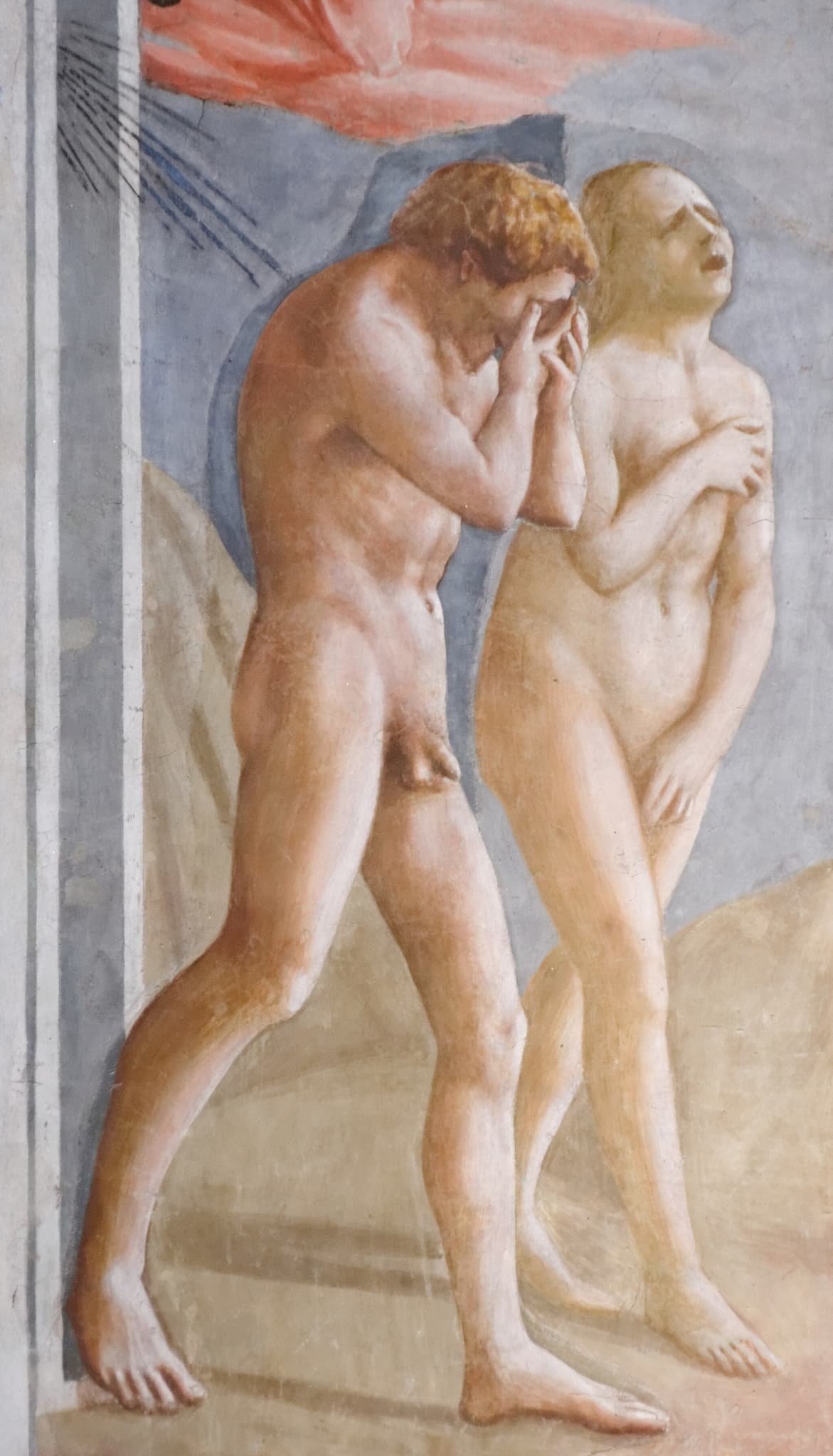
Expulsion from the Garden of Eden
Masaccio • Fresco
Read full analysis of Expulsion from the Garden of Eden →Valuation Analysis
Headline valuation: On a strictly hypothetical commercial basis — i.e., if the Brancacci Chapel "Expulsion from the Garden of Eden" could be authenticated as an uncontested, autograph Masaccio and legally detached and exported — the market envelope I estimate is USD 30,000,000–150,000,000. This figure is intentionally wide because it compresses multiple scenarios: a securely attributed, museum‑quality movable panel by Masaccio would attract intense institutional and private competition; by contrast, any attribution uncertainty, poor condition, or legal restriction would sharply reduce realizable value [1][2].
Method and comparables: I based the envelope on a comparative reading of recent high‑profile Old Masters results and the proven willingness of major buyers to pay premium sums for rare, canonical works. Relevant comparables include mid‑$20M results for exceptional drawings tied to Masaccio’s lineage (e.g., the Michelangelo study after Masaccio sold at Christie’s in 2022) and extreme outliers such as Leonardo’s Salvator Mundi, which demonstrate the market ceiling for singular Renaissance discoveries [2][3]. Because Masaccio’s autograph painted output is vanishingly rare and almost always immovable, direct auction precedents for a Masaccio painting are effectively nonexistent; therefore the chosen range extrapolates upward from the best available comparables while recognizing Salvator Mundi as an atypical high‑end outlier.
Key value drivers and restraints: Upside is driven by art‑historical significance (Masaccio is a foundational figure in the early Renaissance), extreme rarity of autograph works, and institutional demand. Downside and uncertainty derive from attribution risk, condition and conservation history, and — most critically — legal and logistical constraints: the Brancacci frescoes are in‑situ in Santa Maria del Carmine and fall under Italian cultural‑heritage protection, which makes a lawful commercial sale/export essentially infeasible without state authorization [1][4]. Conservation reports, technical imaging, and documentary provenance would materially affect any market outcome.
Practical conclusion: For insurers, fundraisers, or institutions that require a dollar figure, the USD 30–150M envelope is a defensible, high‑uncertainty working estimate. For all practical purposes of collectors and dealers, however, the fresco’s cultural patrimony status renders it a non‑market asset; its institutional/insurance treatment will be as a priceless national treasure rather than a normal saleable lot. A formal, binding valuation would require technical conservation reports, expert attribution consensus, and a legal review of exportability and detachment precedent [5][4].
Key Valuation Factors
Art Historical Significance
High ImpactMasaccio’s "Expulsion" in the Brancacci Chapel is a seminal work in the history of Western art: it marks a decisive move toward naturalism, volumetric modeling, and psychologically charged narrative in early 15th‑century Florence. Its innovations in space, figure modelling, and emotional realism are repeatedly cited as foundational to later Renaissance developments, and the work’s schooling effect on subsequent masters amplifies its cultural weight. Because collectors and museums prize works that fundamentally altered art history, the piece’s canonical status is a primary driver of any theoretical high‑end valuation. In short: art‑historical significance places the work at the top tier of Old Masters desirability.
Rarity & Supply
High ImpactMasaccio’s securely attributed painted corpus is extremely small and mostly immovable (fresco cycles and institutional holdings). Genuine, marketable paintings by Masaccio are virtually absent from modern auction records; supply is thus effectively zero. Economic theory implies that when supply is constrained and demand exists (from museums and well‑funded collectors), prices for any legitimately marketable example would spike. This rarity premium justifies the upper end of the valuation envelope, while the near‑absence of comparable sales increases uncertainty and volatility in any estimate.
Portability & Legal Status
High ImpactThe piece is a wall fresco in the Brancacci Chapel and is protected under Italian cultural‑heritage legislation; detachment and export are legally fraught and rarely permitted for canonical chapel cycles. Even where technical detachment (strappo/stacco) is physically possible, contemporary Italian practice, national patrimony laws and museum stewardship norms make lawful market transfer unlikely. Consequently, the practical market value is effectively zero unless extraordinary legal permissions were granted; any commercial valuation therefore remains hypothetical and contingent on legal change or exceptional state consent.
Market Comparables & Demand
Medium ImpactComparable evidence comes largely from high‑profile Old Masters sales: exceptional drawings tied to Masaccio’s lineage (Michelangelo’s study after Masaccio at Christie’s) have realized mid‑$20M figures, and once‑in‑a‑generation paintings by canonical artists (e.g., Leonardo’s Salvator Mundi) show the extreme ceiling. Museums and sovereign buyers compete aggressively for works that fill gaps in canonical narratives; when a true masterpiece appears, demand typically outstrips supply and pushes prices sharply upward. This dynamic supports a multi‑tens‑of‑millions lower bound but also generates wide dispersion depending on context.
Condition, Conservation & Attribution Risk
Medium ImpactAny realistic commercial valuation would require detailed condition and conservation histories plus technical imaging and pigment analysis. Frescoes undergo restorations and overpainting; previously detached works or workshop interventions (Masolino, studio hands) complicate authorship and reduce market value. Attribution disputes materially depress prices; conversely, clean technical corroboration of autograph status and excellent condition can deliver strong premiums. Therefore, conservation certainty and uncontested attribution are necessary preconditions for the top end of the proposed valuation envelope.
Sale History
Expulsion from the Garden of Eden has never been sold at public auction.
Masaccio's Market
Masaccio is a foundational early‑Renaissance master whose surviving painted oeuvre is limited and largely immovable. As a result, there is little to no modern auction record for major autograph Masaccio paintings; market activity tied to the name mostly involves workshop pieces, copies, or provenance‑linked drawings by later masters. Institutional demand for canonical works in this period is strong, but supply constraints and legal protections mean Masaccio’s market presence is episodic and driven by rare rediscoveries and scholarly confirmation rather than steady commercial turnover.
Comparable Sales
Salvator Mundi
Leonardo da Vinci
Market ceiling: an iconic, rediscovered Renaissance masterpiece sold at global headline price — shows the extreme top end collectors/museums will pay for a uniquely important, securely attributed Old Master work.
$450.3M
2017, Christie's New York
~$554.8M adjusted
A nude young man (after Masaccio) surrounded by two figures
Michelangelo (after Masaccio)
Directly related to Masaccio: a rare, securely attributed Renaissance drawing (by Michelangelo) that copies a Masaccio figure — strong, realistic lower‑end comparable for demand in the Masaccio/Michelangelo lineage (shows collector appetite for rare works tied to Masaccio).
$24.3M
2022, Christie's Paris
~$26.5M adjusted
Study (drawing) by Michelangelo — recent auction record
Michelangelo
Recent high result for an exceptional early‑Renaissance master’s study; important because it raises modern auction ceilings for rare drawings/studies closely related to Masaccio’s circle (demonstrates premium for canonical provenance and rarity).
$27.2M
2026, Christie's New York
~$26.3M adjusted
Current Market Trends
The Old Masters/early‑Renaissance market is episodic: single masterpieces and rediscoveries drive headline prices while the broader segment remains illiquid. Recent years saw spikes from rediscovered drawings and studies (2022–2026 Michelangelo examples), followed by a market cooling in 2024; nonetheless, top institutional and private buyers remain willing to pay premiums for securely attributed, museum‑quality works.
Sources
- Britannica — Masaccio: The Brancacci Chapel
- Christie’s — Michelangelo study after Masaccio (May 18, 2022)
- Christie’s press — Salvator Mundi sale (2017)
- Italian Parliament dossier on cultural heritage (Codice dei beni culturali) — export/tutelage practice
- Smarthistory — Masaccio, Expulsion of Adam and Eve from Eden (Brancacci Chapel)