How Much Is Madonna and Child with St Anne (Sant'Anna Metterza) Worth?
Last updated: April 3, 2026
Quick Facts
- Methodology
- comparable analysis
The Uffizi’s Madonna and Child with St Anne (Sant'Anna Metterza) is a museum‑held, canonical Quattrocento panel; it is not market‑available and any price is theoretical. On a free‑market basis—assuming an accepted autograph Masaccio, full legal exportability and excellent condition—the realistic hypothetical range is approximately $30–150 million, with the upper end reserved for a clearly autograph, museum‑quality masterpiece supported by unanimous scholarly and technical endorsement.
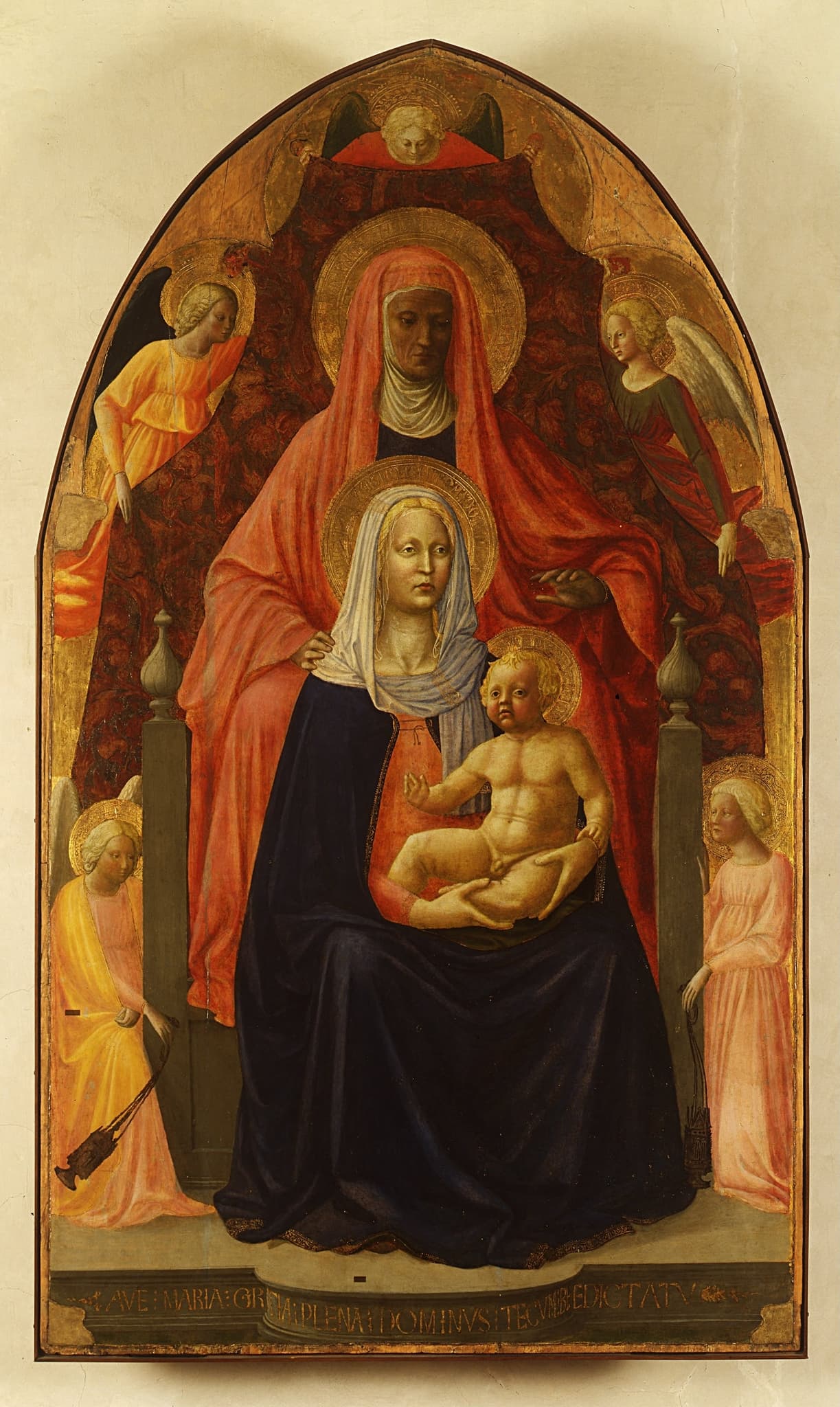
Madonna and Child with St Anne (Sant'Anna Metterza)
Masaccio • Tempera on panel
Read full analysis of Madonna and Child with St Anne (Sant'Anna Metterza) →Valuation Analysis
Context and headline valuation. This valuation is conditional and hypothetical: the Sant'Anna Metterza in question is held by the Galleria degli Uffizi and has not appeared in public‑sale records, so it is not a market object under ordinary circumstances [1]. For market modelling purposes only—i.e., if the work were uncontestedly autograph, saleable under Italian law, and in collector/auction hands—I place a theoretical market range of $30–150 million. That span reflects the scarcity premium for an accepted Masaccio panel, and the ceilings established by rare Florence‑period masterpieces that have actually reached the open market [2].
How the range was derived. The low end ($30M) represents a conservative floor for a securely attributed but relatively minor panel, or a major autograph work with significant condition or attribution caveats. The mid‑to‑high end ($50–150M) is driven by comparables for rare, museum‑quality early‑Renaissance Florentine pictures (notably high‑profile Botticelli and rediscovered pre‑1500 panel sales) and by market behaviour for works tied to Masaccio’s lineage (for example, exceptional Michelangelo drawings linked to Masaccio’s compositions) [2][3]. The absolute upper bound (>~$150M) is theoretical: only a handful of buyers could transact at that scale for a single early‑Renaissance painting, and precedent is thin.
Primary limitations and realism check. The Uffizi custodianship, Italian cultural‑property protections, and likely national‑interest designations make an actual sale improbable; those legal and ethical constraints materially reduce the feasible buyer pool and can prevent export or private sale. Equally important: attribution certainty (e.g., Masaccio alone versus collaborative Masaccio/Masolino hands), conservation state, and an unbroken, published provenance are decisive value drivers. In short: the range above is a market‑theory appraisal conditional on optimal attribution, condition and legal circumstances, not an expectation that the Uffizi piece will be offered.
Next steps to convert theory into market certainty. To refine this into a saleable valuation you would need comprehensive provenance documentation, technical imaging (IRR/X‑ray), dendrochronology if wood panel, pigment and binder analysis, and consultation with leading Masaccio scholars and Old Master specialists at top houses. Those inputs typically narrow an initial range substantially and determine whether the work sits at the $30M floor or approaches the multi‑ten / low‑hundred‑million ceiling [1][2].
Key Valuation Factors
Art Historical Significance
High ImpactMasaccio is a foundational Early Renaissance figure whose surviving autograph paintings are extremely scarce and predominantly museum‑held. If the Sant'Anna Metterza is accepted as autograph and demonstrably central in compositional or technical innovation (e.g., convincing perspective, volumetric modeling, and secure dating to Masaccio’s mature phase), its cultural and scholarly importance would place it at 'museum‑quality' pricing. Museums and top private collectors prize such provenance‑backed singular works, which elevates the theoretical market ceiling. In practice, art‑historical significance converts directly into institutional demand and a concentration of deep‑pocketed buyers, a dynamic that supports valuations at the tens to low hundreds of millions when all other factors align.
Attribution Certainty
High ImpactAttribution is the dominant value lever for pre‑1500 panels. A unanimous, technically supported attribution to Masaccio (including demonstrable autograph brushwork, underdrawing consistent with his practice, and no credible counter‑attribution) would materially elevate price expectations. Conversely, evidence of substantial hand(s) by Masolino, workshop participation, or later overpainting causes steep discounts. Expert consensus—ideally confirmed by technical imaging and endorsement from leading Masaccio scholars and major museum curators—is therefore critical. Even minor lingering doubts about authorship will reduce buyer competition and could reduce value by orders of magnitude.
Provenance & Legal Status
High ImpactA continuous, published provenance from the original commission (Sant’Ambrogio) to the Uffizi strengthens market confidence and price. However, institutional ownership and Italian cultural‑heritage regulations are frequently decisive: works of clear national significance are often non‑exportable and effectively unsaleable to foreign private bidders. A legal designation as a national treasure, deaccession restrictions, or unresolved ownership questions would materially impair marketability. Even if a sale were technically possible, moral‑political pressures and buy‑back/first‑refusal rights by state institutions typically shape the transaction terms and can depress realized prices.
Condition & Conservation
Medium ImpactCondition issues (panel warp, paint loss, heavy retouching, later varnish layers) and the history of restoration strongly influence market value. A panel in stable, well‑documented conservation condition with reversible restorations and robust technical reports will command a premium; conversely, extensive undocumented overpainting or structural instability reduces buyer appetite and increases transaction risk. Technical imaging that reveals autograph underdrawing, original pigments and minimal invasive restoration supports top valuations; serious conservation liabilities push estimates toward the low end of the range.
Market Scarcity & Demand
High ImpactAutograph Masaccio paintings are vanishingly rare on the private market; supply is effectively zero because canonical works are in museums or in situ. This scarcity inflates theoretical prices when a genuinely autograph piece is made available, but it also means the buyer universe is small (major museums, sovereign collectors, and a handful of ultra‑high‑net‑worth individuals). High competition among those buyers can push prices to exceptional levels, yet legal and institutional barriers frequently limit actual transactions. The net effect is a high theoretical ceiling combined with low likelihood of realizing that ceiling.
Sale History
Madonna and Child with St Anne (Sant'Anna Metterza) has never been sold at public auction.
Masaccio's Market
Masaccio (c. 1401–1428) occupies an outsized art‑historical position for the Early Italian Renaissance but has minimal presence in the open market because his major works are frescoes and museum‑held panels. Auction records for his name are essentially non‑existent in modern sales; market signals typically come from works by later masters referencing his compositions (e.g., high‑value Michelangelo drawings) or from rediscovered pre‑1500 panels attributed to other canonical names. Consequently, Masaccio’s market behaves like a museum‑level segment: very high theoretical value per work, but extremely low supply and few market transactions.
Comparable Sales
Portrait of a Young Man Holding a Roundel
Sandro Botticelli
Rare, museum‑quality Florentine Renaissance masterpiece sold at auction — establishes a market ceiling for privately offered, securely attributed top‑tier Florentine works and signals high willingness to pay for canonical early‑Renaissance pictures.
$92.2M
2021, Sotheby's New York
~$106.0M adjusted
A Nude Young Man (after Masaccio) — drawing
Michelangelo Buonarroti
Record auction result for a work directly tied to Masaccio's compositional lineage; demonstrates strong collector demand and price potential for high‑quality, well‑provenanced material connected to Masaccio even when the work is a drawing by a later master.
$24.2M
2022, Christie's Paris
~$26.6M adjusted
Small panel attributed to Cimabue (rediscovered)
Cimabue (attributed)
Pre‑1500 'rediscovery' precedent: a rare early‑Renaissance panel when attributed to a major master fetched a very high price, illustrating how rarity + secure attribution/market narrative can produce sudden large valuations for early panels.
$26.9M
2019, Actéon / Senlis (regional auction)
~$31.7M adjusted
Current Market Trends
The Old Masters and Quattrocento segment has shown selective strength: buyers concentrate on exceptional, well‑provenanced material and drawings tied to major names have achieved record prices recently. Supply constraints, national cultural‑property laws, and institutional stewardship continue to limit market frequency. Anniversary programming and new technical scholarship (e.g., conservation of the Brancacci Chapel) stimulate interest, but the market remains concentrated at the top with cautious but deep demand.
Sources
- Galleria degli Uffizi — St. Anne, Madonna and Child (Sant'Anna Metterza) catalogue entry
- Sotheby's coverage: Botticelli 'Portrait of a Young Man Holding a Roundel' (record precedent for rare Florentine masterpieces)
- Christie's press release — Michelangelo drawing after Masaccio (example of high demand for works tied to Masaccio's lineage)