How Much Is Saints Jerome and John the Baptist Worth?
Last updated: April 3, 2026
Quick Facts
- Methodology
- comparable analysis
The National Gallery panel (NG5962) is a securely held Masaccio two‑saint panel; if legitimately brought to market as an accepted autograph work, a realistic open‑market estimate is approximately $5–15 million. This is a hypothetical market valuation based on scarcity of autograph Masaccios, museum ownership, and high‑end Old Masters comparables.
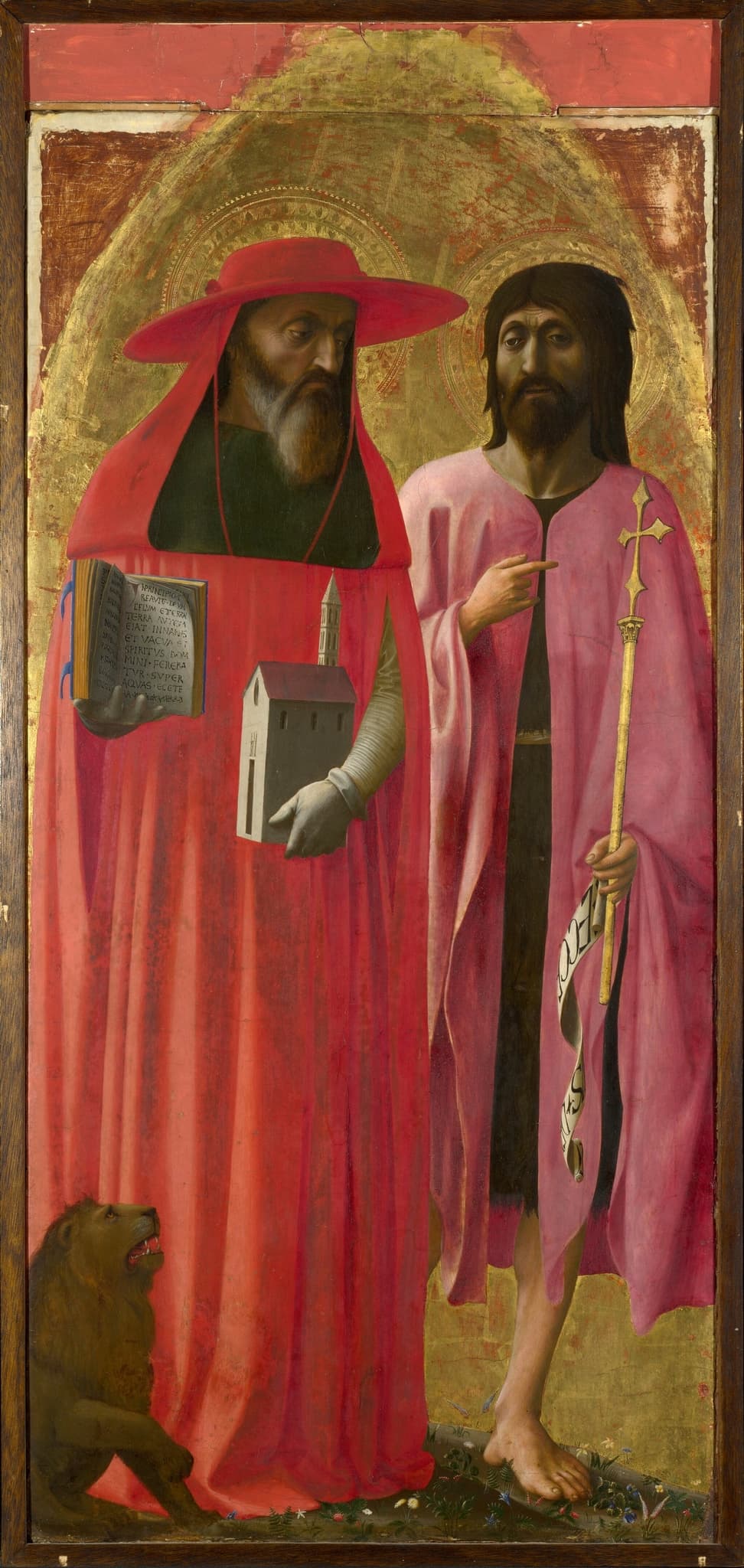
Saints Jerome and John the Baptist
Masaccio • Tempera on panel
Read full analysis of Saints Jerome and John the Baptist →Valuation Analysis
Valuation conclusion: Based on a comparable‑analysis approach and the painting's institutional status (National Gallery inventory NG5962), the hypothetical open‑market value for Masaccio's Saints Jerome and John the Baptist is approximately $5,000,000–$15,000,000. This estimate assumes a secure autograph attribution, stable condition, and no legal impediments to export or sale.
The methodology blends market comparables for high‑profile Renaissance material, institutional behaviour, and the extreme scarcity of securely attributed Masaccio paintings. Masaccio’s autograph painted works almost never reach the open market and are concentrated in public collections, so direct auction comparables are absent. Instead I relied on proximate benchmarks — high‑value Renaissance drawings and rare Quattrocento panel sales — to establish both upside and a conservative working range. High‑profile sales that cite Masaccio as compositional influence (for example the Michelangelo drawing sold in 2022) demonstrate strong collector appetite for canonical‑period material when provenance and attribution are convincing [2].
Within the $5–15M band the lower end reflects the market’s treatment of small devotional or secondary panels by a canonical master: they are desirable but fetch less than large altar‑parts or works central to an artist’s oeuvre. The higher end of the band would apply if the panel is demonstrated to be an unusually important, unrestored autograph work with complete provenance, key technical attributes and a major exhibition history that recontextualises it as a primary piece rather than a secondary saints panel.
Key contingencies that could move the figure materially: a) an authoritative conservation/technical report (IR, x‑ray, pigment analysis, dendrochronology) that confirms a 15th‑century autograph technique; b) discovery of an unbroken, high‑quality provenance and major exhibition/publication history; c) legal or export constraints — work of Italian origin may be subject to patrimony controls that prevent or restrict sale abroad. Conversely, if attribution is downgraded to workshop/circle, or if condition requires significant intervention, values fall rapidly into the mid‑six figures/low‑seven‑figure band.
Practical note: the panel is part of the National Gallery’s holdings and has not appeared in the modern sale record [1]; institutional ownership means sale is unlikely without deaccession and would probably be resolved by a museum‑to‑museum transfer or a private treaty to an institutional buyer rather than a public headline auction. For a formal insured or sale valuation, commission in‑person technical study, an up‑to‑date condition report and a written attribution from recognised Masaccio specialists before proceeding to market engagement.
Key Valuation Factors
Art Historical Significance
High ImpactMasaccio is a foundational figure in early Quattrocento painting; any securely attributed panel by him carries outsized scholarly and curatorial interest. The subject pairing (Saint Jerome and Saint John the Baptist) and probable origin in the Santa Maria Maggiore altarpiece situate the panel within a documented Florentine workshop context. This historical importance supports premium pricing relative to anonymous period panels, particularly if the work contributes to narratives about Masaccio’s development of space, naturalism and paint technique. However, two‑figure devotional panels are frequently treated as secondary in an artist’s oeuvre unless they can be tied to a major commission or demonstrate exceptional technique, which moderates their market ceiling.
Attribution Certainty
High ImpactThe National Gallery’s catalogue treatment and inclusion in scholarly literature confer strong attributional weight; a consensus attribution to Masaccio materially elevates market value. Attribution certainty is the single most powerful value driver for early Renaissance works. If technical imaging and materials analysis corroborate a 15th‑century autograph hand, confidence rises and institutional buyers will compete; if the attribution is contested or revised to 'workshop' or 'follower', estimated value drops by an order of magnitude. For this reason a written, peer‑reviewed attribution report or major‑museum corroboration is essential to realize the top of the estimated range.
Provenance & Exhibition History
High ImpactDocumentary provenance to Santa Maria Maggiore and continuous institutional custody since acquisition (the National Gallery entry) strengthen both scholarly importance and marketability. Museum ownership and exhibition history reduce market risk but simultaneously constrain liquidity: works held by major public collections rarely appear for sale and are treated as national patrimony in many jurisdictions. A clean, well‑recorded provenance with exhibition and publication pedigree increases buyer certainty and can justify the upper portion of the valuation band; conversely, gaps or problematic transfers would reduce market confidence and pricing.
Condition & Conservation
Medium ImpactPhysical condition and past restorations materially affect market value. Museum‑held panels typically benefit from professional conservation, which preserves technical evidence needed for attribution; nevertheless, surface abrasion, overpainting, or unstable supports can reduce price. A stable, well documented conservation history and minimal invasive restoration support higher valuations. If the panel requires major treatment or reveals significant losses beneath later retouching, restoration outcomes and associated costs will be factored into buyer offers and could depress the estimate toward the lower bound.
Market Scarcity & Liquidity
High ImpactAutograph Masaccio paintings are extremely scarce and almost entirely institutionalized, creating a paradox: scarcity supports a high theoretical value but low liquidity limits market depth. When genuine Quattrocento masterpieces do reach the market they attract institutions and well‑funded private collectors, often driving competitive bidding; however, most transactions occur by private treaty or museum acquisition rather than open auction. The scarcity of comparable sales increases valuation uncertainty but generally favours a premium for high‑quality, securely attributed works.
Sale History
Saints Jerome and John the Baptist has never been sold at public auction.
Masaccio's Market
Masaccio occupies an elevated, scholarly canon position but an atypically thin market: his autograph painted works are rare and predominantly held by museums. Because so few panels ever reach private hands, there is no steady auction record for paintings firmly attributed to him; market price discovery relies on analogous high‑quality Quattrocento sales and high‑profile drawing sales by later masters referencing Masaccio’s compositions. Institutional demand and scholarly validation are the decisive market levers; when attribution and provenance are secure, competitive institutional interest can produce multi‑million results despite limited liquidity.
Comparable Sales
A nude man (after Masaccio)
Michelangelo Buonarroti
Direct compositional link to Masaccio (Michelangelo's drawing copies/studies Masaccio). High‑profile Renaissance drawing sale shows collector appetite for works explicitly tied to Masaccio's models; useful as a benchmark for demand even though medium differs (drawing vs. painted panel).
$24.3M
2022, Christie's Paris
~$26.6M adjusted
Portrait of a Young Man Holding a Roundel
Sandro Botticelli
Securely attributed, museum‑grade mid‑Quattrocento painting by a canonical Florentine master that sold at nine figures. Shows the ceiling possible for rare, high‑quality 15th‑century paintings — a relevant upper‑market analogue for a top‑tier, securely attributed Masaccio panel.
$92.2M
2021, Sotheby's New York
~$103.8M adjusted
Venice, the Return of the Bucintoro on Ascension Day
Canaletto (Giovanni Antonio Canal)
High‑end Old Masters sale in 2025 demonstrating market liquidity and strong prices for museum‑quality works; useful as a market‑health benchmark for top‑tier Old Masters in 2025, though stylistically and chronologically different from an early Quattrocento Masaccio panel.
$43.9M
2025, Christie's London
Current Market Trends
The Old Masters/Quattrocento market is supply‑constrained but showed renewed appetite for museum‑grade works in recent years. High‑profile Renaissance drawing and rare panel sales demonstrate strong collector interest in canonical names, though liquidity remains low. Institutional collecting and exhibition programmes (restorations, loans) continue to drive scholarly and market attention, benefitting works with strong provenance and technical documentation.